What a Conveyor Idler Does on the Line
A conveyor idler is the rotating roller that supports the conveyor belt along its carrying and return runs. In a quarry, a coal preparation plant or a cement kiln feed line, these rollers are the parts the belt touches most often, so their condition shapes belt life, energy draw and how well material stays centered. The idler roller itself is simple: a steel shell, a shaft, bearings and a sealing arrangement. The system around it, however, has to match belt width, load and environment.
Construction and Common Surface Forms
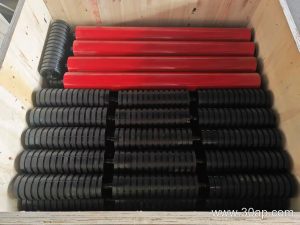
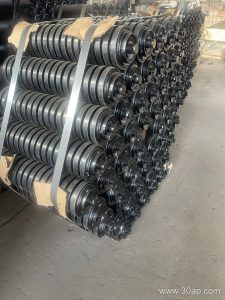
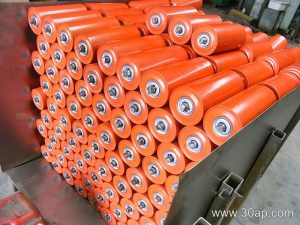
Most idlers use a steel tube shell with welded end discs, a through shaft and deep-groove ball bearings. Common bearing sizes include 6204, 6205, 6305, 6306, 6308 and 6310, selected by load and shaft design rather than by belt width alone. Roller diameters commonly range from Ø63 and Ø76 up to Ø159, Ø178, Ø194 and Ø219 for heavier duties. The surface may be plain steel, nylon, ceramic or rubber rings.
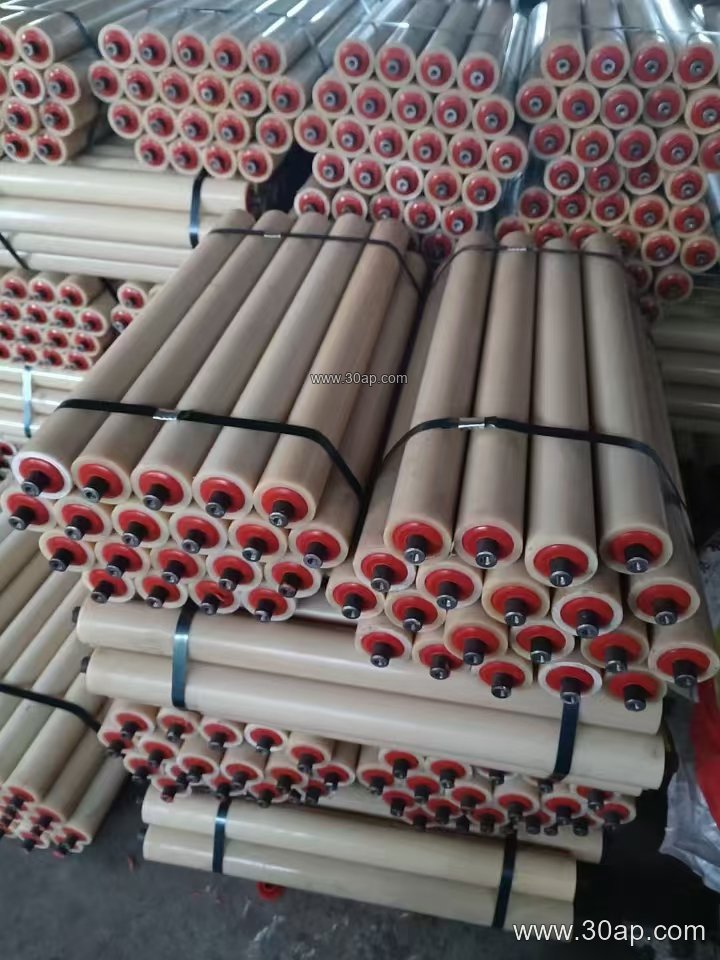
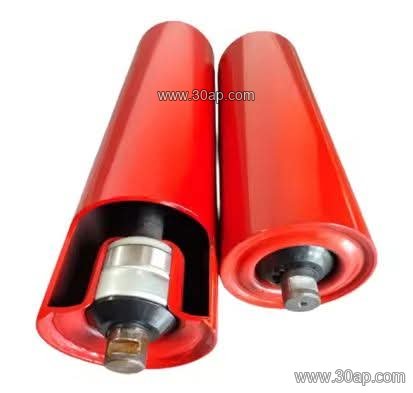
- Steel shell — general duty carrying and return positions.
- Rubber ring — impact absorption at transfer points.
- Ceramic or nylon — where abrasion or sticking is a concern.
Carrying, Return and Transition Positions
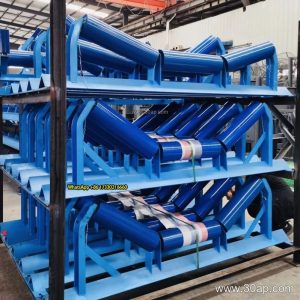
On the top run, three-roll troughing sets are typical, with trough angles of 20, 30, 35 or 45 degrees. The trough angle affects how the conveyor belt holds material, so a 35-degree set may suit a lumpy ore stream while a flatter 20-degree set suits certain fragile products. Transition idlers ease the belt from flat pulleys into the trough, reducing edge stress. On the return side, flat or V-return rollers support the empty belt; a V shape helps tracking on long spans.
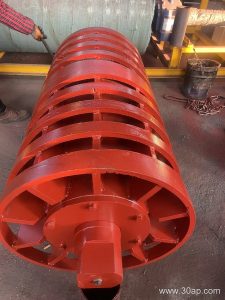
Self-aligning idlers, including friction and tapered types, correct minor belt drift. Training idlers are not a substitute for proper pulley alignment at the drive or tail, but they help on long overland runs. Spiral and comb-type rollers are used where sticky material builds up on the return side.
Matching Roll Length to Belt Width
Roll length changes with belt width, trough angle and roll arrangement. The figures below are typical examples for three-roll troughing sets, not fixed rules; side rolls and center rolls often differ.
| Belt width | Typical roll length |
|---|---|
| B500 | about 200 mm |
| B650 | about 250 mm |
| B800 | about 315 mm |
| B1000 | about 380 mm |
| B1200 | about 465 mm |
| B1400 | about 530 mm |
| B1600 | about 600 mm |
| B1800 | about 670 mm |
| B2000 | about 750 mm |
Belt widths from B400 through B2400 appear in bulk handling, and the matching shaft and bearing choice should come from the conveyor design, not from a single width figure. Idler spacing is also set by load and sag limits, so a heavier iron ore stream usually needs closer spacing than a light grain line.
Where Idlers Work Hardest
In a limestone quarry or a sand and gravel plant, dust and grit attack seals first. In a power station coal yard, fine coal can pack around return rollers. At a crushing and screening station, buffer idlers with rubber rings absorb lump impact below the chute. Each of these settings calls for a different balance of seal quality, shell thickness and roller surface.
Buyer Checklist
- Confirm belt width, trough angle and roll arrangement.
- State the duty: carrying, return, impact or training.
- Check roller diameter and bearing size against load and speed.
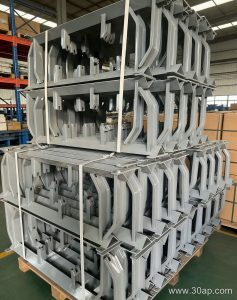
- Ask about seal design and shaft end fixing for the conveyor bracket.
- Keep spare rollers matched to the installed conveyor pulley and frame dimensions.
A well-chosen conveyor idler is not the most expensive part on the line, but it is one of the most repeated. Getting the roller diameter, bearing, seal and bracket fit right at the buying stage saves far more than it costs.