What a Sand and Gravel Conveyor Idler Does
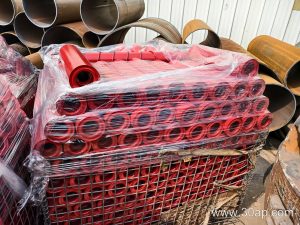
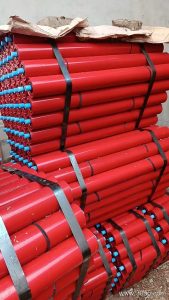
A sand and gravel conveyor idler is the rotating roller that supports the conveyor belt along its carrying and return runs. In a pit, quarry, or aggregate plant, these idlers carry heavy, abrasive material day after day. The idler roller itself is usually a steel tube fitted with bearings and seals, mounted on a shaft and held in place by a conveyor bracket. Together with the conveyor pulley at the drive and tail, the idlers keep the belt tracking and the load moving.
Common Types and Where They Sit
Not every position on a sand and gravel conveyor needs the same roller. The table below shows typical arrangements and their usual role.
| Type | Typical position | Common use |
|---|---|---|
| Troughing idler (3-roll) | Carrying side | Supports the loaded belt and shapes it into a trough |
| Impact idler / rubber ring impact idler | Load point | Absorbs shock from falling gravel and rock |
| Return idler (flat or V-type) | Return side | Supports the empty belt |
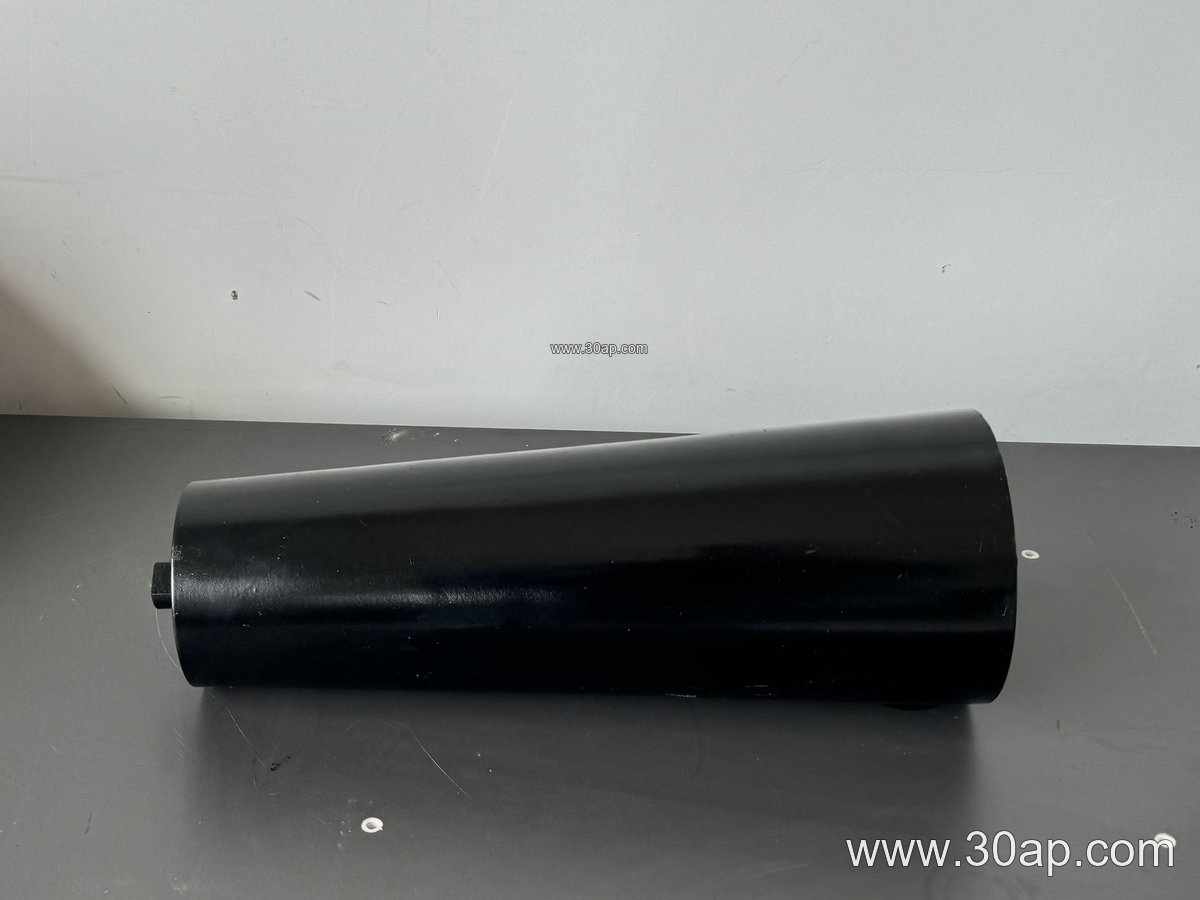
| Training idler (friction or conical) | Carrying or return side | Helps correct belt misalignment |
| Spiral idler | Return side | Reduces material build-up on the roller |
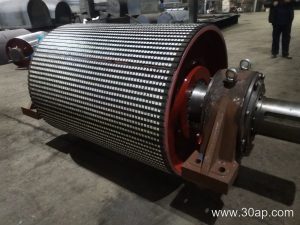
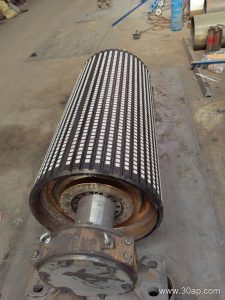
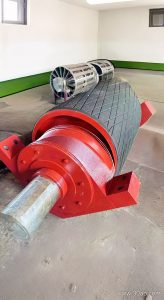
Drive, tail and bend pulleys are separate components and are not interchangeable with idlers. A conveyor pulley transfers drive power, while an idler only supports the belt.
Roller Diameter, Belt Width and Trough Angle
Buyers often ask how to match roller size to belt width. Common roller diameters include Ø63, Ø76, Ø89, Ø102, Ø108, Ø127, Ø133, Ø159, Ø178, Ø194 and Ø219 mm. Belt widths run from B400 up to B2400 in many plants. A larger diameter is often chosen for wider belts and higher loads, but there is no fixed rule that one belt width must use one pulley diameter or one shaft size.
Trough angle affects how well the belt holds material. Common angles are 20, 30, 35 and 45 degrees. For abrasive sand and gravel, a 35-degree trough is often a practical balance between capacity and belt stress. Roll length also changes with belt width, trough angle and idler arrangement. For example, a three-roll troughing set commonly uses roll lengths near 200 mm for B500, 250 mm for B650, 315 mm for B800, 380 mm for B1000, 465 mm for B1200, 530 mm for B1400, 600 mm for B1600, 670 mm for B1800 and 750 mm for B2000. These are common examples only; side rolls and center rolls can differ.
Materials, Seals and Bearings
The roller surface may be steel tube, nylon, ceramic or rubber ring. Rubber ring rolls are popular at transfer points because they cushion falling stone. Bearing sizes such as 6204, 6205, 6305, 6306, 6308 and 6310 appear in many idler designs. A good seal matters in dusty aggregate plants, because fine sand and grit shorten bearing life. Buyers should check that the seal design suits wet or dry conditions and that the bracket fits the existing frame.
Buyer Checklist for Aggregate Plants
- Confirm belt width, trough angle and idler arrangement before ordering.
- Match roller diameter to load and belt speed, not to a single fixed table.
- Use impact idlers at load points and training idlers where the belt wanders.
- Check bearing and seal quality for dusty or wet service.
- Keep spare rollers and brackets for critical conveyors.
In a sand and gravel operation, idler choice affects belt life, energy use and downtime. A practical review of the conveyor layout, material size and operating hours will guide the right roller type and size for each section.