What the Bend Pulley Assembly Does
A bend pulley assembly is the turning unit that changes the direction of a conveyor belt without driving it. It sits where the belt path needs a redirect, often near a take-up or tensioning station, and it works together with the drive pulley and the tail pulley rather than replacing either of them. Because it only guides the belt, its job is to keep wrap angles and belt tracking under control while the real pulling force comes from elsewhere.
The assembly normally includes the pulley shell, the shaft, the bearing housings, and the frame that ties it to the conveyor structure. In many layouts a conveyor bracket or a pair of brackets holds the unit in place, and the whole package is aligned so the belt enters and leaves smoothly.
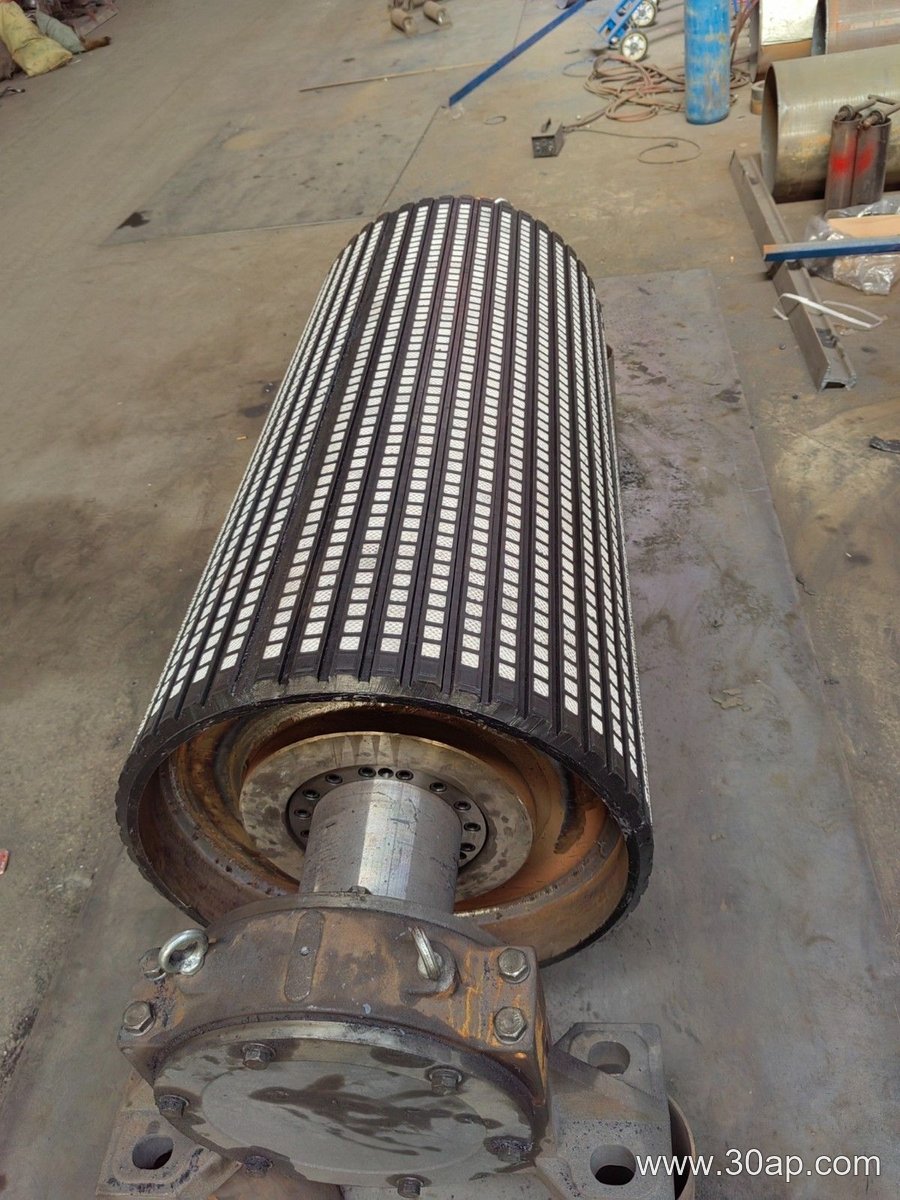
How the Assembly Is Built
The core is a cylindrical shell, usually made from rolled steel and machined at the ends. A shaft runs through the center, supported by bearing blocks on both sides. The shell may be smooth or covered with rubber, and the covering is often called lagging. Common surface forms include plain, cold-bonded rubber, hot-vulcanized rubber, diamond grooved, herringbone grooved, and ceramic lagging. Lagging thickness is often 8, 10, 12, 15, or 20 mm, chosen according to the belt and the environment.
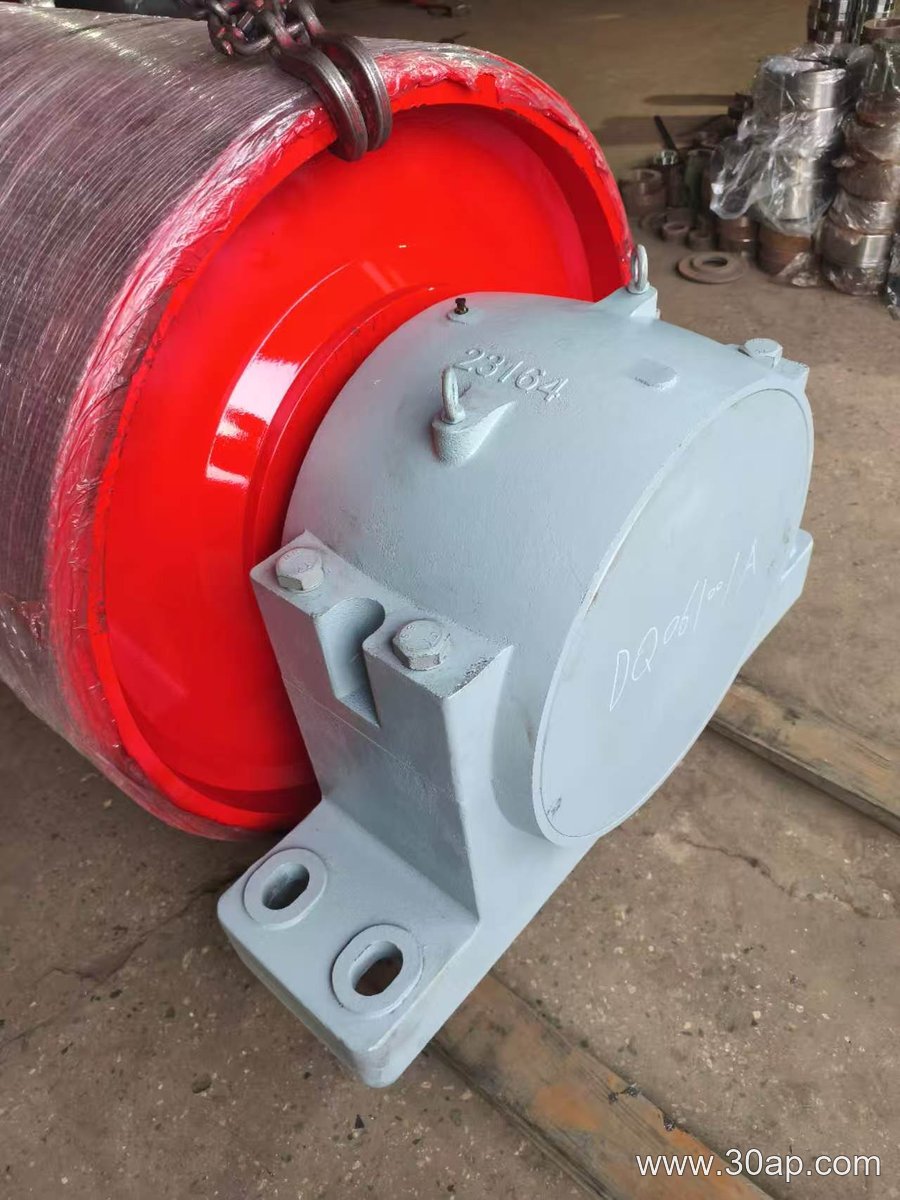
Width and diameter are selected together with the belt and the load. Typical belt widths include B400, B500, B650, B800, B1000, B1200, B1400, B1600, B1800, B2000, B2200, and B2400. The pulley face is usually wider than the belt, for example a B800 belt may run on a face of about 950 mm, while a B1200 belt may use a face near 1400 mm. Diameters commonly range from Ø200 and Ø250 up to Ø1000, Ø1250, and larger, but no single belt width is tied to one diameter.
Shaft diameter is determined by torque and load, not by belt width alone. Common shaft sizes include Ø50, Ø60, Ø70, Ø80, Ø90, Ø100, Ø120, Ø140, Ø160, Ø180, and Ø200. These values are reference points; the final choice follows the design calculation.
Where It Fits in a Conveyor
This turning unit is common in aggregate and mining circuits, such as a limestone quarry, an iron ore plant, or a coal preparation plant. It also appears in cement clinker lines, power station coal handling, and port bulk terminals. In these places the belt may need to bend around a take-up pulley, a snub pulley, or a return bend before it reaches the drive.
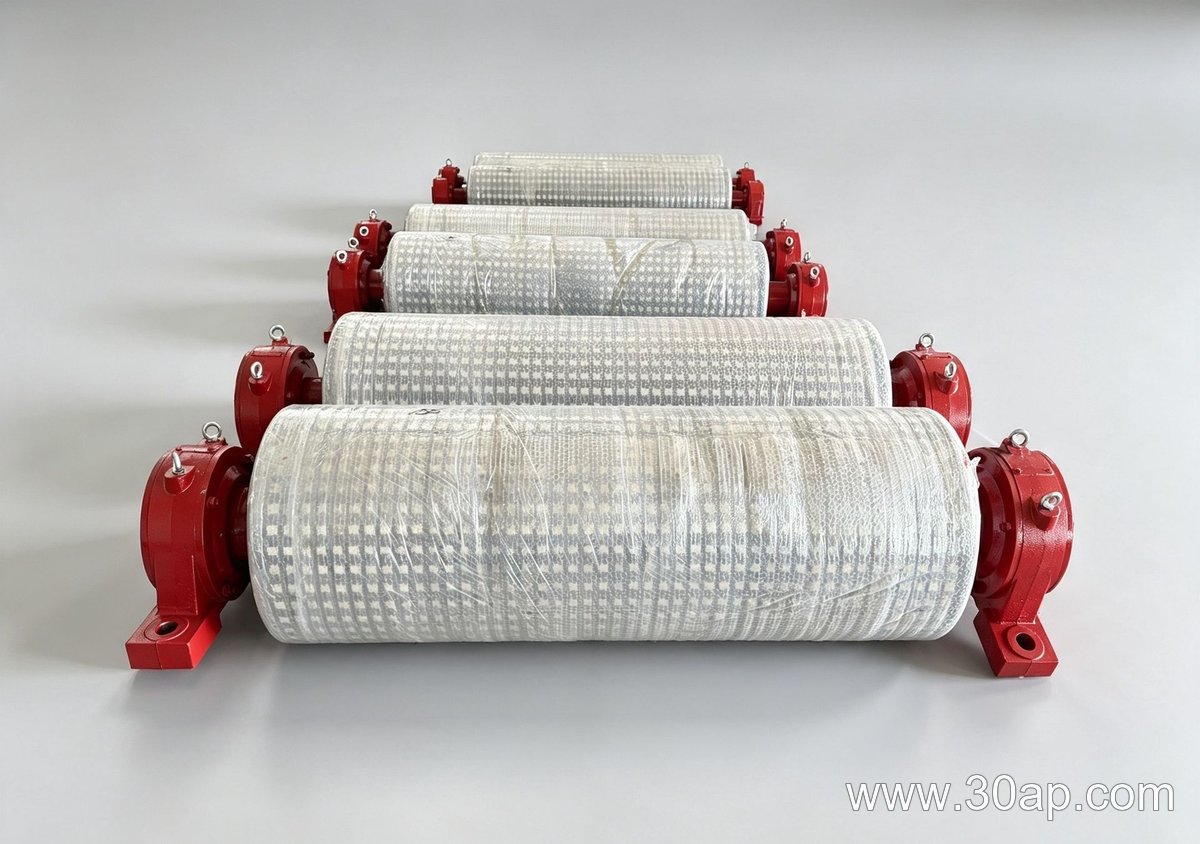
It should not be confused with a drive pulley, which transmits power, or a tail pulley, which supports the belt at the loading end. A bend pulley assembly is a separate function, and a conveyor pulley of another type is not an interchangeable substitute. When the belt must wrap a drive pulley more fully, a snub or wrap pulley may be added, but that is a different duty from simple direction change.
Selection Points for Buyers
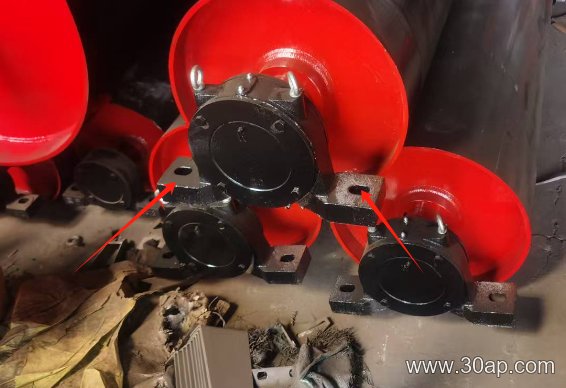
Before ordering, confirm the belt width, the required face width, the shaft diameter, the bearing type, and the lagging. A smooth face is often enough for a clean, dry belt, while diamond or herringbone rubber can help where material carryback or moisture reduces grip. Ceramic lagging is sometimes specified in abrasive conditions.
Check the mounting arrangement as well. The assembly must match the conveyor bracket spacing and the available take-up travel. If the unit is part of a tensioning station, the frame and slide must allow movement without binding. Alignment matters: a small misalignment can cause belt mistracking and edge wear.
Maintenance is mostly about bearings and lagging. Grease the bearings on schedule, watch for abnormal noise or heat, and inspect the rubber surface for wear or separation. Replace the lagging when it becomes smooth or damaged, and check that the shell is still round. A well-chosen bend pulley assembly, matched to the belt and the structure, keeps the belt path stable and reduces unnecessary wear on the conveyor belt and the idler roller set.