What a Conveyor Vertical Roller Does
A conveyor vertical roller is the upright roller mounted in a self-aligning idler set to keep a conveyor belt tracking in the center of the frame. In many plants it is simply called a vertical idler or vertical guide roller, and it works alongside the carrying idlers rather than replacing them. The roller stands at an angle to the belt edge and touches the side of the belt only when the belt begins to drift. That contact nudges the belt back toward the center line, so the belt does not rub the structure, spill material, or climb the pulley.
This component is common on long overland lines, stockyard conveyors, and transfer belts in a cement plant, a coal washing station, a limestone quarry, or a power station coal yard. It is a small part, but a seized or worn vertical roller can cause edge damage on an expensive conveyor belt.
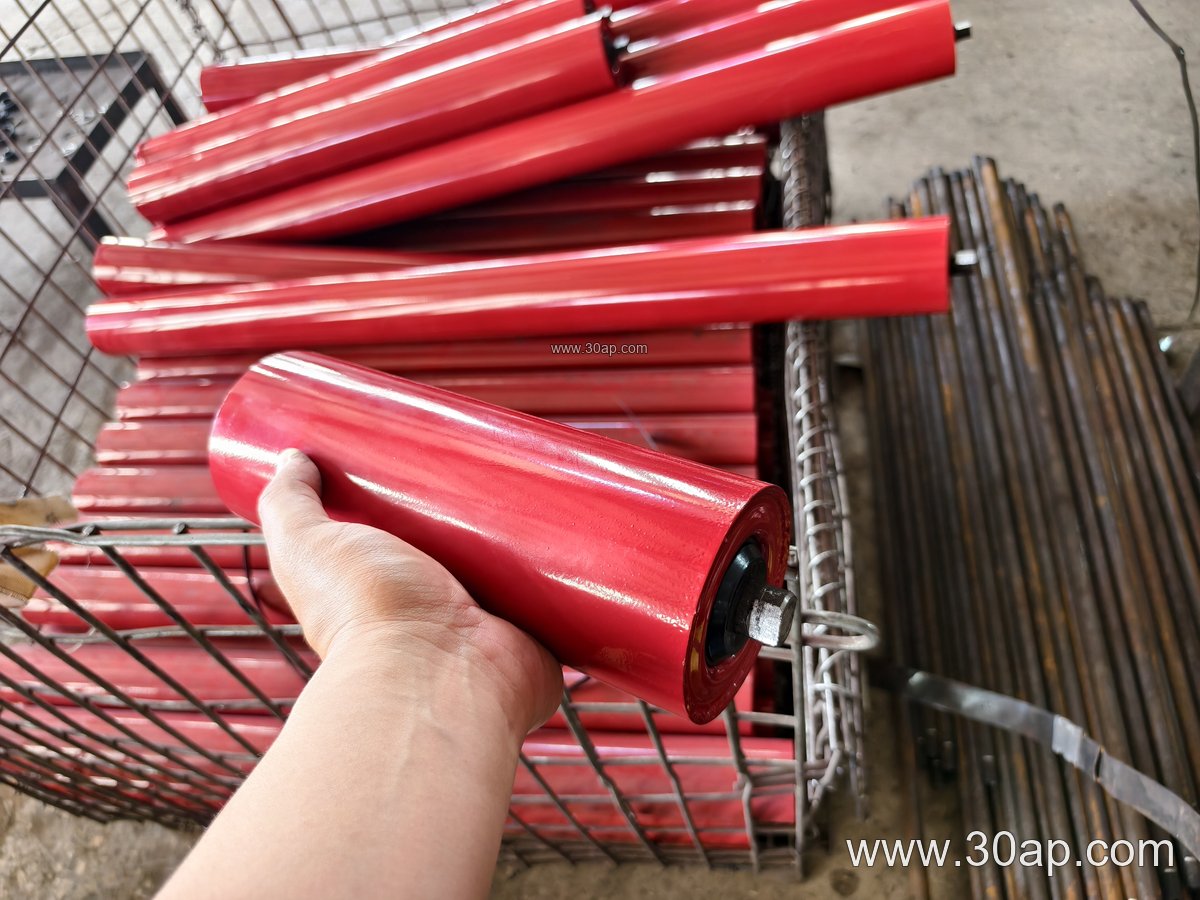
Construction and Mounting
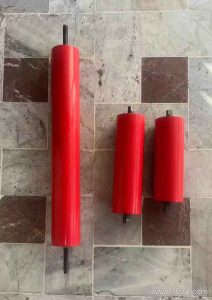
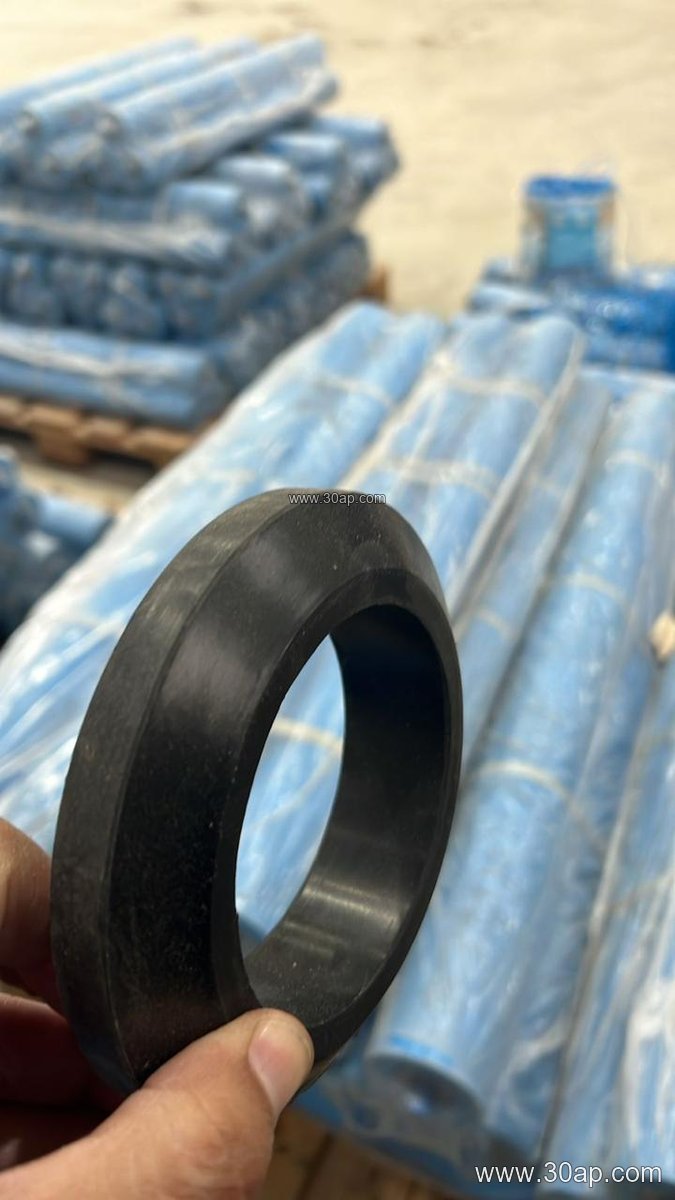
The roller body is usually a steel tube fitted with sealed bearings at each end, carried on a short shaft. A rubber or polyurethane cover is often used on the belt contact face to protect the belt edge and improve grip. The roller is fixed to a bracket that bolts onto the conveyor frame or onto the self-aligning idler group. Because the roller is vertical, the load is mostly side thrust, so the bearing housing and seal design matter more than the tube thickness alone.
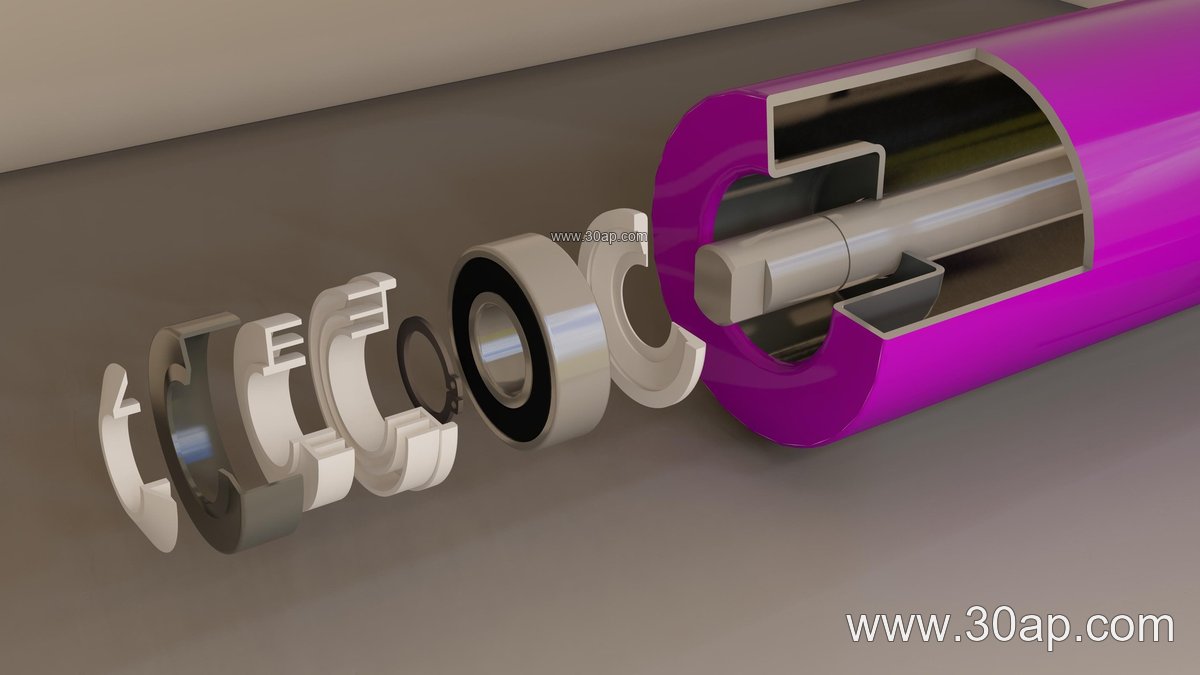
- Tube: welded steel, often with a protective coating
- Bearing: deep groove ball bearings, commonly 6204, 6205, or 6305 depending on shaft and load
- Cover: bare steel, rubber sleeve, or urethane sleeve
- Mounting: adjustable bracket or fixed plate on the frame
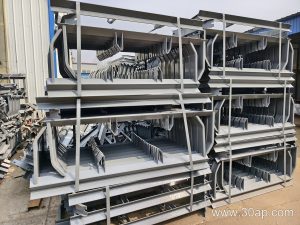
A conveyor bracket with slotted holes allows the roller to be set at the correct gap from the belt edge. Too large a gap and the roller never touches the belt; too small a gap and the roller rubs continuously, wearing both the cover and the belt edge.
Where It Fits on the Conveyor
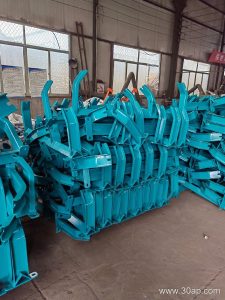
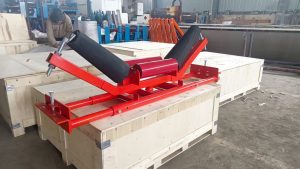
Vertical rollers are most often part of a friction self-aligning idler set or a cone self-aligning group. In these assemblies, the vertical roller sits at the leading edge of the group and reacts to belt misalignment, while the angled carrying rollers do the main support work. A two-roller or three-roller troughing set may be paired with one or two vertical rollers, depending on belt width and the expected side load.
Typical locations include the entry and exit of a transfer chute, curves in the route, and long spans where wind or uneven loading causes the belt to wander. On a gravel aggregate line or a sinter plant conveyor, a vertical roller at the load point helps keep the belt centered before the material settles.
Common Sizes and Reference Data
Vertical rollers are usually selected to match the idler group and belt width rather than ordered as a standalone size. The table below gives common reference values; final dimensions are set by the conveyor design.
| Item | Common reference values |
|---|---|
| Belt width | B500, B650, B800, B1000, B1200, B1400, B1600, B1800, B2000 |
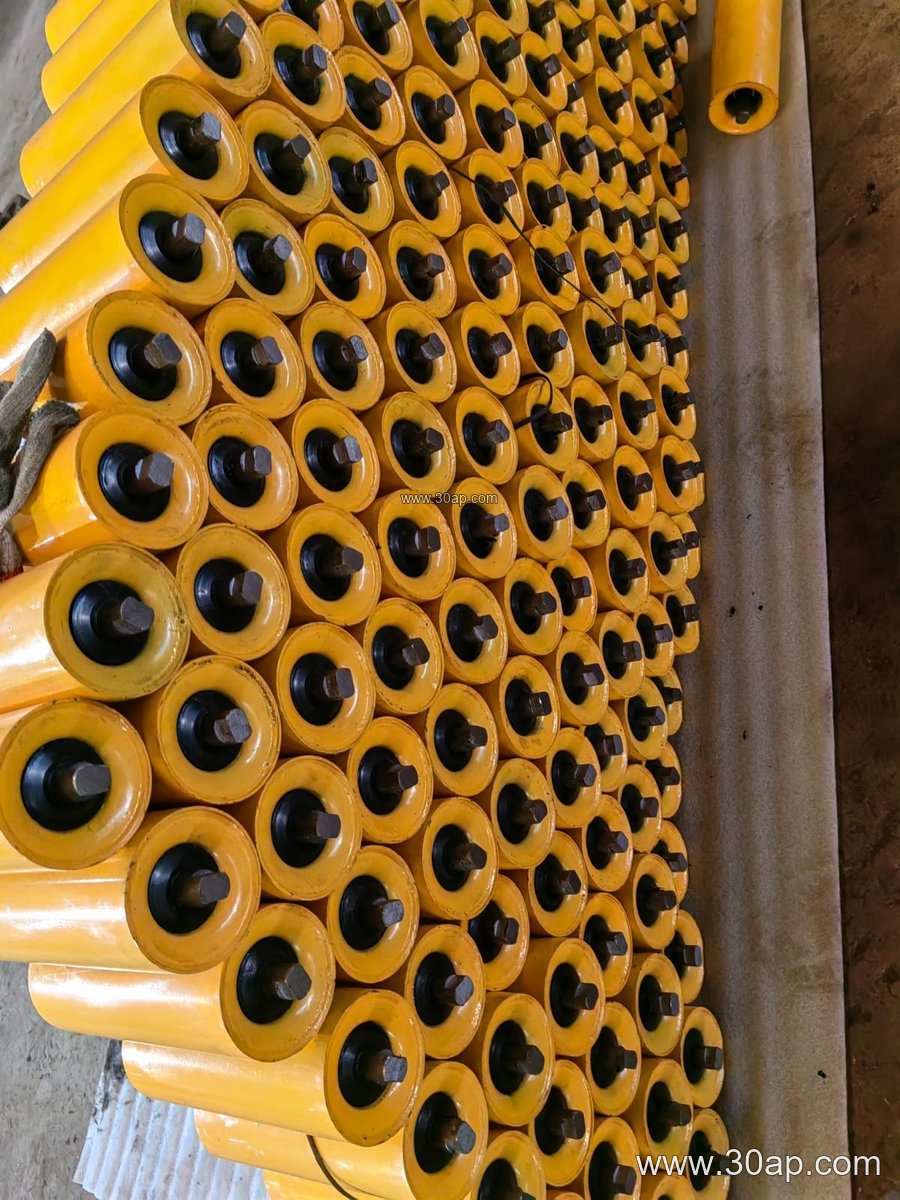
| Roller diameter | Ø63, Ø76, Ø89, Ø102, Ø108, Ø127 |
| Roller length | Typically 150 to 400 mm, according to bracket and group design |
| Trough angle of the group | 20, 30, 35, or 45 degrees |
| Bearing | 6204, 6205, 6305, 6306 |
These values are examples only. A wide belt does not automatically require a large vertical roller, and one belt width can be matched with more than one roller diameter. The shaft diameter should be confirmed from the bracket and bearing selection, not guessed from belt width.
Buyer Checklist
- Confirm the self-aligning group type, since a vertical roller for a friction group may not fit a cone-type frame.
- Check the mounting hole pattern on the conveyor bracket before ordering.
- Choose the cover material for the site: rubber for general duty, urethane where oil or fine abrasive dust is present.
- Ask for the bearing number and seal type, especially for dusty coal or cement service.
- Verify the gap setting procedure so maintenance staff can adjust the roller after belt tracking changes.
During inspection, spin the roller by hand and check for roughness, seal leakage, or a worn flat spot on the cover. Replace a damaged vertical roller before it damages the belt edge. Keeping the roller free-turning and correctly gapped is the simplest way to protect the conveyor belt and the pulleys at each end of the line.