What a Conveyor Bracket Assembly Does
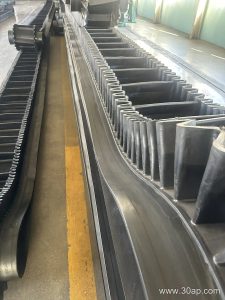
A conveyor bracket assembly is the structural support that holds idler rollers in position along a belt conveyor. It connects the rollers to the conveyor frame, sets the trough angle of the carrying side, and keeps spacing consistent so the conveyor belt runs smoothly under load. Without a properly built bracket assembly, rollers shift, belt tracking suffers, and the whole conveying line becomes unreliable.
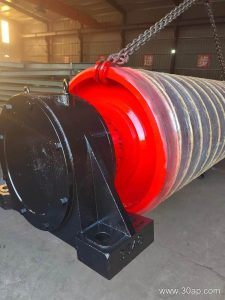
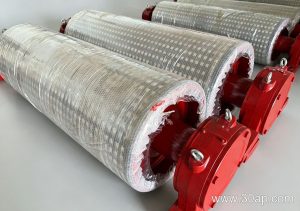
The assembly is sometimes called a roller bracket set or idler frame, and the two names describe the same product: a fabricated steel structure that carries conveyor rollers and transfers their loads into the mainframe. It is not a pulley and does not replace one. A drive pulley, tail pulley, and bend pulley each serve different functions, and none of them is interchangeable with a bracket assembly.
How the Assembly Is Built
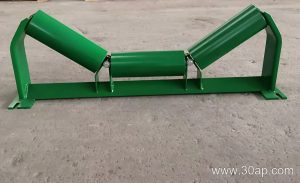
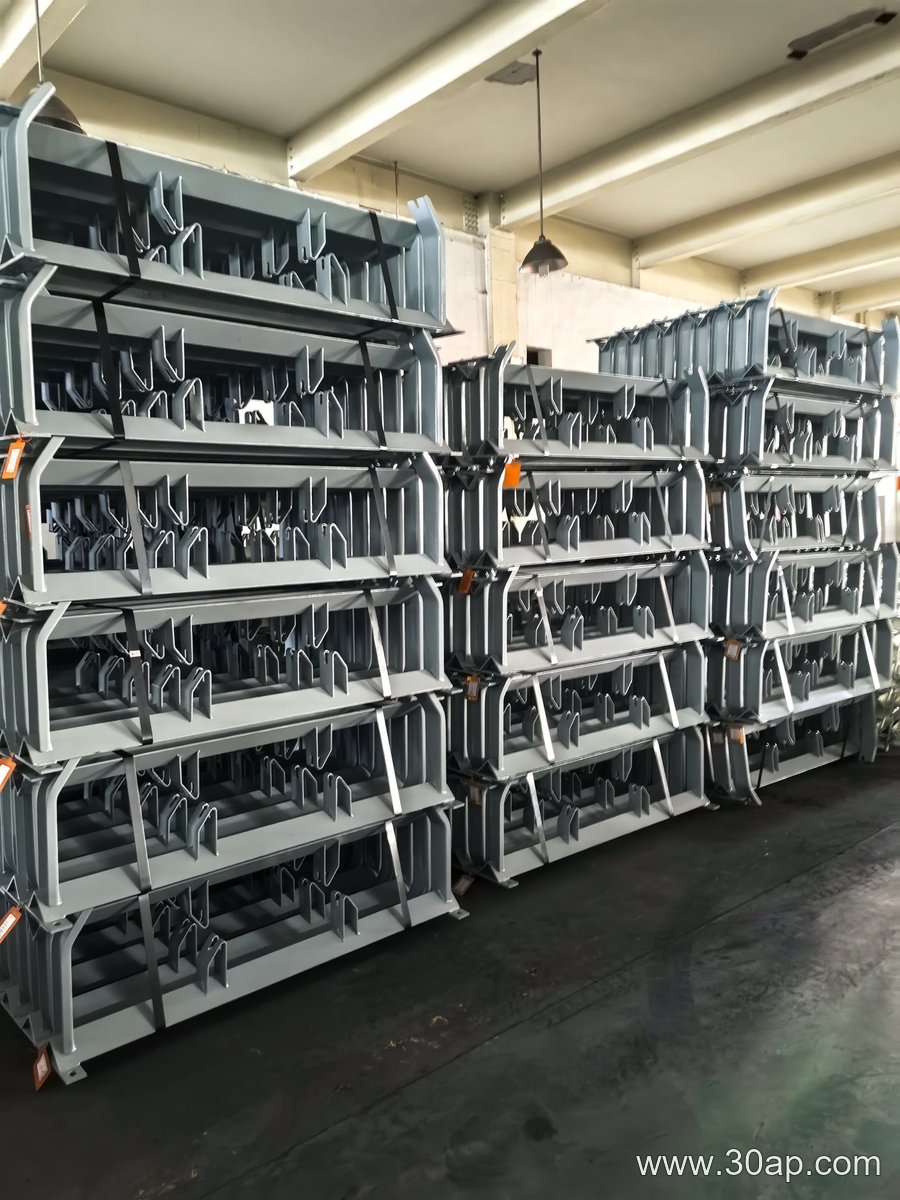
Most bracket assemblies are welded or bolted from angle steel, channel steel, or bent steel plate. The choice of material and thickness depends on belt width, load, and the number of rollers the bracket must carry.
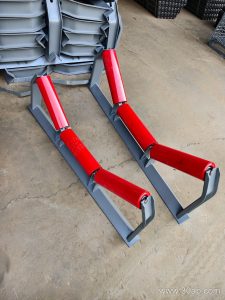
A typical carrying-side assembly includes a horizontal base beam and two or three inclined roller seats. The incline angle determines the trough profile. Common trough angles include 20, 30, 35, and 45 degrees, and adjustable brackets allow the angle to be changed within that range. A slight forward tilt of about 1.5 to 2 degrees is sometimes built into the side rollers to help center the belt.
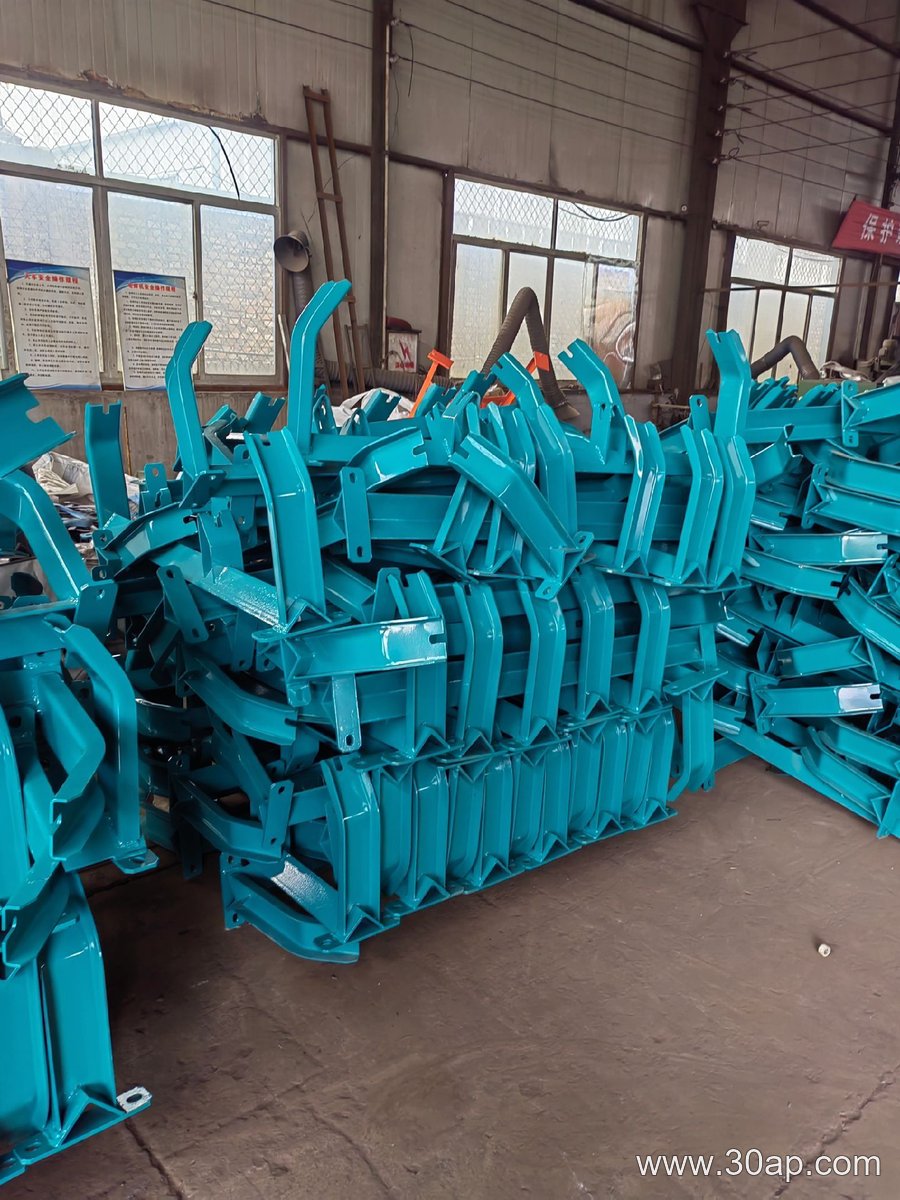
Return-side brackets are usually simpler. A flat return bracket supports a single roller under the belt, while a V-return bracket uses two rollers set at an angle to help remove material that clings to the belt. Impact brackets, used below loading points, are built heavier and may carry rubber-surfaced rollers to absorb falling material.
Mounting hole spacing and beam length are not fixed values. They follow the belt width, trough angle, and roller diameter specified for each conveyor. Buyers should treat any dimension as a design input, not a universal standard.
Where Bracket Assemblies Are Used
These assemblies appear wherever a conveyor belt needs continuous roller support. In a quarry or sand and gravel line, they carry the belt through crushing and screening circuits. In a coal washing plant or power station coal handling system, they support the belt on long inclined runs and at transfer points.
Other common locations include cement plants, steel mills, port loading terminals, and tunnel muck removal lines. The environment shapes the design: dusty sites may call for sealed roller seats, while high-impact loading zones need cushion brackets rather than standard carrying brackets.
Matching Brackets to Belt Width and Roller Diameter
Belt width and roller diameter are related but not locked together. A B800 belt, for example, may run with Ø89, Ø108, or Ø133 rollers depending on load and speed. A wider B1200 belt might use Ø133 or Ø159 rollers. The bracket assembly must match the chosen roller diameter at its mounting points, and the beam length must suit the belt width.
Trough angle is a separate decision. A 35-degree trough is common for general bulk material, while a 45-degree trough contains material better on steep or high-capacity lines. A 20-degree trough suits flatter belts or materials that should not be over-compressed. Adjustable brackets let a single assembly cover a range of angles, which can simplify spare parts planning.
Do not assume that one belt width can only match one pulley diameter or one roller diameter. The correct combination comes from the conveyor design, not from a fixed table.
Adjustable Versus Fixed Brackets
Fixed brackets are welded or bolted at a set trough angle. They are simple, rigid, and cost-effective for conveyors that always run the same material at the same rate.
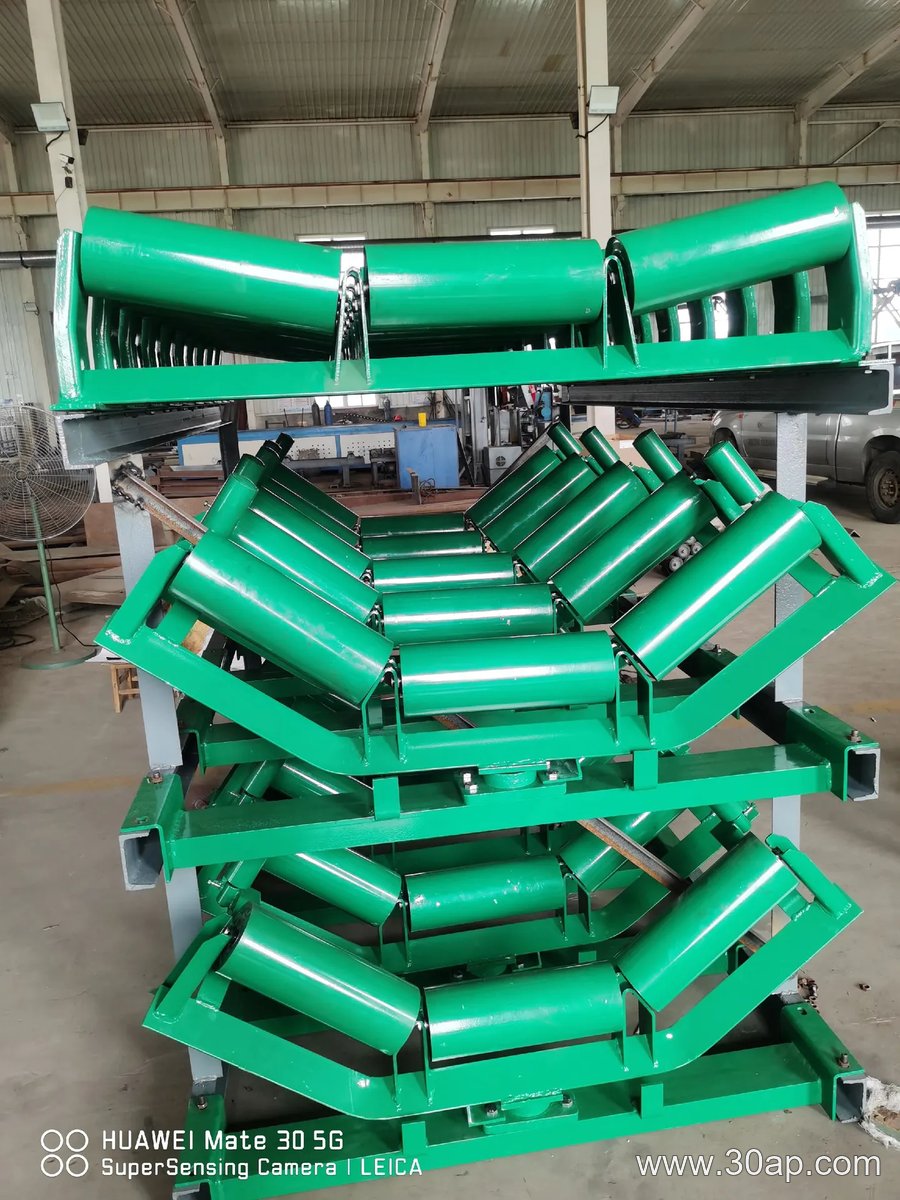
Adjustable brackets use slotted holes, pivoting seats, or movable arms so the trough angle can be changed. They are useful during commissioning, when the belt needs fine tuning, or when a conveyor handles different materials over time. The trade-off is more parts and more points to inspect.
Both types must locate rollers accurately. A loose or misaligned bracket lets the idler roller sit crooked, which causes the conveyor belt to drift and wear along one edge.
Working With Rollers and the Belt
A bracket assembly is only one part of the support system. The idler roller turns inside the bracket seats, and the conveyor belt rides on the rollers. If the bracket is square to the frame, the rollers stay parallel, and the belt tracks straight. If the bracket is twisted or mounted at the wrong height, the belt will fight the rollers and may climb the side roller.
During installation, check that all brackets on a given section sit at the same elevation and that the roller seats are aligned. Spacing between brackets usually follows the belt sag allowance, with closer spacing at loading points and wider spacing on the return run.
What Buyers Should Check
- Belt width and required trough angle, including whether adjustment is needed.
- Roller diameter and the matching seat or mounting slot in the bracket.
- Material and finish suited to the site, such as painted or galvanized steel for wet areas.
- Load rating at impact points, where cushion brackets may be required instead of standard carrying brackets.
- Mounting hole pattern and beam length, which should be confirmed against the conveyor frame drawing.
- Whether the assembly is supplied as a complete set with hardware or as separate components.
A conveyor bracket assembly looks simple, but it decides how well the belt, rollers, and frame work together. Getting the details right at the specification stage avoids tracking problems, premature roller wear, and unplanned downtime later.