What a Conveyor Idler Frame Does
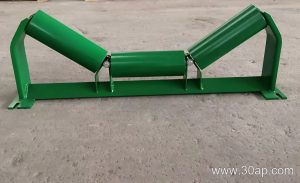
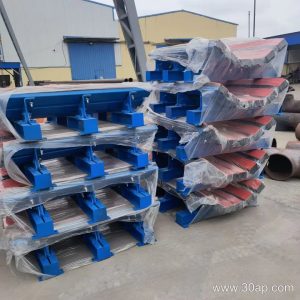
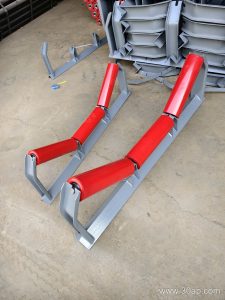
A conveyor idler frame is the structural element that holds idler rollers in the correct position under and around the conveyor belt. It carries the load of the belt and material, keeps the belt trained along the conveyor line, and transfers forces into the conveyor stringer or support structure. Without a properly aligned frame, even good-quality idler rollers wear unevenly and the belt can drift, spill material, or rub against the structure.
The frame is often called a conveyor idler bracket or idler support frame, and these names describe the same product. It should not be confused with a conveyor pulley: drive pulleys, tail pulleys, and bend pulleys are separate components that transmit or redirect belt motion, and they are not interchangeable with idler frames.
Construction and Common Forms
Most frames are fabricated from angle steel, channel steel, or folded steel plate. The material and thickness are chosen according to belt width, load, and the environment. In dusty or wet locations such as a coal preparation plant or a limestone quarry, galvanized or painted finishes are common, and drainage and material build-up around the frame should be considered during design.
Frames appear in several arrangements along a conveyor:
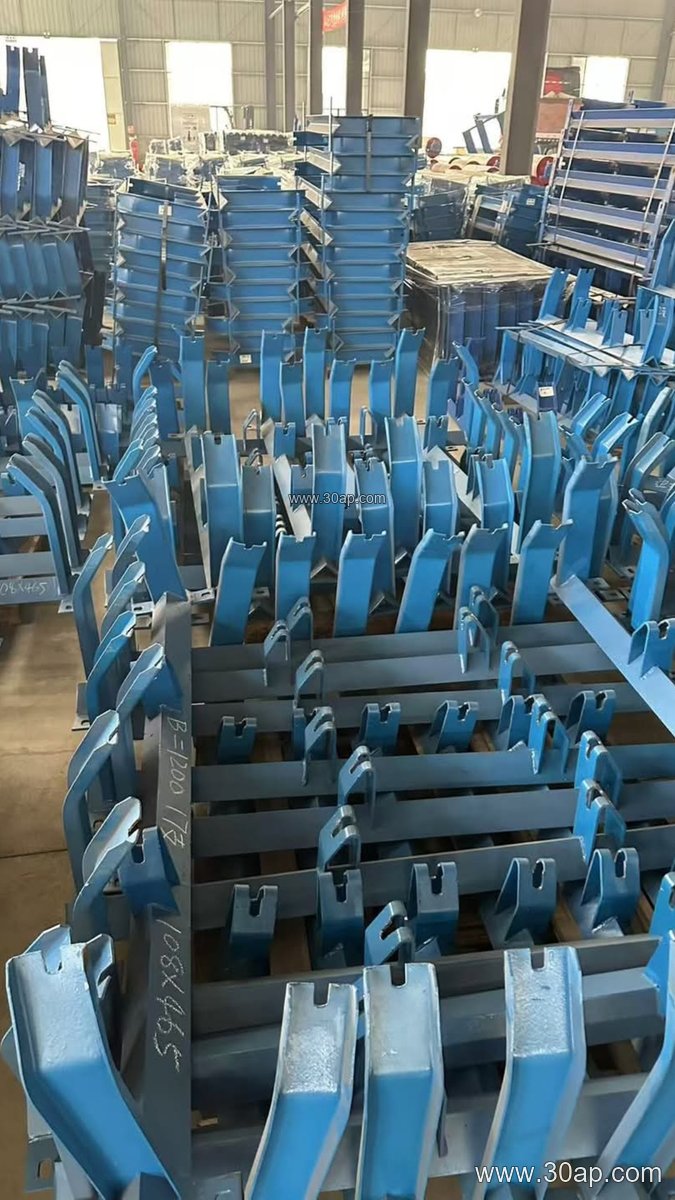
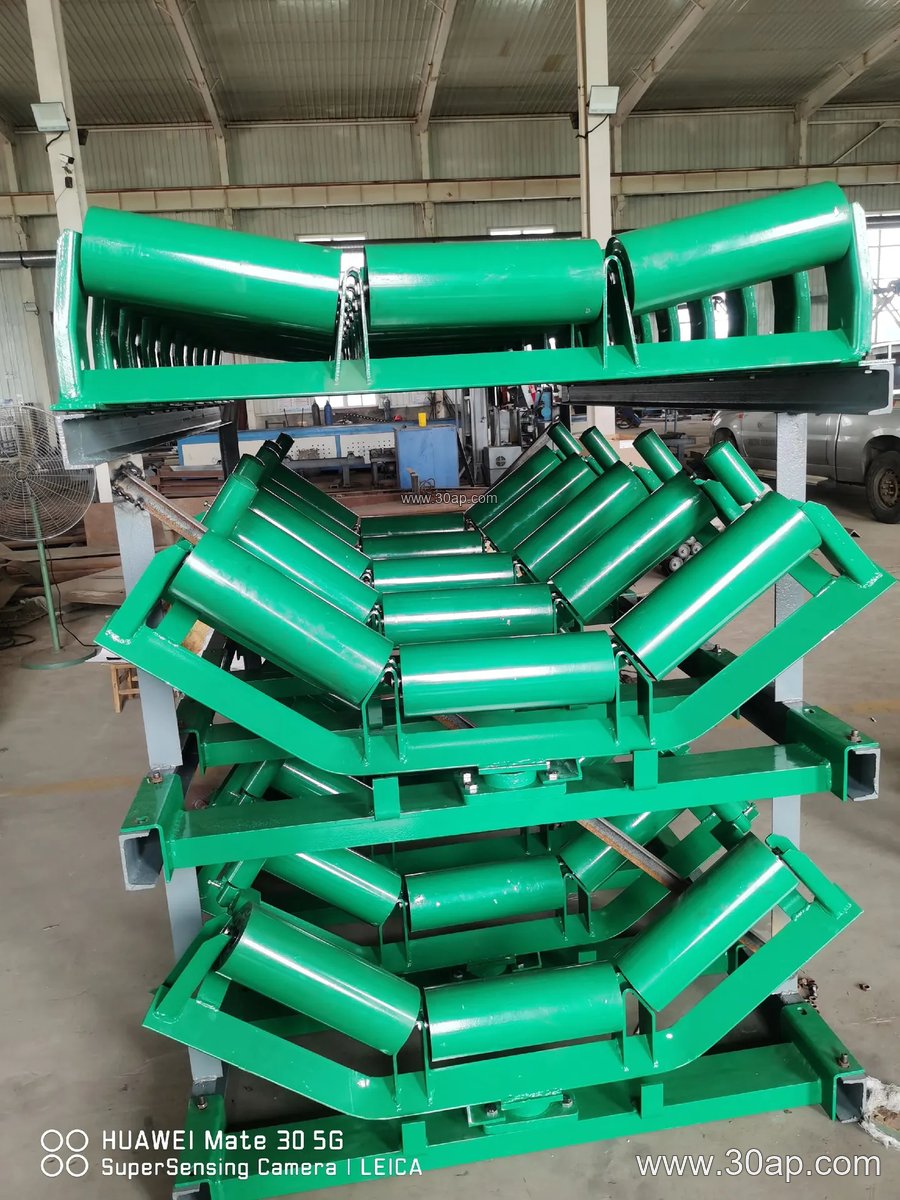
- Troughing frames that support the belt in a trough shape on the carrying side
- Transition frames near pulleys, where the belt changes from flat to troughed
- Return frames, including flat return and V-return designs, that support the empty belt
- Impact frames with buffer rollers under loading points
- Self-aligning and forward-leaning frames used for belt training
- Suspended and adjustable frames for special layouts
An adjustable frame allows the trough angle to be set among common values such as 20, 30, 35, or 45 degrees. Forward-leaning frames usually use a small tilt of about 1.5 to 2 degrees to help center the belt.
Matching Belt Width, Trough Angle, and Roller Diameter
Frame dimensions follow the belt width, the required trough angle, and the roller diameter. Common belt widths include B500, B650, B800, B1000, B1200, B1400, B1600, B1800, B2000, B2200. Roller diameters such as Ø89, Ø108, Ø133, Ø159, and Ø194 are selected according to load and belt speed.
There is no single fixed combination. A B800 belt may run with a 35 degree frame and Ø108 rollers in one plant, while a B1200 conveyor in a cement plant might use a 45 degree frame with Ø133 rollers. Mounting hole spacing and beam length change with belt width and trough angle, so they are determined by design rather than treated as universal values.
| Belt width | Common trough angle | Typical roller diameter | Typical frame material |
|---|---|---|---|
| B500 | 20–30 degrees | Ø89 | Angle steel |
| B650 | 30 degrees | Ø89–Ø108 | Angle or channel steel |
| B800 | 35 degrees | Ø108 | Channel steel |
| B1000 | 35–45 degrees | Ø108–Ø133 | Channel steel or folded plate |
| B1200 | 35–45 degrees | Ø133 | Folded steel plate |
| B1400 | 35–45 degrees | Ø133–Ø159 | Folded steel plate |
| B1600 | 35–45 degrees | Ø159 | Heavy channel or folded plate |
| B1800–B2200 | 35–45 degrees | Ø159–Ø194 | Heavy fabricated steel |
These figures are reference examples, not fixed pairings. Actual selection depends on belt tension, material density, idler spacing, and the conveyor profile.
Where These Frames Are Used
Idler frames appear wherever a conveyor belt needs support. In a sand and gravel line they sit under the loading and transfer points; in a power plant coal handling system they carry the belt through long galleries; in a steel plant sinter line they handle hot and abrasive material; in a fertilizer or grain silo facility they must resist corrosion and keep material from accumulating on the frame.
The frame works together with the conveyor belt, the idler roller, and occasionally a conveyor bracket or pulley nearby. Good alignment across all of these parts is what keeps the line running smoothly.
What Buyers Should Check
Before ordering, confirm the belt width, required trough angle, roller diameter, and mounting dimensions. Ask whether the frame is fixed or adjustable, and whether it is for the carrying side or return side. Check the steel grade, finish, and weld quality, and confirm that the frame suits the local environment. Finally, verify that replacement frames match the existing stringer hole pattern so installation does not require modification.