What an Impact Idler Bracket Does at the Loading Zone
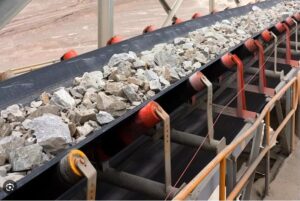
An impact idler bracket is the support frame that holds the cushioning rollers directly under the point where material drops onto a conveyor belt. Its job is not simply to keep a roller in place. It absorbs and spreads the repeated shock of falling lumps, keeps the roller alignment stable, and helps the belt stay on its intended path during one of the most punishing parts of the conveying line.
Because the load arrives vertically, the bracket and its rollers must resist both impact and vibration. A well-built bracket reduces the chance that the belt surface, the idler roller, or the frame itself will be damaged by continuous heavy charging.
How the Bracket Is Built
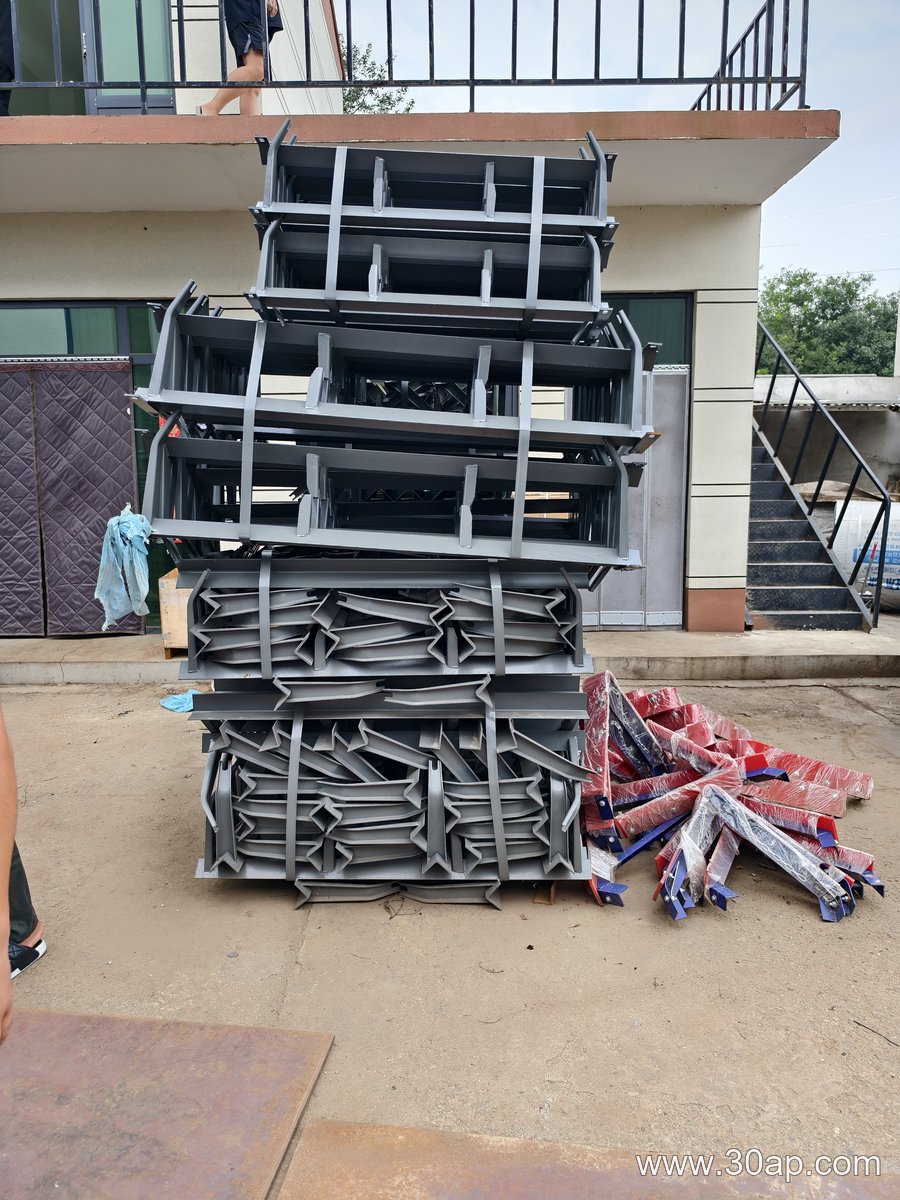
Most impact idler brackets are fabricated from angle steel, channel steel, or folded steel plate. The choice depends on the belt width, the expected impact energy, and the mounting arrangement of the conveyor. The bracket usually carries a set of cushioned rollers arranged in a trough shape, and it may be fixed or adjustable.
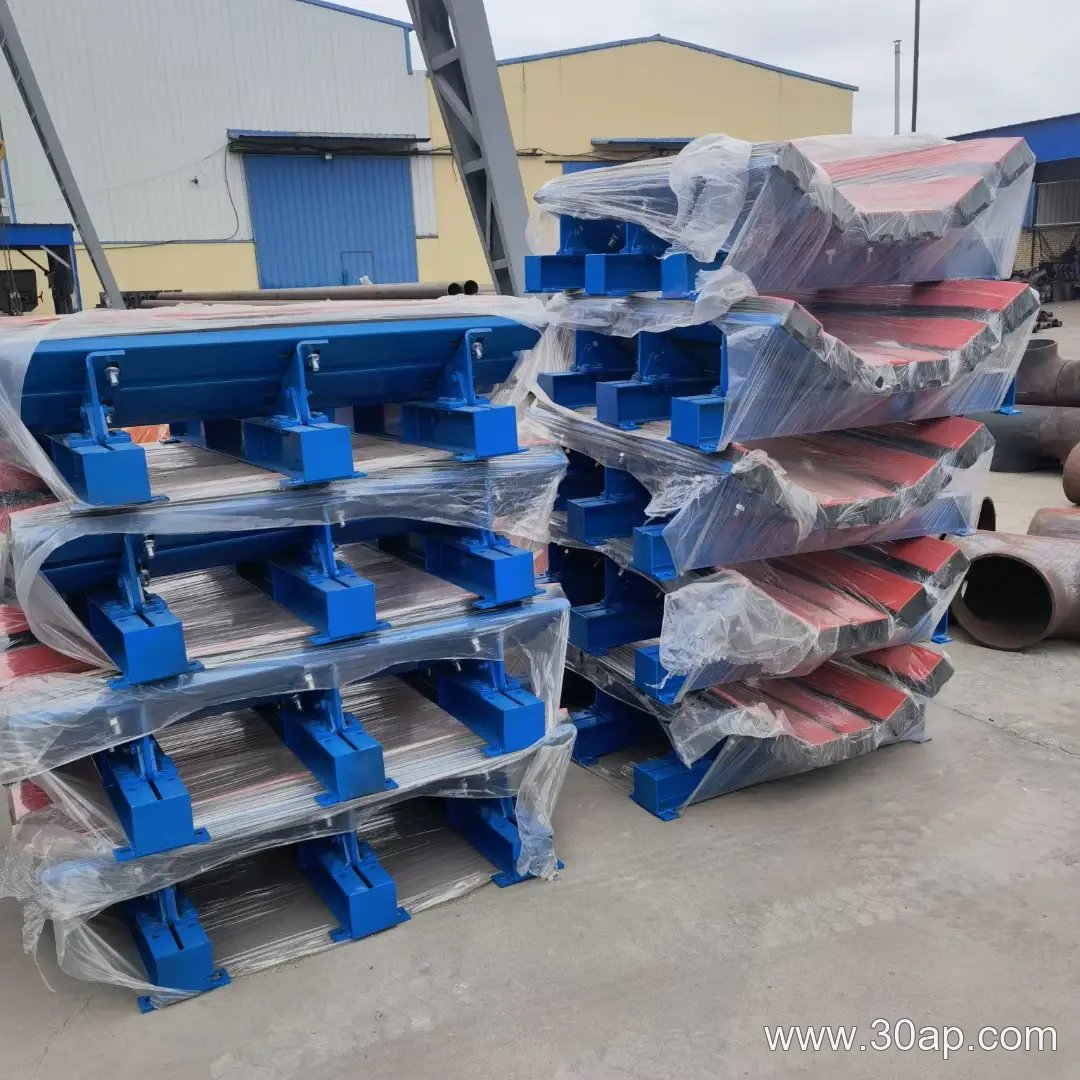
A common arrangement follows the trough angle of the carrying side, such as 20, 30, 35, or 45 degrees. Adjustable versions allow the same bracket to be set at different trough angles, which is useful when a conveyor is being commissioned or when material characteristics change. Roller diameters such as Ø89, Ø108, Ø133, Ø159, and Ø194 are used across different belt widths, but the bracket should be selected as part of a complete roller and frame design rather than by a single dimension.
Mounting and Alignment Details
The bracket fixes to the conveyor frame through mounting holes, and the hole spacing and beam length usually change with belt width and trough angle. For this reason, an impact idler bracket is not a universal part that can be swapped between unrelated conveyors without checking the frame dimensions.
Where Impact Idler Brackets Are Used
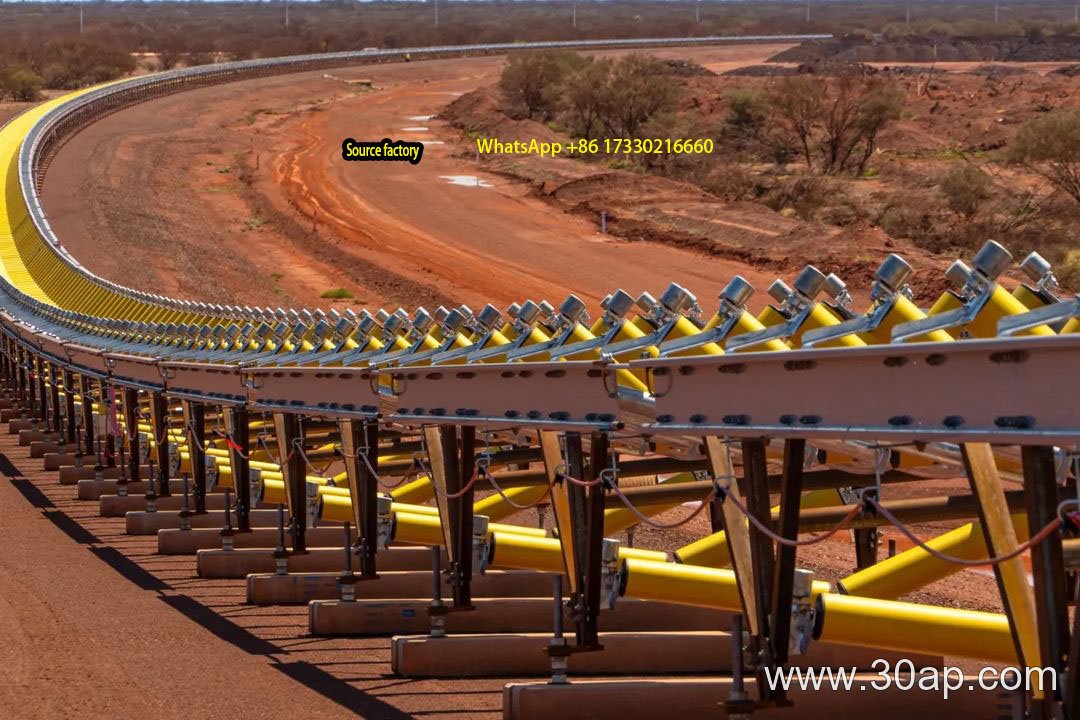
These brackets are found wherever the belt receives a direct fall of material. In a limestone quarry, they sit below the crusher discharge. In a coal preparation plant, they support the belt under the raw coal feed. Other common locations include sand and gravel lines, crushing and screening plants, and transfer towers where one conveyor discharges onto another.
The loading point is often the first place where a conveyor belt shows wear. Using a dedicated impact bracket there is a practical way to protect the belt and the surrounding structure. It also helps the conveyor pulley and the rest of the line run more smoothly, because a belt that is stable at the loading point is less likely to wander downstream.
Choosing the Right Bracket for the Duty
Several factors decide which impact idler bracket suits a project:
- Belt width, such as B650, B800, B1000, or B1200, and the corresponding frame dimensions.
- Roller diameter and the shaft arrangement used by the selected idler roller.
- Trough angle and whether a fixed or adjustable bracket is preferred.
- Material lump size, drop height, and the expected impact load.
- Mounting method and the available space under the loading chute.
A wider belt does not automatically mean a larger roller diameter, and a given belt width does not lock the design into one trough angle. The correct combination is decided by the conveyor design, the material, and the loading conditions.
Fixed or Adjustable
A fixed bracket is simple and rigid, which suits a stable operating condition. An adjustable bracket lets maintenance staff fine-tune the trough angle or roller position. Both types can be used at a loading point, but the adjustable version is often chosen when the conveyor handles more than one material or when the loading arrangement may be modified later.
What Buyers Should Check
Before ordering, confirm the belt width, the roller diameter, the trough angle, and the mounting hole pattern. Ask how the bracket is intended to work with the selected idler roller and whether the frame can accept the required beam length. It is also worth checking that the bracket material and finish suit the environment, especially in dusty or wet plants.
An impact idler bracket is a small part of a conveyor system, but it sits at the point where damage begins. Matching it correctly to the belt, the roller, and the loading conditions is what keeps the conveyor bracket, the belt, and the entire loading zone working reliably.