What a Trough Idler Bracket Does
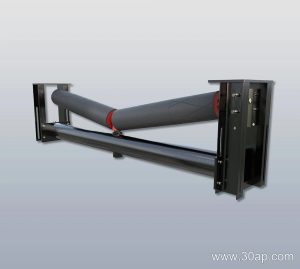
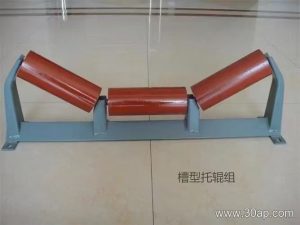
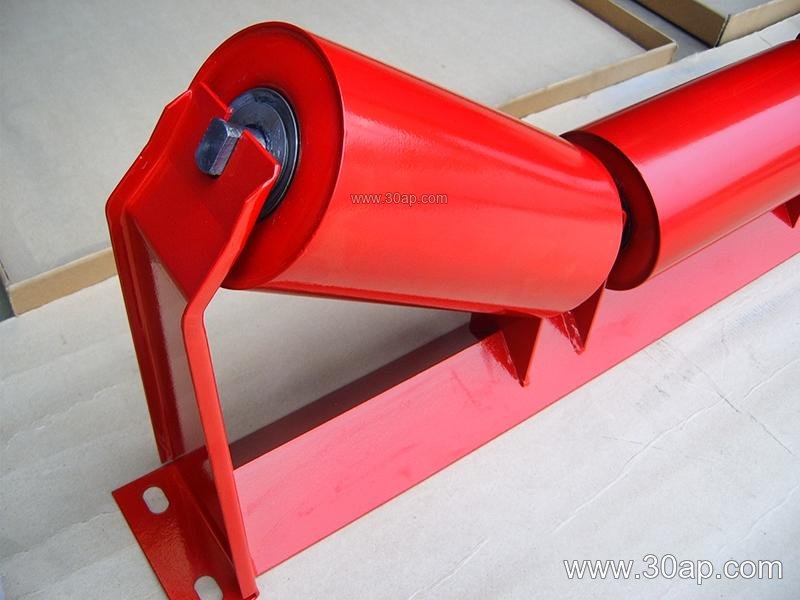
A trough idler bracket is the structural support that holds the carrying idlers in a troughed arrangement along the load side of a belt conveyor. In many plants it is simply called a conveyor bracket, but its job is specific: it positions the idler rollers so the conveyor belt forms a stable trough that keeps bulk material centered during transport. Whether the conveyor is moving coal at a power plant, crushed limestone at a quarry, or clinker in a cement line, the bracket is part of the frame that keeps the belt profile consistent from one section to the next.
It should not be confused with a conveyor pulley. A drive pulley, tail pulley, and bend pulley each have their own function at the ends or bends of the conveyor, and they are not interchangeable with a trough bracket. The bracket works together with the idler rollers and the conveyor belt, not in place of the pulleys.
Construction and Common Materials
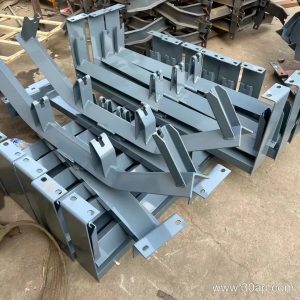
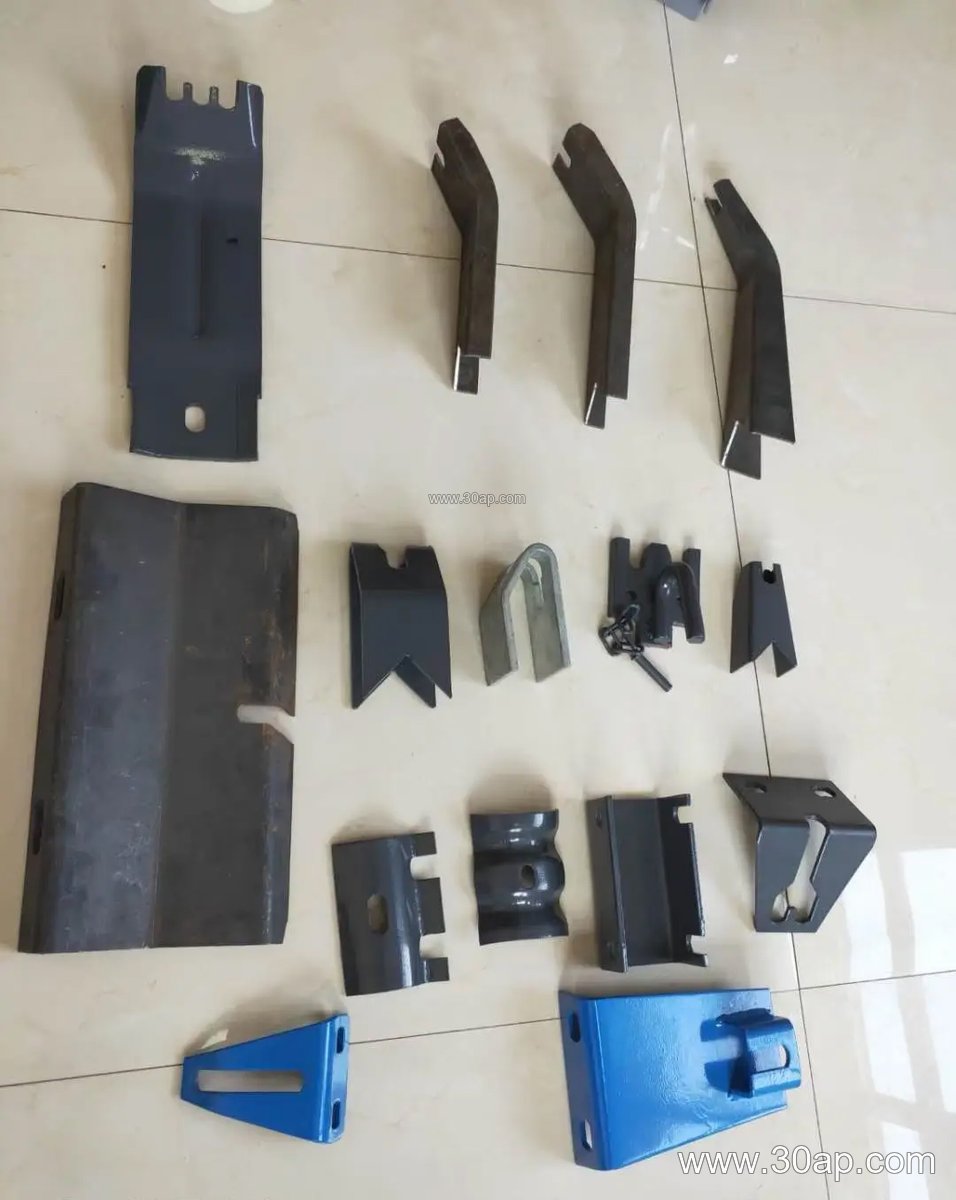
Most trough idler brackets are fabricated from angle steel, channel steel, or folded steel plate. The bracket typically includes mounting holes or slots for the idler shafts and may be fixed to the conveyor frame by bolts or welding. A well-built bracket keeps the idler axes aligned so the belt does not drift or pinch. The surface is often painted or coated for moderate corrosion protection, though the exact finish depends on the supplier and the environment.
Brackets vary in geometry. A fixed trough bracket sets one trough angle, while an adjustable bracket can be set to different angles during installation. Common trough angles include 20 degrees, 30 degrees, 35 degrees, and 45 degrees. Adjustable designs are useful when the same conveyor frame may handle different materials or when fine tuning is needed after the belt is loaded.
Where It Fits in a Conveyor Line
The trough idler bracket belongs to the carrying side of the conveyor. It is commonly seen in mining, coal preparation, cement plants, power station coal handling, sand and gravel lines, and crushing and screening circuits. In these settings, the bracket supports the idler roller that carries the loaded belt. Return brackets and V-return brackets appear on the return side, and transition brackets are used near the head or tail where the belt changes shape. These are related parts, but they are not the same as a trough bracket and should be selected for their own positions.
Because the trough bracket controls the belt cross-section, it affects material spillage, belt tracking, and idler life. A bracket that is misaligned or worn can cause the belt to run off center, which increases edge wear and may damage the idler roller bearings.
Typical Reference Data
The table below lists common reference combinations for trough idler brackets. These values are examples only and should be confirmed against the actual conveyor design, belt width, and idler diameter.
| Belt Width | Trough Angle | Idler Diameter | Typical Bracket Type |
|---|---|---|---|
| B500 | 20 degrees | Ø89 | Fixed trough bracket |
| B650 | 30 degrees | Ø89 | Fixed or adjustable trough bracket |
| B800 | 35 degrees | Ø108 | Adjustable trough bracket |
| B1000 | 35 degrees | Ø108 | Adjustable trough bracket |
| B1200 | 45 degrees | Ø133 | Heavy-duty trough bracket |
| B1400 | 45 degrees | Ø159 | Heavy-duty trough bracket |
| B1600 | 45 degrees | Ø159 or Ø194 | Heavy-duty trough bracket |
Installation hole spacing and crossbeam length usually change with belt width and trough angle, so they should not be treated as fixed numbers. A bracket that fits one belt width may not fit another without adjustment.
How to Choose a Trough Idler Bracket
- Match the belt width and idler diameter. A B800 belt with Ø108 idlers needs a bracket sized for that combination. A B1200 belt with Ø133 idlers needs a different bracket.
- Decide between fixed and adjustable. Fixed brackets are simple and rigid. Adjustable brackets allow the trough angle to be changed between 20, 30, 35, or 45 degrees as operating conditions require.
- Check the material and environment. For dusty or slightly corrosive conditions in a coal plant or cement plant, a coated or galvanized option may last longer.
- Confirm mounting dimensions. Hole spacing, frame width, and bolt size should match the existing conveyor frame. Do not assume that a bracket for one belt width will fit another.
- Consider the transition zone. Near the tail pulley, a transition bracket may be needed to support the belt as it opens from the pulley into the trough. This is a different part from a standard trough bracket.
Maintenance Notes
Inspect trough idler brackets during routine belt conveyor maintenance. Look for loose bolts, cracks, bent steel, or elongated mounting holes. A bracket that has shifted can change the trough angle and cause the belt to mistrack. Replacing a worn bracket before it damages the idler roller or the conveyor belt is usually less costly than repairing a torn belt or a seized roller.
For a reliable trough profile, the bracket, the idler roller, and the conveyor belt need to work as a set. The bracket is a small part, but it holds the geometry that keeps the whole carrying side running smoothly.