What a Port Conveyor Pulley Does
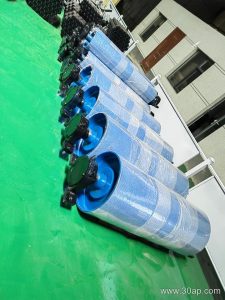
In a seaport bulk terminal, a port conveyor pulley is the rotating drum that drives, redirects, or tensions the conveyor belt. It is often called a conveyor drum or belt pulley, but the term covers several distinct roles. A drive pulley transmits power from the gearbox to the belt. A tail pulley sits at the loading end and helps keep the belt tracking. A bend pulley changes the belt direction without driving it. These are not interchangeable names, and a buyer should specify which position the pulley will occupy before selecting dimensions.
The working environment is harsh: salt air, abrasive dust from iron ore or coal, and continuous operation. A port conveyor pulley must therefore resist corrosion, maintain grip, and handle high tension without premature fatigue.
How It Is Built
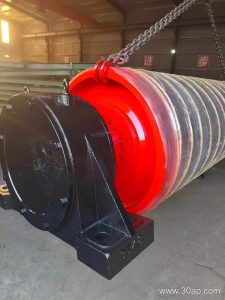
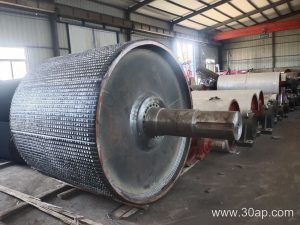
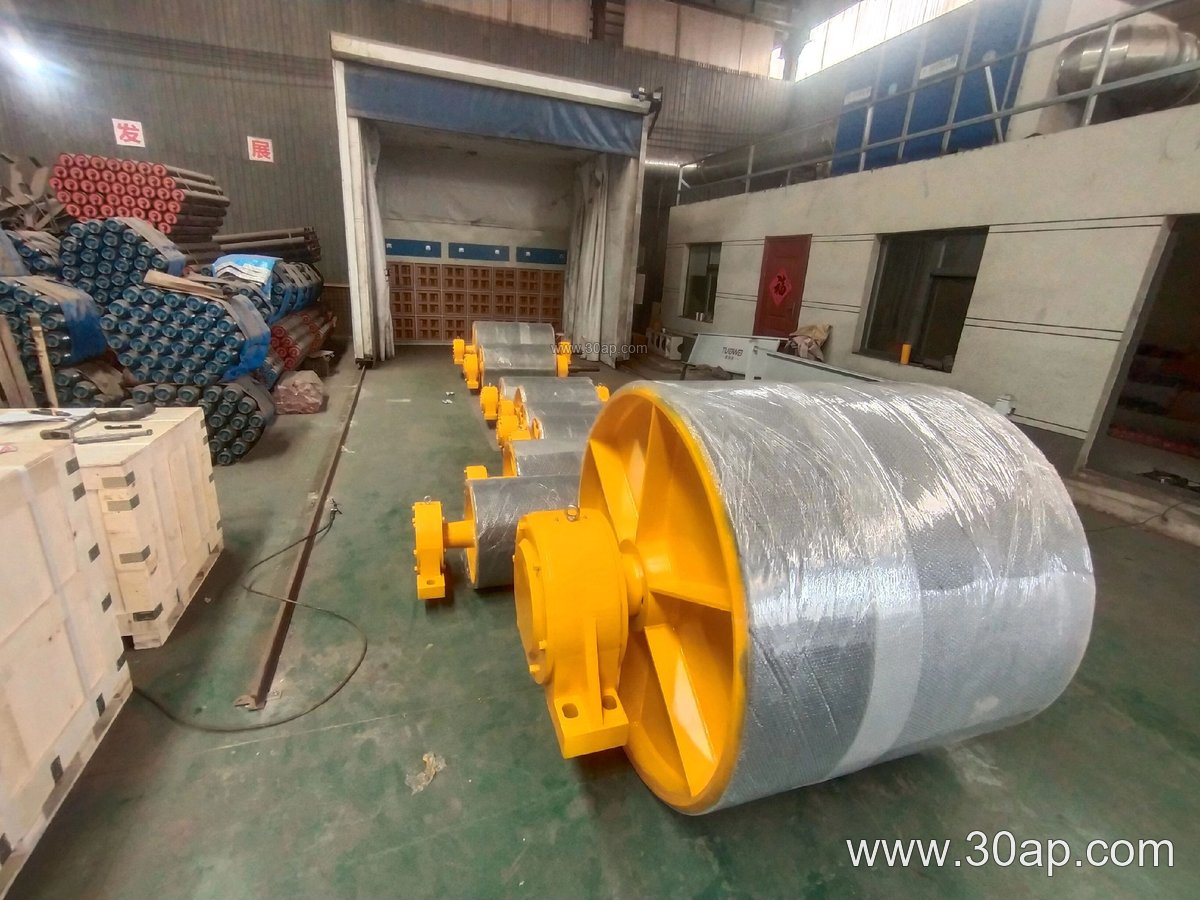
The main components are the shell, the shaft, the hubs, and the locking assembly. The shell is usually a seamless steel tube or rolled plate, machined at both ends for concentricity. The shaft is sized by torque and bending load, not by belt width alone. Common shaft diameters include Ø80, Ø100, Ø120, Ø140, Ø160, and Ø200 mm, but the final value comes from the drive calculation.
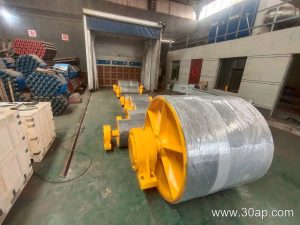
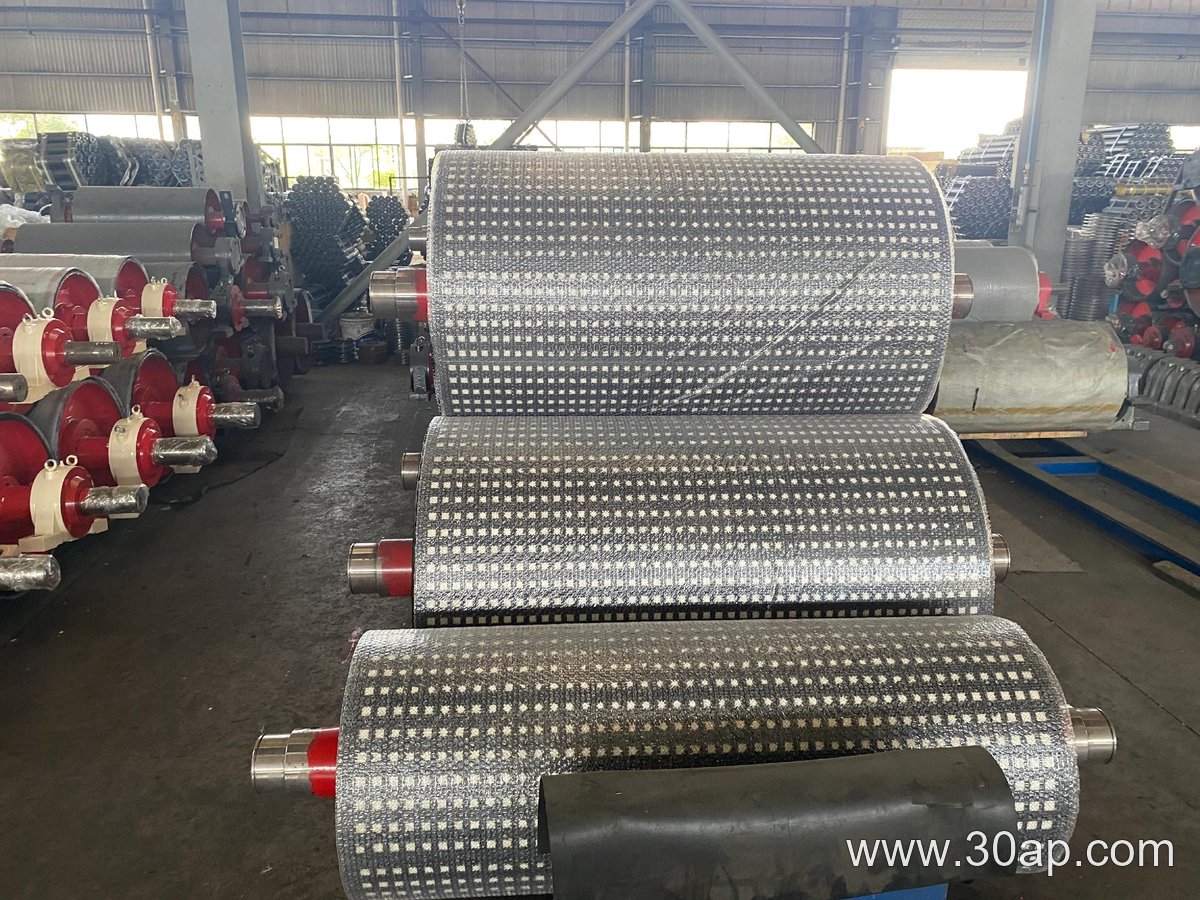
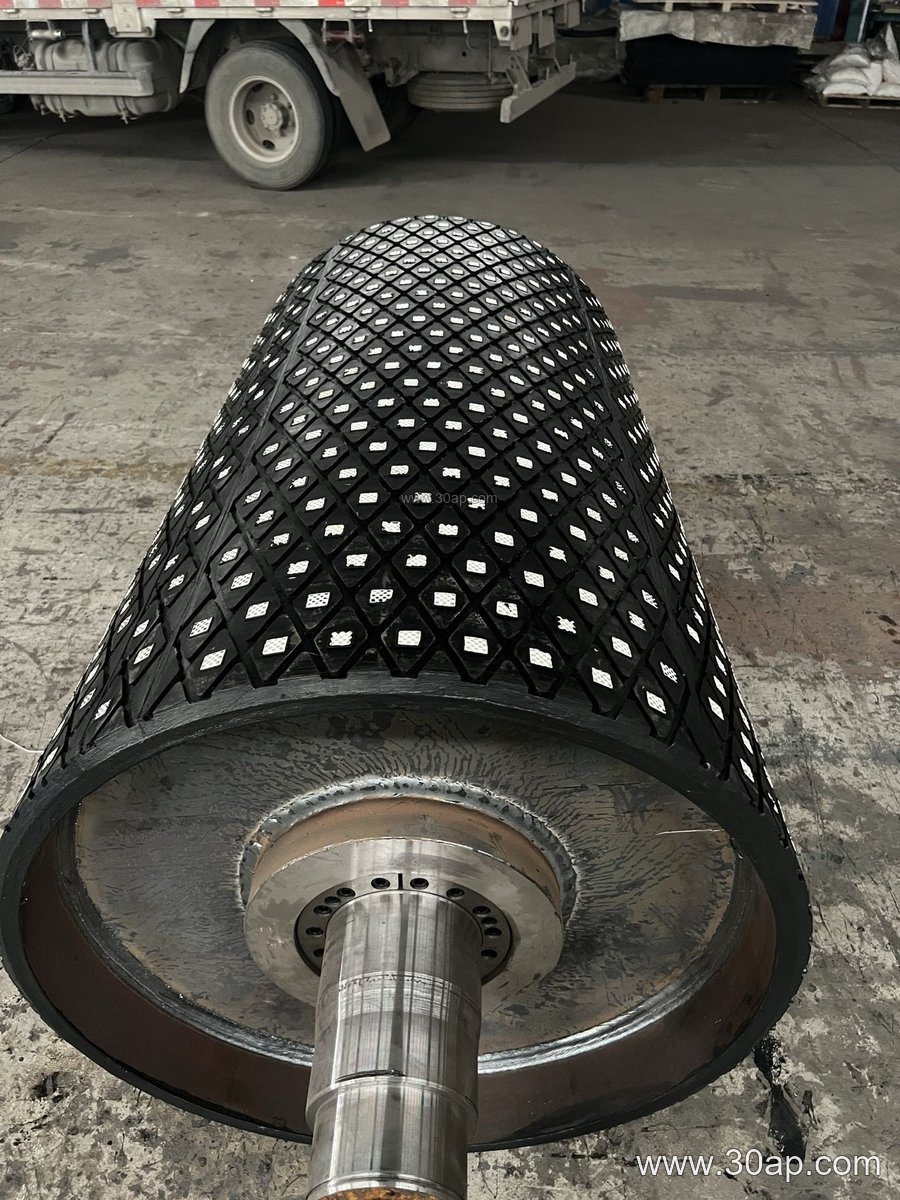
Surface treatment affects grip and wear life. Options include plain finish, cold-bonded rubber, hot-spliced rubber, diamond grooving, herringbone grooving, and ceramic lagging. Lagging thickness is often 8, 10, 12, 15, or 20 mm. In a coal terminal or a limestone quarry, diamond rubber lagging is a frequent choice because it sheds water and fines. Ceramic lagging may suit wet, slippery conditions, though it costs more and requires careful bonding.
Where It Fits in the System
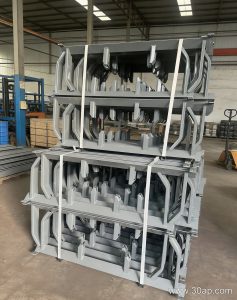
A port conveyor pulley works together with the conveyor belt, idler rollers, and conveyor brackets. In a shiploader or a stacker-reclaimer, the drive pulley is usually at the head end, while the tail pulley is at the counterweight or take-up. A bend pulley may appear where the belt must wrap around a drive to increase contact angle. In a cement plant or a power station coal yard, the same logic applies, but dust and temperature may call for different lagging.
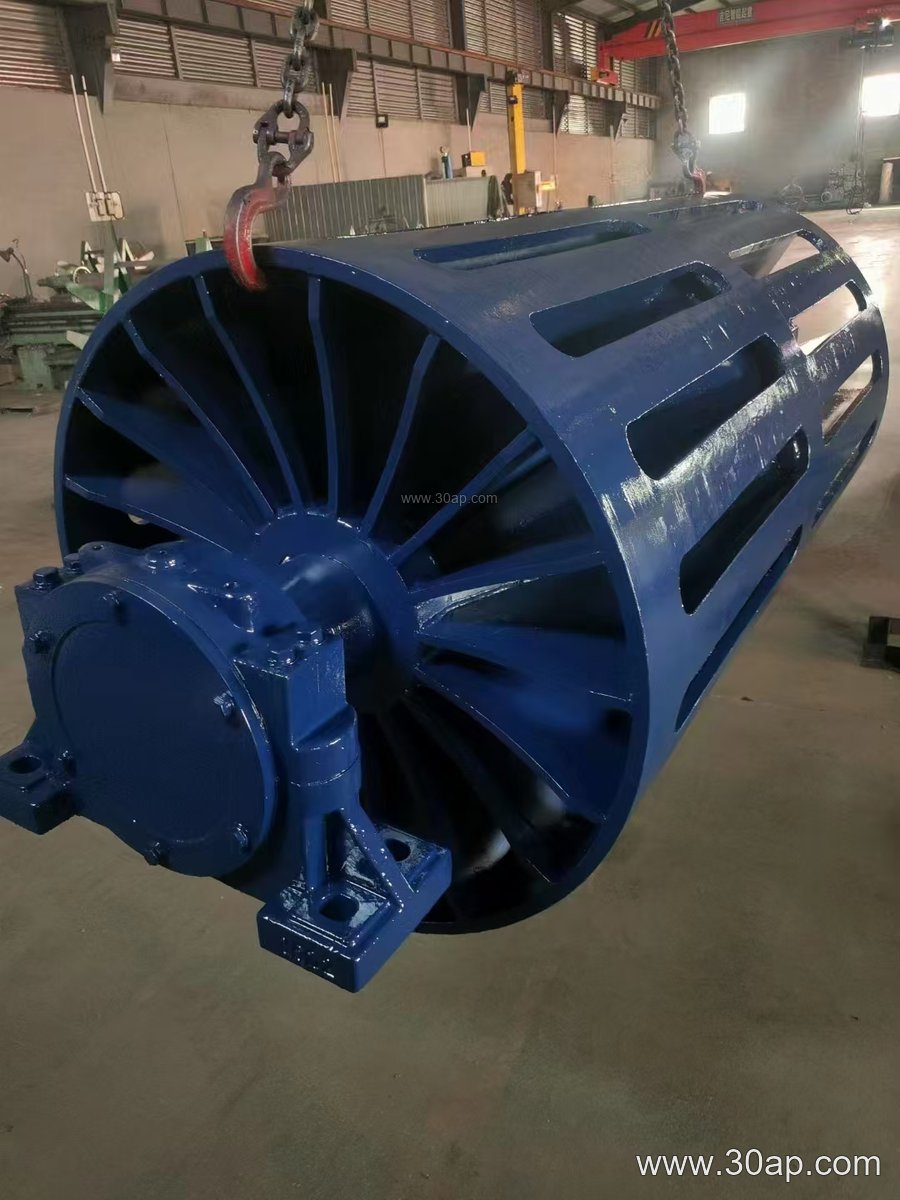
Typical belt widths range from B400 to B2400. Shell face width is usually slightly wider than the belt, for example B800 with about 950 mm face, B1200 with about 1400 mm, or B1400 with about 1600 mm. Diameter choices include Ø200, Ø315, Ø400, Ø500, Ø630, Ø800, Ø1000, Ø1250, and Ø1600 mm. A common combination such as B1200 × Ø1000 mm is not a rule; the same belt width can pair with different diameters depending on speed, tension, and wrap angle.
Key Selection Points
- Position: drive, tail, bend, take-up, or snub. Each has different load and grip requirements.
- Belt width and face width: match the shell face to the belt, leaving a small margin.
- Diameter and shaft: calculate from torque, radial load, and bearing life. Do not assume a fixed shaft size from belt width.
- Lagging: choose plain, rubber, diamond, herringbone, or ceramic based on material and moisture.
- Balance and machining: dynamic balancing matters at higher speeds to reduce vibration.
- Corrosion protection: coastal port air demands proper painting or stainless options for exposed parts.
Maintenance and Buyer Checks
Inspect lagging for wear, glazing, or missing grooves. Check locking assemblies for tightness and look for belt misalignment that may indicate a worn pulley face or a failing bearing. Keep spare pulleys for critical drives, especially in a continuous ship unloader or a coal stockyard.
When requesting a quote, provide the belt width, the pulley position, the required diameter, the shaft size, the lagging type and thickness, and the bearing housing style. A supplier who asks for these details is more likely to deliver a port conveyor pulley that fits the duty. Avoid treating any single size as universal; a quarry, a fertilizer plant, and a port terminal may all use the same product name but need different designs.