What a Rubber Lagged Pulley Does on a Conveyor
A belt conveyor rubber lagged pulley is a conveyor pulley whose cylindrical shell is covered with a rubber layer. That rubber surface, often called lagging, raises the friction between the pulley and the conveyor belt. Without enough friction, a drive pulley can slip when the belt is wet, dusty, or heavily loaded. In coal mines, cement plants, and aggregate yards, a lagged pulley helps the belt start smoothly and keeps it tracking better through the head, tail, and bend sections.
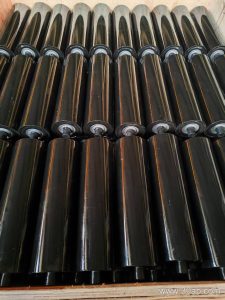
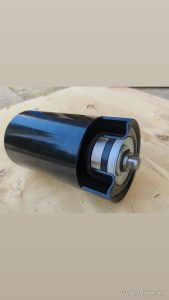
It is not the same as an idler roller. Idler rollers support the belt along the carrying side, while a conveyor pulley turns the belt at the ends or redirects it. A tail pulley, a bend pulley, and a drive pulley each do different jobs, so they cannot be swapped without checking the belt path and tension.
How the Rubber Layer Is Built
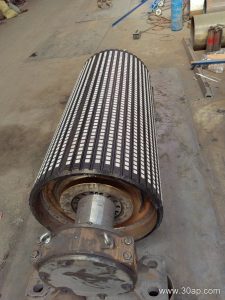
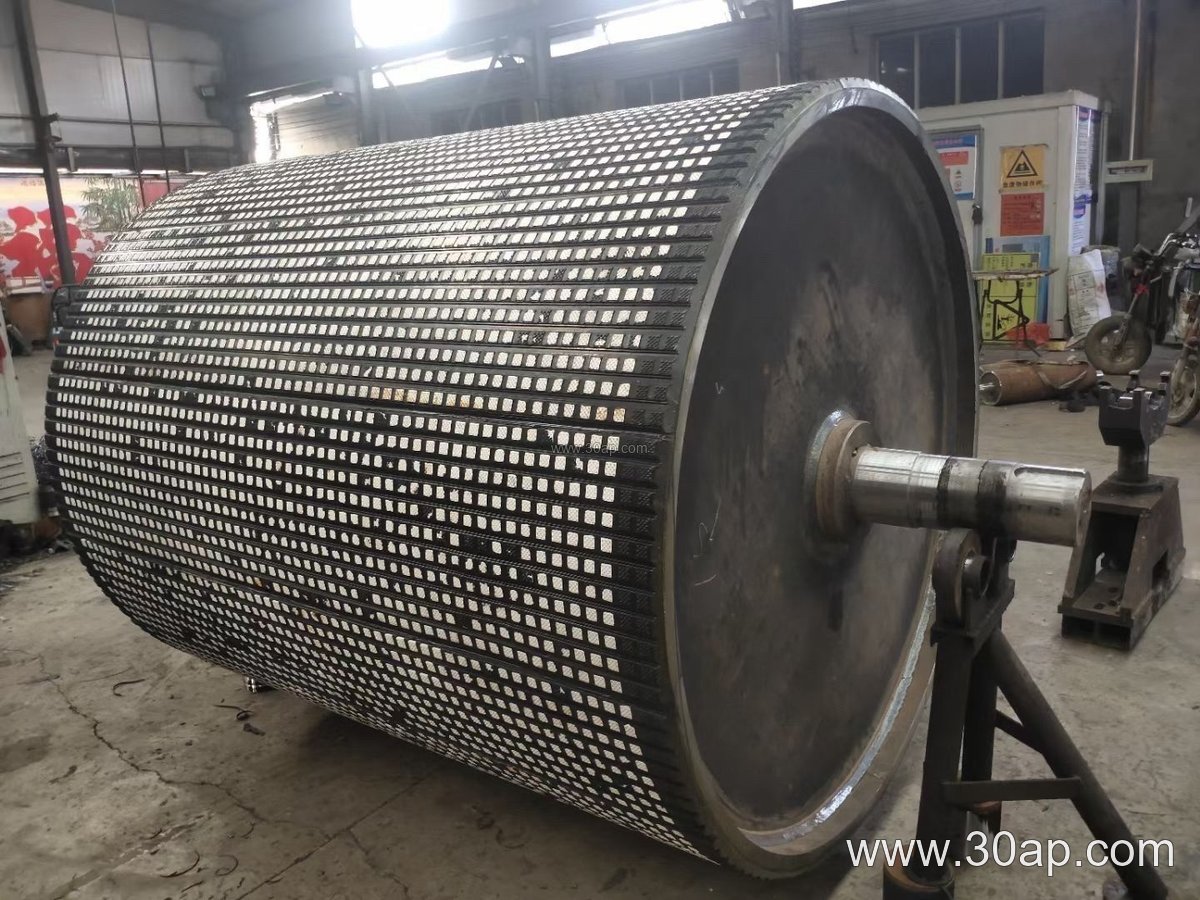
The lagging is bonded to a steel shell. Common surface forms include plain rubber, diamond groove, herringbone, and ceramic-lagged rubber. Each one suits a different material and moisture level. For example, diamond or herringbone grooves help shed water and fine dust in a tunnel or a port bulk terminal. Plain rubber is often chosen where the belt is clean and the load is steady.
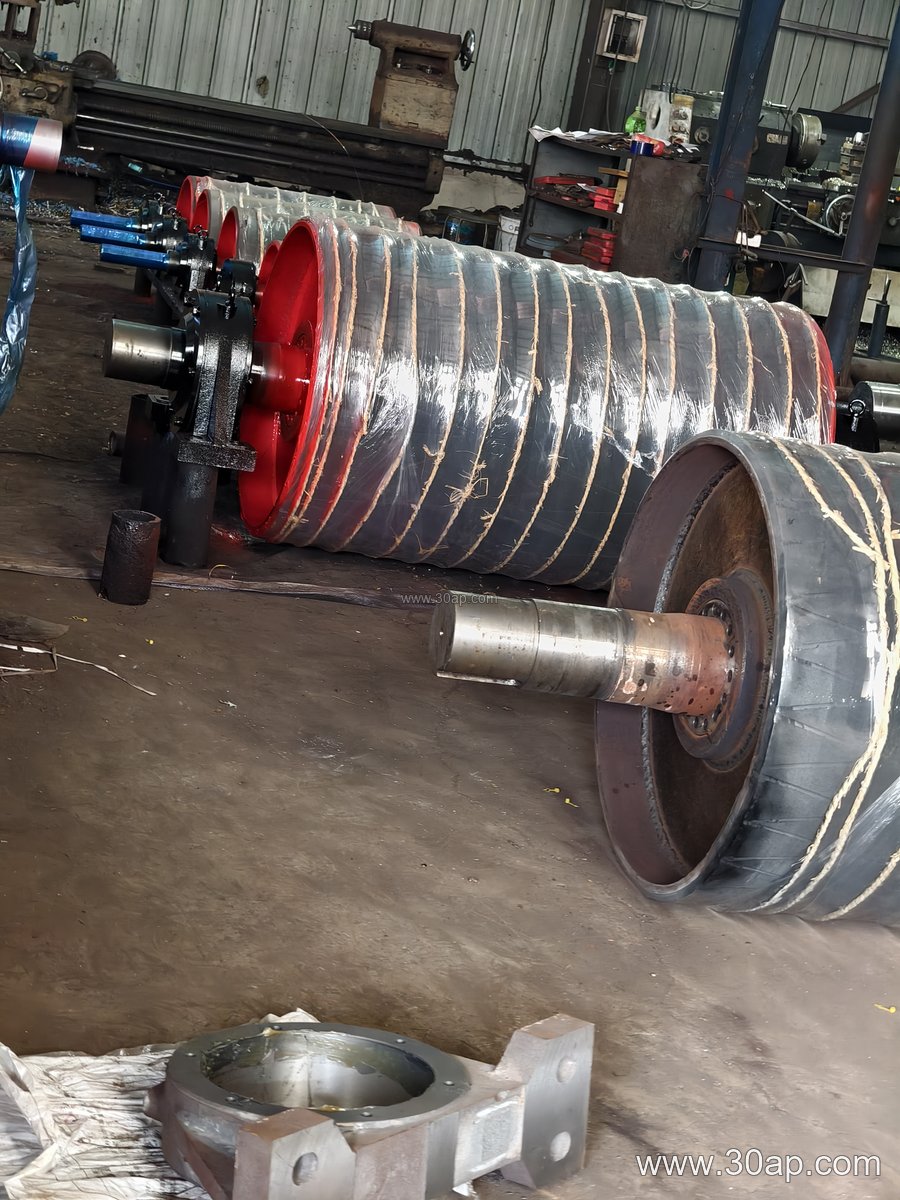
Lagging thickness is commonly 8, 10, 12, 15, or 20 mm. The right choice depends on the belt tension, the pulley diameter, and how much wear the site produces. A thicker layer is not automatically better; it can add weight and change the pulley balance if it is not fitted correctly.
Common Types and Where They Fit
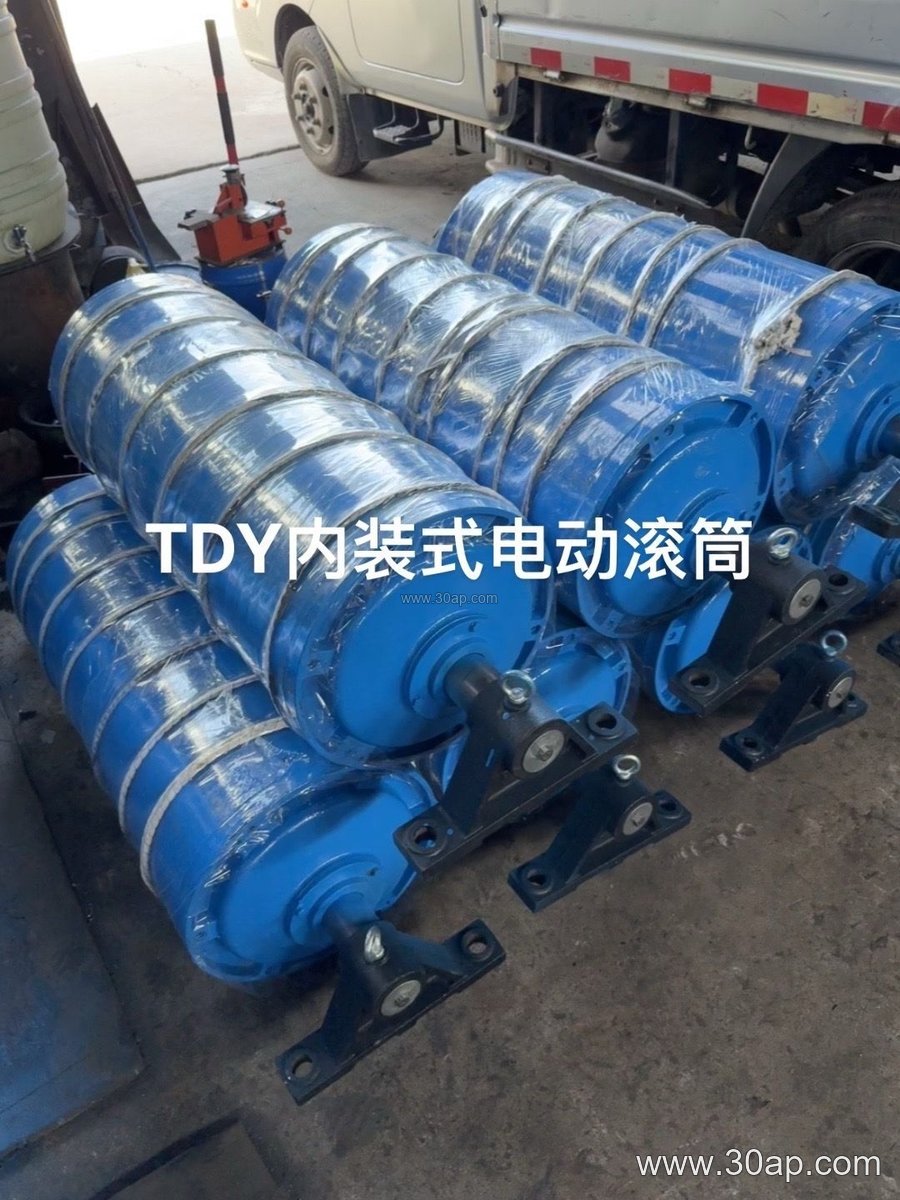
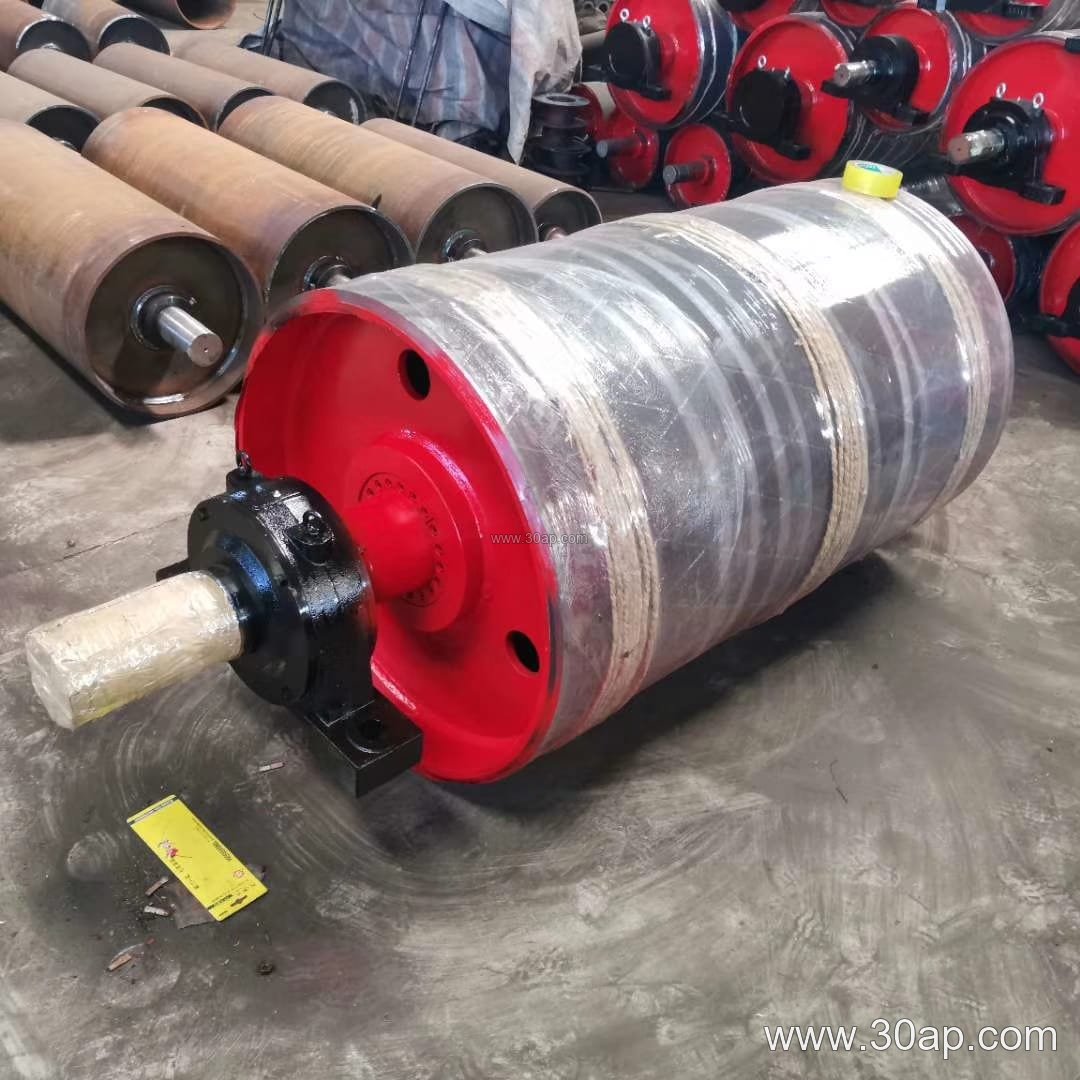
Rubber lagging can be applied to several pulley positions. A drive or head pulley needs strong grip to pull the loaded belt. A tail pulley may be lagged to reduce slip at the return end. A bend pulley or a take-up pulley may use a thinner rubber cover to protect the belt and improve tracking. An electric drum pulley is a different design because the motor sits inside the shell; it is mentioned here only as a comparison, not as a replacement for a standard lagged pulley.
In a sand and gravel line, a B800 x Ø500 lagged pulley often works with a 600 mm face width. In a cement plant, a B1200 x Ø1000 drive pulley with 12 mm diamond lagging is a common reference point. These are examples, not fixed rules. A B1200 belt can be paired with more than one pulley diameter depending on the conveyor layout and the required torque.
Key Parameters Buyers Should Check
When choosing a belt conveyor rubber lagged pulley, the following data should be confirmed with the supplier. The table gives common reference ranges, not a universal specification.
| Item | Common reference |
|---|---|
| Belt width | B400, B500, B650, B800, B1000, B1200, B1400, B1600, B1800, B2000 |
| Pulley diameter | Ø200, Ø250, Ø315, Ø400, Ø500, Ø630, Ø800, Ø1000, Ø1250 |
| Face width | Usually wider than the belt, for example B650 about 750 mm, B1000 about 1150 mm, B1400 about 1600 mm |
| Shaft diameter | Ø50, Ø60, Ø70, Ø80, Ø90, Ø100, Ø120, Ø140, Ø160, Ø180, Ø200 |
| Lagging thickness | 8, 10, 12, 15, 20 mm |
| Surface form | Plain, diamond, herringbone, ceramic, cold-bonded rubber, hot vulcanized rubber |
Shaft diameter is set by torque and load, not by belt width alone. A larger belt does not automatically mean a larger shaft. The conveyor bracket and bearing housing must also match the shaft and the pulley position.
Selection and Maintenance Notes
- Check the belt tension and the drive power before choosing the lagging type. Slipping is often a sign that the pulley is too small or the lagging is worn.
- For wet or muddy conditions, a grooved surface usually performs better than a plain one.
- Inspect the rubber layer for cuts, glazing, or separation. A worn lagging can damage the conveyor belt and reduce output.
- Keep the pulley aligned with the conveyor bracket and the idler roller frames so the belt does not run off center.
- When replacing a tail pulley, do not use a drive pulley as a direct substitute. The load and grip requirements are different.
A rubber lagged pulley is a small part of a long conveyor, but it affects belt life, energy use, and downtime. Matching the lagging to the site conditions and the pulley position is the practical way to keep a coal, cement, or aggregate line running.