What a High Impact Resistant Idler Does
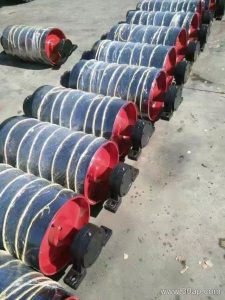
A high impact resistant idler is a heavy-duty roller assembly placed where the conveyor belt receives its roughest treatment. At transfer points, crusher discharges and loading chutes, falling rock, ore or clinker strikes the belt with force that would quickly destroy a standard roller. The impact-resistant idler, also called a buffer idler or impact roller, absorbs that energy through a resilient surface rather than passing it straight into the belt and frame.
In a limestone quarry, a cement plant or a coal handling system, this roller often sits directly under the loading zone. Its job is not to carry the belt for the whole length of the conveyor, but to protect the belt exactly where the material lands.
How the Roller Is Built
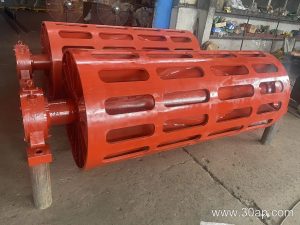
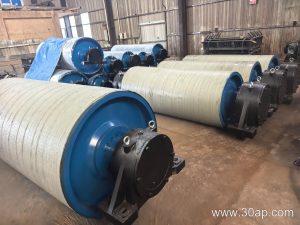
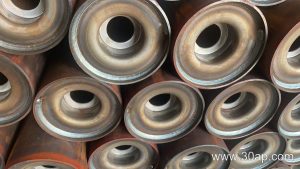
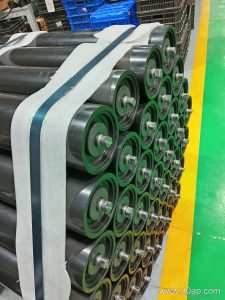
The core is usually a steel tube with machined end faces and a shaft that fits the conveyor bracket. What separates it from a standard carrying idler is the outer layer. Rubber rings, sometimes called rubber discs, are fitted along the shell to cushion each impact. Some designs use a thick rubber lagging bonded to the tube, while others rely on a stack of separate rings that can be replaced individually.
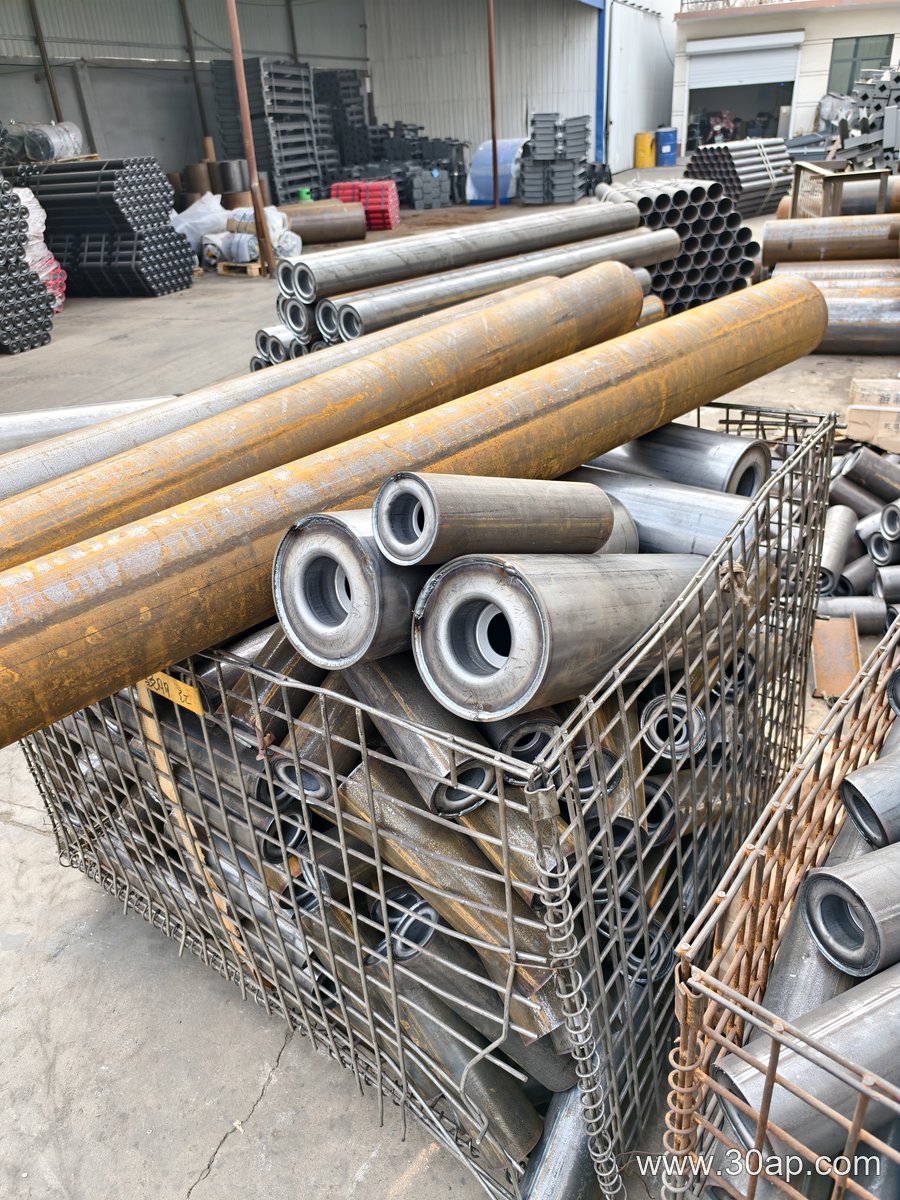
Bearings are selected to suit the load and speed. Common sizes include 6204, 6205, 6305, 6306, 6308 and 6310. The bearing is normally protected by a labyrinth or contact seal, because dust from crushed stone, coal or cement will destroy an unprotected bearing quickly. The shaft ends are machined to match the bracket, and the roller length follows the belt width and trough configuration.
Common Construction Options
- Rubber ring impact idler with replaceable discs
- Rubber lagged roller with a bonded cushion layer
- Heavy-wall steel tube for high falling energy
- Sealed bearing housing for dusty transfer points
Where It Fits on the Conveyor
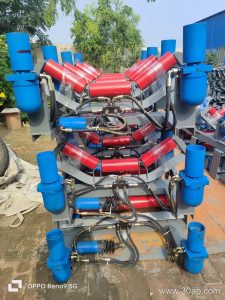
Impact rollers are most often used in the loading section, normally as part of a three-roll troughing set with 20, 30, 35 or 45 degree trough angles. The centre roll takes the direct hit, while the side rolls support the belt edges. A transition idler may be placed just before or after the impact zone to guide the belt into the trough without sharp bends.
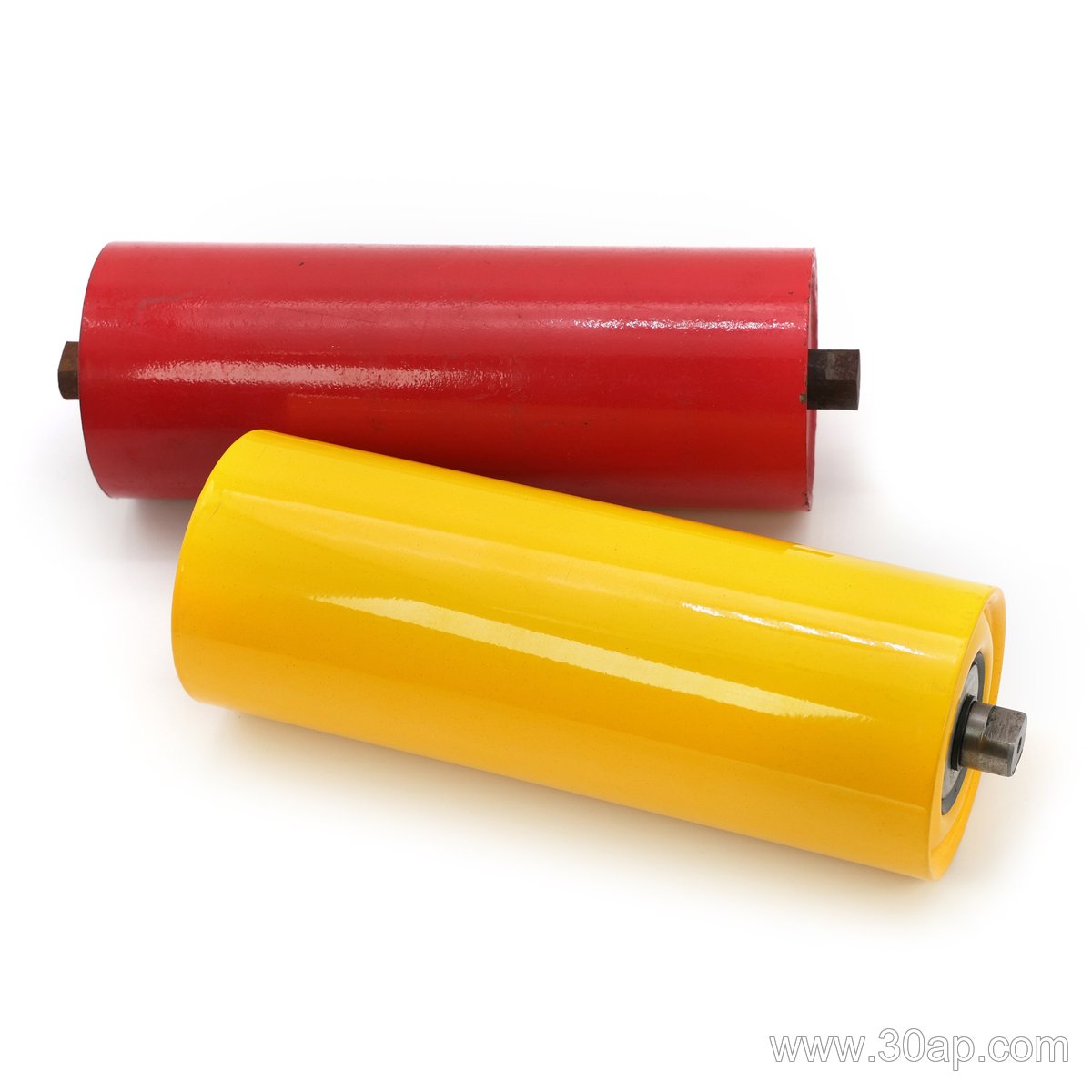
Typical industries include:
- Quarries and sand and gravel lines
- Coal preparation plants and power station coal handling
- Cement plants and clinker conveyors
- Iron ore, copper ore and sinter plants
- Port bulk terminals and tunnel muck removal
In these places the conveyor belt may carry sharp, heavy lumps, so a cushioning roller at the load point usually pays for itself by extending belt life.
Dimensions and Matching to the Belt
Roller diameter and belt width are chosen together with the conveyor design, not from a single fixed rule. Common roller diameters include 63, 76, 89, 102, 108, 127, 133, 159, 178, 194 and 219 mm. Belt widths commonly range from B400 up to B2400. The roller length depends on belt width, trough angle and the number of rolls in the set.
For a three-roll troughing set, typical roll lengths are roughly 200 mm for B500, 250 mm for B650, 315 mm for B800, 380 mm for B1000, 465 mm for B1200, 530 mm for B1400, 600 mm for B1600, 670 mm for B1800 and 750 mm for B2000. These are common examples only; side rolls and centre rolls can differ, and the final size should follow the conveyor drawing.
Reference Table
| Item | Common Range |
|---|---|
| Roller diameter | 63 to 219 mm |
| Belt width | B400 to B2400 |
| Trough angle | 20, 30, 35, 45 degrees |
| Bearing | 6204, 6205, 6305, 6306, 6308, 6310 |
| Roll surface | Steel tube, rubber rings, nylon, ceramic |
What Buyers Should Check
Before ordering, confirm the belt width, the trough angle, the roller diameter and the bracket spacing. Ask whether the roller will be used as a centre roll, a side roll or a full impact set. Check the seal type for the dust level at the transfer point, and confirm that the shaft diameter matches the existing conveyor bracket.
It also helps to compare the impact roller with a standard troughing idler. A standard idler is fine along the carrying run, but at a high drop point the cushioning design is the better choice. For the return run, a flat return idler or a V-return idler is normally used instead, since impact protection is not needed there.
Regular inspection of the rubber rings, bearing play and roller rotation will show whether the impact idler is still doing its job. Replacing worn rings early is usually simpler than replacing a damaged conveyor belt later.