What a Motor-Driven Pulley Is and Why It Matters
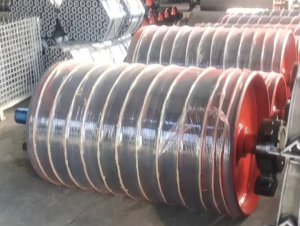
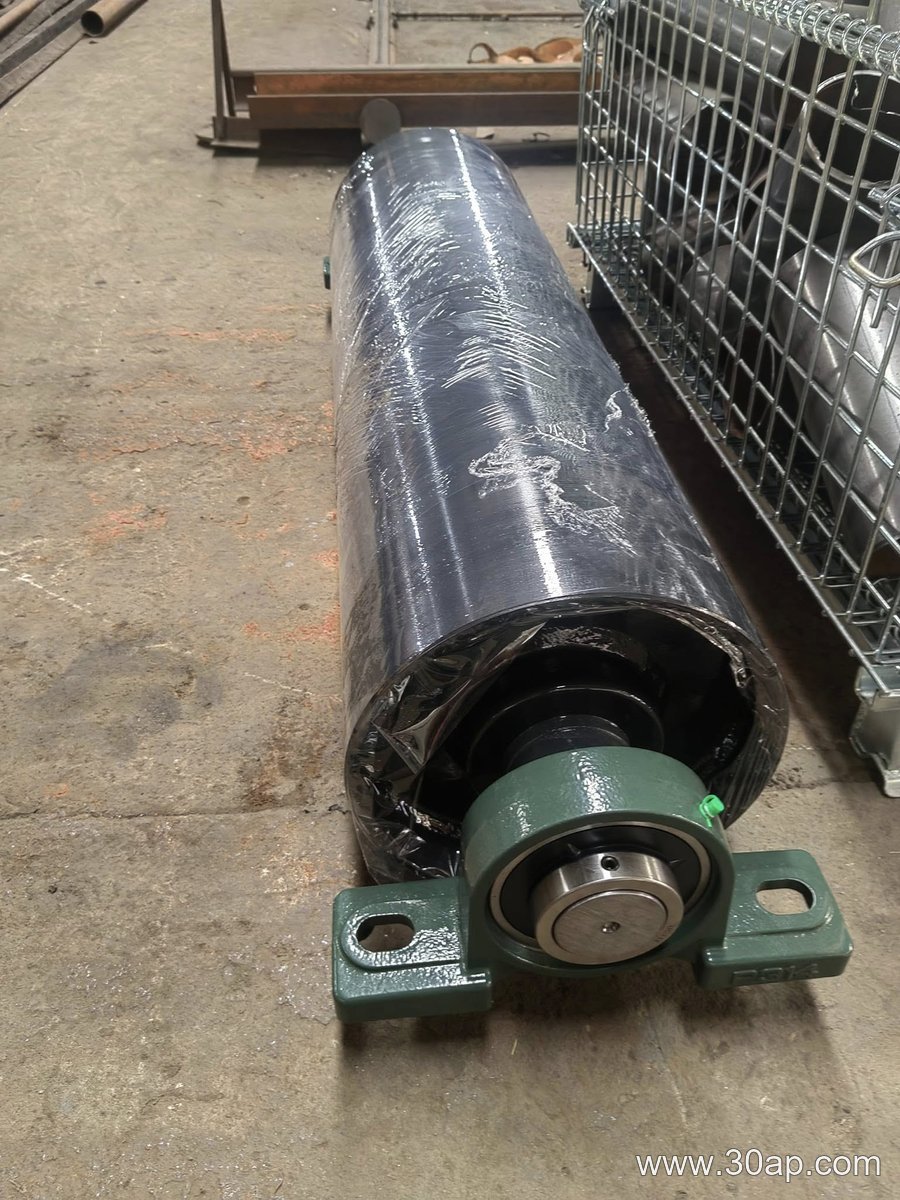
A motor-driven pulley, often called a drum motor or internal motor pulley, is a conveyor pulley with the electric motor and gearbox built inside the drum shell. Instead of mounting a separate motor and reducer outside the conveyor frame, the drive unit sits within the pulley body. This design saves floor space, reduces exposed rotating parts, and simplifies alignment. In industries such as coal preparation plants, cement clinker lines, and aggregate crushing circuits, this integrated approach can cut maintenance points and improve safety around the belt.
This component is a distinct subtype of conveyor pulley. It should not be confused with a tail pulley, bend pulley, or take-up pulley, which serve different roles in the belt path. A motor-driven pulley acts as the head or drive pulley, transmitting torque directly to the conveyor belt.
How It Is Built
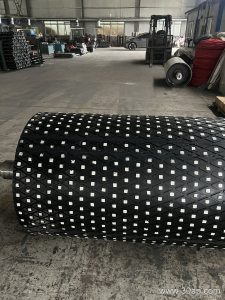
Inside the shell, you typically find an electric motor, a planetary or helical gear set, bearings, and a sealing system. The shell itself may be smooth or covered with rubber lagging. Common surface options include plain finish, cold-bonded rubber, hot vulcanized rubber, diamond grooving, herringbone pattern, and ceramic lagging. Lagging thickness often ranges from 8 mm to 20 mm, depending on grip requirements and material being conveyed.
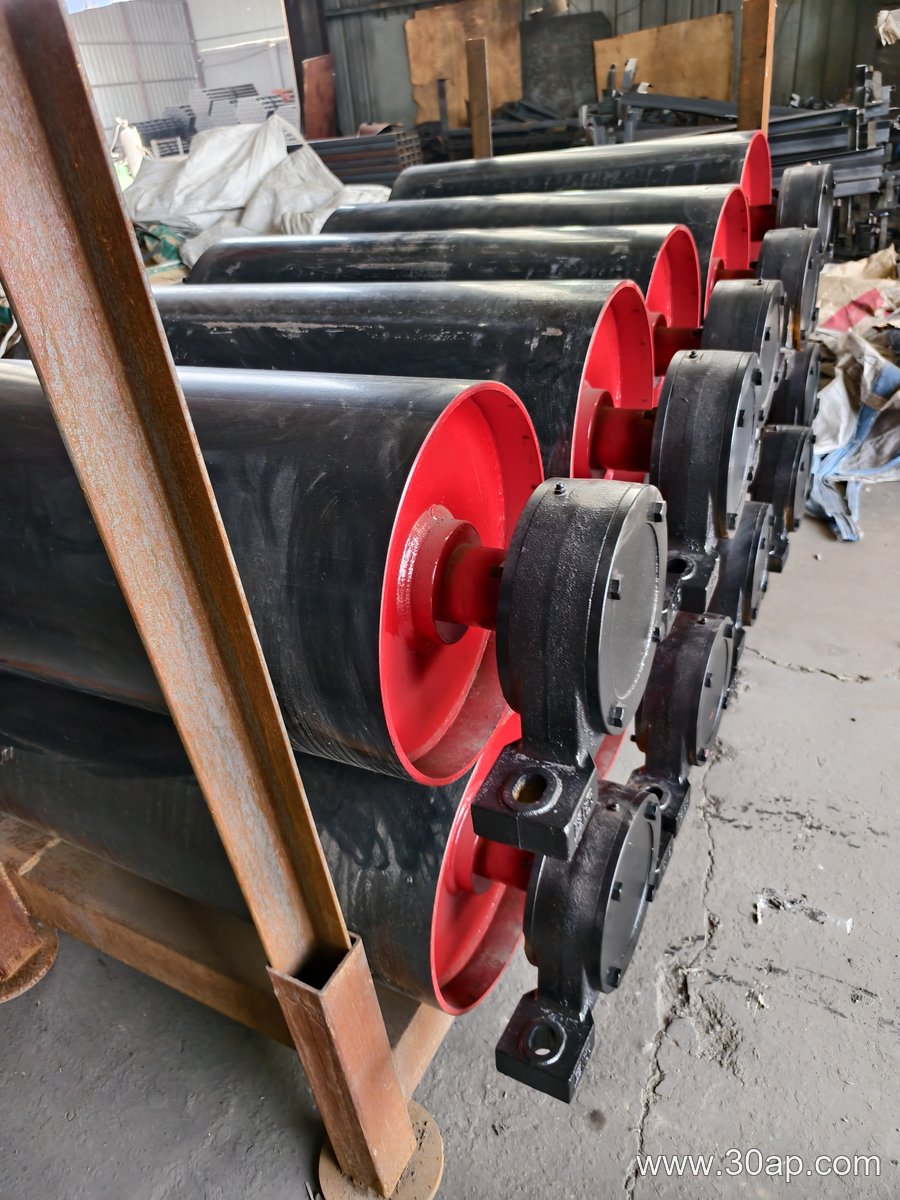
Key dimensions are not universal. A motor-driven pulley for a B800 belt might use a Ø500 drum, while a B1200 system could use Ø630 or Ø800. Larger tonnage lines in iron ore or copper mines sometimes use Ø1000 or Ø1250 drums. The shaft diameter is determined by torque and load, not by belt width alone. Typical shaft sizes include Ø60, Ø80, Ø100, Ø140, and Ø180, but these are reference examples only.
Where It Is Used
You will see motor-driven pulleys in quarry conveyors, coal handling systems, power plant coal feeders, and sand and gravel lines. They also appear in tunnel muck removal and fertilizer bulk handling. A single motor-driven pulley can replace a conventional drive arrangement, which is useful when space is tight or when a fully enclosed drive is preferred. For comparison, a bend pulley only changes belt direction, while a motor-driven pulley powers the belt. They are not interchangeable.
Key Parameters to Check
When selecting a motor-driven pulley, consider belt width, drum diameter, shaft diameter, lagging type, and power rating. The table below shows common combinations, but these are examples, not fixed rules.
| Belt Width | Drum Diameter | Typical Shell Width | Lagging Options |
|---|---|---|---|
| B400 | Ø200–Ø315 | ~500 mm | Plain, rubber, diamond |
| B650 | Ø315–Ø500 | ~750 mm | Rubber, herringbone |
| B800 | Ø400–Ø630 | ~950 mm | Rubber, ceramic |
| B1000 | Ø500–Ø800 | ~1150 mm | Rubber, ceramic |
| B1200 | Ø630–Ø1000 | ~1400 mm | Rubber, ceramic |
| B1400 | Ø800–Ø1250 | ~1600 mm | Rubber, ceramic |
Remember that shell width is usually slightly wider than the belt. For instance, B500 often pairs with about 600 mm shell width, and B1600 with about 1800 mm. These are customary proportions, not mandatory matches.
Buyer Checklist
- Confirm the actual belt width and required drum diameter for your conveyor.
- Specify the lagging type based on material and moisture.
- Check shaft diameter against torque and radial load, not just belt width.
- Ensure the motor-driven pulley fits the conveyor bracket and take-up arrangement.
- Ask for the allowable radial load and thrust load if the pulley will see heavy impact.
- Plan for maintenance access, even though the drive is enclosed.
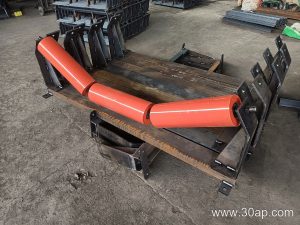
In coal mines, cement plants, and port bulk terminals, a motor-driven pulley can be a compact and reliable choice. It works alongside conveyor idler rollers, conveyor brackets, and the conveyor belt itself. However, it is not a drop-in replacement for a tail pulley or a bend pulley. Each subtype has its own job. Understanding that difference helps you specify the right component and avoid downtime.