What a Feed-End Pulley Does
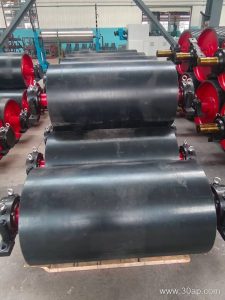
The feed-end pulley is the roller at the loading end of a conveyor. On many systems this position is also the tail pulley, which turns the conveyor belt back toward the carrying run after the belt has discharged its load. The pulley does not drive the belt in most layouts; instead it supports the belt, maintains alignment, and helps set the path of the return strand. When the loading point also serves as a tensioning station, the same assembly may be called a take-up or tension pulley. That is still the same product family, just described by its duty rather than by its location.
Because material is dropped onto the belt near this pulley, the feed-end pulley often works in a dusty, abrasive environment. Its bearings, lagging, and sealing have to cope with fines that migrate along the belt. A poorly protected unit can seize, wear the belt edge, or cause mistracking that shows up further along the conveyor.
How It Is Built
A typical unit combines a cylindrical shell, end discs, a shaft, bearing housings, and a surface covering. The shell is usually steel, sometimes with a machined face for better belt contact. The shaft is sized by torque and load rather than by belt width alone, so a B800 conveyor might use a Ø80 shaft in one design and a larger shaft in another depending on tension and duty.
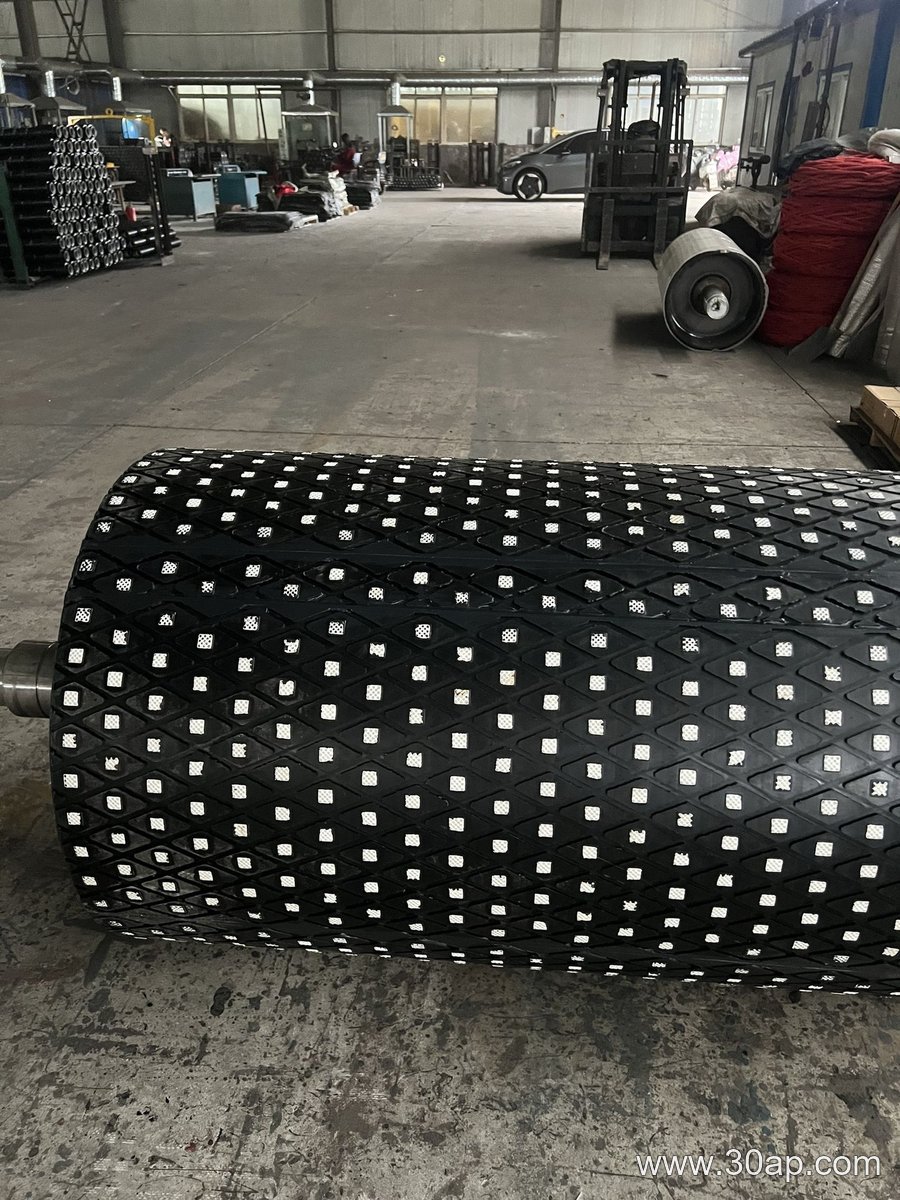
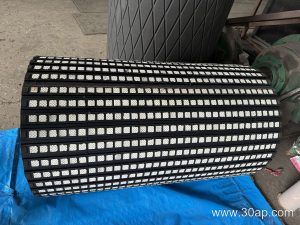
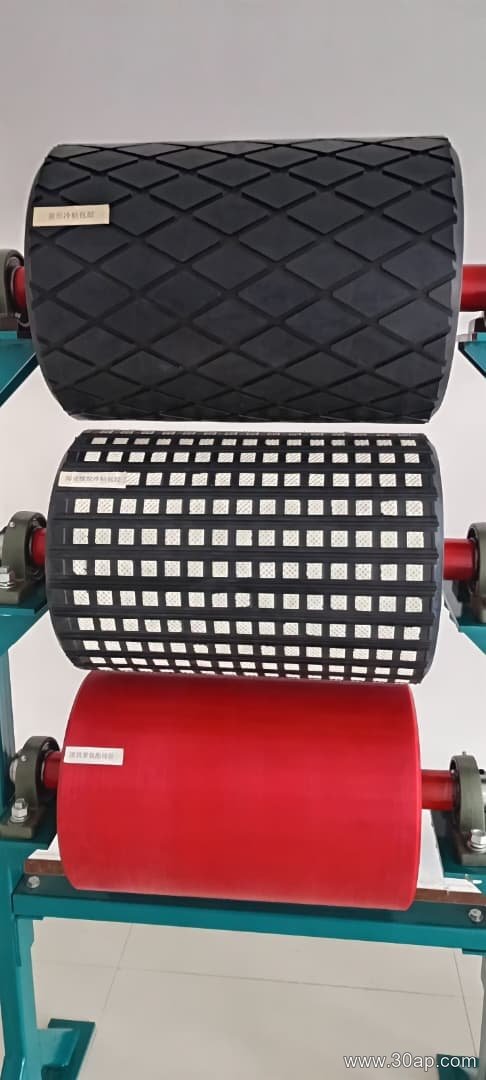
Surface options matter at the feed end. Plain steel is adequate for light, dry service. Rubber lagging improves grip and cushions the belt where impact and dust are present. Common finishes include plain, cold-bonded rubber, hot-vulcanized rubber, diamond grooving, herringbone grooving, ceramic lagging, and flat rubber sheet. Lagging thickness is often 8, 10, 12, 15, or 20 mm, chosen for wear life and belt protection rather than as a universal rule.
Common Sizes and Combinations
Feed-end pulleys are made in many diameters and face widths. The face is normally wider than the belt to allow for mistracking. The table below shows common pairings; these are reference values, not fixed rules, and final selection depends on belt tension, wrap angle, and shaft load.
- B400 belt with about 500 mm face, often Ø200 to Ø315
- B500 belt with about 600 mm face, often Ø250 to Ø400
- B650 belt with about 750 mm face, often Ø315 to Ø500
- B800 belt with about 950 mm face, often Ø400 to Ø630
- B1000 belt with about 1150 mm face, often Ø500 to Ø800
- B1200 belt with about 1400 mm face, often Ø630 to Ø1000
- B1400 belt with about 1600 mm face, often Ø800 to Ø1250
- B1600 belt with about 1800 mm face, often Ø1000 to Ø1400
For example, a B800 × Ø500 unit and a B1200 × Ø1000 unit are both realistic, but neither combination is compulsory. Shaft diameters commonly run from Ø50 up to Ø200, again determined by the actual load case.
Where It Fits in a Plant
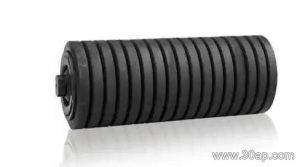
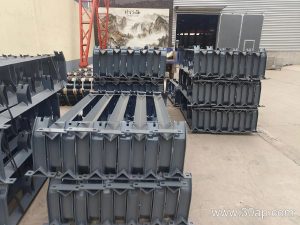
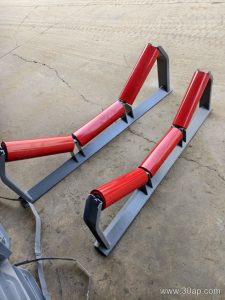
You will find this pulley in aggregate crushing and screening lines, where the belt receives crushed rock at the tail end. It also appears in coal handling, limestone and copper concentrator circuits, and in fertilizer or grain silos where a return pulley sits under the loading chute. In these locations the pulley works with the conveyor belt, idler rollers, and conveyor brackets that hold the assembly in line.
Do not confuse the feed-end pulley with a drive pulley or a bend pulley. A drive pulley transmits power to the belt; a bend pulley changes belt direction without driving. A feed-end pulley mainly supports and guides, and only drives if the design specifically makes it a drive position. This distinction matters when ordering spares, because a drive pulley needs a different shaft, coupling, and lagging strategy.
Buyer Checklist
Before specifying a feed-end pulley, confirm the belt width, the required face width, the shaft diameter, and the bearing type. Check whether the position is fixed or sliding, because a take-up frame changes the housing and adjustment needs. Ask how the surface will be finished and how thick the lagging should be for the material being carried. Finally, confirm the mounting dimensions and the conveyor bracket interface so the new pulley fits the existing structure without field modification.