What EP1250 Conveyor Belt Means
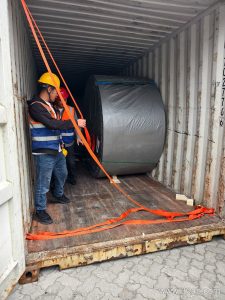
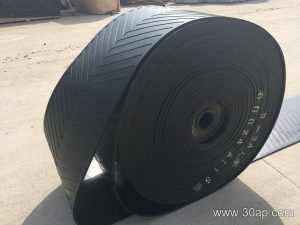
An EP1250 conveyor belt is a heavy-duty rubber belt built on a polyester-polyamide (EP) carcass with a nominal tensile strength of 1250 newtons per millimeter of belt width. The “EP” refers to the warp and weft yarns—polyester in the warp and polyamide (nylon) in the weft—which give the belt low elongation, good troughability, and strong resistance to impact and fatigue. The number 1250 places it in the upper-mid range of EP belt strengths, above common EP1000 and below EP1600, making it a frequent choice for main haulage conveyors rather than light transfer lines.
In everyday plant language, this product is also called an EP1250 rubber conveyor belt or a 1250 kN/m EP belt. Those are accurate equivalents for the same item, not different products.
How the Belt Is Built
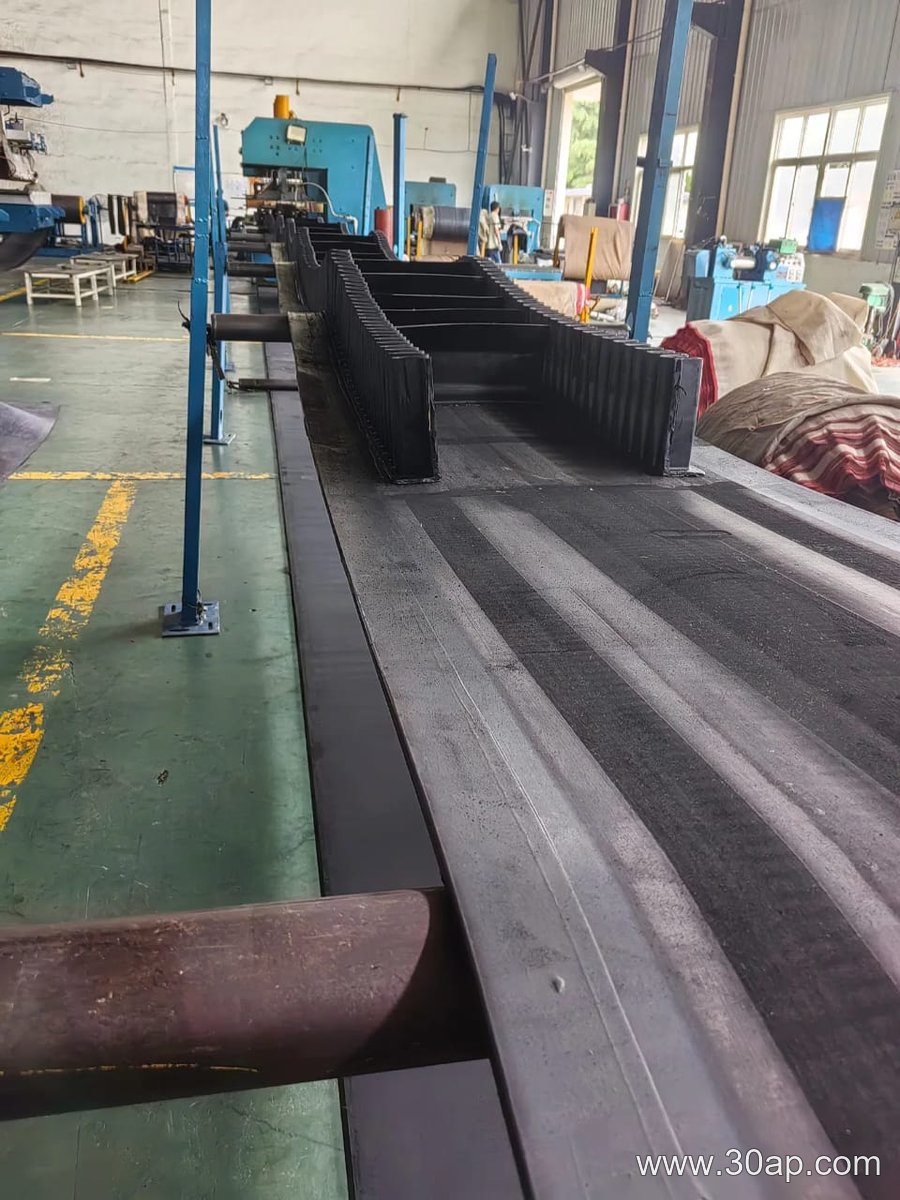
The carcass usually consists of multiple EP fabric plies, commonly 2 to 6 layers depending on the required strength and the pulley arrangement. The plies are bonded with rubber skim compounds, then covered on both sides with top and bottom cover rubber. A typical cover combination might be 4+2 mm, 5+2 mm, 6+2 mm, or 8+3 mm, though these are reference values and actual thicknesses are selected by the conveyor designer.
Cover compounds can be tailored to the duty: abrasion-resistant, heat-resistant, oil-resistant, flame-retardant, anti-static, cold-resistant, or acid and alkali resistant. Edge construction—cut edge or moulded edge—also affects how well the belt resists fraying on long runs and around pulleys. The belt is not normally supplied with a fixed shaft diameter; shaft sizing belongs to the conveyor pulley, not the belt itself.
Where It Is Used
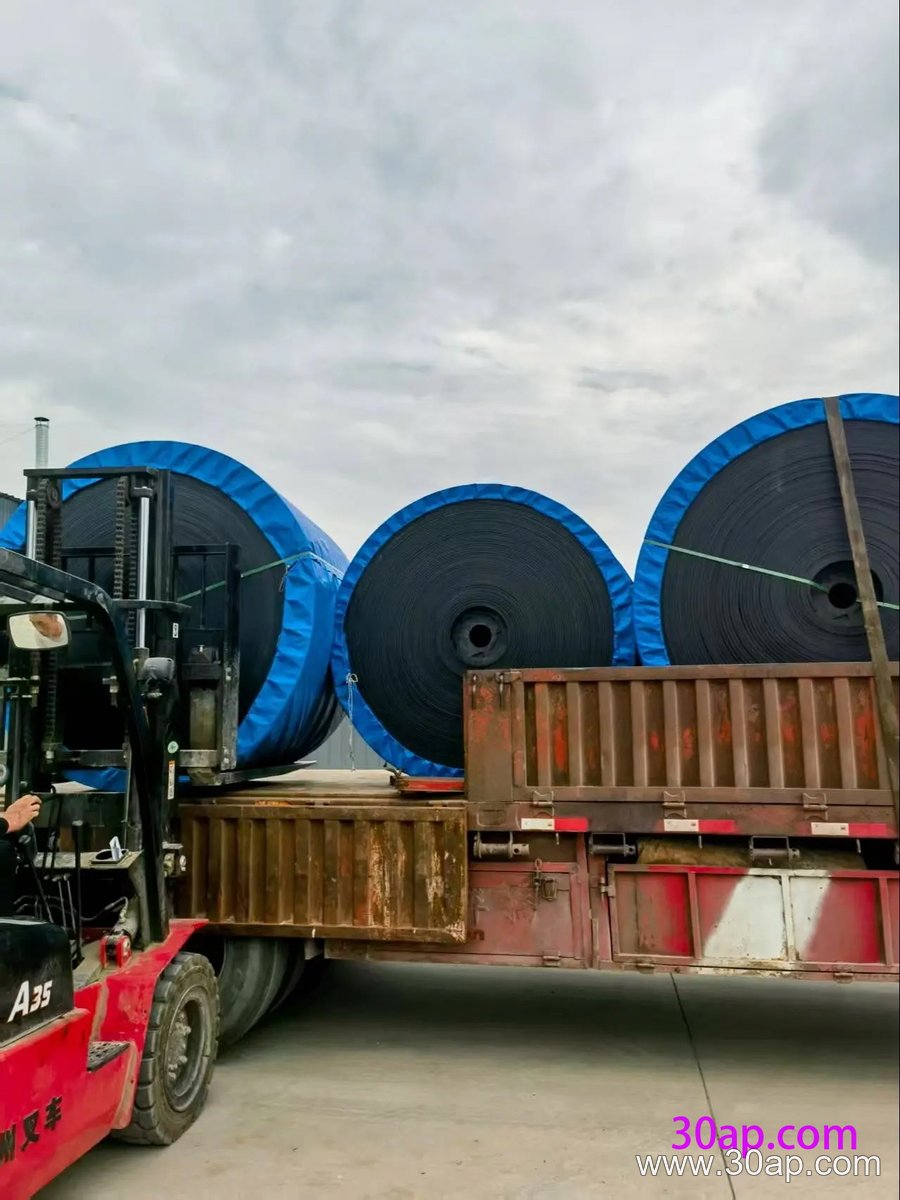
EP1250 conveyor belting fits medium-to-heavy bulk handling where a single flight carries a substantial load. Typical installations include coal preparation plants, crushed stone and aggregate conveyors, cement clinker lines, iron ore transfer, and port bulk terminals. It also appears in some long overland conveyors where low stretch and stable tracking matter.
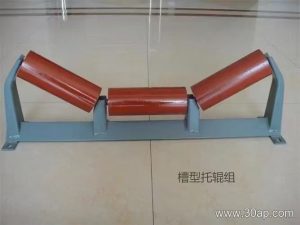
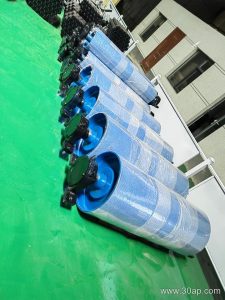
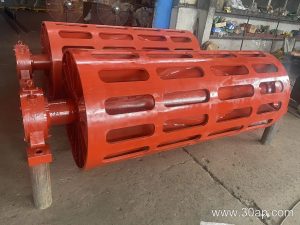
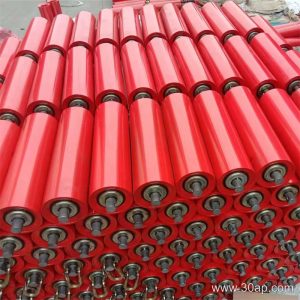
On the conveyor structure, the belt runs over idler rollers that support the load and maintain the trough, and it wraps around conveyor pulleys at the head, tail, and bend positions. A drive pulley transmits power; a tail pulley returns the belt; a bend pulley changes direction. These three are distinct components and should not be treated as interchangeable. Conveyor brackets hold the idlers and pulleys in alignment, so their condition directly affects belt life.
Common Widths and Related Parameters
EP1250 belting is produced in a range of standard widths. The table below lists common reference widths and cover options; final selection depends on the conveyor design.
| Parameter | Common reference values |
|---|---|
| Belt width | B500, B650, B800, B1000, B1200, B1400, B1600, B1800, B2000 |
| Strength grade | EP200, EP315, EP400, EP500, EP630, EP800, EP1000, EP1250, EP1600, EP2000 |
| Cover thickness | 3+1.5 mm, 4+2 mm, 5+2 mm, 6+2 mm, 8+3 mm |
| Carcass plies | 2 to 6 layers |
| Surface forms | smooth, patterned, chevron, corrugated sidewall |
Note that belt width and pulley diameter are not locked in a one-to-one relationship. A wider belt does not automatically require one specific pulley diameter, and a pulley diameter alone does not fix the belt width. The conveyor engineer matches them through tension, wrap angle, and space constraints.
Selection and Maintenance Notes
- Check the actual maximum tension and safety factor before choosing EP1250 rather than a lower or higher grade.
- Match cover compound to the material: hot clinker, oily scrap, or abrasive rock each calls for a different cover.
- Inspect idler rollers and conveyor pulleys regularly; a seized idler or worn pulley lagging can destroy even a correctly specified belt.
- Keep conveyor brackets tight and aligned to prevent edge damage and mistracking.
- Confirm splice type and cure method with the belt supplier, since joint strength often governs the whole system.
EP1250 conveyor belt is a working component, not a universal answer. Used within its design envelope and maintained with the rest of the conveyor, it delivers long service on demanding bulk handling routes.