What a Tapered Idler Is
A tapered idler is a conveyor roller whose shell diameter changes along its length, usually from a larger end to a smaller end. Instead of a straight cylindrical shell, the surface forms a gentle cone. This shape is used to guide the conveyor belt, support the belt at transition points, or help correct misalignment. In many conveyor systems the tapered idler roller works together with a standard cylindrical idler, but its tapered profile gives it a different job. It is not a drive pulley, a tail pulley, or a bend pulley, and it should not be selected as a replacement for those components.
How the Tapered Roller Is Built
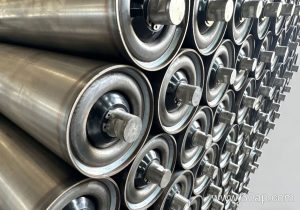
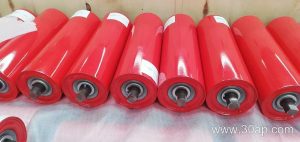
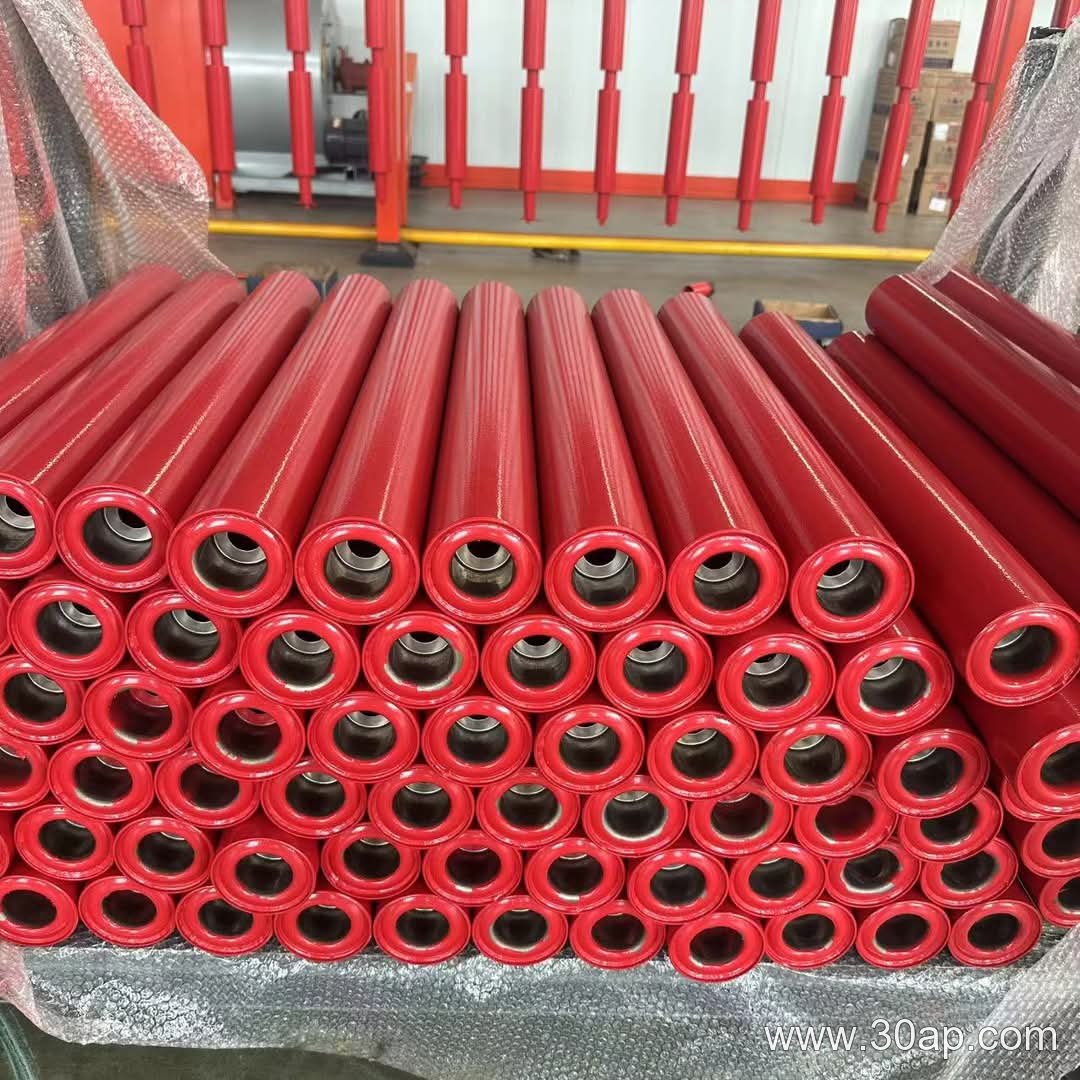
The body is commonly made from a steel tube that is machined or formed into a taper. The surface may be left as bare steel, coated with nylon, covered with rubber rings, or fitted with ceramic tiles for extra grip or wear resistance. Inside, the roller uses a shaft, bearing housings, and a sealing arrangement. Common bearing sizes for conveyor idlers include 6204, 6205, 6305, 6306, 6308, and 6310, but the bearing choice depends on the load, speed, and roller diameter rather than on belt width alone.
Roller diameters for tapered idlers often follow the same general range as other idlers, such as Ø63, Ø76, Ø89, Ø102, Ø108, Ø127, Ø133, Ø159, Ø178, Ø194, and Ø219. The small end and large end may differ, so the taper angle is a design detail. The roller length is also made to suit the conveyor. For a three-roll troughing set, common roller lengths can be around 200 mm for B500, 250 mm for B650, 315 mm for B800, 380 mm for B1000, 465 mm for B1200, 530 mm for B1400, 600 mm for B1600, 670 mm for B1800, and 750 mm for B2000. These are typical examples, not fixed rules, and the side rollers and center roller may have different lengths.
Where Tapered Idlers Are Used
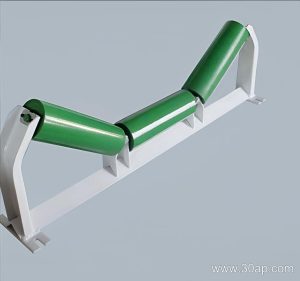
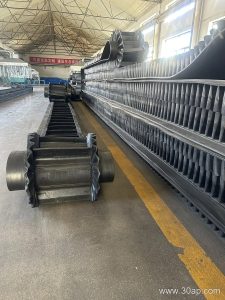
One common place for a tapered idler is the transition zone between the tail pulley and the first full troughing set. Here the belt changes from a flat shape to a troughed shape, and a tapered roller can support the belt edge without causing sharp bends. Another use is in self-aligning idler groups, where the tapered shape helps steer the belt back to the center. A tapered idler can also appear in the return run when the belt needs gentle edge support.
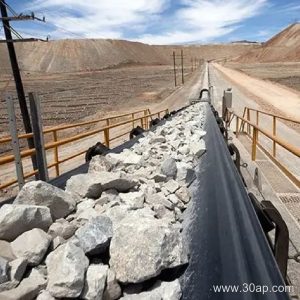
These rollers are found in bulk handling operations such as a limestone quarry, a coal washing plant, a sand and gravel line, a cement plant, or a tunnel mucking system. They are also used in fertilizer and grain handling where belt training matters. In these places, the tapered idler works alongside the conveyor belt, conveyor bracket, and other idler rollers to keep material moving.
Selection Points for Buyers
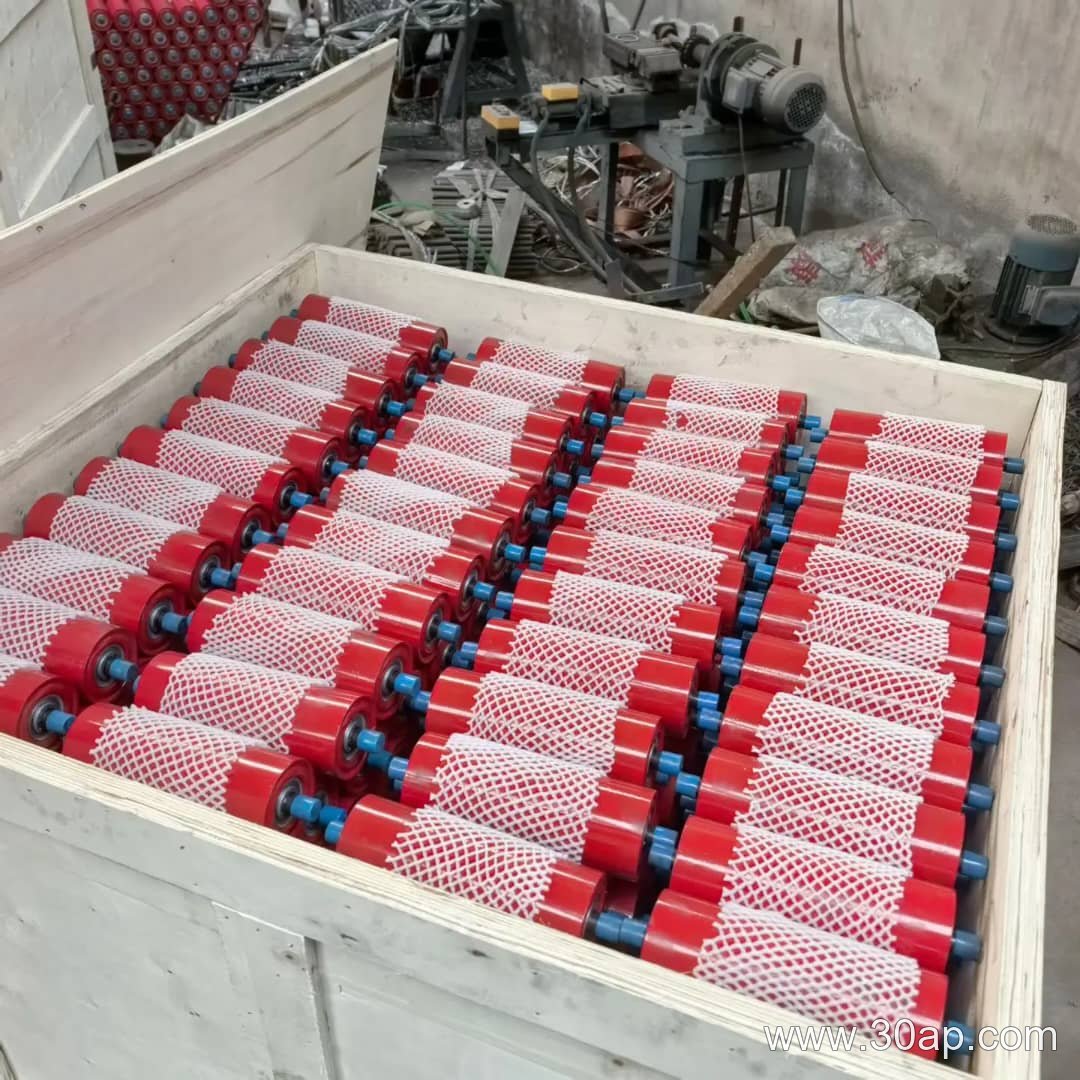
When choosing a tapered idler, start with the belt width and the trough angle. Common trough angles are 20 degrees, 30 degrees, 35 degrees, and 45 degrees. The taper should match the belt path at that point. If the idler is meant for training, a slight forward tilt of about 1.5 to 2 degrees may be used, but this is a design choice and not a universal setting.
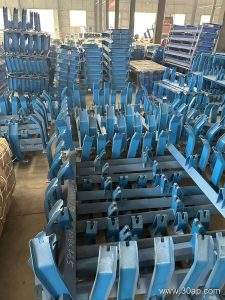
Check the roller diameter, shaft size, and bearing type against the load and speed of the conveyor. A larger diameter roller usually handles more load and runs cooler, but it must fit the existing bracket. The surface form matters too. Rubber rings can reduce impact and noise, while ceramic or nylon surfaces may be chosen for different wear conditions. Do not assume that one belt width can only match one pulley diameter or one shaft size. The drive pulley, tail pulley, and bend pulley have their own separate specifications.
Maintenance and Comparison Notes
A tapered idler should turn freely and stay aligned with the belt. Listen for unusual noise, check for play in the bearing, and look for material buildup on the tapered surface. If the belt drifts, inspect the entire idler group rather than replacing only one roller. For heavy impact zones, a rubber-disc缓冲 idler or a spiral idler may be a better fit than a tapered model. For straight carrying runs, a standard troughing idler is usually enough. The tapered idler is a specialized component, so use it where its shape solves a specific belt training or transition problem.