What a Fixed Conveyor Bracket Does on a Belt System
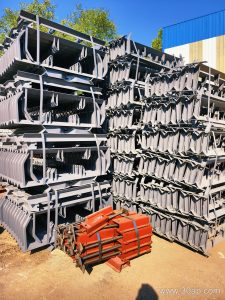
A fixed conveyor bracket is the stationary support that holds idler rollers at a set position along the conveyor frame. Unlike an adjustable bracket, it does not allow the trough angle or roller position to be changed after installation. The bracket locks the roller in place, so the conveyor belt runs over a consistent profile from one end of the structure to the other. This stability matters most on long runs where small variations in roller height can cause the belt to wander or wear unevenly.
The bracket is not a pulley. Drive pulleys, tail pulleys, and bend pulleys each serve different functions at the ends or direction changes of a conveyor, while a fixed bracket works along the carrying and return strands. It supports idler rollers, which in turn support the conveyor belt and the material load.
How the Bracket Is Built
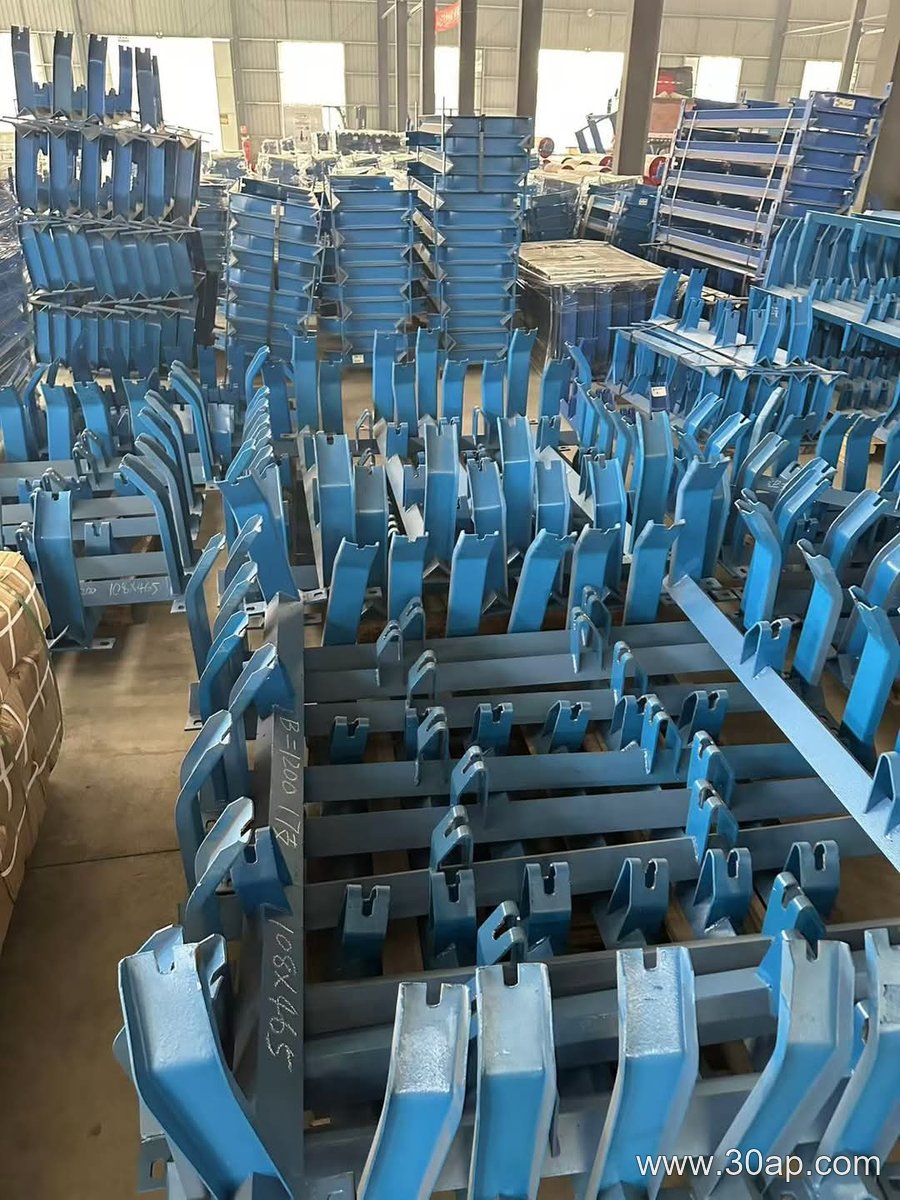
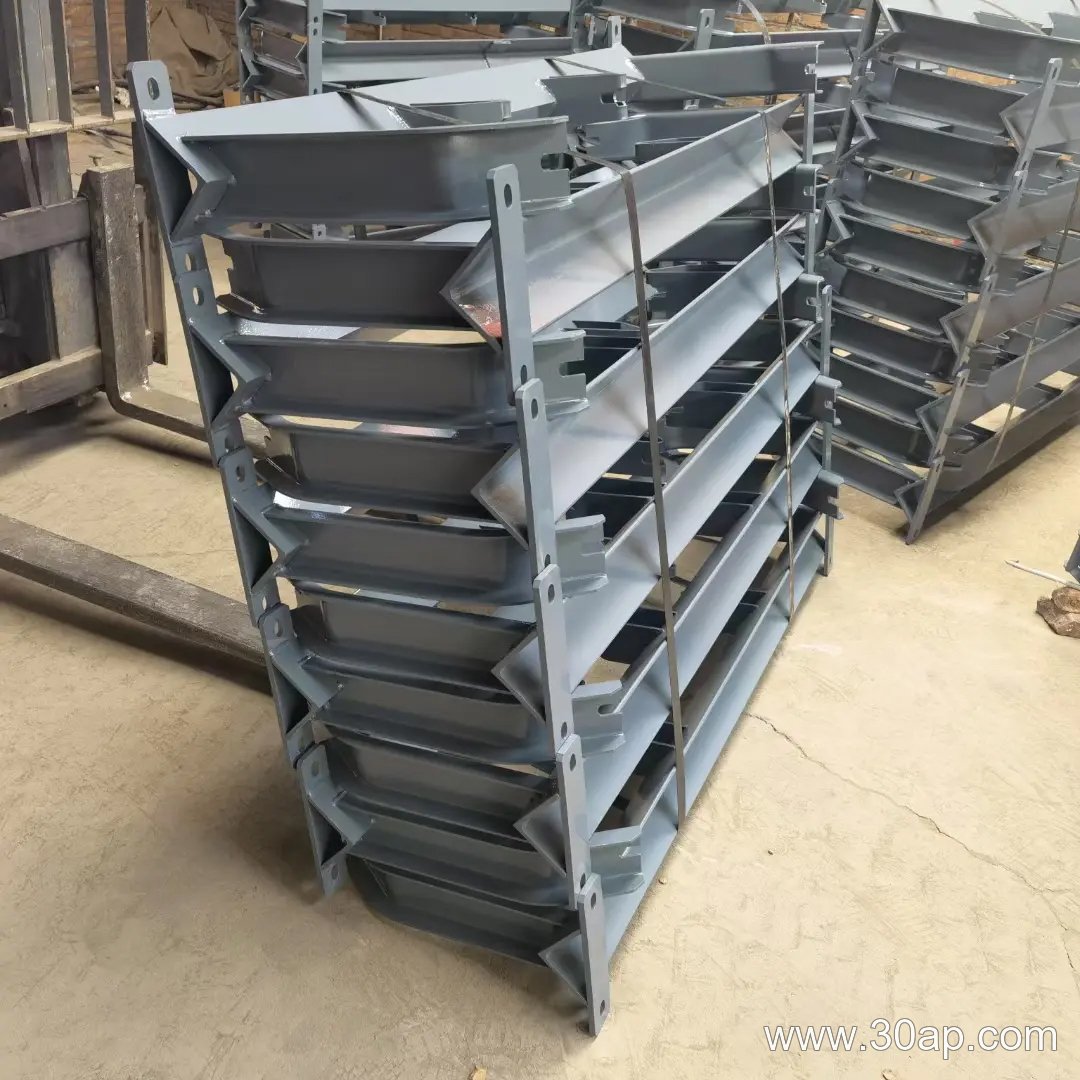
Most fixed brackets are fabricated from angle steel, channel steel, or bent steel plate. The choice depends on the load, the belt width, and the environment. A bracket for a light-duty sand line may use thinner bent plate, while a bracket in a primary crushing circuit often uses heavier channel or angle sections.
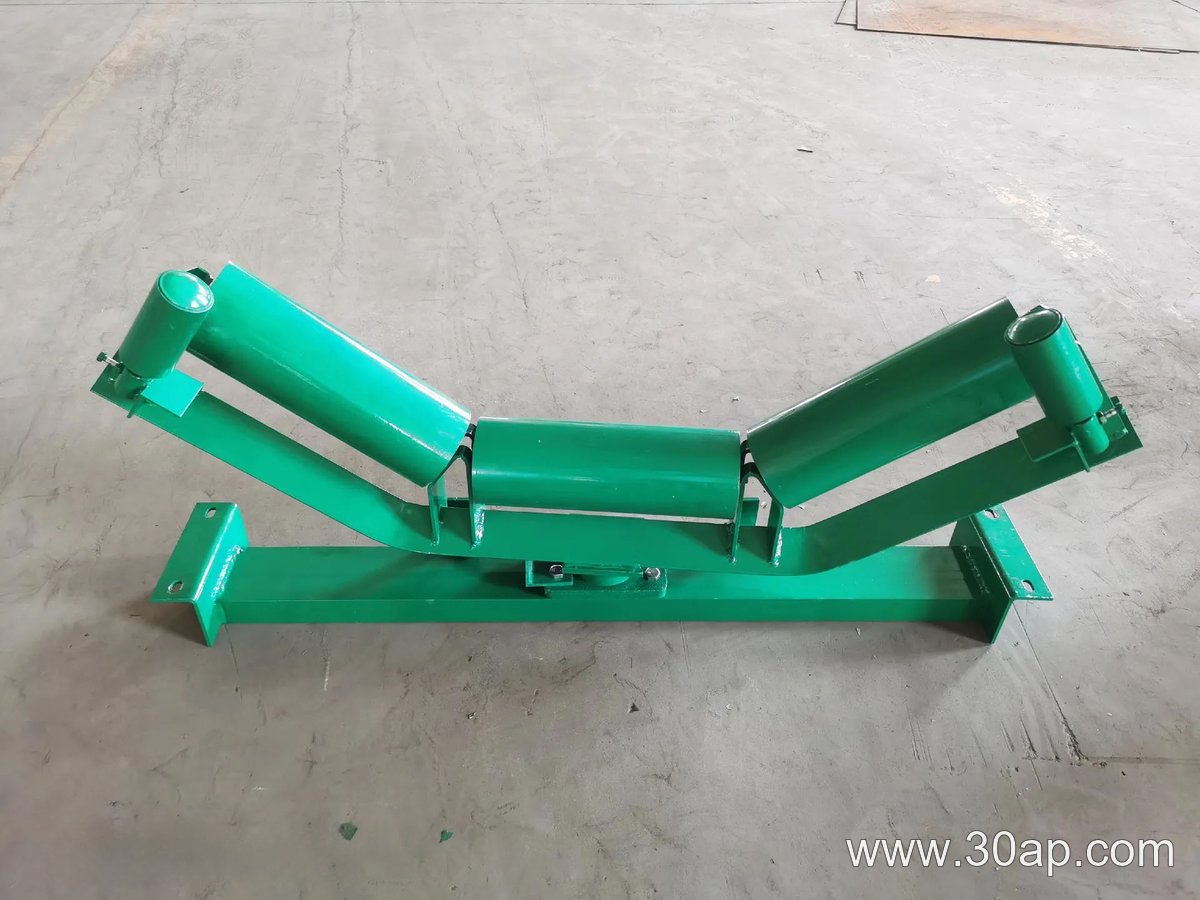
The bracket usually includes mounting holes or slots that match the conveyor frame. It may be a single-piece design for one roller or a multi-roller assembly that sets the trough angle. The roller seating area is machined or punched to hold the idler shaft securely without play.
Common Types and Where They Fit
Fixed brackets appear in several positions along a conveyor. The list below describes typical roles, not a mandatory set for every project.
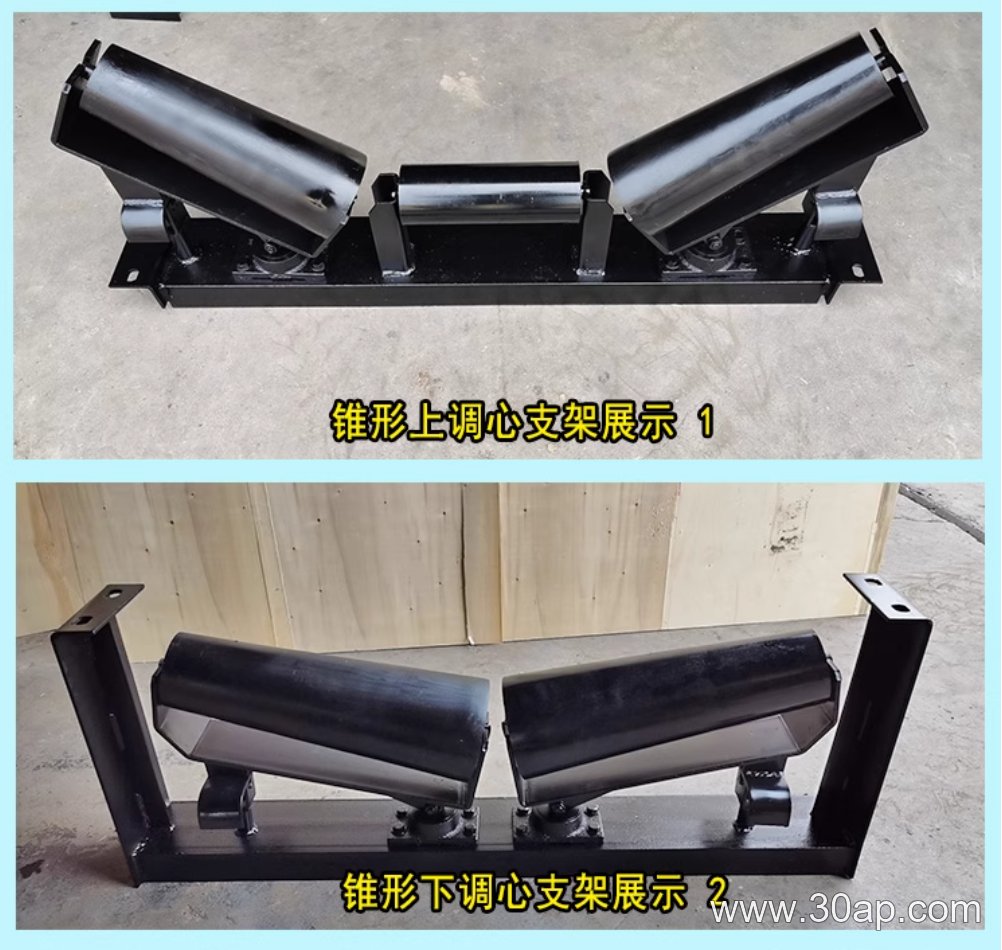
- Troughing bracket — supports three rollers to form a trough for the carrying belt.
- Transition bracket — guides the belt from a flat pulley to a troughed profile.
- Return bracket — holds return idlers under the belt.
- V-return bracket — uses two rollers in a V shape to help center the belt on the return strand.
- Impact bracket — supports impact idlers at the loading point.
- Self-aligning bracket — allows slight roller movement to correct belt tracking.
A fixed bracket differs from an adjustable bracket mainly in that the trough angle is set at the factory or at installation and then locked. An adjustable bracket lets maintenance staff change the angle between positions, which can be useful when a conveyor handles different materials. The fixed version is simpler and usually more rigid.
Matching Bracket Dimensions to Belt and Roller
Bracket dimensions follow the belt width, the trough angle, and the roller diameter. The table below shows common reference combinations, but these are not fixed rules. A given belt width can work with more than one trough angle or roller diameter depending on the material and capacity.
| Belt Width | Trough Angle | Roller Diameter | Typical Bracket Material |
|---|---|---|---|
| B500 | 20° or 30° | Ø89 | Bent steel plate |
| B650 | 30° or 35° | Ø89 or Ø108 | Angle steel |
| B800 | 35° | Ø108 or Ø133 | Angle or channel steel |
| B1000 | 35° or 45° | Ø108 or Ø133 | Channel steel |
| B1200 | 35° or 45° | Ø133 or Ø159 | Channel steel |
| B1400 | 35° or 45° | Ø133 or Ø159 | Channel steel |
| B1600 | 35° or 45° | Ø159 or Ø194 | Heavy channel or bent plate |
| B1800 | 35° or 45° | Ø159 or Ø194 | Heavy channel or bent plate |
Mounting hole spacing and crossbeam length change with belt width and trough angle. They are not universal numbers, so the bracket must be ordered for the actual conveyor frame. The roller shaft diameter also follows the roller, not the belt width alone.
Installation and Maintenance Notes
Correct alignment at installation prevents most tracking problems. The bracket should sit square to the conveyor centerline, and all rollers in a station should sit at the same height. Bolts should be tightened to the frame manufacturer’s recommendation. After the first few days of operation, recheck the bolts because vibration can loosen them.
Inspect the bracket for wear, bent edges, or elongated holes. A deformed fixed bracket can tilt a roller and cause the belt to run off center. Replacing a worn bracket early is usually less costly than repairing a damaged belt or idler roller.
Buyer Checklist
Before ordering a fixed conveyor bracket, confirm the belt width, trough angle, roller diameter, and frame bolt pattern. Ask whether the bracket is for the carrying side or return side. For dusty or corrosive locations, specify the surface treatment, such as painting or galvanizing. Finally, check that the bracket is designed for the actual load and belt speed, since a bracket sized only by belt width may not suit a heavy ore or high-capacity application.