What a Take-Up Pulley Does
A take-up pulley is the rotating component that maintains tension in a conveyor belt. Without enough tension, a loaded belt can slip on the driving drum, wander off track, or spill material. The take-up pulley usually sits near the tail end of the conveyor, where it can move along a short track or slide. As the belt stretches with age and load, this pulley is adjusted to remove slack. In many systems, the same position is filled by a tail pulley that also serves as the take-up point.
The job sounds simple, but it affects the whole conveyor. A belt that is too loose will not grip the drive pulley. A belt that is too tight puts extra load on shafts, bearings, and the conveyor bracket. The take-up pulley gives maintenance staff a controlled way to find the middle ground.
How a Take-Up Pulley Is Built
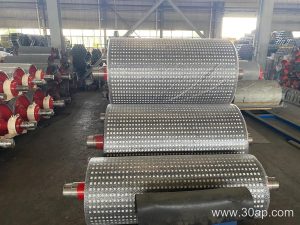
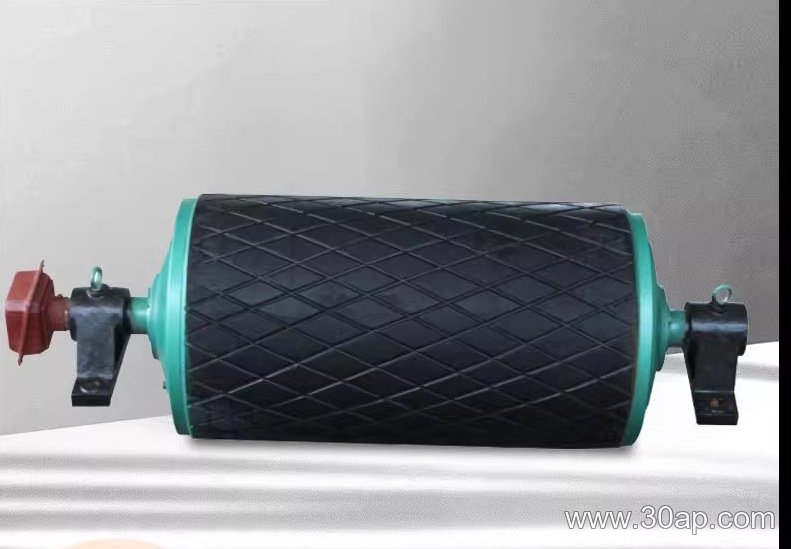
Most take-up pulleys are drum-style units. The shell may be seamless pipe or rolled plate. End discs are welded to the shell, and the shaft is machined to fit the bearing housings. A common construction is the cast-welded pulley, where cast steel hubs or end discs are welded into a rolled shell. This method gives a strong connection between the shaft and the drum while keeping the weight reasonable.
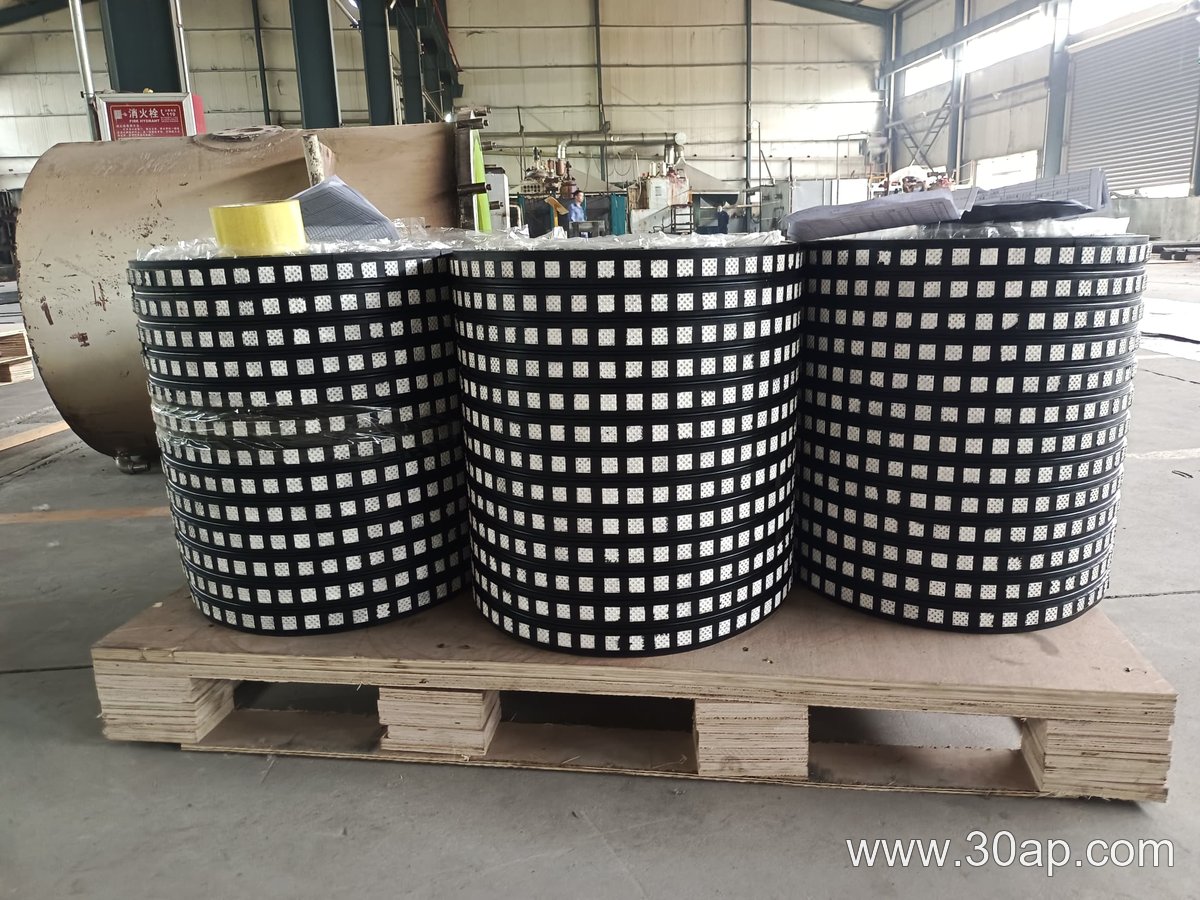
Lagging is often added to the shell. Rubber or polymer lagging improves grip and protects the shell from abrasion. However, a take-up pulley does not always need heavy lagging because it is not the main driving point. In some designs, the surface is plain steel or has a slight crown to help center the belt.
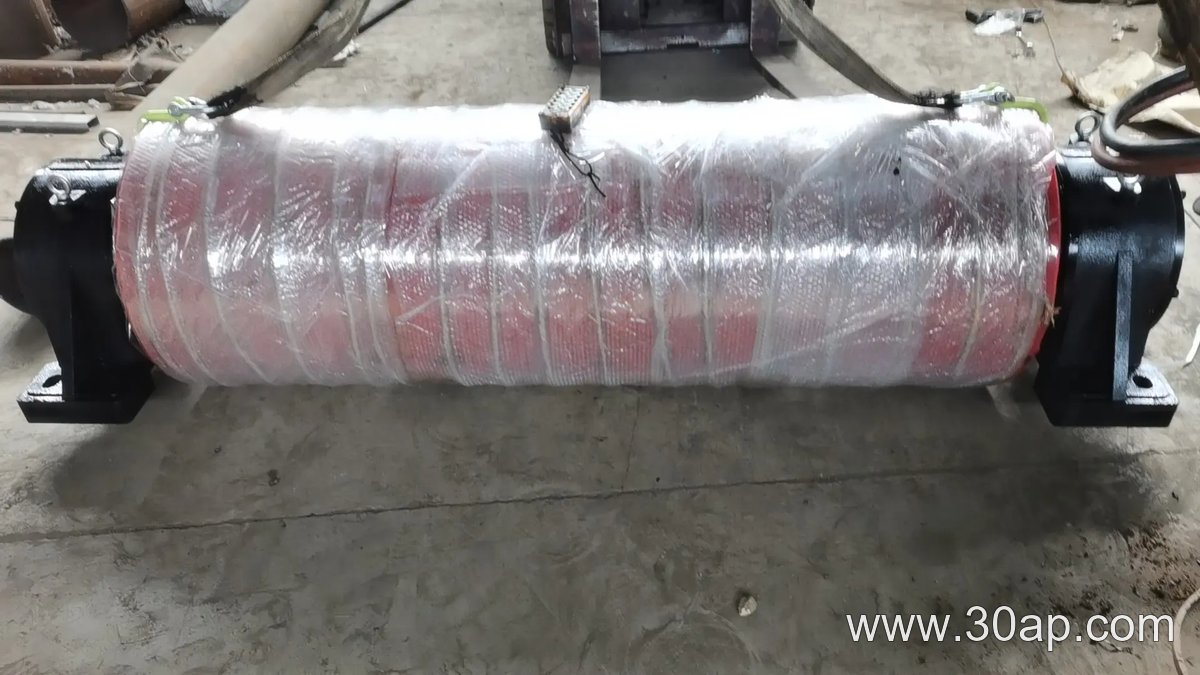
Bearings are another key part. They may be pillow block units mounted on the conveyor frame, or they may sit in sliding housings that move along a take-up track. The adjustment can be manual with threaded rods, or automatic with a gravity take-up tower and counterweight. A screw-type take-up is common on shorter conveyors, while a gravity system is used where constant tension is important.
Where It Fits in a Conveyor
A take-up pulley works with several other parts. The conveyor belt runs over the drive pulley, under or over idler rollers, and around the tail or take-up drum. The belt path determines whether the take-up pulley is a bend pulley, a return pulley, or a true tail pulley. A bend pulley changes the belt direction without providing take-up travel, while a take-up wheel pulley is mounted on a movable carriage or slide.
In a typical bulk handling line, you might find a 630mm drive pulley at the head, a series of troughing idlers along the carrying side, and a take-up pulley at the tail. The drive drum pulls the belt, and the take-up drum keeps it tight. The conveyor bracket supports the bearing housings and the take-up frame. If the take-up is a screw type, the bracket includes a slot or guide so the bearing can slide.
Common arrangements
- Tail-end take-up: the pulley is at the far end and moves horizontally.
- Gravity take-up: a weighted carriage pulls the pulley downward or backward.
- Bend pulley take-up: a bend pulley is mounted on a movable arm to add tension.
- Automatic take-up: a hydraulic or pneumatic cylinder keeps tension steady.
Materials and Surface Choices
Steel is the standard material for the shell and shaft. For wet or corrosive environments, stainless steel or coated shafts may be used. Lagging can be plain rubber, grooved rubber, or ceramic tiles. Grooved lagging helps shed water and fines, while ceramic lagging is chosen for high abrasion. The end discs may be flat or dished. Dished ends add stiffness and help the pulley resist bending under belt tension.
The shaft diameter and bearing size must match the load. A take-up pulley carries less torque than a drive pulley, but it still carries the full belt tension on both sides. That tension creates a bending load on the shaft. If the shaft is undersized, it will flex, and the bearings will fail early. A buyer should always share the belt width, belt tension, and travel distance with the supplier.
What a Buyer Should Check
When specifying a take-up pulley, start with the belt width and the required take-up travel. The travel distance depends on the belt type and the conveyor length. A short conveyor may need only a few hundred millimeters of movement, while a long overland system may need much more. The pulley diameter should be large enough to avoid excessive bending stress in the belt.
Next, confirm the shaft and bearing arrangement. Ask whether the pulley is fixed or sliding. Check the mounting holes and the distance between bearing centers. If the pulley will replace an existing unit, measure the old shaft, the shell diameter, the face width, and the keyway. A mismatched keyway or bolt pattern can stop a project.
Also consider the environment. Dust, water, and temperature affect the choice of lagging and bearing seals. In a food plant, washdown chemicals may require stainless steel or special coatings. In a quarry, impact and abrasion may call for thicker lagging and heavier end discs.
Finally, think about maintenance. A take-up pulley that is hard to reach will be neglected. Leave enough space for inspection and lubrication. If the take-up is a screw type, protect the threads from dust. If it is a gravity type, make sure the carriage moves freely and the guides are not worn.
Keeping the Belt on Track
A take-up pulley is not a cure for misalignment. If the belt runs off to one side, check the idler rollers, the drive pulley, and the loading point first. A crowned take-up drum can help center the belt, but it will not fix a crooked frame. Regular inspection of the take-up travel, bearing condition, and lagging wear will prevent unexpected downtime. When the belt is properly tensioned, the conveyor runs smoother, the drive pulley grips better, and the whole system lasts longer.