What a Vertical Guide Idler Does
A vertical guide idler is a small-diameter idler roller mounted with its axis vertical, usually along the edge of a conveyor belt or at a transfer point. Instead of supporting the belt from below like a carrying or return idler, it acts as a side guide: the belt edge or a guide profile runs against the roller, which rotates with the belt rather than scraping against a fixed surface. In a coal preparation plant or a limestone quarry, this simple change from sliding contact to rolling contact can reduce edge wear and help keep the belt tracking within its frame.
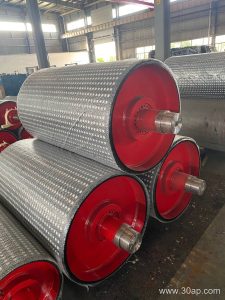
The device is also described as a vertical edge guide roller or vertical guide roller idler. These are equivalent names for the same product. It should not be confused with a bend pulley, a drive pulley, or a tail pulley, which transmit or redirect belt tension through the belt’s full width; the vertical guide idler only touches the belt at its edge.
Construction and Mounting
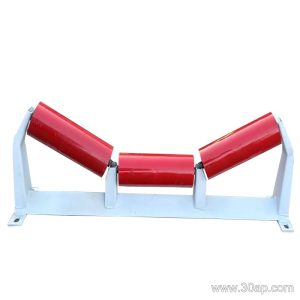
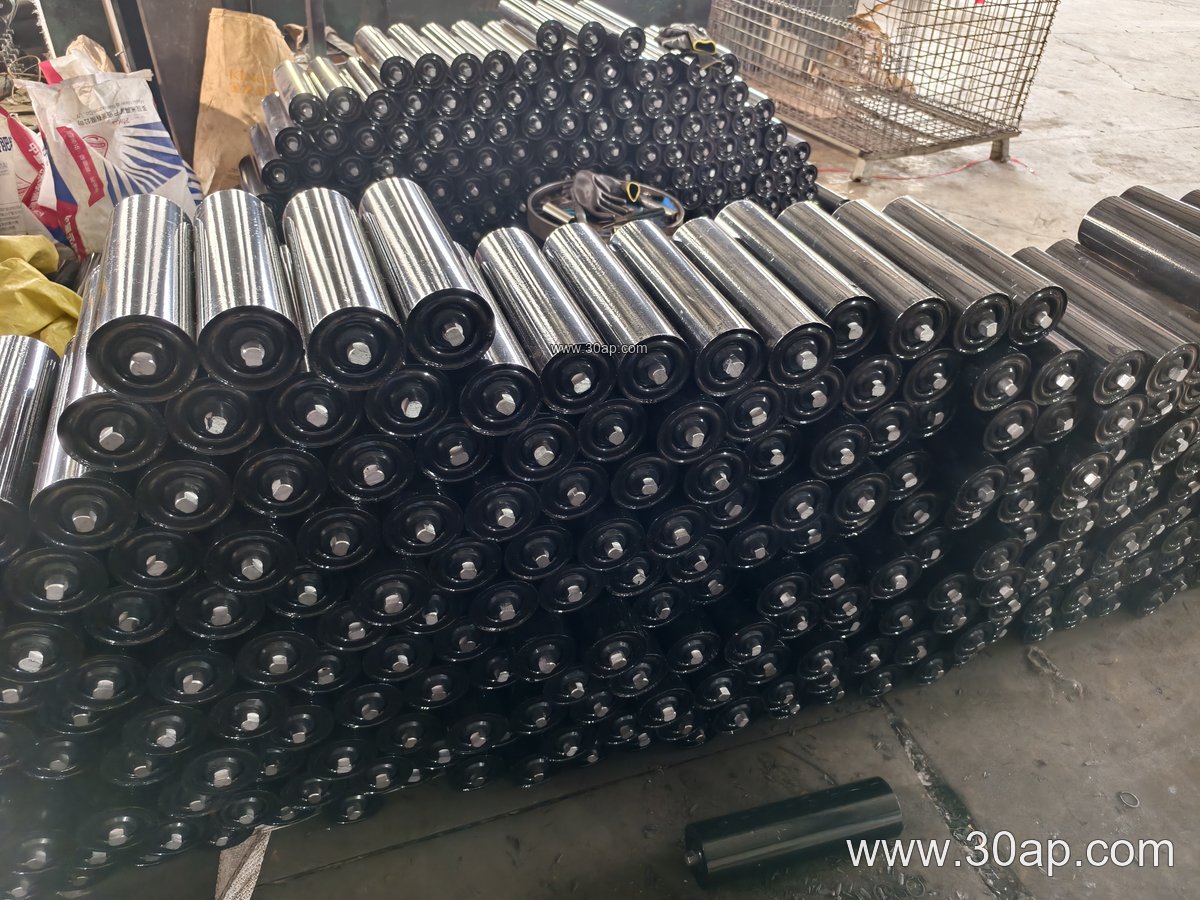
Most units share the same basic build as a standard idler roller: a steel tube shell, a shaft, sealed bearing housings, and a bracket that fixes the assembly to the conveyor structure. Because the roller stands upright, the housing design and seal arrangement matter more than on a horizontal idler, since water and fine dust can collect around the top bearing. Common shell diameters for this duty sit at the smaller end of the range, often Ø63, Ø76, or Ø89 mm, though larger sizes may be used where belt pull is high.
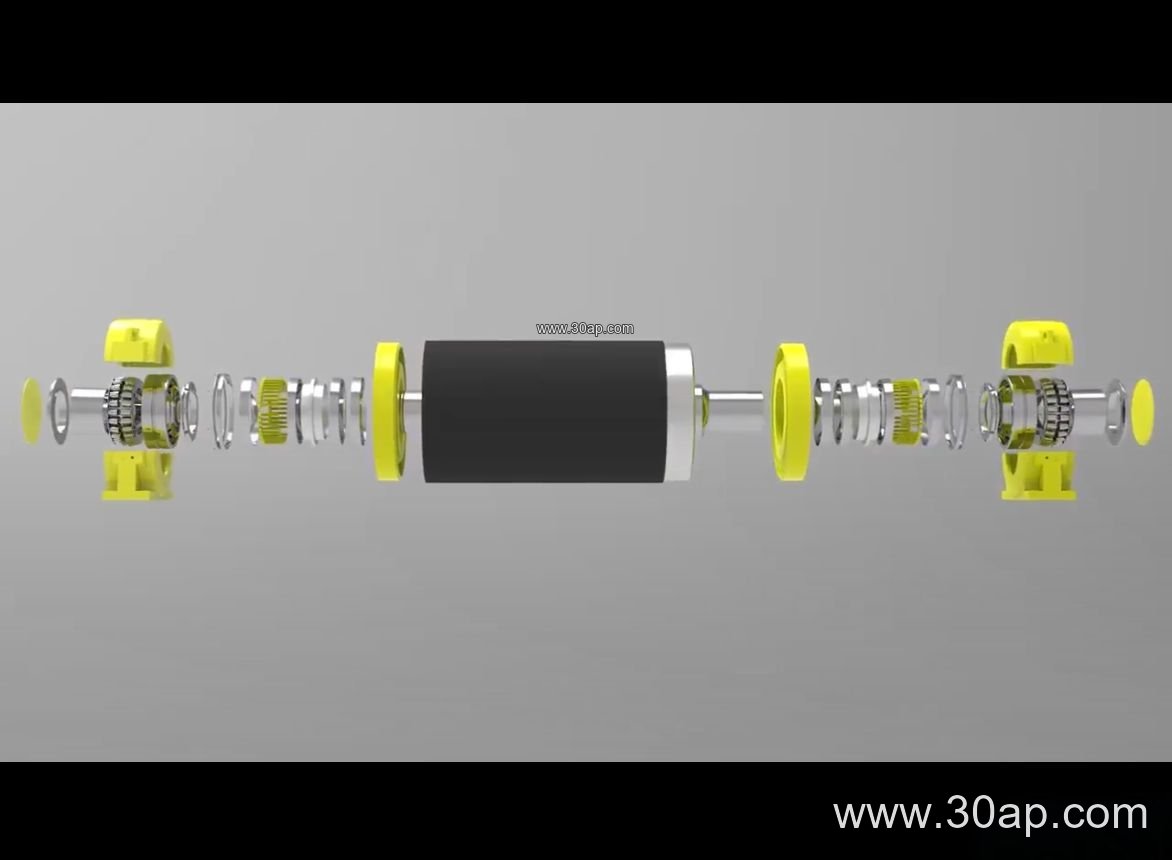
Typical bearing options include 6204, 6205, and 6305, selected by the manufacturer according to load and shaft size rather than by belt width alone. The mounting bracket is normally bolted to the conveyor frame or to a dedicated conveyor bracket at the belt edge, with slotted holes or shims so the roller can be set just clear of the belt.
| Item | Common Options | Notes |
|---|---|---|
| Shell diameter | Ø63, Ø76, Ø89, Ø102 mm | Selected by load and belt pull |
| Shell surface | Steel, nylon, rubber-covered | Rubber or nylon reduces belt edge wear |
| Bearing | 6204, 6205, 6305 | Matched to shaft and load by the maker |
| Belt width served | B400 to B1400 typical | Roller length and position set by design |
Where It Fits in a Conveyor Line
Vertical guides are most often found where a conveyor belt is prone to lateral movement: at the loading point of a crushing and screening circuit, on short transfer conveyors in a concrete mixing plant, or along the inclined section of a belt in an iron ore or copper mine. In a power plant coal handling system, they are frequently installed just before and after the discharge zone, where belt wander is most visible.
They are not a substitute for a self-aligning idler set. A training idler, such as a friction or cone-type self-aligning idler, corrects tracking by steering the belt through angled rollers under the belt. A vertical guide idler only limits edge movement at a specific point, so the two are often used together: the guide protects the edge, and the training idler does the correcting.
Selection Points for Buyers
- Confirm the belt width and the space available at the frame edge; roller length and bracket reach follow from this.
- Check whether the belt carries a guide profile or whether the bare edge will contact the roller, since this affects the preferred shell surface.
- Ask for the seal and bearing specification, especially for wash-down areas or dusty sinter and cement service.
- Verify the mounting interface with the existing conveyor bracket before ordering, as hole patterns vary between makers.
- Consider a rubber-covered or nylon shell where belt edge wear is the main concern.
Installation is straightforward but should be checked during commissioning. The roller face should sit parallel to the belt path and just touch or lightly clear the edge; excessive pressure will wear both the belt and the roller, while too much gap defeats the purpose. During routine maintenance, a vertical guide idler can be checked by hand for smooth rotation and inspected for dust ingress around the upper bearing. Replacing a worn unit is usually a matter of unbolting the bracket, so keeping one spare set on site is practical for continuous operations such as a port terminal or a steel plant sinter line.