What the Belt Conveyor Take-Up Pulley Does
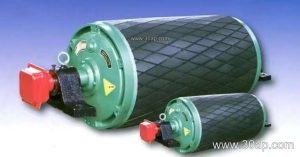
A belt conveyor take-up pulley is the drum that maintains working tension in the conveyor belt. It is not a drive pulley, not a tail pulley, and not a bend pulley; it sits in the take-up section and moves to compensate for belt stretch, load changes, and thermal expansion. In a quarry, a cement plant, or a power plant coal yard, this take-up pulley keeps the belt from slipping on the drive and helps prevent excessive sag between idler roller stations.
The same component is also called a tension pulley or take-up drum. The name changes with the plant, but the function is the same: hold the belt at the tension the conveyor design requires.
Construction and Surface Options
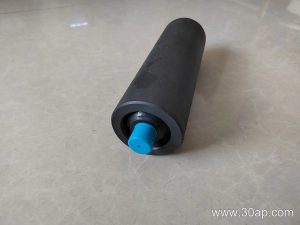
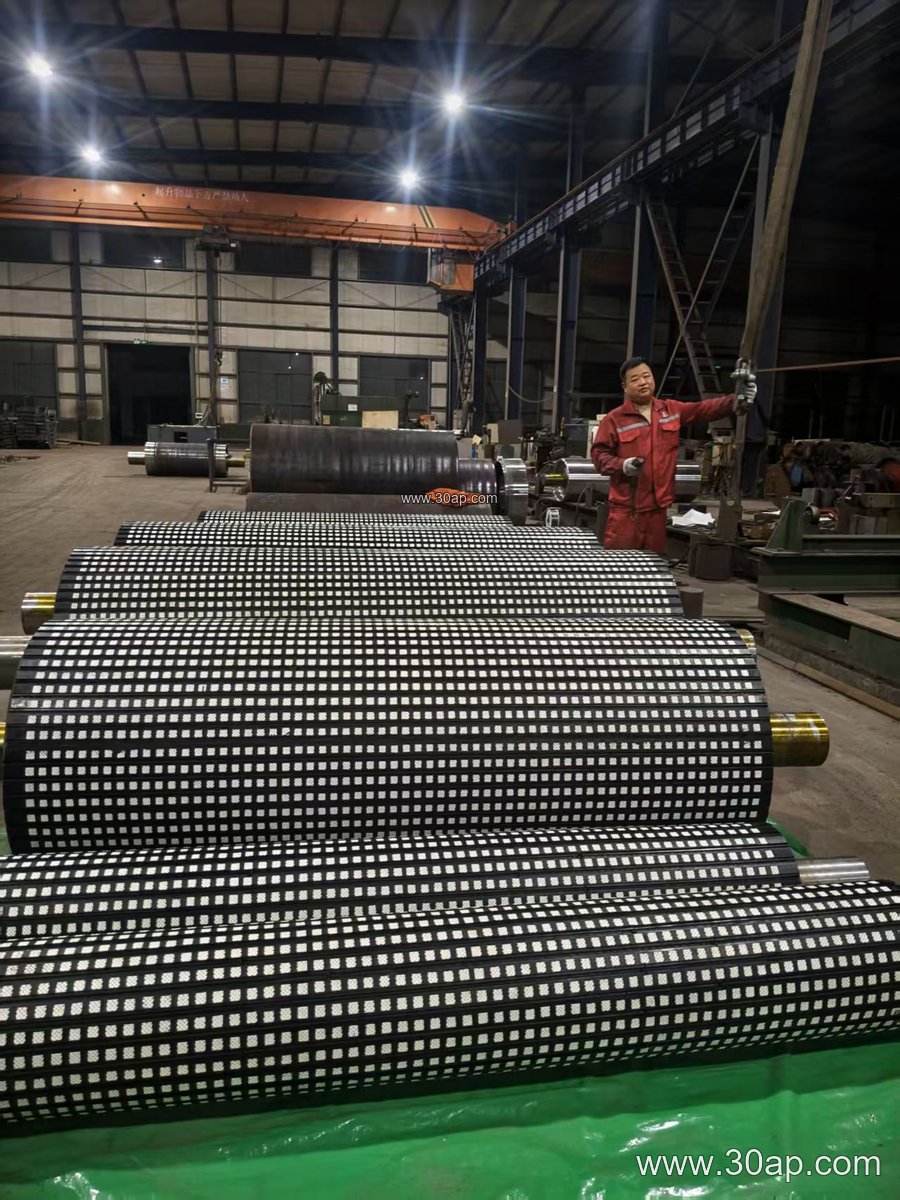
Most take-up pulleys are welded steel drums with a machined face and a shaft sized by torque and bearing load, not by belt width alone. Common diameters include Ø200, Ø315, Ø400, Ø500, Ø630, Ø800, Ø1000, Ø1250, and larger sizes for heavy-duty mining conveyors. Face width usually runs wider than the belt; for example, a B800 belt often uses a pulley face near 950 mm, while a B1200 belt may use about 1400 mm. These are reference values, not fixed pairings.
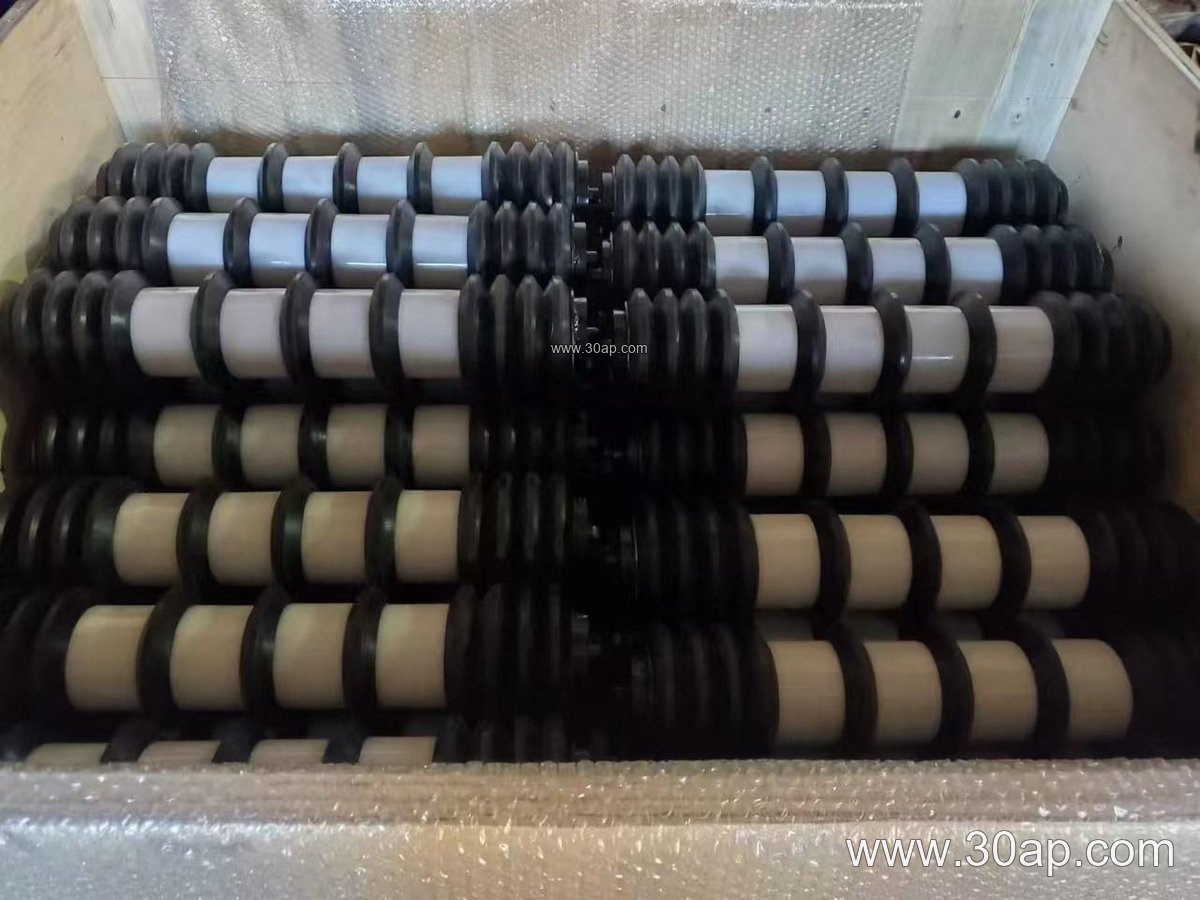
Surface treatment depends on the duty. Plain face is common in clean, light-duty service. Rubber lagging, either cold-bonded or hot-spliced, improves grip and protects the shell. Diamond or herringbone grooving helps shed water and fines. Ceramic lagging may be chosen where slip and abrasion are both concerns. Lagging thickness is often 8, 10, 12, 15, or 20 mm, selected by the designer.
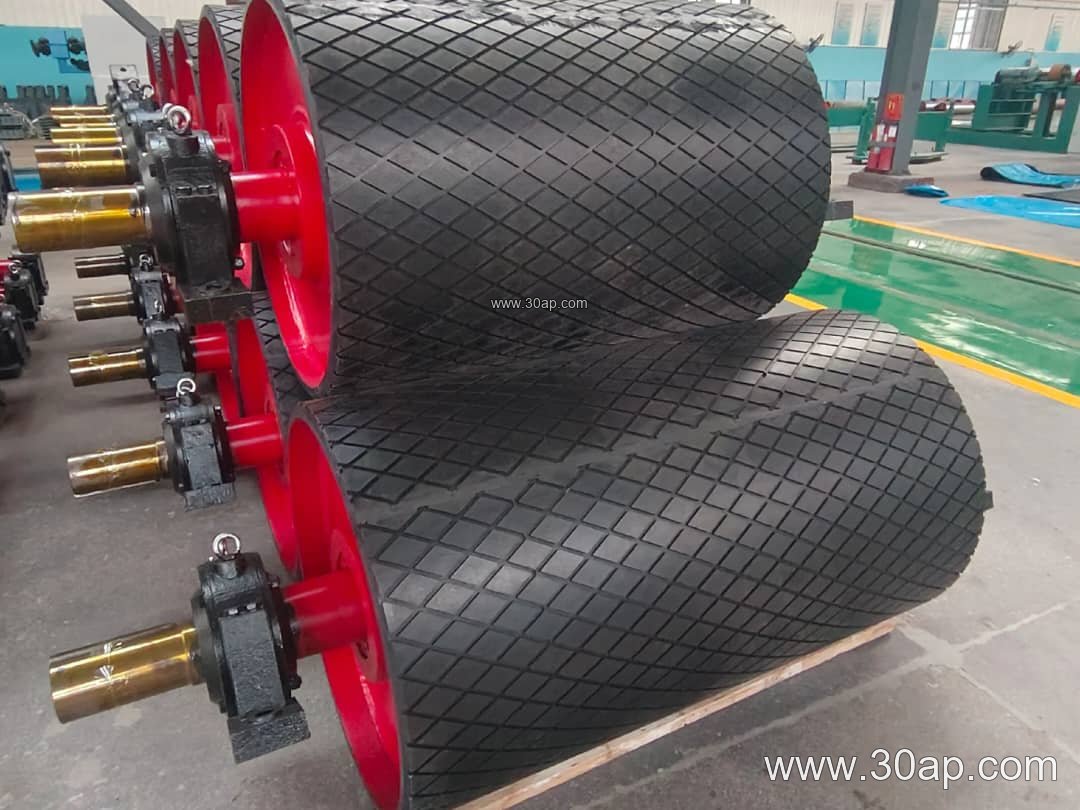
Where It Fits in the Conveyor
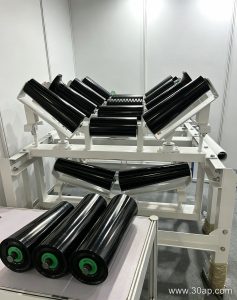
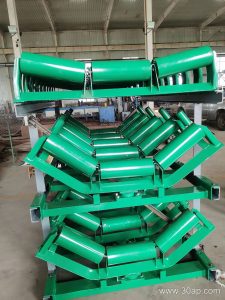
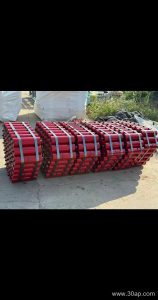
Take-up pulleys appear in a range of layouts. In a short aggregate conveyor, a screw take-up may move a small drum a few centimeters. In a long overland or underground coal mining conveyor, a gravity take-up tower may carry a larger pulley on a vertical slide. The take-up pulley works together with the conveyor belt, conveyor pulley set, and conveyor bracket structure, so alignment and free movement matter as much as drum strength.
Industries that rely on this drum include limestone mines, iron ore and copper ore operations, coal preparation plants, clinker lines in cement works, and port bulk terminals. A steel cord conveyor belt or a multi-ply fabric core belt may need different take-up travel, but the take-up pulley remains the tensioning element.
Matching the Take-Up Pulley to the Belt
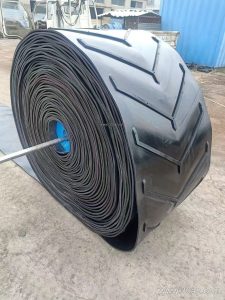
Belt type affects the take-up design. A heavy-duty mining conveyor belt carrying coarse rock may call for a larger diameter and thicker lagging than a smooth EP conveyor belt in a sand and gravel line. Abrasion resistant conveyor belt, heat resistant conveyor belt, and flame retardant conveyor belt each place different demands on the pulley surface and bearings. The take-up pulley should be sized from the actual belt tension and shaft load, not from a single belt width rule.
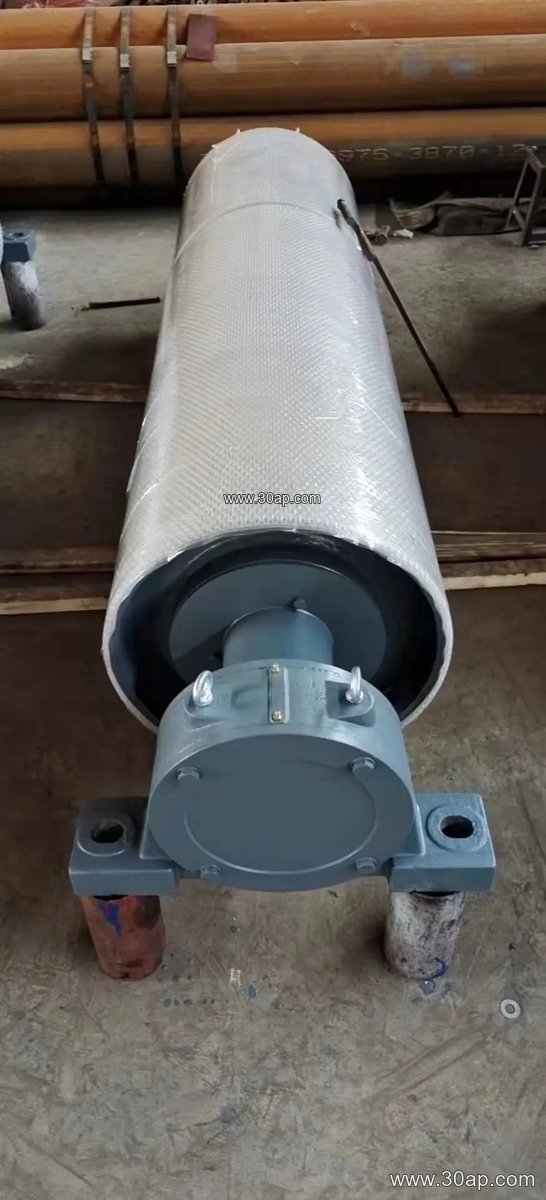
Common belt widths in these systems include B400, B500, B650, B800, B1000, B1200, B1400, B1600, B1800, B2000, B2200, and B2400. Shaft diameters often fall in the Ø50 to Ø200 range, but the final size comes from the conveyor designer’s torque and bending calculations.
Buyer Checklist
- Confirm the take-up type: screw, gravity, or hydraulic.
- State belt width, belt type, and expected tension range.
- Specify pulley diameter, face width, shaft diameter, and bearing style.
- Choose lagging: plain, rubber, diamond, herringbone, or ceramic.
- Check that the pulley travel matches belt stretch and take-up stroke.
- Review the conveyor bracket and slide arrangement for free movement.
For a reliable tensioning point, the belt conveyor take-up pulley should be treated as part of the whole conveyor system, not as a standalone drum.