What a Conveyor Equipment Idler Does
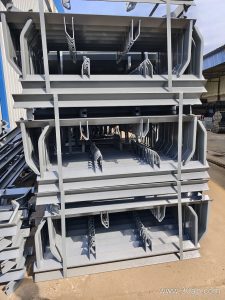
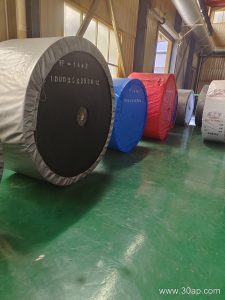
A conveyor equipment idler is the rotating roller assembly that supports the conveyor belt along its carrying and return paths. In everyday plant language it is often called an idler roller, but its job is more than simply holding the belt up. Each idler helps maintain belt shape, reduces friction, guides material load, and keeps the belt tracking within the structure. On a typical conveyor, idlers are mounted on brackets or frames at regular intervals, and together they form the idler set or idler group that the belt rides across.
Unlike a conveyor pulley, which drives or redirects the belt at the ends of the system, an idler does not transmit power. Drive, tail, and bend pulleys are separate components with different duties, so they are not interchangeable with idlers. The conveyor equipment idler is a line component, distributed along the length of the conveyor, and its condition directly affects belt wear, energy consumption, and material spillage.
How an Idler Roller Is Built
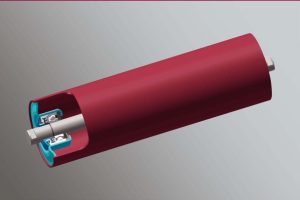
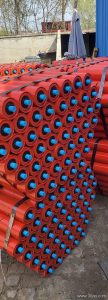
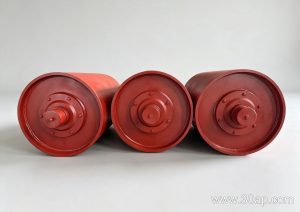
A standard idler roller usually consists of a steel tube shell, bearing housings at each end, a shaft, and a sealing arrangement. The shell may be plain steel, nylon-coated, ceramic-covered, or fitted with rubber rings for impact absorption. Bearings are commonly deep-groove ball types such as 6204, 6205, 6305, 6306, 6308, or 6310, selected according to load, speed, and roller diameter. The seal matters as much as the bearing: good labyrinth or contact seals keep dust and moisture out, which is critical in abrasive or wet environments.
Roller diameter is usually chosen to match belt speed and load. Common diameters include Ø63, Ø76, Ø89, Ø102, Ø108, Ø127, Ø133, Ø159, Ø178, Ø194, and Ø219 mm. A larger diameter generally suits higher belt speeds or heavier material, while smaller diameters are used on lighter-duty conveyors. There is no universal rule that one belt width must pair with one specific roller diameter; the correct combination depends on the belt width, trough angle, idler spacing, and the load the belt carries.
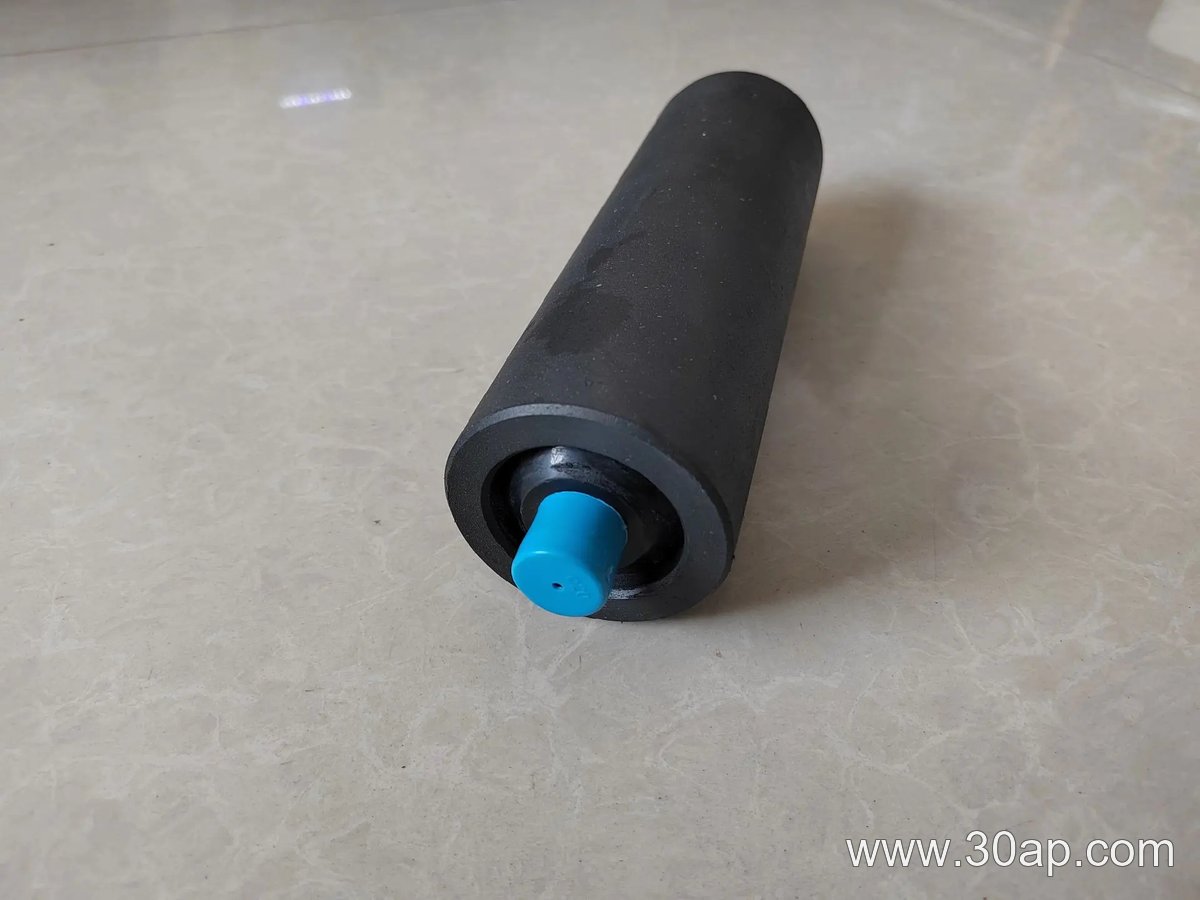
Common Idler Types and Where They Fit
The carrying side of a conveyor often uses three-roll troughing idlers, which shape the belt into a trough and keep bulk material centered. Trough angles of 20, 30, 35, and 45 degrees are common, and a slight forward tilt of about 1.5 to 2 degrees is sometimes used on training idlers. The return side may use a single flat roller or a V-shaped return idler to help clean the belt and improve tracking.
Other types serve specific positions. Impact idlers with rubber rings are placed under loading points to absorb falling material. Transition idlers ease the belt from the flat pulley into the trough. Self-aligning idlers, including friction and tapered designs, correct minor belt misalignment. Spiral or comb idlers help shed sticky material. These are variations of the same product family, not replacements for the main idler function.
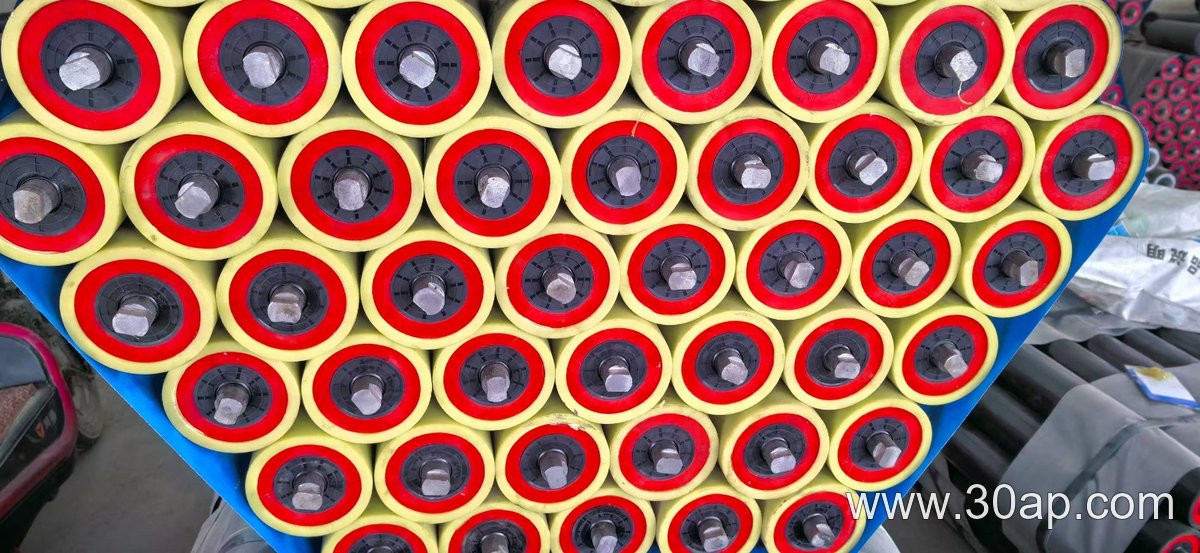
Belt Width, Roll Length, and Layout
Idler length changes with belt width, trough angle, and the number of rolls in the set. For a three-roll troughing set, the following roller lengths are commonly seen as reference examples:
- B500: about 200 mm
- B650: about 250 mm
- B800: about 315 mm
- B1000: about 380 mm
- B1200: about 465 mm
- B1400: about 530 mm
- B1600: about 600 mm
- B1800: about 670 mm
- B2000: about 750 mm
These figures are not fixed pairings. Side rollers and center rollers can differ, and the final length is determined by the conveyor design. Belt widths range from B400 up to B2400, and the idler set must match the belt width and trough geometry rather than follow a single table.
Where Conveyor Equipment Idlers Are Used
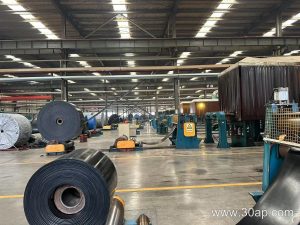
Idlers appear in nearly every bulk handling line. In a quarry or sand and gravel plant, they carry crushed stone and aggregate over long distances. In a coal preparation plant or power station coal yard, they support the conveyor belt through loading, transfer, and stockpile areas. The same components are used in cement plants, steel mills, ports, and crushing and screening circuits. The working environment decides the shell material and seal type more than the product name does.
What Buyers Should Check
When selecting a conveyor equipment idler, buyers should confirm the belt width, trough angle, roller diameter, shaft size, and mounting bracket dimensions. Bearing grade and seal design should suit the dust and moisture level on site. Roller surface—steel, nylon, ceramic, or rubber ring—should match the material being conveyed. It is also worth checking that the idler group matches the existing conveyor bracket spacing and that the shaft fits without modification. Finally, ask for the actual roller length and bearing number rather than assuming a size from the belt width alone. A correct idler selection reduces belt wear, lowers downtime, and keeps the conveyor running smoothly.