What a Conveyor Frame Does on a Belt Conveyor
A conveyor frame is the structural support that holds idler rollers, a conveyor pulley, and the conveyor belt in a stable working position. In many workshops and plants, people also call this assembly a conveyor bracket or support frame. It is not a single decorative part; it is a load-bearing system that keeps the belt tracking, maintains the trough profile, and transfers material weight to the ground or to a larger steel structure.
On a typical belt conveyor, the frame runs along the carrying side and the return side. The carrying side usually supports troughed idlers, while the return side often uses flat or V-return rollers. A conveyor pulley at the head or tail works with the frame, but it is a different component and should not be treated as a replacement for the frame itself.
How the Frame Is Built
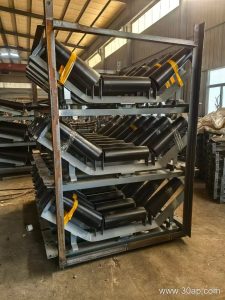
Most frames are fabricated from angle steel, channel steel, or folded steel plate. The choice depends on the belt width, the material being conveyed, and the required span between supports. A simple frame may consist of two longitudinal beams connected by cross members. A wider or heavier-duty frame may include reinforced cross beams, gussets, and adjustable mounting slots.
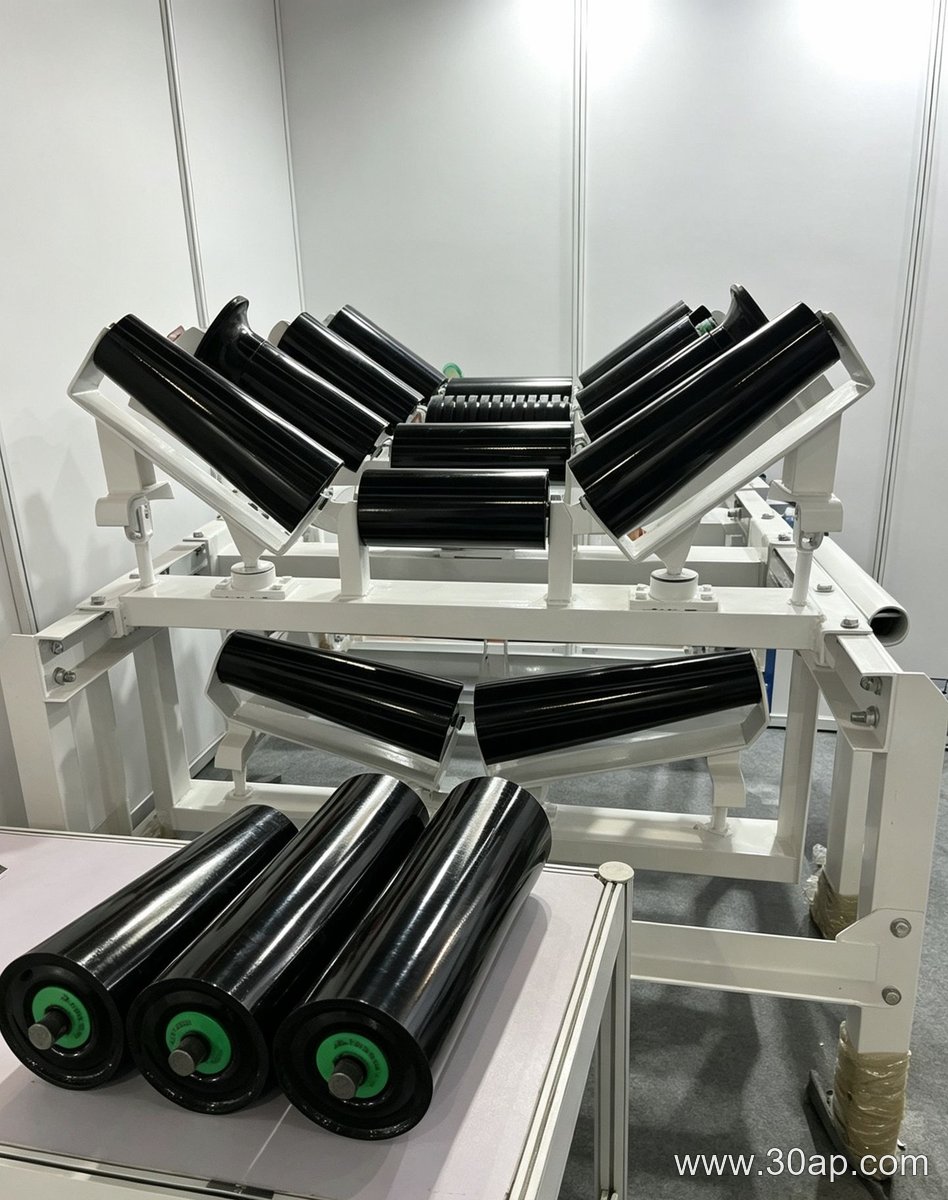
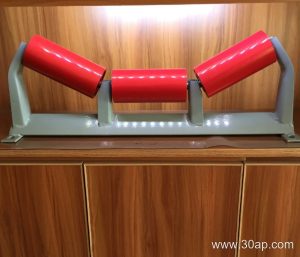
The frame must provide correct spacing for idler rollers and allow the belt to sit at the intended trough angle. Common trough angles include 20 degrees, 30 degrees, 35 degrees, and 45 degrees. A fixed frame is welded or bolted for one angle. An adjustable frame allows the same structure to be set at different angles within a range. This is useful when a conveyor is designed for future modification or when material characteristics change.
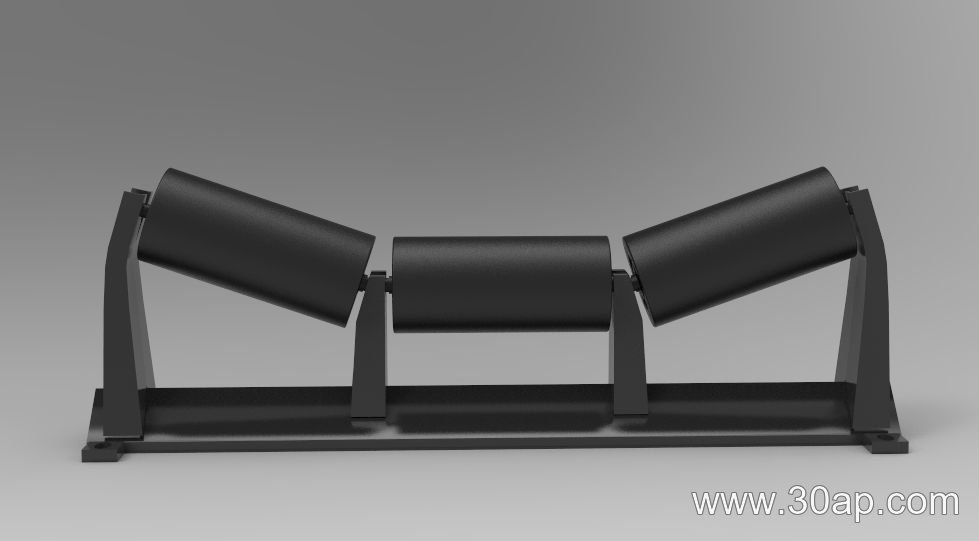
Common Frame Types and Their Positions
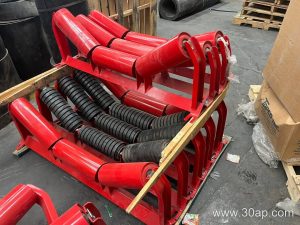
The frame family includes several subtypes, and each has a specific role. The main carrying frame is often called a troughing idler frame or upper trough frame. It supports three or more idlers that form the belt into a trough. A transition frame is placed near a pulley to guide the belt from a flat profile into a trough without sudden stress. A return frame supports the empty belt on the lower side; it may be a flat return frame or a V-return frame.
Other subtypes include impact frames for loading zones, self-aligning frames for belt tracking, forward-leaning frames, spiral roller frames, hanging frames, and adjustable frames. These are not interchangeable. For example, an impact frame is used where material falls onto the belt, while a self-aligning frame is used to correct belt drift. A conveyor bracket may connect the frame to the main conveyor structure, but it is not the same as a full frame assembly.
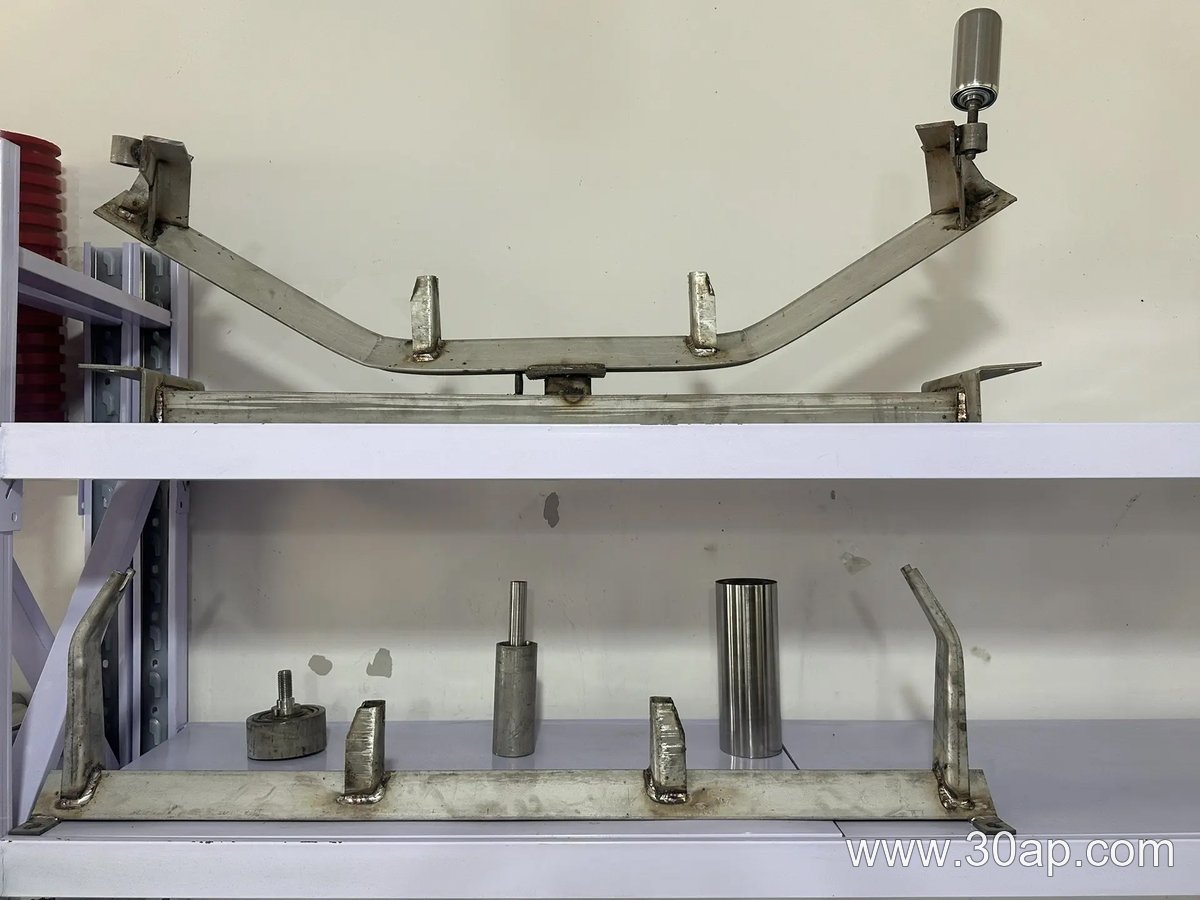
Matching Frame Dimensions to Belt and Roller Sizes
Belt width and roller diameter are two key references. Common belt widths include B500, B650, B800, B1000, B1200, B1400, B1600, B1800, B2000, and B2200. Common idler roller diameters include 89 mm, 108 mm, 133 mm, 159 mm, and 194 mm. These values are reference data, not fixed combinations. A B800 belt, for example, may be used with different roller diameters and trough angles depending on the load and speed.
Installation hole spacing and cross beam length are not universal. They are determined by belt width, trough angle, roller type, and the overall conveyor design. A buyer should not assume that one belt width automatically matches one pulley diameter or one shaft size. The frame drawing should specify the mounting dimensions and the roller spacing required for the application.
Where Conveyor Frames Are Used
These frames appear in many bulk material handling locations. In a quarry or limestone mine, they support heavy rock loads and resist dust and vibration. In a coal washing plant or power plant coal yard, they may be built with sealed or protected bearings to cope with fine particles. The same basic frame design also works in sand and gravel lines, crushing and screening plants, and cement plants.
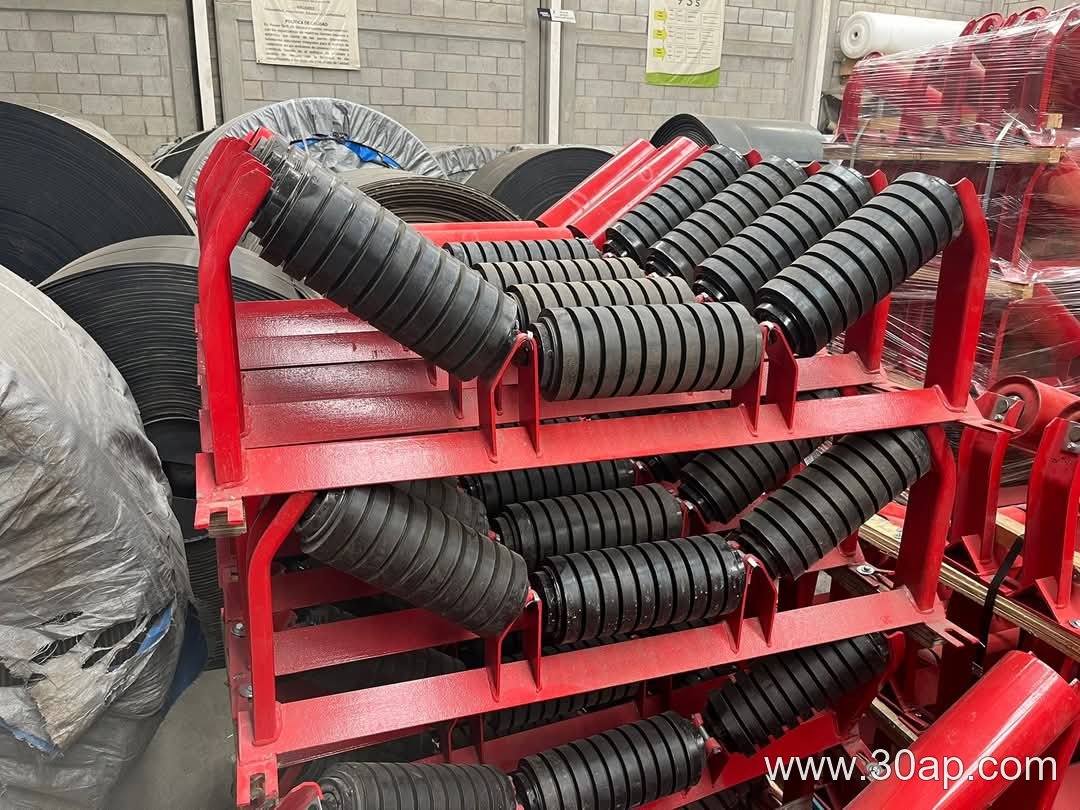
Other applications include fertilizer handling, grain silos, and tunnel muck removal. In each case, the frame must suit the material, the belt speed, and the loading method. A frame that works well for a light grain conveyor may not be suitable for a primary crusher discharge without additional reinforcement.
What Buyers Should Check Before Ordering
Before selecting a conveyor frame, confirm the belt width, the desired trough angle, the roller diameter, and the mounting method. Ask whether the frame is fixed or adjustable. Check whether it is for the carrying side or the return side, and whether impact or self-aligning features are needed. Also confirm the connection details for the conveyor bracket and the main support structure.
A good frame drawing should show the cross beam length, the hole spacing, the roller position, and the material thickness. Do not rely on a single number from a catalog. The frame is part of a system, and its dimensions should match the idler rollers, the conveyor belt, and the pulley arrangement. When these details are correct, the conveyor runs smoother, the belt tracks better, and maintenance becomes easier.