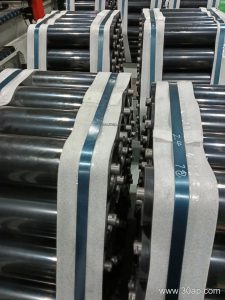
What Pulley Machining Covers
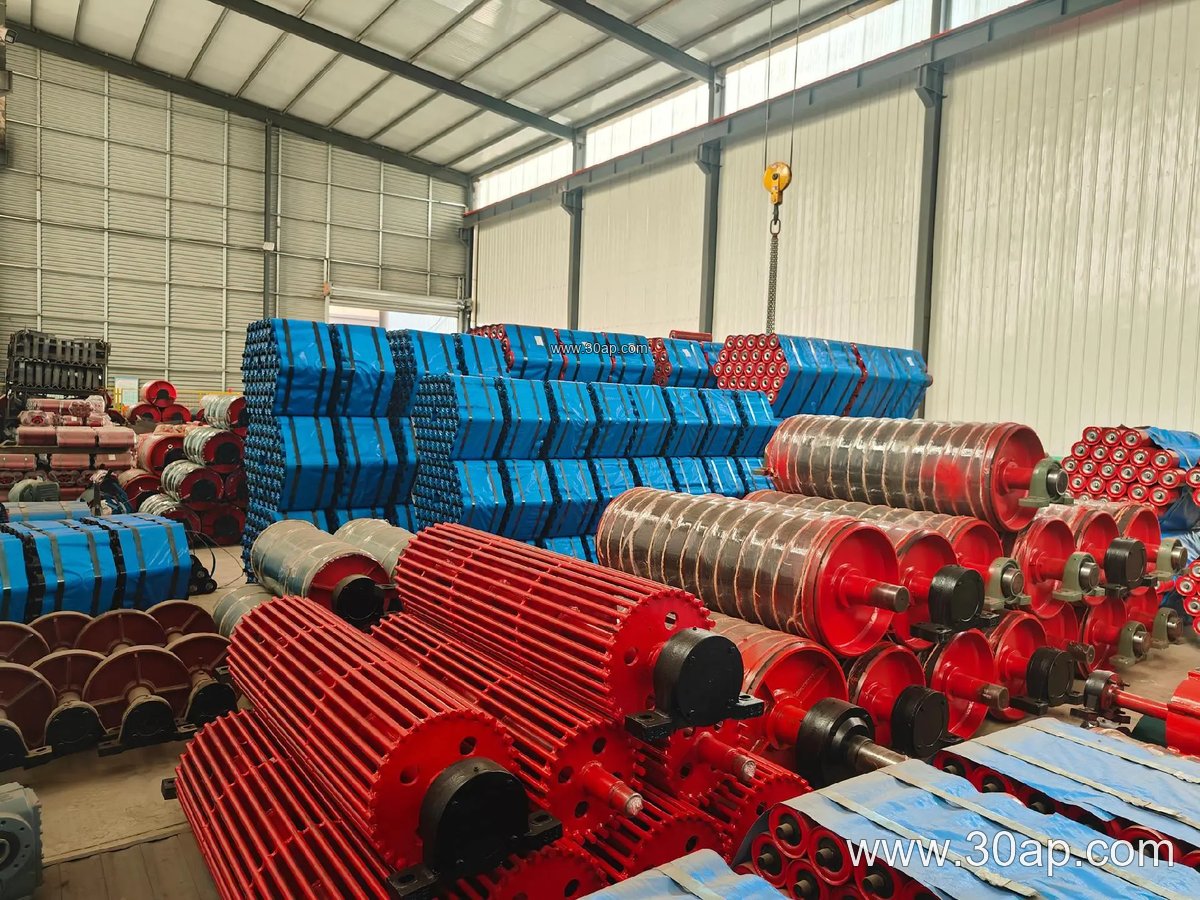
Pulley machining is the set of turning, boring, welding, and finishing operations that turn a steel shell, shaft, and end discs into a working conveyor pulley. The drum is the rotating part that carries the conveyor belt, transfers torque, and keeps the belt tracking along the conveyor line. In a quarry, a coal preparation plant, or a cement plant, a poorly machined drum shows up quickly as belt wander, slippage, or vibration, so the machining stage deserves attention before the pulley ever reaches the frame.
Machining is not only about making the OD round. It also includes machining the shaft journals to fit the bearings, squaring the end faces, preparing the hub bore, and finishing the shell surface so lagging will bond evenly. A conveyor drum that runs true from the start lasts longer and puts less stress on the conveyor bracket and the belt itself.
How a Machined Pulley Is Built
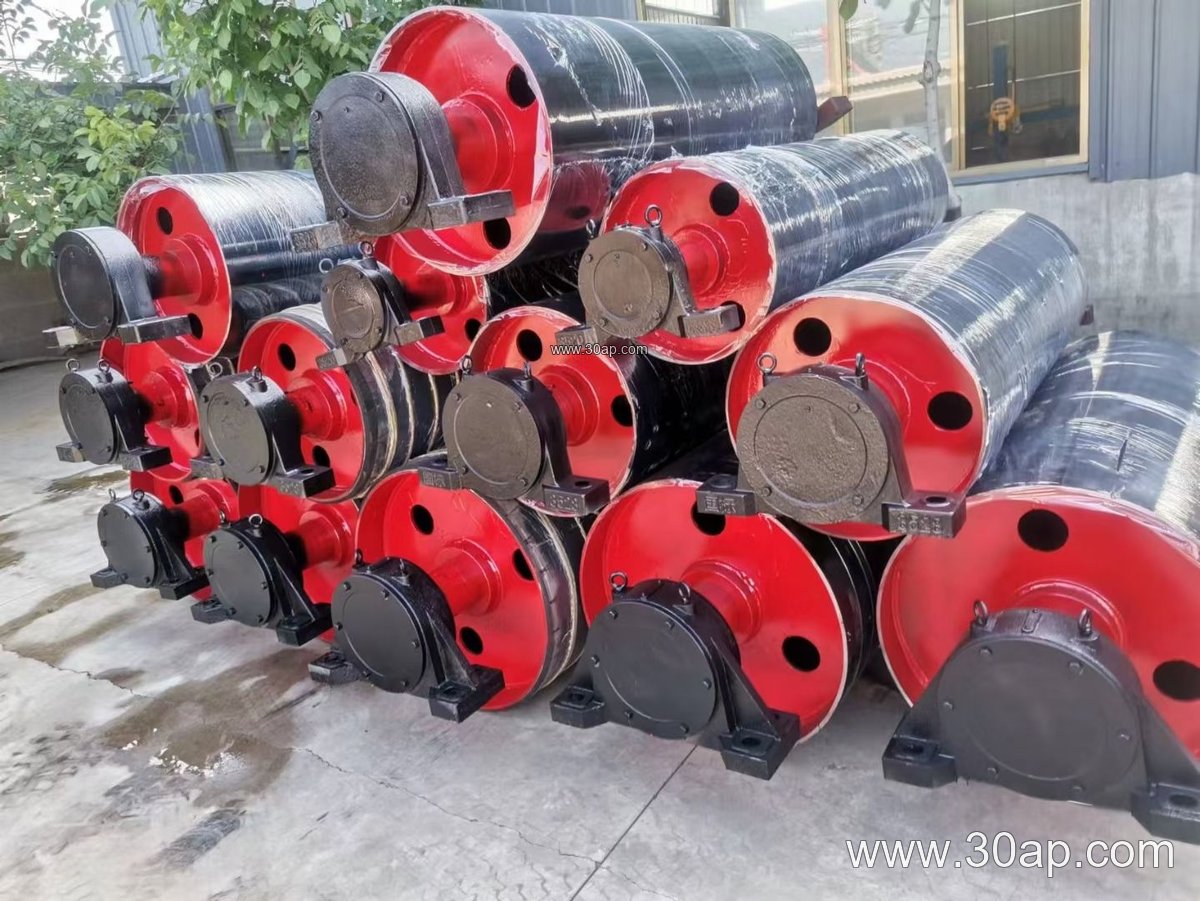
Most conveyor pulleys start as a rolled steel shell welded to end discs, with a shaft pressed or keyed through the hubs. The main machining steps usually include:
- Turning the shell OD to a consistent diameter and concentricity
- Boring and keying the hub bore to match the shaft
- Machining the shaft journals for bearing seats
- Facing the end discs so the pulley sits square on the frame
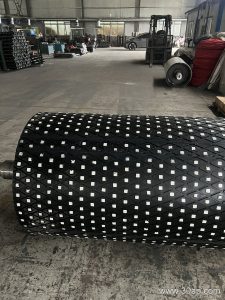
- Preparing the shell for lagging, whether plain, grooved, or ceramic
For heavier service, the shaft diameter is chosen from torque and load, not from belt width alone. A B1200 drum might use a larger shaft in a high-tension head position than in a low-tension bend position. Typical shaft sizes fall in the Ø50 to Ø200 range, but the final figure comes from the conveyor design.
Where Machined Pulleys Are Used
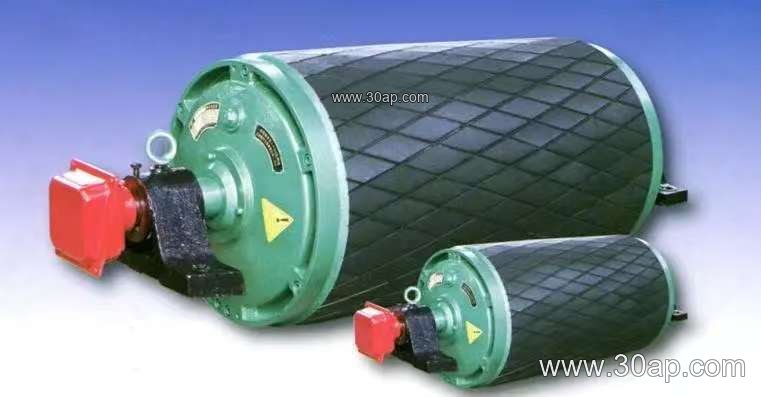
Drive pulleys, tail pulleys, and bend pulleys appear across bulk handling, but they are not interchangeable. A drive pulley transmits power through the lagged surface, while a tail pulley mainly guides the returning belt and a bend pulley changes belt direction under lower tension. In a limestone mine, a head drum with diamond lagging may pull a long incline belt, while a smaller bend drum redirects the same belt before the tensioner. In a power plant coal yard, a tail drum with a smooth face may be preferred to reduce material buildup.
The working environment shapes the machining choices. A wet coal preparation plant may call for sealed bearing housings and corrosion-resistant finishes, while a dry aggregate line in a sand and gravel plant may prioritize wear resistance on the shell. The belt itself matters too: a heavy steel cord conveyor belt or a thick abrasion resistant conveyor belt needs a drum machined to handle higher tension and a well-finished lagging surface. In other cases, an EP conveyor belt or a multi-ply fabric core belt runs well on a standard machined drum with 8–12 mm rubber lagging.
Diameter, Face Width, and Surface Forms
Pulley diameter is usually matched to belt tension, belt thickness, and the required wrap angle. Common diameters include Ø200, Ø315, Ø400, Ø500, Ø630, Ø800, Ø1000, and Ø1250, with larger sizes for high-tension drives. Face width is normally a little wider than the belt, for example B800 with roughly 950 mm face, or B1400 with about 1600 mm face. These are reference combinations, not fixed rules.
| Parameter | Common Range | Notes |
|---|---|---|
| Belt width | B400 to B2400 | Face width usually exceeds belt width |
| Drum diameter | Ø200 to Ø1800 | Selected by tension and wrap angle |
| Shaft diameter | Ø50 to Ø200 | Based on torque and load |
| Lagging thickness | 8, 10, 12, 15, 20 mm | Plain, diamond, chevron, or ceramic |
Surface options include plain, hot-vulcanized rubber, cold-bonded rubber, diamond grooving, chevron grooving, and ceramic tiles. Diamond lagging helps shed water in a wet quarry, while ceramic lagging suits high-wear drive positions in an iron ore or copper ore operation. A smooth face may be enough for a bend pulley where traction is not the main job.
What Buyers Should Confirm
Before ordering, confirm the belt width, the drum diameter, the shaft size, the bearing type, and the lagging form. Ask how the shell will be balanced and whether the journals will be machined to the bearing tolerance. For a conveyor pulley that will sit near a crusher or a ship loader, mention impact and dust exposure so the lagging and seals can be chosen accordingly. A machined drum is a long-term part, and small details at the drawing stage save real downtime later.