What an Anti-Misalignment Idler Does on a Conveyor
An anti-misalignment idler is a self-correcting carrying or return roller designed to keep a conveyor belt centered on its path. When a belt starts to drift toward one side, the angled or offset rolls of this idler generate a small steering force that nudges the belt back toward the middle of the frame. Operators in a limestone quarry, a coal washing plant or a cement kiln line often install these tracking rollers where belt wander is most likely, such as long straight runs, curves and transition zones near the head or tail.
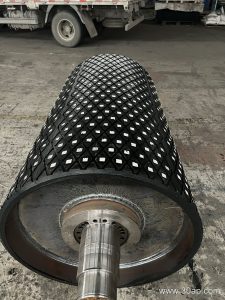
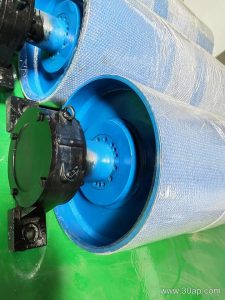
This is not a drive pulley, a tail pulley or a bend pulley. Those are powered or directional components that transmit motion and tension. The anti-misalignment idler, sometimes called a self-aligning idler or training idler, only guides the belt. Pulleys and idlers work together, but they are not interchangeable parts.
How the Roller Is Built
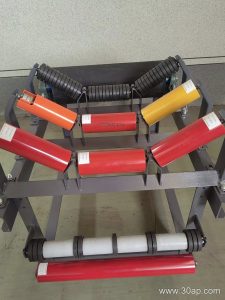
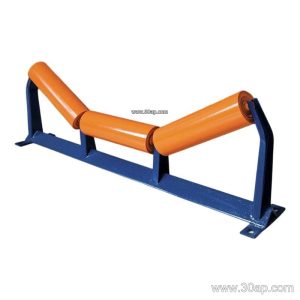
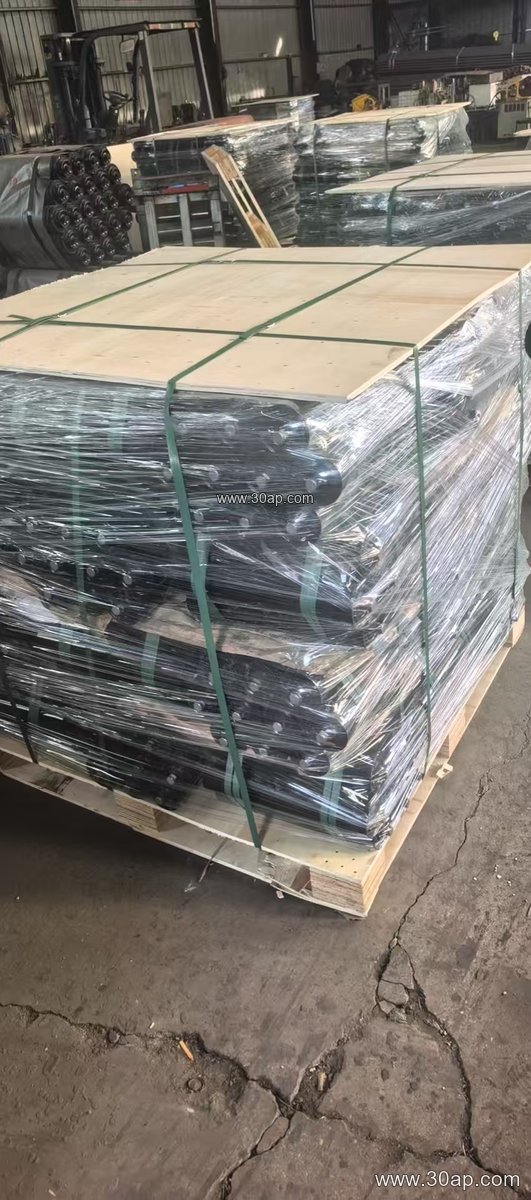
Most designs use a pair of angled rolls mounted on a pivoting frame. A vertical pivot pin lets the assembly rotate slightly when the belt contacts the side rolls, and the resulting angle pushes the belt back to the centerline. Common surface forms include steel tube, nylon, ceramic and rubber ring. Rubber rings are useful in dusty or wet service because they grip the belt edge without marking it.
Bearing choice matters for service life. Typical sizes include 6204, 6205, 6305, 6306, 6308 and 6310, selected according to load, speed and sealing arrangement. Dusty sites such as an ore stockyard or a sand and aggregate line benefit from labyrinth seals and grease retention. The roller shell and shaft should be sized for the actual belt tension rather than guessed from belt width alone.
Typical Sizes and Configuration Reference
The values below are common reference examples. Final dimensions follow the conveyor design, belt width, trough angle and idler group form. They are not fixed combinations.
| Parameter | Common Reference Values |
|---|---|
| Roller diameter | Ø63, Ø76, Ø89, Ø102, Ø108, Ø127, Ø133, Ø159, Ø178, Ø194, Ø219 mm |
| Belt width | B400, B500, B650, B800, B1000, B1200, B1400, B1600, B1800, B2000, B2200, B2400 |
| Trough angle | 20°, 30°, 35°, 45° |
| Forward tilt (for training) | about 1.5° to 2° |
| Idler group | single roll, two-roll, three-roll troughing |
| Bearing | 6204, 6205, 6305, 6306, 6308, 6310 |
| Roll surface | steel tube, nylon, ceramic, rubber ring |
For a three-roll troughing set, common roll lengths are roughly 200 mm at B500, 250 mm at B650, 315 mm at B800, 380 mm at B1000, 465 mm at B1200, 530 mm at B1400, 600 mm at B1600, 670 mm at B1800 and 750 mm at B2000. Side rolls and center rolls may differ, and the exact length is set by the frame design.
Where It Fits in the Conveyor Line
Training idlers are usually placed on the carrying side at intervals along a long run, and on the return side where the belt has little support. In a power plant coal handling system, a properly positioned anti-misalignment idler can reduce edge wear on a flame retardant conveyor belt. In a copper or iron ore concentrator, the same roller helps protect a heavy-duty mining conveyor belt from rubbing against the frame. Similar benefits apply to a quarry conveyor belt, an aggregate conveyor belt or a crusher conveyor belt handling abrasive rock.
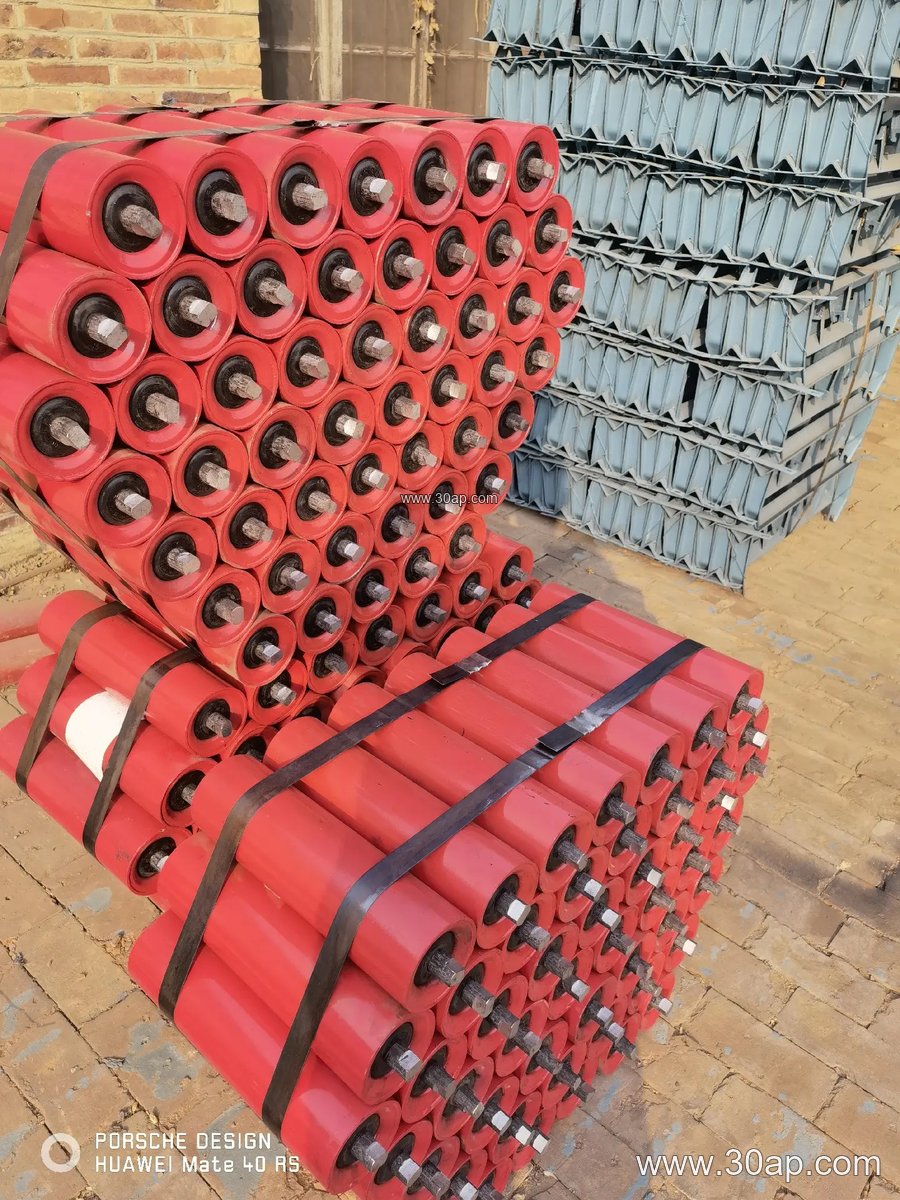
The roller should be mounted square to the belt centerline, with the pivot free to move. A conveyor bracket that is twisted or loose will defeat the self-aligning action, so alignment of the supporting structure deserves as much attention as the roller itself.
Matching the Idler to the Belt and Duty
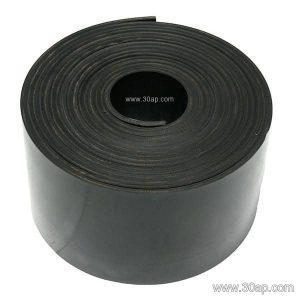
Belt type and load guide the selection. A multi-ply fabric core conveyor belt or an EP conveyor belt usually needs a moderate-diameter roller with good sealing, while a steel cord conveyor belt on a high-tension run may call for larger shafts and heavier bearings. In a coal mine, a flame retardant conveyor belt and anti-static conveyor belt are common, and the idler should be specified for the same environment. A heat resistant conveyor belt near a sinter plant or clinker cooler needs a roller that can tolerate radiant heat. An abrasion resistant conveyor belt in a stone crushing line favors a durable shell and replaceable rubber rings.
Widths such as 800 mm, 1000 mm, 1200 mm and 1400 mm are frequent in bulk material handling, but no single belt width forces one pulley diameter or one roller size. Confirm the belt speed, trough angle, load and frame dimensions with the supplier before ordering.
Buyer Checklist
- Confirm belt width, trough angle and idler group form.
- State the roller diameter and bearing size required by the frame.
- Describe the environment: dust, moisture, heat, oil or fire risk.
- Check pivot freedom and mounting squareness during installation.
- Inspect rollers for rotation and belt tracking as part of routine maintenance.
A well-chosen anti-misalignment idler is a small investment that protects the belt edge, extends roller life and keeps the conveyor running straight in mines, quarries, cement plants and ports.