What a Port Conveyor Pulley Does
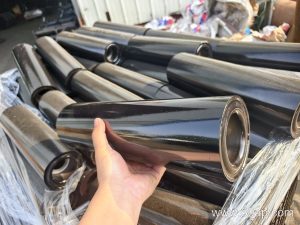
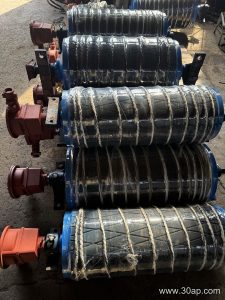
A port conveyor pulley is the cylindrical drive or driven component that transmits power to the conveyor belt and keeps it tracking properly in bulk material handling terminals. Unlike a general-purpose conveyor pulley used in a small workshop, the port version must withstand continuous operation, salt-laden air, and heavy tonnage from ship loading and unloading systems. In a typical port layout, the drive pulley connects to the gearbox and motor, the tail pulley maintains belt tension at the return end, and bend pulleys route the belt through the take-up zone.
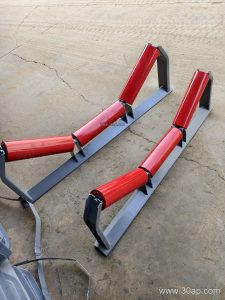
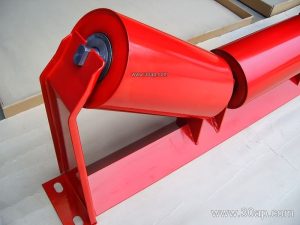
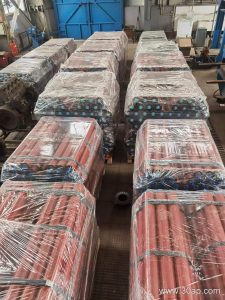
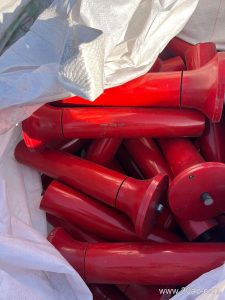
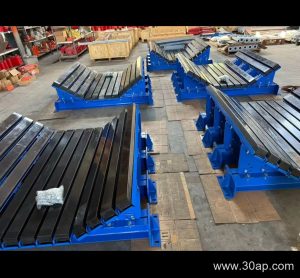
These pulleys work alongside the rubber conveyor belt, idler roller sets, and conveyor bracket assemblies to form a complete handling line. A worn or undersized pulley can cause belt slippage, edge damage, or premature cover failure, so matching the pulley to the belt and load profile matters from the first day of installation.
Construction and Surface Options
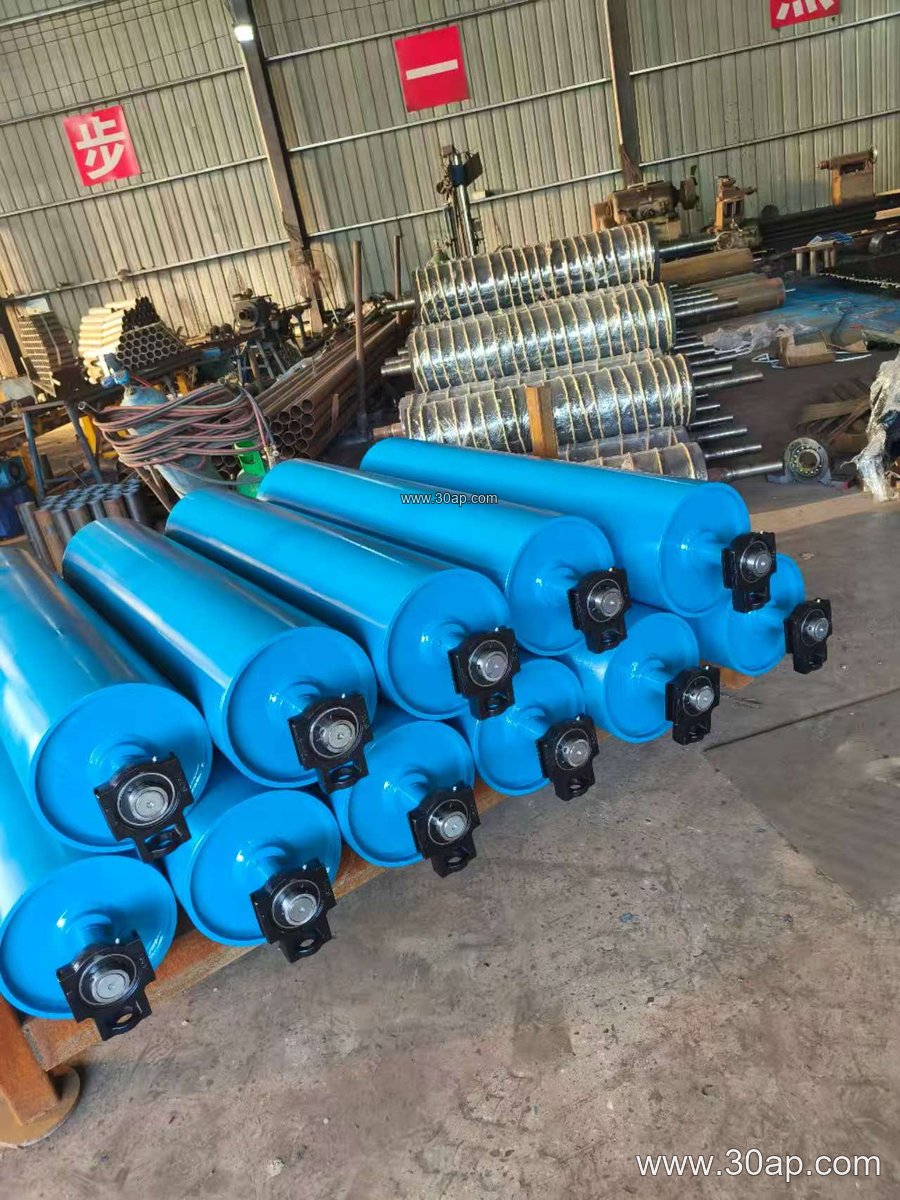
The core is usually a welded steel drum with machined end discs and a shaft sized by torque and radial load, not by belt width alone. Common shaft diameters range from Ø50 to Ø200 mm depending on the drive duty. The pulley face width typically exceeds the belt width to allow for belt wander; for example, a B1200 belt often runs on a pulley with roughly 1400 mm face width, while a B800 system may use about 950 mm face width.
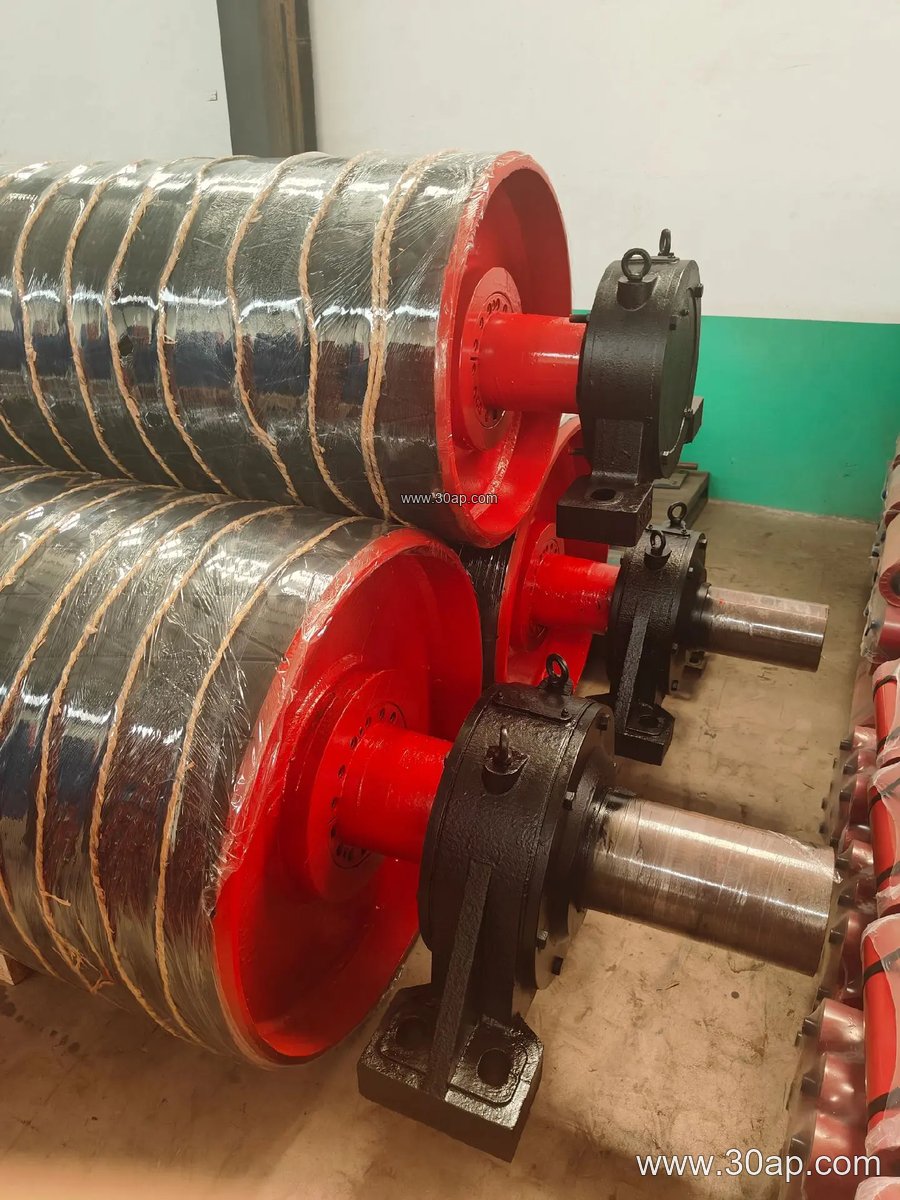
Surface treatment is a key decision. Plain steel is acceptable for light, clean duty, but most port applications specify lagging for grip and wear protection. Available forms include:
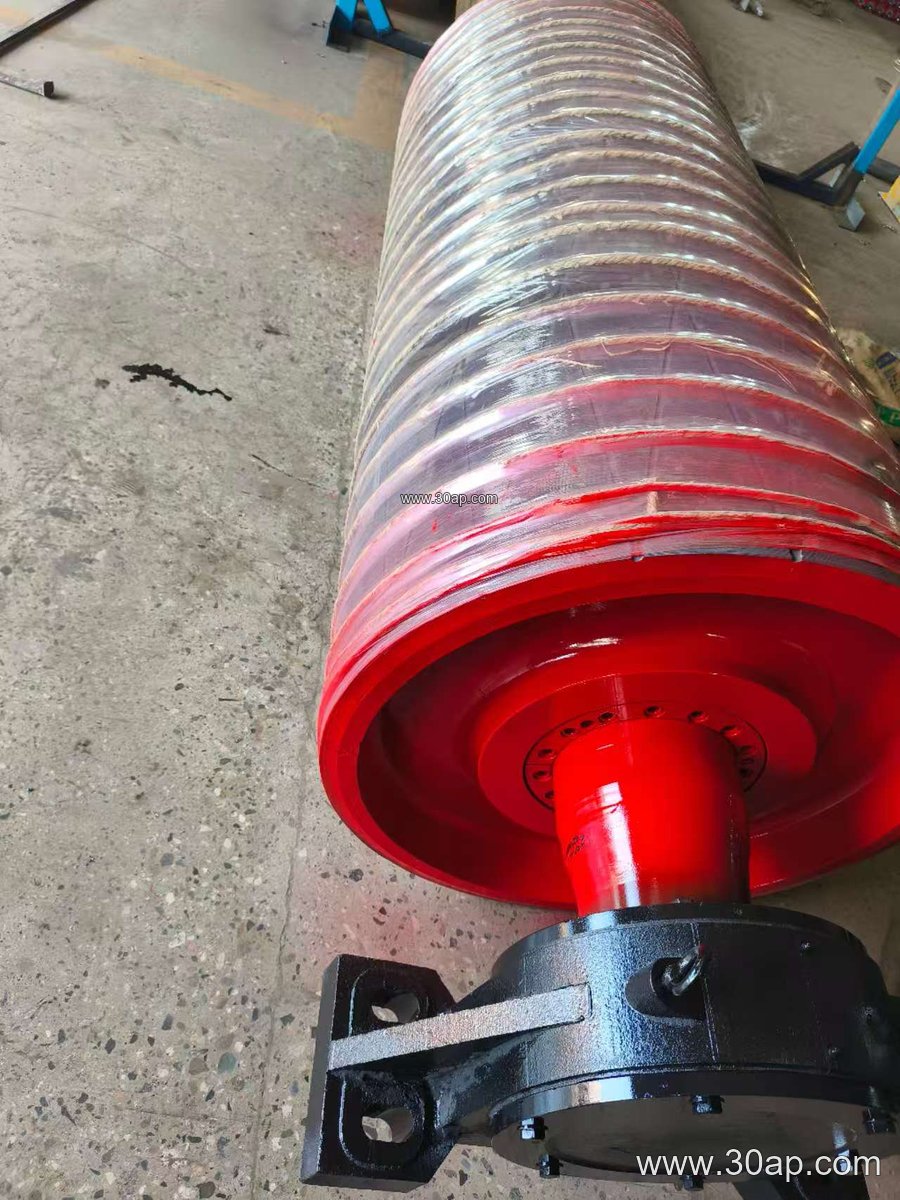
- Hot vulcanized rubber lagging in 8, 10, 12, 15, or 20 mm thickness
- Cold-bonded rubber lagging
- Diamond pattern lagging for improved traction in wet conditions
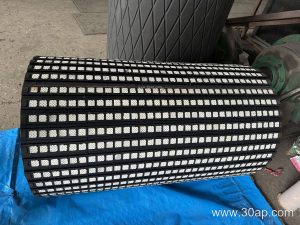
- Ceramic lagging for high-abrasion service
- Plain lagging for non-drive bend and snub positions
Drive pulleys usually receive diamond or ceramic lagging, while tail and bend pulleys may use plain or lightly grooved rubber. The choice should reflect the material being carried—whether it is coal, iron ore, limestone, or fertilizer—and the expected moisture level at the terminal.
Where It Fits in the Port Terminal
Port conveyor pulleys appear in ship loaders, stacker-reclaimers, and long overland jetty conveyors. In a coal export terminal, the head pulley discharges coal onto the ship loader boom, while the tail pulley sits at the transfer tower. In an iron ore import facility, heavy-duty pulleys handle abrasive fines and lump ore, often paired with a steel cord conveyor belt or a high-abrasion rubber conveyor belt to resist cutting and gouging.
Other common settings include fertilizer handling sheds and grain silo galleries, where dust and humidity demand careful sealing. The pulley bearing housings and the conveyor bracket interface should be protected against corrosive harbor air, and the lagging should be selected to avoid material build-up on the return run.
Matching the Pulley to the Belt System
A port conveyor pulley is not selected in isolation. The belt type, tension, and speed all influence the pulley diameter and lagging. For a B1000 system carrying aggregate, a drive pulley around Ø800 mm with 12 mm diamond lagging is a common starting point, but the final size depends on the belt’s rated tension and the gearbox output. A B1400 conveyor handling heavy ore may require a Ø1000 mm or larger drum with a thicker shaft.
When the conveyor uses an EP conveyor belt or a multi-ply fabric core conveyor belt, the pulley diameter must be large enough to limit bending stress in the carcass. Steel cord conveyor belts typically demand larger diameter pulleys than fabric belts of the same width, so the pulley supplier should confirm the minimum diameter from the belt manufacturer’s data. The table below shows representative combinations, not fixed rules:
| Belt Width | Typical Pulley Face Width | Example Diameter Range | Common Lagging |
|---|---|---|---|
| B800 | ~950 mm | Ø500–Ø800 mm | 10–12 mm diamond |
| B1000 | ~1150 mm | Ø630–Ø1000 mm | 12 mm diamond or ceramic |
| B1200 | ~1400 mm | Ø800–Ø1250 mm | 15 mm diamond |
| B1400 | ~1600 mm | Ø1000–Ø1400 mm | 15–20 mm ceramic |
These values are for reference only; actual selection follows the conveyor design, belt tension, and duty cycle.
Buyer Checklist for Port Conveyor Pulleys
Before ordering, confirm the belt width, belt type, and the pulley’s position—drive, tail, bend, or snub. Drive and tail pulleys are not interchangeable, and a bend pulley cannot substitute for a drive pulley because the load path and lagging requirements differ. Ask for the shaft diameter calculation based on torque and radial load, and verify the lagging thickness and pattern against the material and climate. For corrosive port environments, specify bearing seals and surface protection. Finally, check that the pulley face width and the conveyor bracket dimensions align with the existing structure, so the new pulley drops into place without field modification.
Whether the terminal handles coal, ore, cement clinker, or grain, the port conveyor pulley remains a small but critical link between the drive train and the belt. Getting the diameter, lagging, and shaft right protects the belt, reduces downtime, and keeps the terminal moving.