What a Pipe Conveyor Belt Is
A Pipe Conveyor Belt is a specialized conveyor belt that forms a closed tube as it travels along the conveyor line. After the material is loaded at the tail end, the belt gradually curls into a pipe shape through a series of transition idlers, carries the load in an enclosed circle, and opens again at the discharge point. This design keeps dust, spillage, and weather exposure under control, which is why it appears in mines, coal preparation plants, cement works, power stations, and quarry and aggregate operations.
The product is also called a tubular conveyor belt or an enclosed conveyor belt. It is not the same as a skirted conveyor belt or a corrugated sidewall conveyor belt, which keep material on an open belt with raised edges rather than rolling the belt into a tube.
Construction and Belt Structure
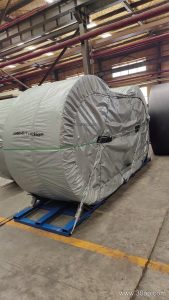
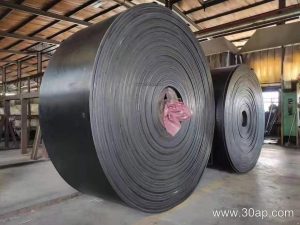
A Pipe Conveyor Belt is built around a fabric or steel cord carcass, covered with rubber on both the carrying and pulley sides. The carcass provides tensile strength and keeps the belt rigid enough to hold its circular shape, while the covers resist abrasion, impact, and the specific conditions of the site.
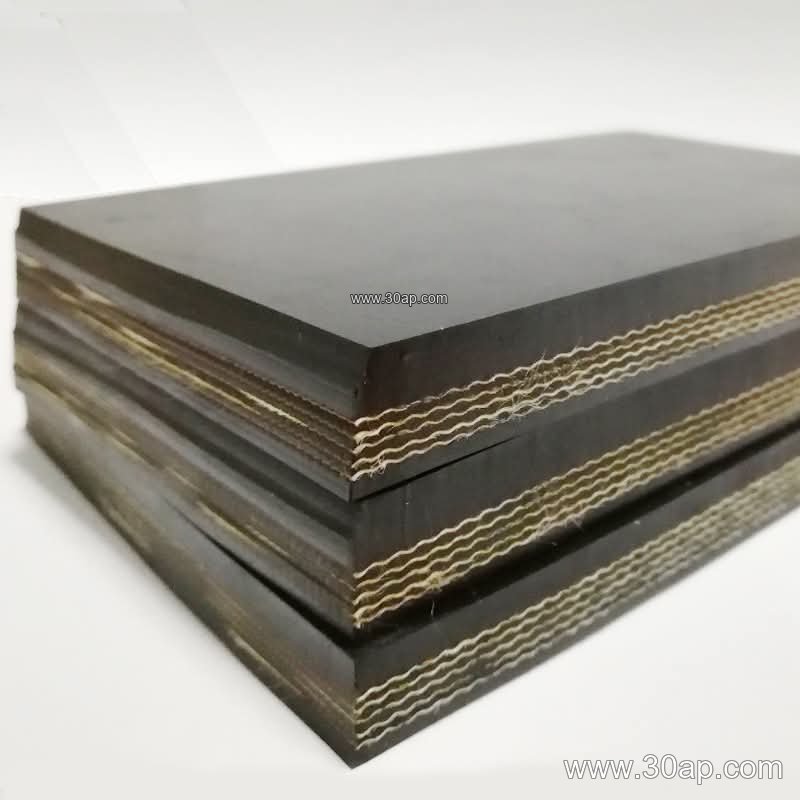
Common carcass options include EP conveyor belt grades and steel cord conveyor belt constructions where higher tension is needed over long distances. Rubber grades may be selected for heat, oil, flame retardance, or cold service depending on the material being conveyed. Because the belt must flex repeatedly into a pipe, the cover thickness and carcass design are usually balanced against the required stiffness.
Typical Reference Parameters
| Item | Common reference range |
|---|---|
| Belt width | B500, B650, B800, B1000, B1200, B1400, B1600, B1800, B2000 |
| Fabric strength grades | EP200, EP315, EP400, EP500, EP630, EP800, EP1000, EP1250, EP1600, EP2000 |
| Cover thickness | 3+1.5, 4+2, 5+2, 6+2, 8+3 mm |
| Carcass plies | Usually 2 to 6 layers for fabric core designs |
These values are reference data only. Actual belt width, strength grade, and cover thickness are determined by the conveyor design, the material, the tonnage, and the route.
Where It Fits in a Conveyor Line
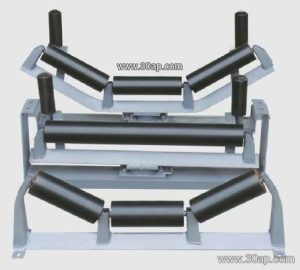
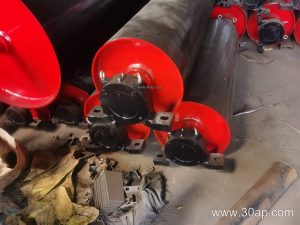
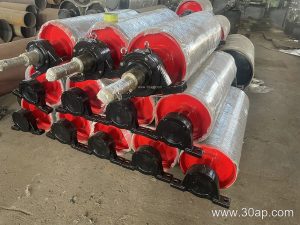
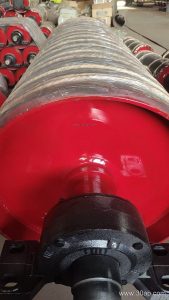
The belt runs over a conveyor pulley at the drive and tail positions, supported by idler roller sets that are arranged in a hexagonal or circular pattern to shape the pipe. Conveyor brackets and frames hold the idlers at the correct angle. Drive, tail, and bend pulleys each have a different role, and they are not interchangeable; the bend pulley only redirects the belt, while the drive pulley transmits power.
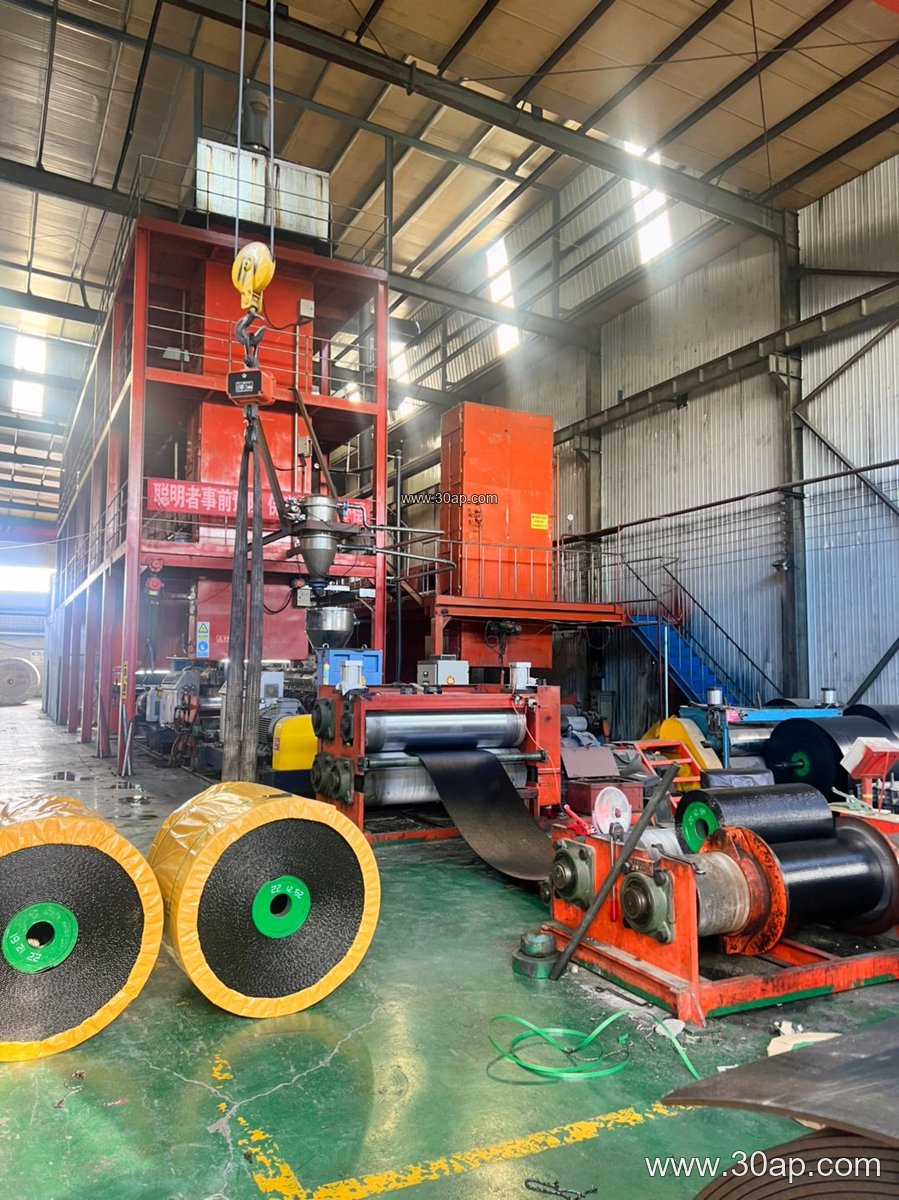
Enclosed conveying suits dusty or friable cargo such as coal, cement clinker, limestone, iron ore, copper ore, and sand. It also helps on routes with curves, because a pipe-shaped belt can bend horizontally without the transfer points needed by a conventional troughed belt. Ports, ship loading systems, recycling plants, and construction material yards also use this format where housekeeping and spill control matter.
Selection Points for Buyers
- Confirm the material: lump size, bulk density, moisture, temperature, and whether it is oily or chemically active.
- Check the tension demand against the route length and lift, then choose a fabric core or steel cord carcass grade accordingly.
- Review the pipe diameter in relation to belt width and the fill level the conveyor is designed for; a larger pipe does not automatically suit every duty.
- Ask how the belt is spliced, since an endless conveyor belt joint affects both tube formation and service life.
- Match the cover grade to the environment, for example an abrasion resistant conveyor belt for sharp aggregate or a heat resistant conveyor belt near hot clinker.
- Plan idler and pulley inspection access, because the belt’s shape depends on correct idler alignment.
Installation and Maintenance Notes
Correct transition length matters. If the belt is forced into a pipe too quickly, edge stress and tracking problems follow. Idler frames should be aligned to keep the overlap consistent, and the conveyor pulley lagging should be checked for wear that could affect grip. During operation, watch for material buildup on the return side, damaged edges, and cover wear; these are early signs that the pipe shape is being disturbed.
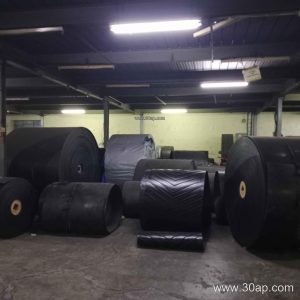
For more information on matching a Pipe Conveyor Belt with the right conveyor belt, idler roller, and conveyor pulley setup, review the technical data before ordering. Related belt styles such as chevron conveyor belt or corrugated sidewall conveyor belt serve different open-belt duties and should not be substituted for a tubular design where full enclosure is required.