What a Conveyor Frame Does
A conveyor frame is the structural backbone that holds the idlers, pulleys, and belt in alignment along the entire run. In a quarry, coal preparation plant, or cement kiln feed line, the frame carries the weight of the loaded belt and keeps every component in its proper position. Without a rigid, well-aligned frame, even the best EP conveyor belt or steel cord conveyor belt will mistrack, spill material, and wear out prematurely. The frame is not a single part but a system of beams, brackets, and supports that work together.
How the Frame Is Built
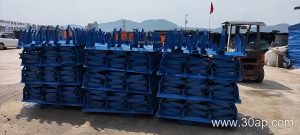
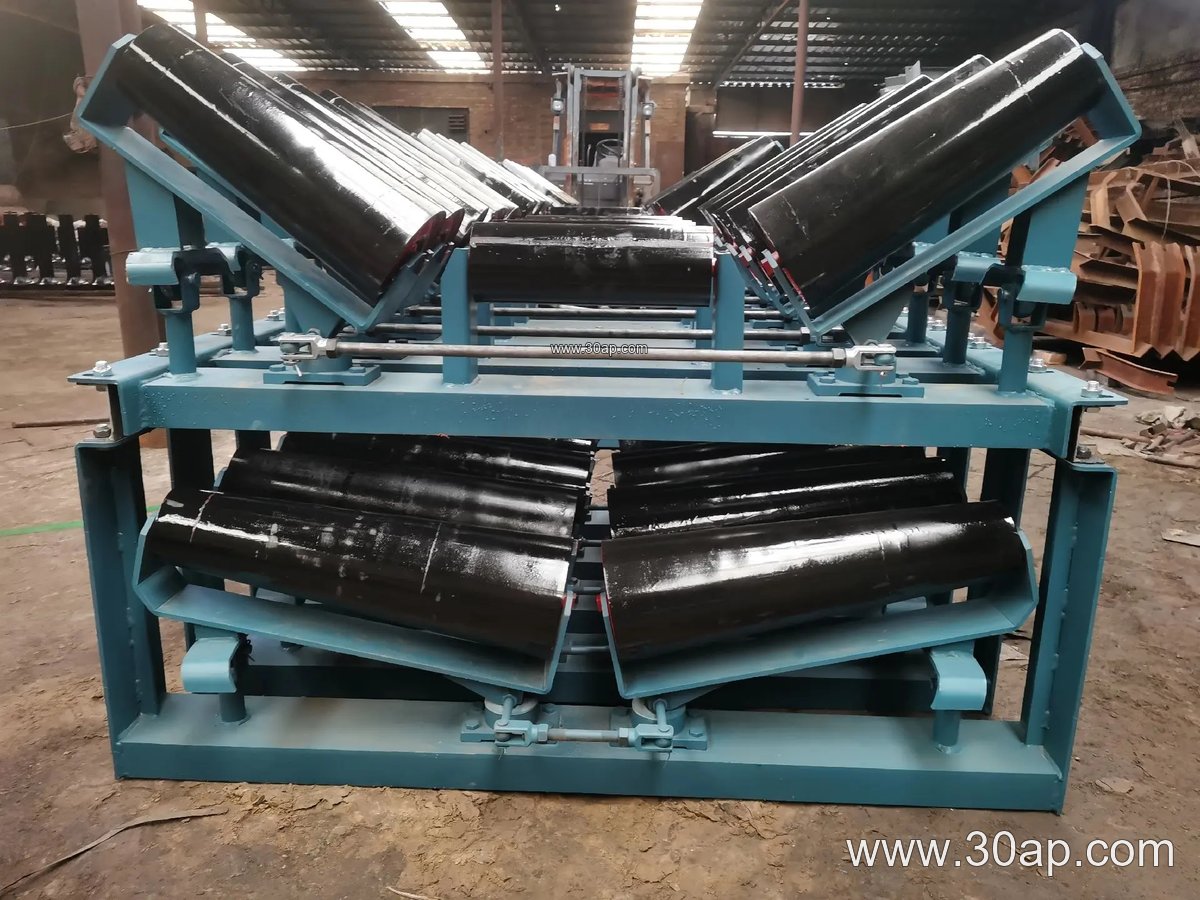
Most frames are fabricated from angle steel, channel steel, or folded steel plate. The main longitudinal beams run the length of the conveyor and are joined by cross members at intervals. Conveyor brackets attach the idler roller assemblies to the beams, and the whole structure is anchored to the floor or steel structure. The design must resist vibration, accommodate belt loads, and allow for maintenance access. A typical frame section includes:
- Longitudinal beams (angle or channel)
- Cross beams and stringers
- Idler mounting brackets
- Pulley supports at drive and tail positions
- Bolt holes or welding points for assembly
Material selection depends on the duty. In a limestone mine or iron ore plant, heavier channel sections may be used to handle high belt tensions and impact loads. In a light-duty sand and gravel line, folded plate frames can be sufficient.
Matching Frame to Belt and Idlers
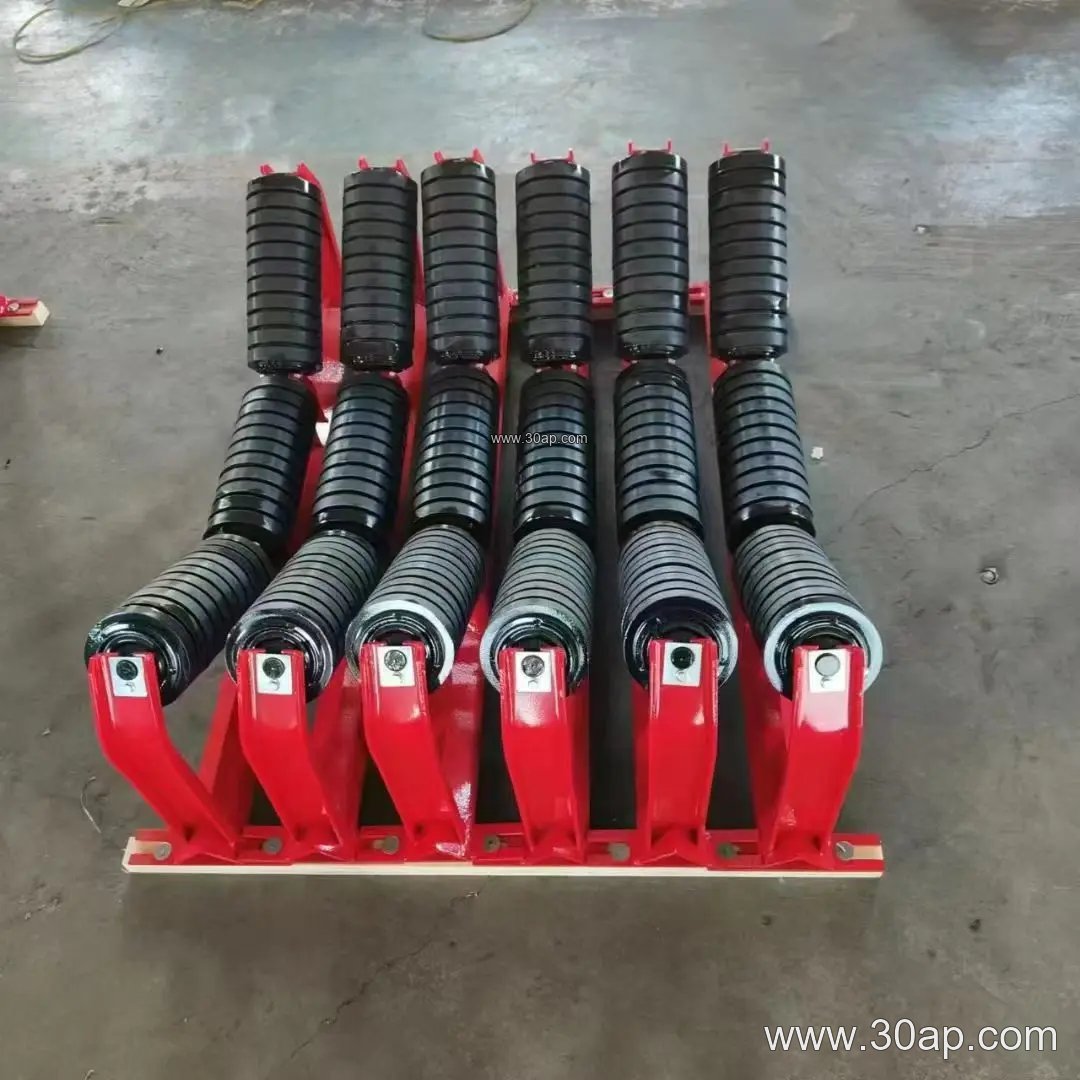
The frame geometry must suit the belt width and the trough angle. Common belt widths include B500, B650, B800, B1000, B1200, B1400, B1600, B1800, B2000, B2200, but the frame is always designed for the specific width and load. Trough angles of 20, 30, 35, and 45 degrees are typical; adjustable frames allow the angle to be changed within a range. Idler diameters such as Ø89, Ø108, Ø133, Ø159, and Ø194 are paired with the frame through the bracket hole spacing. For example, a B800 frame with 35-degree trough and Ø108 idlers is a common combination in a cement plant, while a B1200 frame with 45-degree trough and Ø133 idlers may appear in a heavy-duty mining conveyor. These are examples, not fixed rules — the frame design should always follow the belt tension, load, and site conditions.
Types and Their Roles
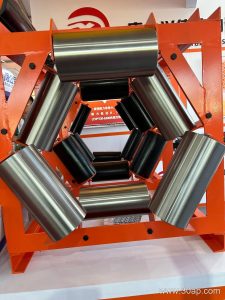
Frames come in several forms to handle different sections of the conveyor. Troughing frames support the carrying side and set the belt into a trough. Return frames support the belt on its way back, often with flat or V-return idlers. Transition frames ease the belt from flat to troughed shape near pulleys. Impact frames, fitted with buffer idlers, absorb shock at loading points. Self-aligning frames help correct belt mistracking. Adjustable frames allow on-site changes to trough angle or height. Each type has a specific place; a drive pulley frame is not interchangeable with a tail pulley frame, and neither replaces a troughing frame.
Applications Across Industries
Conveyor frames appear wherever bulk material moves continuously. In a coal mining operation, flame retardant conveyor belts run on robust frames that resist dust and vibration. In a power plant coal yard, frames support long overland conveyors. In a fertilizer plant, oil resistant or chemical resistant belts may need frames with corrosion protection. In a port ship loading system, wide frames carry heavy loads at high speeds. The frame must be chosen to match the environment — from the abrasive dust of a crusher conveyor to the heat of a sinter plant.
What Buyers Should Check
When specifying a conveyor frame, confirm the belt width, trough angle, idler diameter, and the load per meter. Check the bracket hole spacing and cross beam length, as these vary with width and angle. Ask about material thickness and surface treatment for the site conditions. Ensure the frame design allows for belt replacement and idler changes without major dismantling. For high-tension applications with steel cord conveyor belt, verify that the frame can handle the take-up forces. Also consider whether adjustable or fixed frames suit the maintenance strategy. A well-chosen frame keeps the belt centered, extends idler life, and reduces downtime in any bulk handling operation.