What a Mining Ceramic Lagged Pulley Does
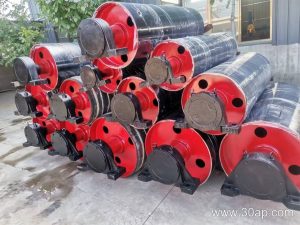
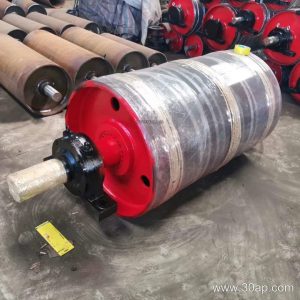
A mining ceramic lagged pulley is a conveyor pulley whose shell is covered with ceramic tiles set in a rubber or polymer matrix. The ceramic studs press into the belt cover and raise the friction coefficient between drum and belt, which is exactly what heavy conveyors need when they start under load. In a quarry, a limestone mine or a coal preparation plant, the drive pulley often has to transmit high torque on a wet or dusty surface; ceramic lagging keeps slip under control where plain steel would polish and lose grip.
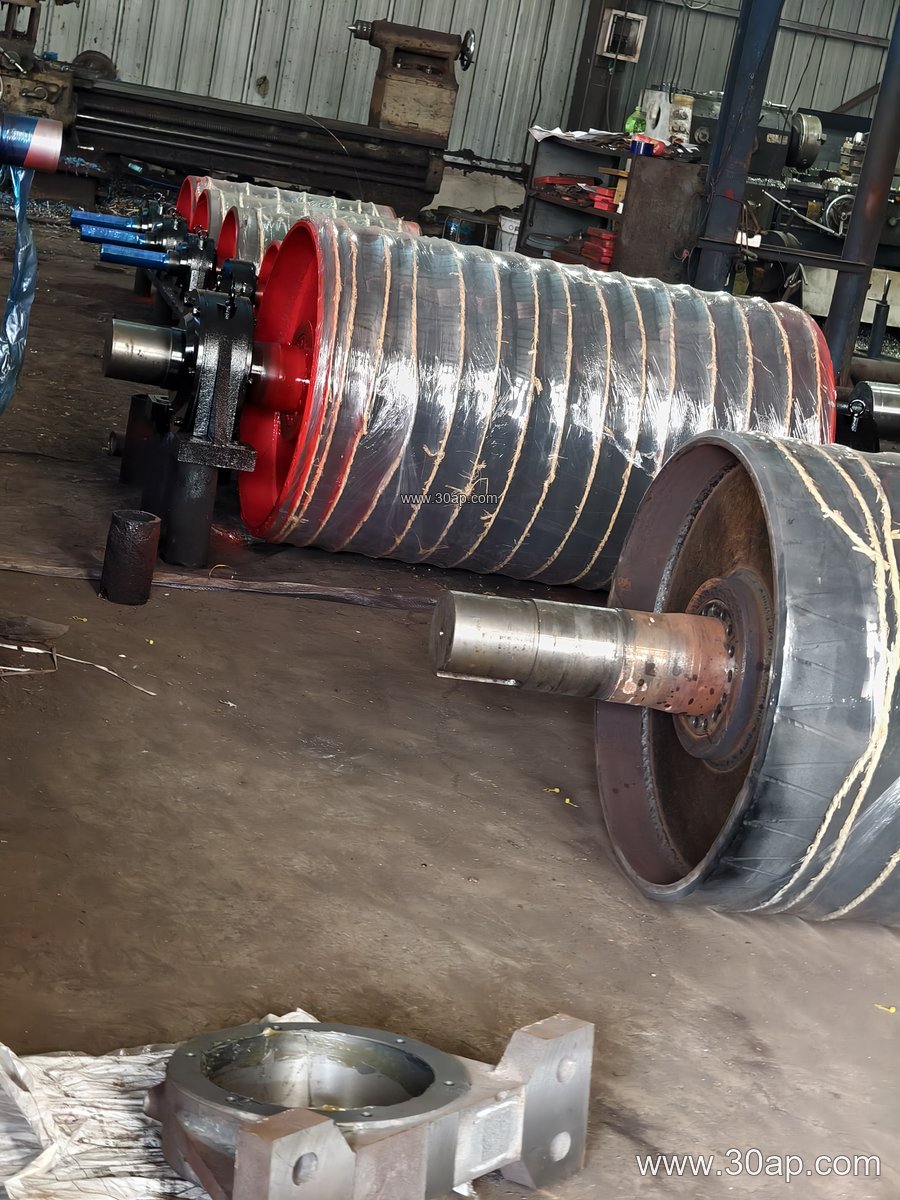
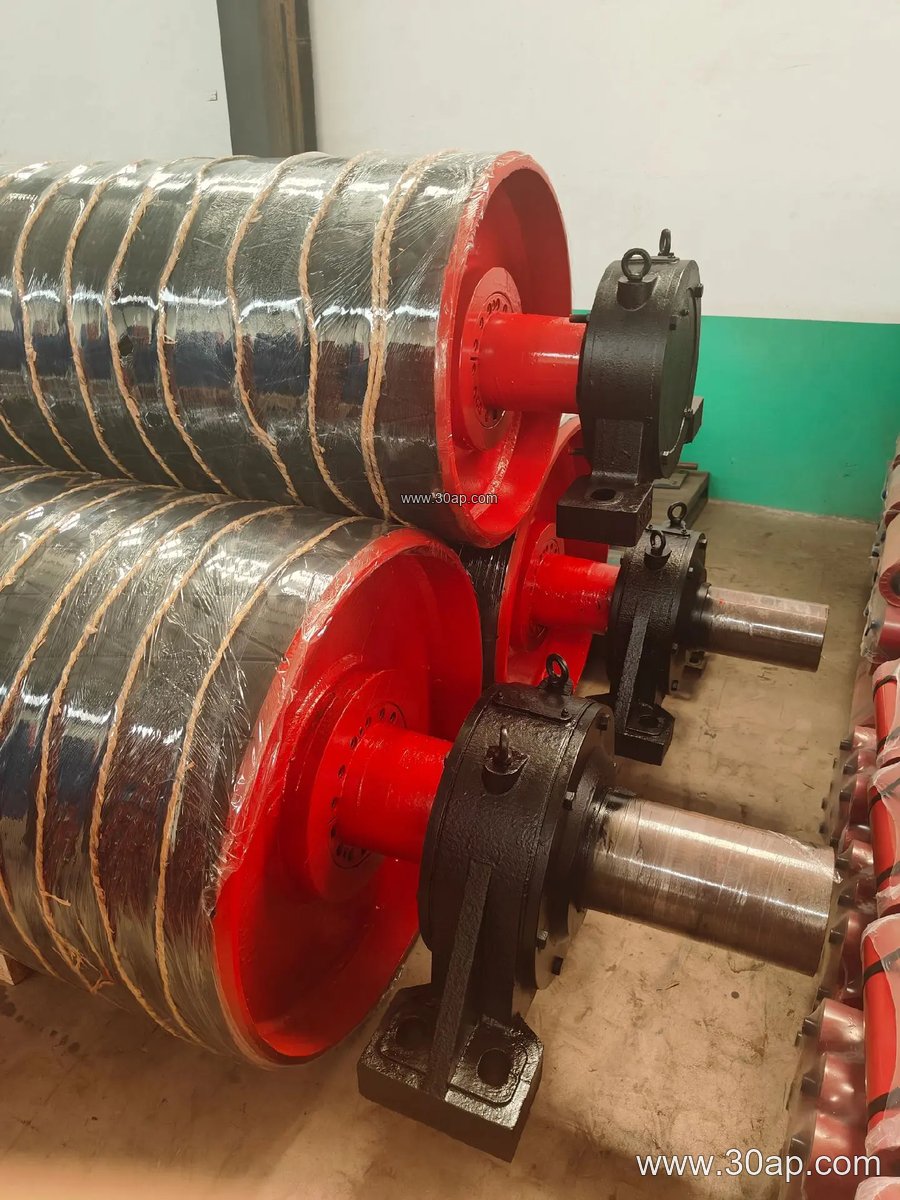
The pulley itself remains the same component as any conveyor pulley: shell, shaft, hubs, discs and bearing housings. What changes is the surface. Ceramic lagging is a surface form, not a separate machine category, so a drive pulley, a tail pulley and a bend pulley can all be supplied with it, although the duty differs in each position.
How the Ceramic Surface Is Built
Most ceramic lagged pulleys use small alumina tiles, typically 10 to 20 mm across, bonded into a rubber sheet that is then applied to the drum. Two application routes are common: hot vulcanized bonding, which cures the rubber directly onto a prepared shell, and cold bonded rubber, which is glued in place. Tiles are usually arranged in a staggered pattern so that the studs interlock with the belt cover rather than cutting grooves into it.
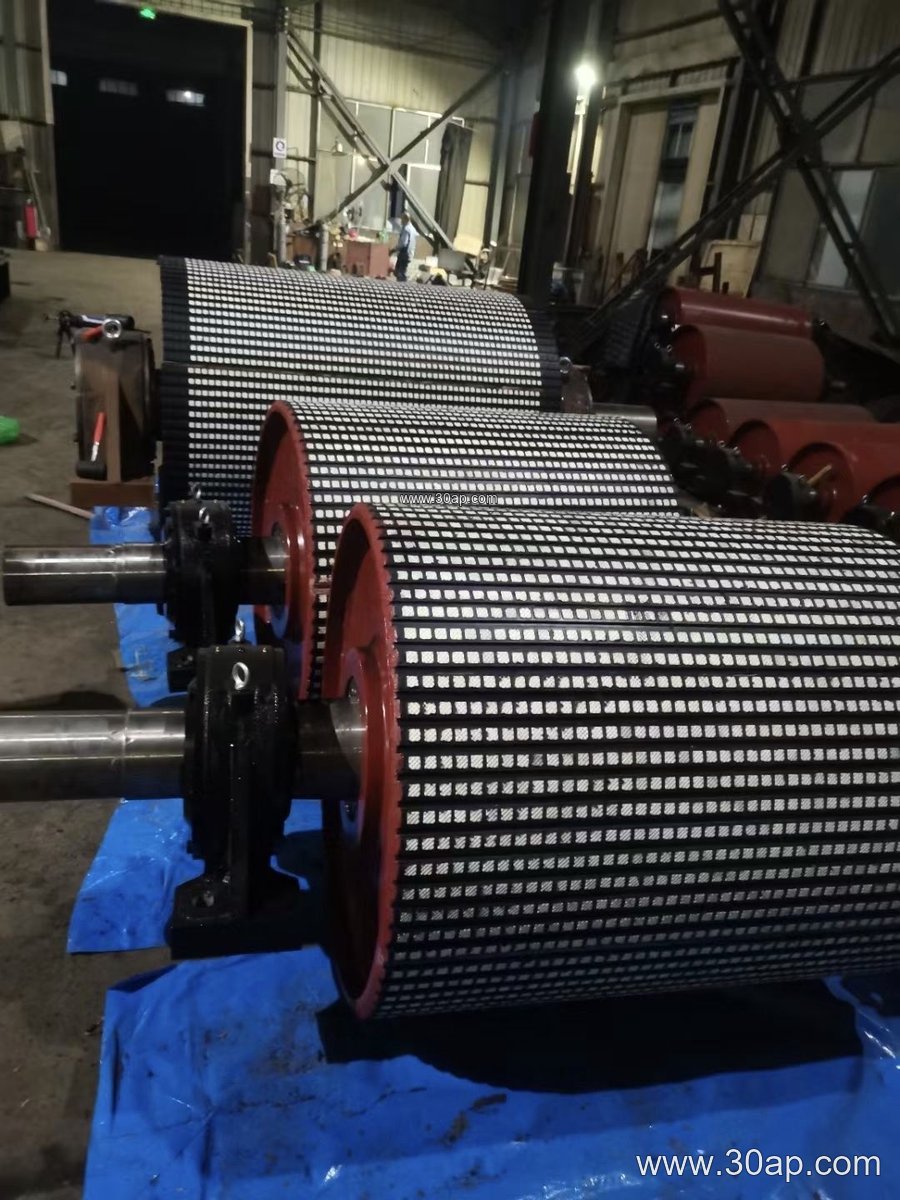
Lagging thickness is commonly 8, 10, 12, 15 or 20 mm. A thicker layer gives more embedment and longer wear life, but it also changes the effective drum diameter, so the belt path and take-up stroke should be checked before fitting. The ceramic surface is normally used on the drive or head position, where traction matters most; a bend pulley or snub pulley rarely needs it, and a plain or diamond rubber lagging may be enough there.
Where It Fits in the Plant
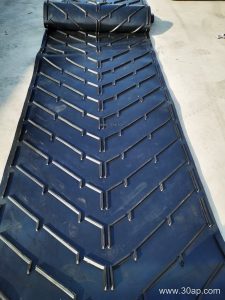
Aggregate and sand making lines are typical users, because crushed stone and grit work their way between belt and drum and reduce grip on smooth surfaces. Iron ore and copper ore circuits also favor ceramic lagging on the main drive, where a heavy-duty mining conveyor belt runs at high tension. In a power plant coal handling system, the same drum helps keep a flame retardant conveyor belt tracking during winter starts. Cement plants use it on clinker and raw meal conveyors, and port bulk terminals apply it where salt air and rain make steel shells slippery.
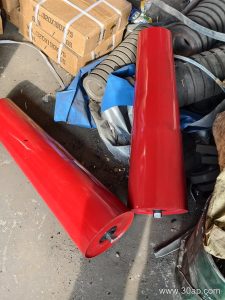
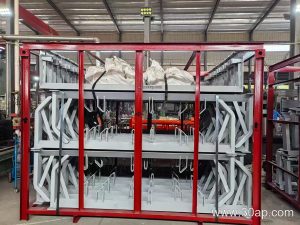
The surrounding hardware matters as much as the drum. A worn conveyor belt cover, misaligned conveyor bracket or seized idler roller will defeat even a good ceramic surface, so traction problems should be diagnosed before specifying lagging.
Sizes and Matching to the Belt
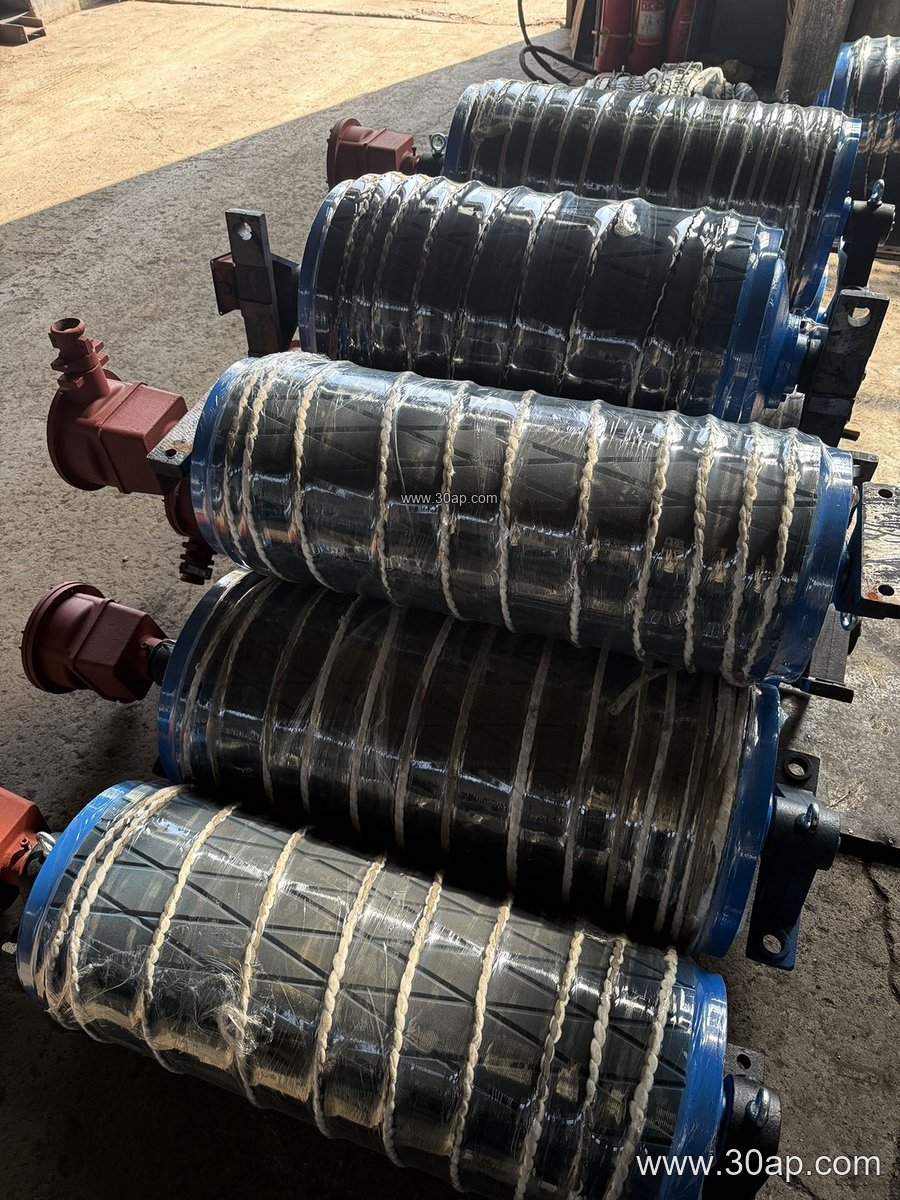
Pulley dimensions follow belt width, belt tension and shaft load rather than a single fixed rule. The table below shows common reference combinations; each is a starting point for discussion, not a supply promise.
| Belt width | Typical shell face width | Example pulley diameter | Common shaft range |
|---|---|---|---|
| B650 | about 750 mm | Ø400 to Ø630 | Ø80 to Ø120 |
| B800 | about 950 mm | Ø500 to Ø800 | Ø90 to Ø140 |
| B1000 | about 1150 mm | Ø630 to Ø1000 | Ø100 to Ø160 |
| B1200 | about 1400 mm | Ø800 to Ø1250 | Ø120 to Ø180 |
| B1400 | about 1600 mm | Ø800 to Ø1400 | Ø140 to Ø200 |
| B1600 | about 1800 mm | Ø1000 to Ø1600 | Ø160 to Ø200 |
Face width is generally a little wider than the belt, for example B1200 with a face near 1400 mm. Diameter is chosen from belt speed, wrap angle and torque, so a B800 conveyor may run a Ø500 drive drum on one line and a Ø800 drum on another. Shaft diameter comes from torque and bending load, never from belt width alone. When ordering, state the belt type as well: an EP conveyor belt, an NN conveyor belt and a steel cord conveyor belt each behave differently on the same drum.
Buyer Checklist
- Confirm the pulley position: drive, head, tail, tension or bend. Only the drive and head positions usually justify ceramic lagging.
- Give the belt specification, including whether it is a fabric core conveyor belt, a multi-ply fabric core belt or a steel cord belt, plus cover hardness.
- State lagging thickness and tile pattern, and check the resulting diameter change against take-up travel.
- Ask for the balancing grade, bearing type and shaft material, since these decide service life more than the tiles do.
- Inspect the belt cover and conveyor bracket alignment before installation; ceramic studs wear belts that are already damaged.
For mining conveyors handling abrasive ore, a ceramic lagged drum paired with an abrasion resistant conveyor belt and well-aligned idler rollers gives the most reliable drive. Where heat, oil or flame resistance is the main concern, match the belt compound first and treat the pulley surface as the second decision. A ceramic lagged pulley is a traction tool, not a cure for a badly aligned conveyor.