What a Conveyor System Pulley Does in a Belt Circuit
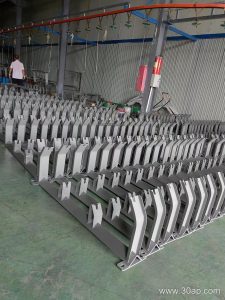
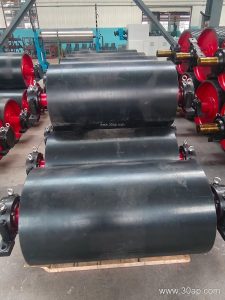
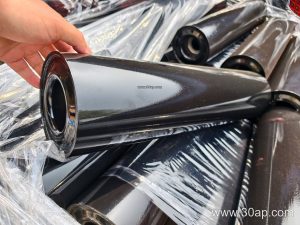
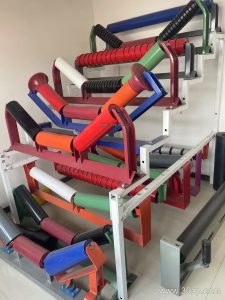
A conveyor system pulley is the rotating drum that carries, drives, tensions or redirects a conveyor belt. It is not a passive roller. In a quarry plant, a cement kiln feed line or a power station coal yard, the pulley transfers motion and load between the belt and the frame. The same product is often called a belt conveyor pulley or conveyor drum. It works with conveyor belt, idler roller and conveyor bracket components, but its function is distinct from all of them.
Drive, tail and bend pulleys are not interchangeable names. A drive pulley (also called a head pulley) transmits torque from the gearbox to the belt. A tail pulley sits at the loading end and sets belt direction and tension. A bend pulley changes belt path without driving or tensioning the belt. Each position has its own load case, so a buyer should specify position before diameter or lagging.
How the Pulley Is Built
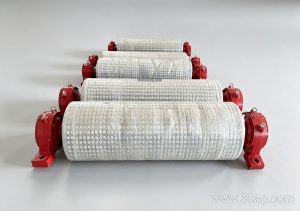
A typical drum has a welded shell, two end discs, a shaft, bearing housings and a surface treatment. The shell is machined or rolled to a true circle, then balanced for the belt speed. Shaft ends are keyed for coupling or mounted in pillow block bearings. Surface forms include plain, cast rubber, cold-bonded rubber, hot-vulcanized rubber, diamond lagging, herringbone lagging, ceramic lagging and flat rubber. Lagging thickness is commonly 8, 10, 12, 15 or 20 mm, depending on grip and wear requirements.
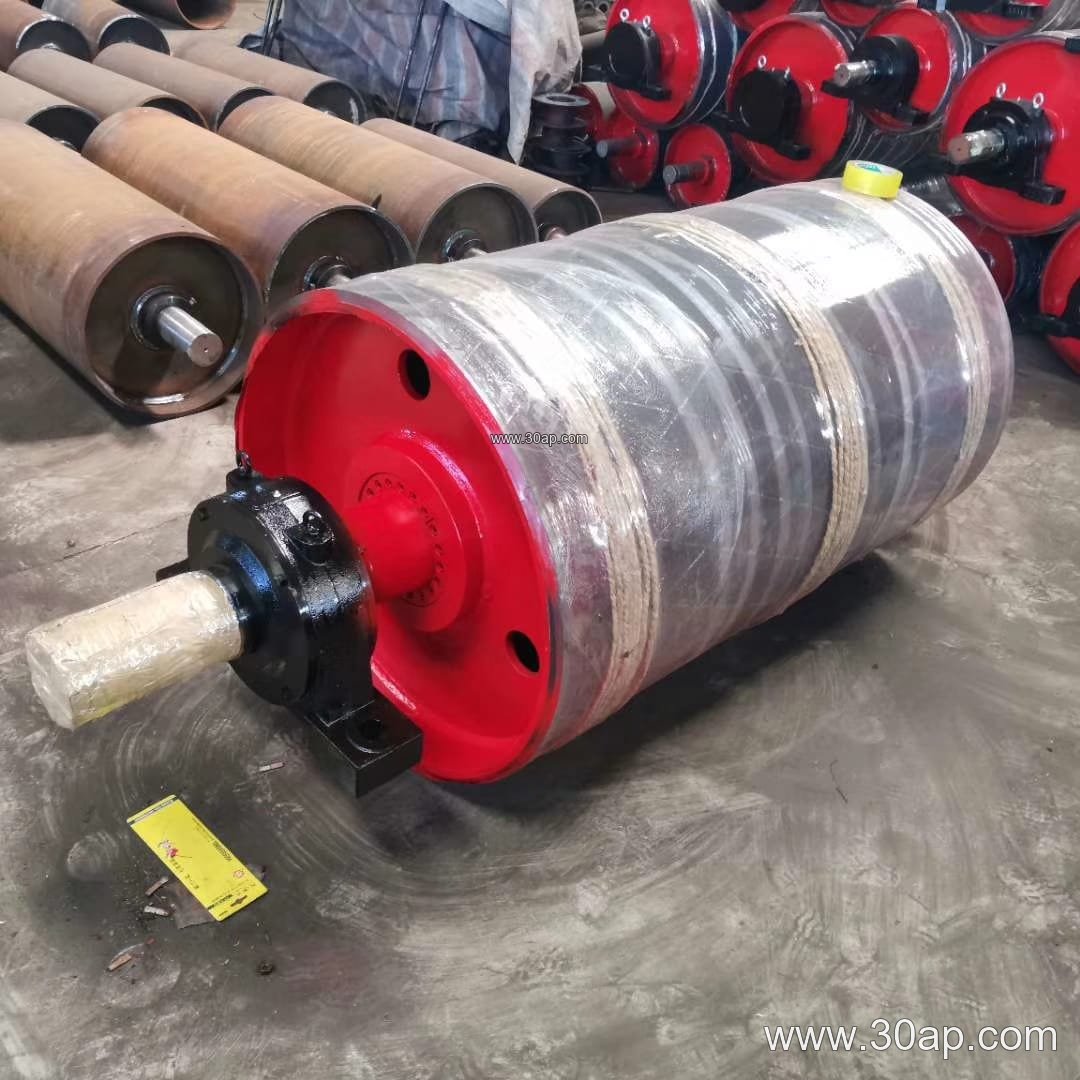
Shell width usually exceeds belt width so the belt is supported across its full face. For example, B800 may use a shell around 950 mm and B1200 around 1400 mm. These are reference values, not fixed rules. The diameter range commonly runs from Ø200 to Ø1800, and shaft diameter from Ø50 to Ø200. Shaft size should follow torque and bearing load, not belt width alone. A B1200 × Ø1000 drive pulley and a B800 × Ø500 tail pulley can both exist on the same site.
Matching the Pulley to the Belt and the Duty
Belt construction affects pulley choice. A heavy-duty mining conveyor belt or steel cord conveyor belt needs a large drive pulley diameter to limit bending stress. Multi-ply fabric core belting such as EP conveyor belt and NN conveyor belt is more forgiving, but still benefits from a correctly sized drum. Abrasion resistant conveyor belt in a stone crushing line and heat resistant conveyor belt near a clinker cooler place different demands on lagging and bearing seals.
In an underground coal mine, a flame retardant conveyor belt and anti-static conveyor belt are often combined with rubber lagging that resists slip. At a port ship loading conveyor, a wide conveyor belt of 1800 mm or 2000 mm may run over a large bend pulley with ceramic lagging for wet conditions. Chevron conveyor belt and corrugated sidewall conveyor belt can run on standard drums, but the profile height and cleat spacing need checking against the pulley face.
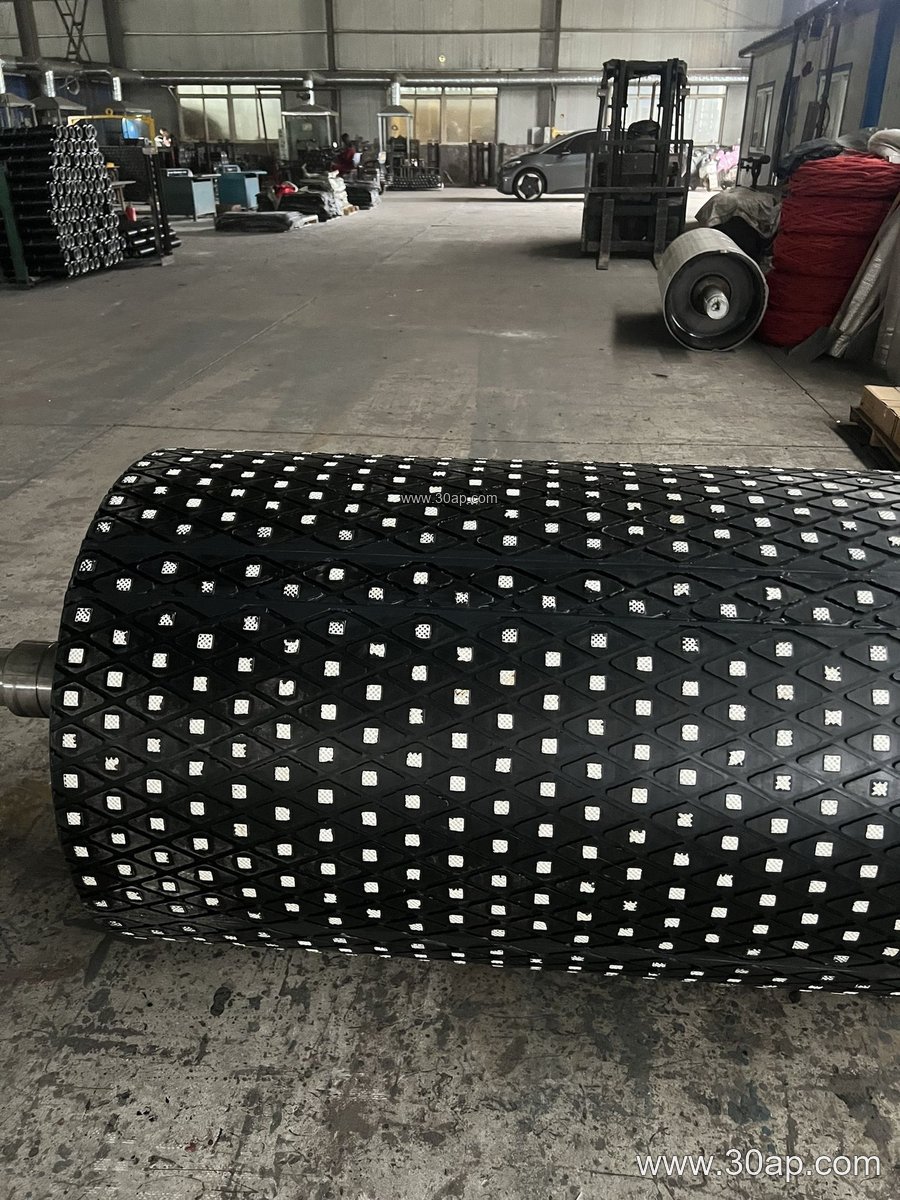
Common Sizes and Surface Options
The following table shows reference combinations, not a supply list. Final dimensions are set by the conveyor design.
| Belt width | Shell width (typical) | Common diameter examples | Surface options |
|---|---|---|---|
| B500 | about 600 mm | Ø250, Ø315, Ø400 | plain, 8–10 mm rubber |
| B650 | about 750 mm | Ø315, Ø400, Ø500 | plain, diamond lagging |
| B800 | about 950 mm | Ø400, Ø500, Ø630 | 10–12 mm rubber |
| B1000 | about 1150 mm | Ø500, Ø630, Ø800 | hot-vulcanized rubber |
| B1200 | about 1400 mm | Ø630, Ø800, Ø1000 | diamond or ceramic lagging |
| B1400 | about 1600 mm | Ø800, Ø1000, Ø1250 | 12–15 mm rubber |
| B1600 | about 1800 mm | Ø1000, Ø1250, Ø1400 | ceramic or plain |
| B1800 | about 2000 mm | Ø1250, Ø1400, Ø1600 | heavy lagging |
Shaft sizes commonly include Ø80, Ø100, Ø120, Ø140, Ø160 and Ø180. A larger drum does not automatically mean a larger shaft; both follow the calculated torque and radial load.
What Buyers Should Check Before Ordering
- Position in the circuit: drive, tail, bend, take-up or snub.
- Belt type and tension: steel cord, EP, NN or PVC belting changes the required drum diameter.
- Lagging: plain for cleaning-friendly areas, rubber for grip, ceramic for wet or abrasive service.
- Bearing and shaft data: confirm load, speed and coupling arrangement.
- Environment: coal dust, cement powder, salt air or washdown affects seals and coating.
For a cement plant clinker line or an iron ore transfer station, the conveyor system pulley should be selected together with the conveyor belt, idler roller and conveyor bracket layout. A pulley that is correctly sized for one duty may be wrong for another, so the specification should travel with the conveyor design rather than with the catalogue page. Sites that handle bulk material conveyor belt systems in mining, steel plants, ports and aggregate yards will get longer service from a drum that matches the actual belt, load and environment.