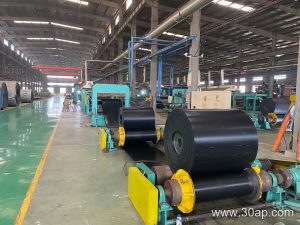
What a High-Strength Pulley Really Is
A high-strength pulley is a conveyor pulley built for the loads, tensions and shock that ordinary light-duty drums cannot handle. In practice it is the same component many engineers call a heavy-duty conveyor pulley, and the two names describe one product: a welded or cast drum with a reinforced shell, sturdy end discs and a shaft sized to the torque it must transmit. The design intent is simple. Keep the shell round under high belt tension, keep the shaft straight under bending load, and keep the lagging gripping the belt without peeling away.
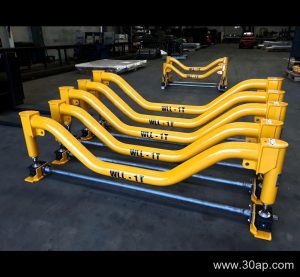
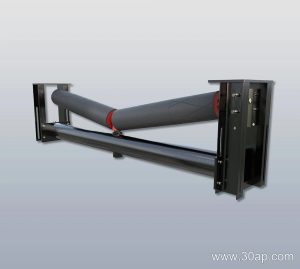
Because the pulley sits inside a working conveyor, it never acts alone. The conveyor belt wraps it, the conveyor bracket holds its bearing housings, and the frame around it carries the reaction forces. A weak drum shows up as belt tracking problems, uneven wear or, in bad cases, a cracked weld near the hub.
How the Drum Is Built
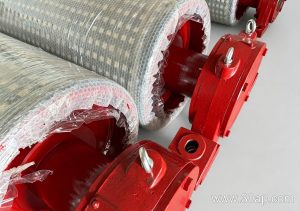
Most high-strength pulleys use a rolled steel shell with machined end discs welded to a central shaft. Heavier designs add internal stiffening rings or a thicker shell to resist ovalisation. The shaft is not chosen from belt width alone; it is calculated from torque, belt tension and the distance between bearings. Common shaft diameters include Ø50, Ø60, Ø70, Ø80, Ø90, Ø100, Ø120, Ø140, Ø160, Ø180 and Ø200 mm, but the final value always follows the load case.
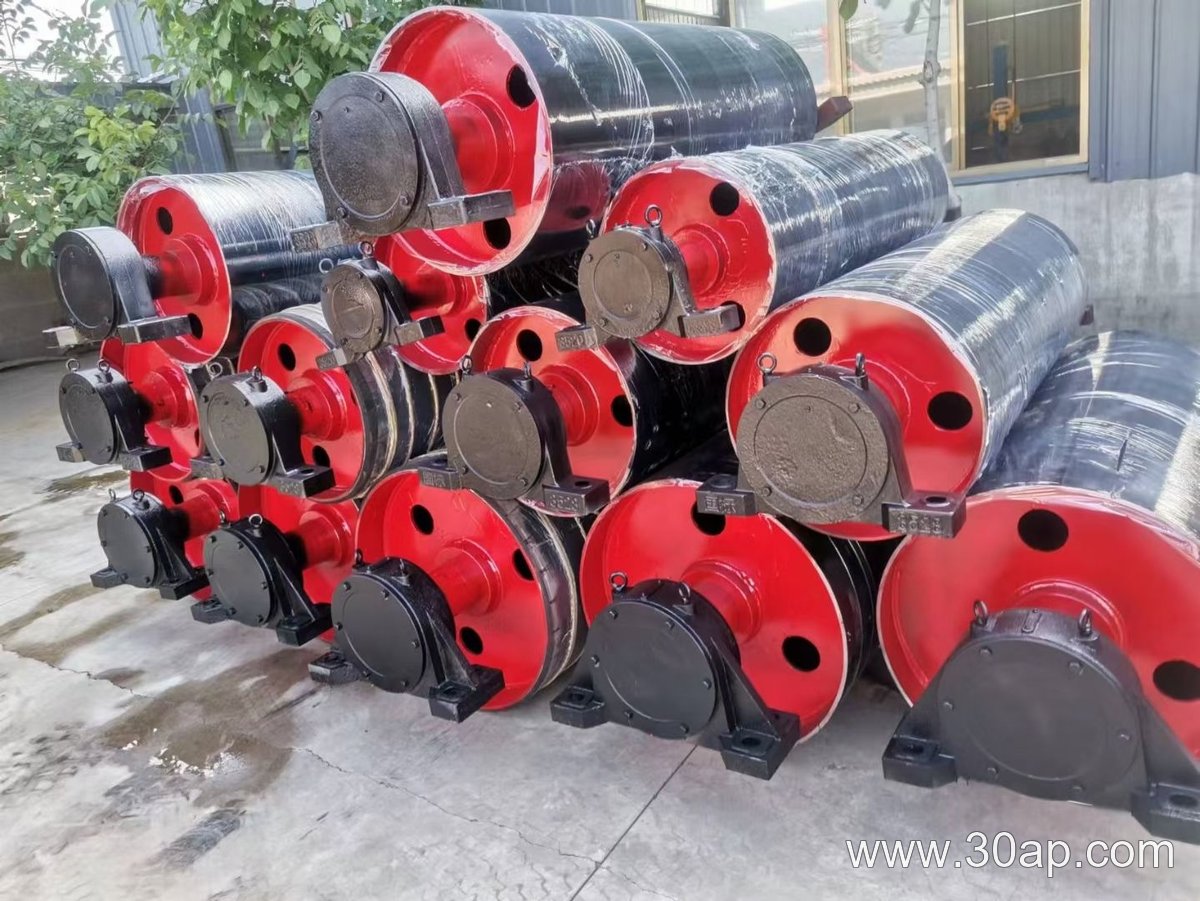
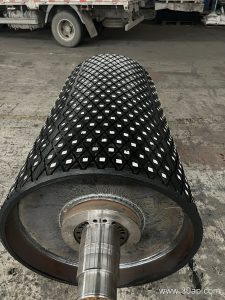
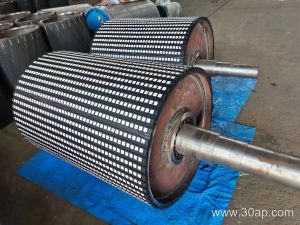
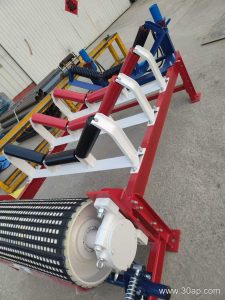
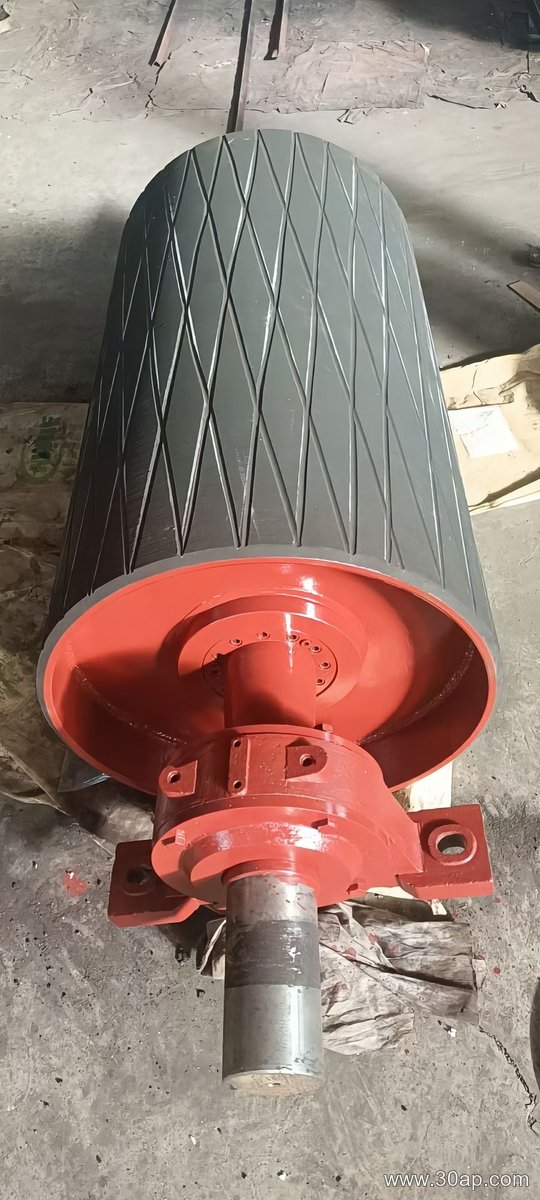
Surface treatment matters as much as the steel. Options include plain finish, cast rubber, cold-bonded rubber, hot vulcanised rubber, diamond grooving, herringbone grooving and ceramic lagging. Lagging thickness is often 8, 10, 12, 15 or 20 mm. Diamond or herringbone patterns help shed water and fines, while ceramic tiles suit abrasive, high-slip duty.
Typical Service Positions
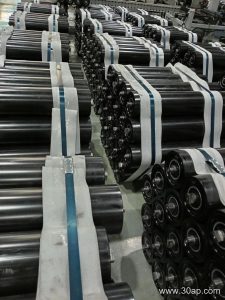
The duty of a high-strength pulley changes with its position on the conveyor. A drive pulley, also called the head or drive drum, transmits motor torque to the belt. A tail pulley at the loading end turns the returning belt. A bend pulley changes belt direction where space is tight, and a tension pulley takes up slack. These are different functions and are not interchangeable, even when they share a shell diameter. An idler roller, by contrast, supports the belt along the carry and return runs and is not a pulley at all.
- Quarry and limestone pit conveyors moving primary crushed rock.
- Coal preparation plants handling wet, sticky feed.
- Sand and aggregate lines with abrasive, high-tonnage flow.
- Power station coal handling and port bulk terminals.
In each setting the high-strength pulley must survive continuous starting torque, dust and, often, wash-down water. That is why the lagging grade and the weld quality usually decide service life more than the shell diameter by itself.
Matching Diameter, Face Width and Belt
Belt width and pulley diameter are linked by the belt’s bending limits and the required wrap angle, not by a fixed table. A B800 belt may run on a Ø500 mm drum in one conveyor and a larger drum in another where more traction or a gentler belt path is needed. Face width is normally a little wider than the belt, for example about 950 mm for B800, about 1150 mm for B1000 and about 1400 mm for B1200, so the belt does not hang over the edges. Popular combinations include B800 x Ø500, B1200 x Ø1000 and B1400 x Ø800, but these are examples, not rules.
| Parameter | Common reference values |
|---|---|
| Belt width | B400, B500, B650, B800, B1000, B1200, B1400, B1600, B1800, B2000, B2200, B2400 |
| Pulley diameter | Ø200, Ø250, Ø315, Ø320, Ø400, Ø500, Ø630, Ø800, Ø1000, Ø1250, Ø1400, Ø1600, Ø1800 |
| Lagging | Plain, cast rubber, cold-bonded, hot vulcanised, diamond, herringbone, ceramic |
| Lagging thickness | 8, 10, 12, 15, 20 mm |
What Buyers Should Check
Before ordering, confirm the shaft diameter from the actual torque and bearing span, not from a rule of thumb. Ask how the lagging is bonded, because a cold-bonded layer and a hot vulcanised one behave differently under heat and moisture. Check that the face width suits the belt and that the bearing housings fit the existing conveyor bracket. If the pulley is a drive unit, the required friction and wrap angle should be reviewed alongside the belt type. Finally, treat all figures in this article as typical references only. Each conveyor has its own load case, and the right high-strength pulley is the one sized for that case.