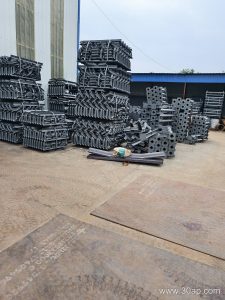
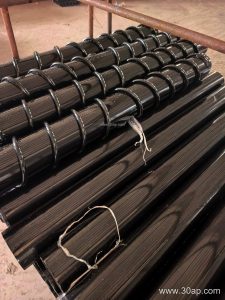
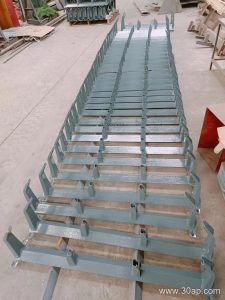
What a Large-Diameter Conveyor Idler Does
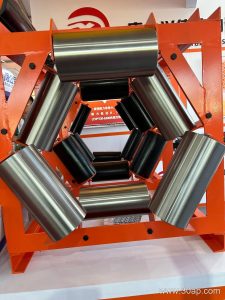
A large-diameter conveyor idler is a load-carrying roller whose shell diameter sits at the upper end of the usual range, commonly from about 159 mm up to 219 mm. It supports the conveyor belt on the carrying or return side of a bulk handling conveyor, and its main job is to keep the belt profile stable while spreading the load over a bigger rotating surface. You will see these rollers described simply as heavy-duty troughing idlers or large return rollers, but the product remains the same: an idler roller sized for high belt tension and coarse material.
The larger shell brings a lower rotational speed for the same belt speed, which reduces wear on bearings and seals. That matters where a conveyor belt runs continuously and cannot be stopped often, such as a coal mining conveyor feeding a power plant bunker or an ore conveyor at an iron ore stockyard.
Construction and Bearing Choices
Most units are built from a steel tube shell, a through shaft, stamped bearing housings, and a multi-stage labyrinth seal. Roller surfaces may be plain steel, nylon, ceramic, or rubber rings where impact or build-up is a concern. Bearing selection follows the load and speed rather than a fixed rule, so common sizes such as 6308, 6310, and larger are matched to the shaft and housing design. A large-diameter roller should never be paired with a shaft size guessed from belt width alone.
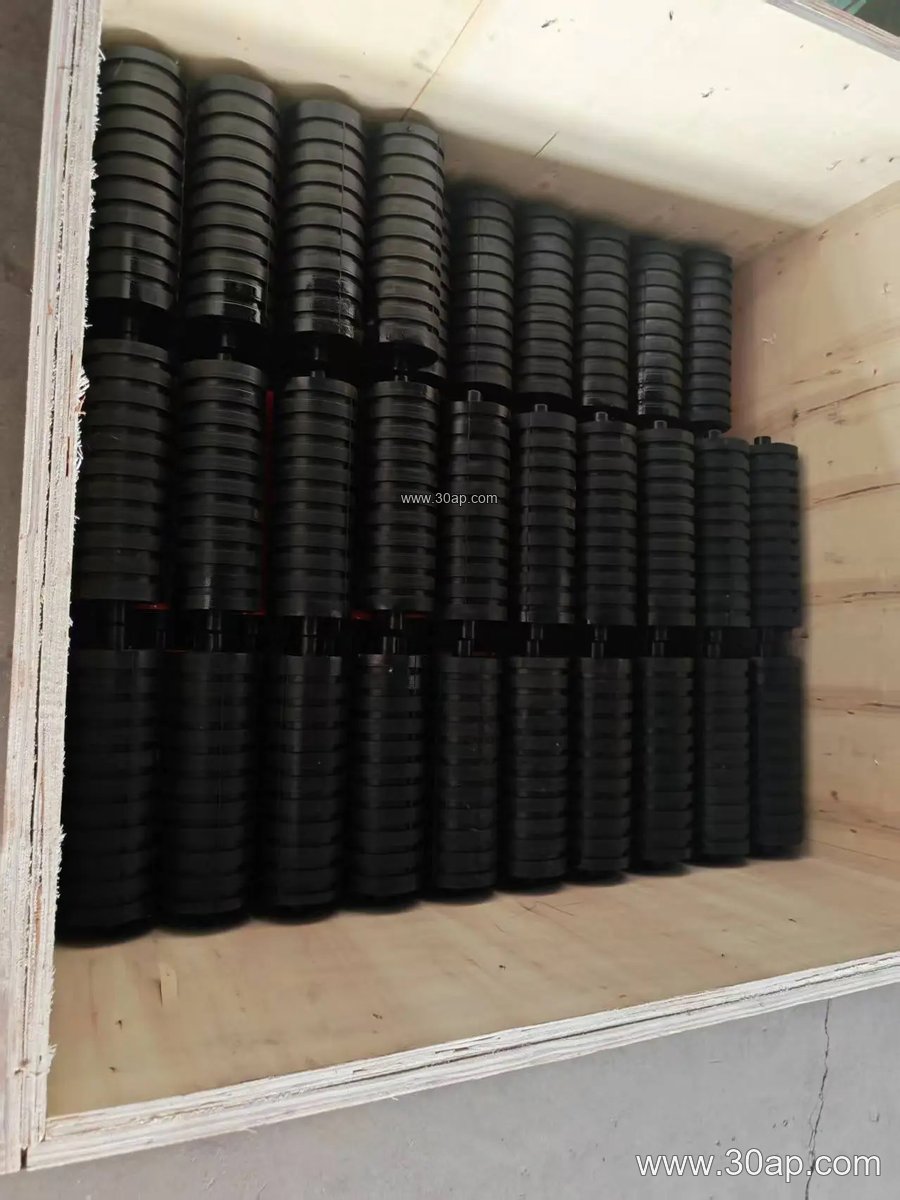
- Shell: welded steel tube, machined ends, balanced for higher speed
- Seal: labyrinth or combined contact seal for dust and water rejection
- Bearing: deep groove ball bearing, greased for life or regreasable
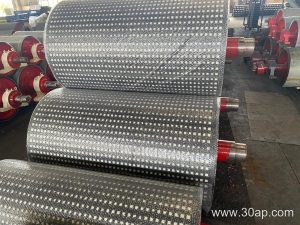
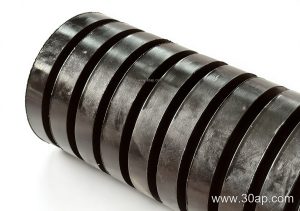
- Surface: steel, nylon, ceramic, or rubber ring for buffer zones
Where the Larger Roller Fits
These idlers suit the head-end transition and heavy-load zones of a quarry conveyor or aggregate conveyor, where lump size is large and the belt is thick. In a cement plant they are often used on clinker and limestone lines. In a coal mining conveyor or underground coal mining conveyor, flame retardant conveyor belt and anti-static conveyor belt grades are usually specified together with robust rollers, because the whole system must resist dust, moisture, and fire risk.
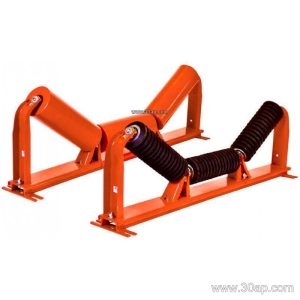
On the return strand, a large return roller or V-type return set helps control belt sag over long spans. On the carrying side, three-roll troughing sets at 30 or 35 degrees are common, and the center roll may be larger than the side rolls when the belt is wide. The pulley at the drive and the pulley at the tail are separate components and are not interchangeable with idlers.
Common Diameter and Belt Width References
The table below shows typical pairings used in design discussions. These are reference examples, not fixed rules; final selection depends on belt tension, load, speed, and frame design.
| Idler diameter | Typical belt width range | Typical duty |
|---|---|---|
| Ø159 mm | B1000 to B1400 | Medium to heavy carrying |
| Ø178 mm | B1200 to B1600 | Heavy carrying, transition |
| Ø194 mm | B1400 to B2000 | High load, long span |
| Ø219 mm | B1800 to B2400 | Very heavy duty, coarse ore |
Roll length changes with belt width, trough angle, and roll position. For a three-roll troughing set, common side-roll lengths are about 200 mm at B500, 315 mm at B800, 465 mm at B1200, and 600 mm at B1600. The center roll can differ, so the length should be confirmed per frame drawing.
Buyer Checklist
Before ordering, confirm the belt width, trough angle, roll length, shaft end type, and mounting bracket spacing. Check whether the conveyor bracket is fixed or adjustable, and whether the frame accepts a 30-degree or 45-degree set. Ask for the seal type and bearing brand policy, and state the environment: wet washing plant, dusty crusher discharge, or hot clinker. For abrasive ore, an abrasion resistant conveyor belt and ceramic or rubber-covered rollers often work together. For cold climates, a cold resistant conveyor belt may be needed alongside low-temperature grease.
Finally, match the roller to the belt, not the other way around. A wide belt such as a 1800mm wide conveyor belt needs a frame and idler group designed for that width, while a 1000mm belt uses a smaller set. Correct diameter, seal quality, and roll alignment reduce belt edge damage and extend service life. Browse more conveyor idler and roller options at beltconveyoridler.com and check compatible conveyor belt grades before finalizing the order.