What a Vertical Idler Bracket Does
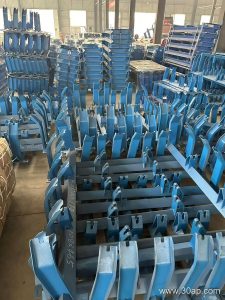
A vertical idler bracket is the upright support that holds the side idler of a troughed belt conveyor in a fixed working position. In a three-roll trough set, the two outer rolls sit at an angle while the centre roll stays almost flat; the vertical bracket is the element that keeps each wing roll at the chosen trough angle. Some plants call this item a side idler stand or an upright roll support, but in a conveyor bill of materials it is normally listed as a vertical idler bracket.
The bracket does not carry the belt directly. It carries the shaft ends of the wing idler roller and transfers the load into the conveyor frame. Get the geometry wrong and the belt sits unevenly, wanders, or spills material at the loading point.
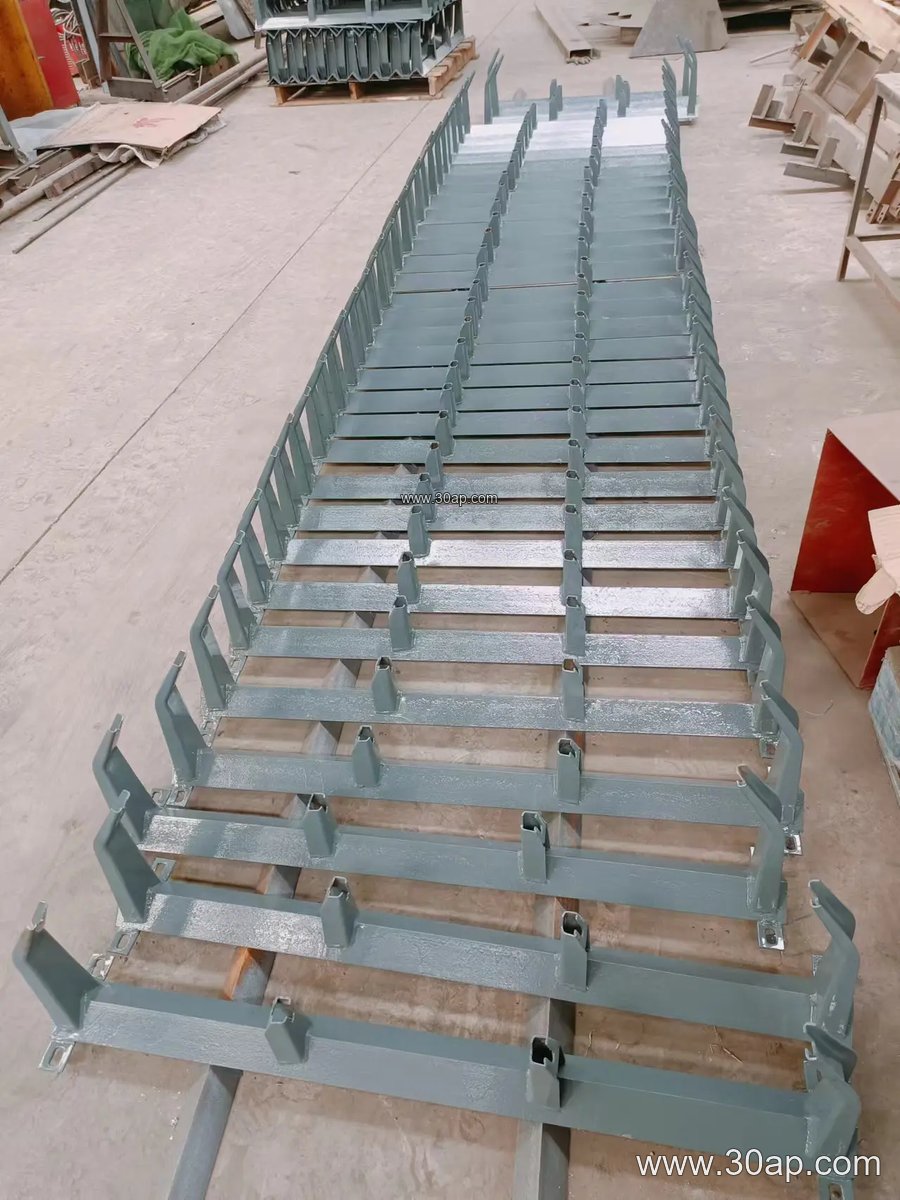
Construction and Mounting Position
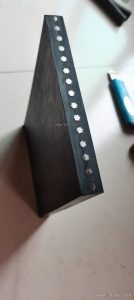
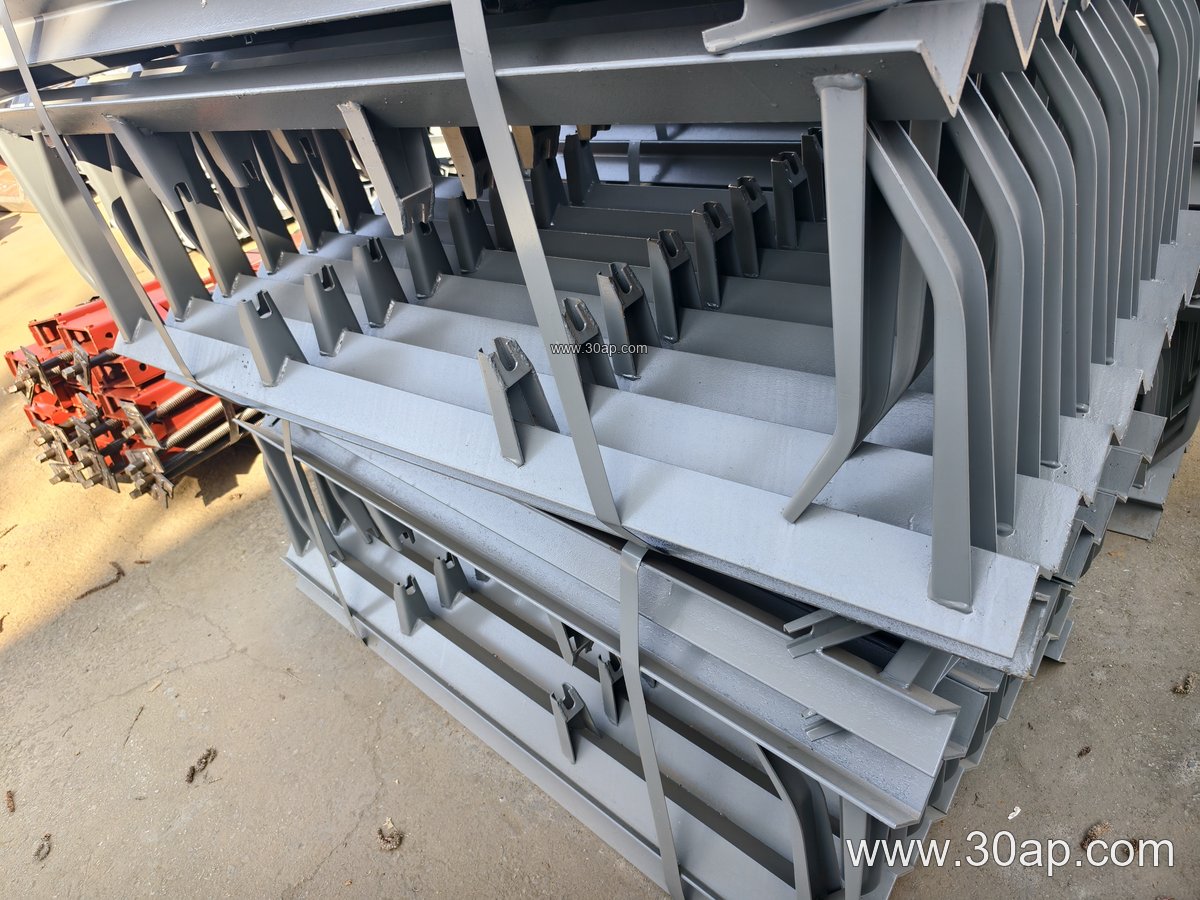
Most vertical brackets are fabricated from angle steel, channel steel, or folded steel plate. A common design is an L-shaped or slightly inclined upright with a slotted foot plate or drilled fixing holes, plus a small cradle or notch at the top that receives the idler shaft. The foot bolts to the main frame beam, and the angle of the top cradle sets the trough angle of the wing roll.
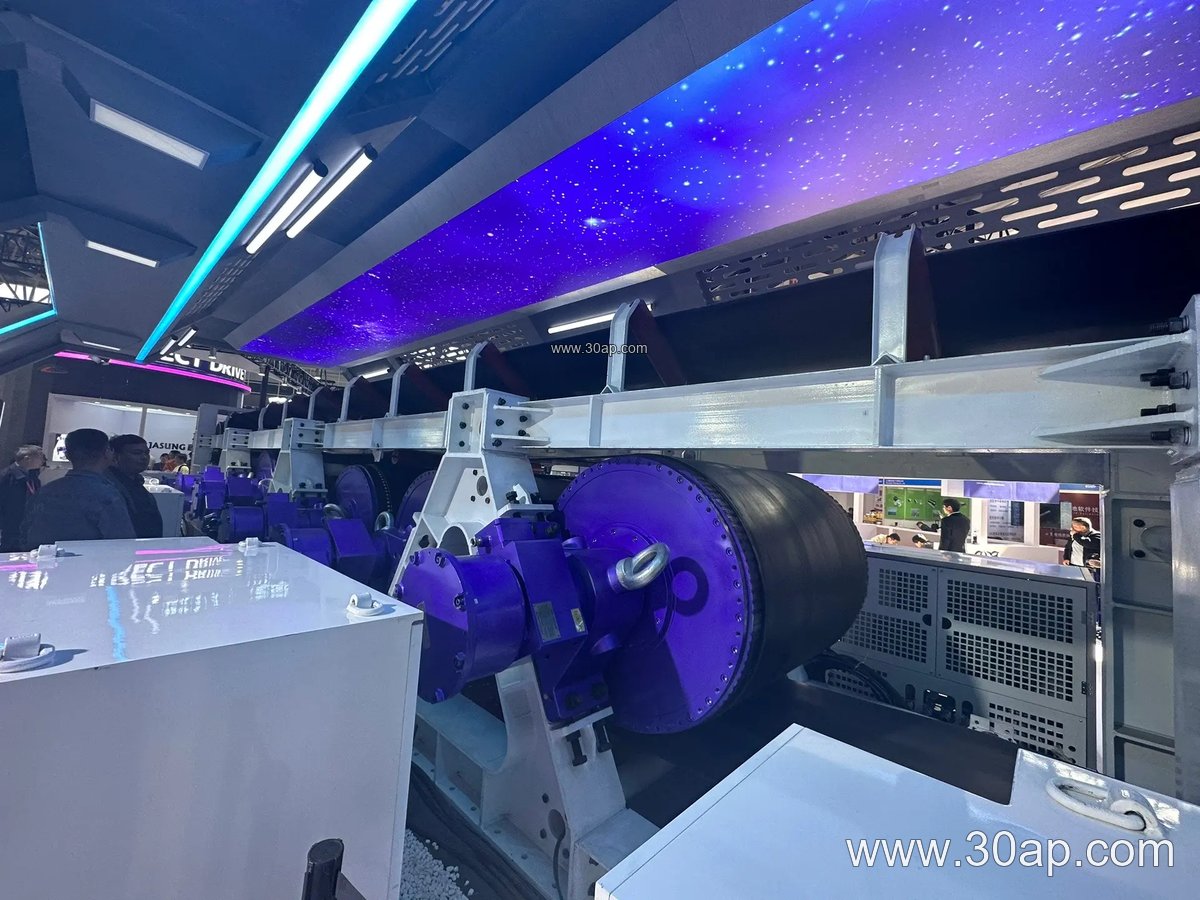
- Fixed version: the trough angle is built into the bracket and cannot be changed in service.
- Adjustable version: slotted holes or a pivoting top allow the operator to set the angle within a range, typically between 20 and 45 degrees.
Mounting hole spacing and crossbeam length follow the belt width and the selected trough angle, so they are determined by design rather than taken as a universal figure. Two brackets usually work as a pair, one on each side of the conveyor, and they must be matched to the same centre roll height.
Where It Appears in the Plant
These brackets are found wherever a conveyor handles bulk material on a troughed carrying run. In a quarry or stone crushing line, a heavy-duty mining conveyor belt running at 35 degrees is often supported by vertical brackets made from channel steel, because the impact and dust load demand a stiff upright. In a coal preparation plant or power station coal yard, flame retardant conveyor belt grades run alongside steel cord conveyor belt sections on long trunk conveyors, and the same bracket family appears on both.
They are also common on aggregate conveyor belt lines feeding screens, on ore conveyor belt transfers in iron ore and copper ore circuits, and on cement plant clinker and raw meal conveyors. On a pipe conveyor belt or a corrugated sidewall conveyor belt, the support arrangement changes, so the vertical bracket should not be assumed to fit those designs without checking the frame drawing.
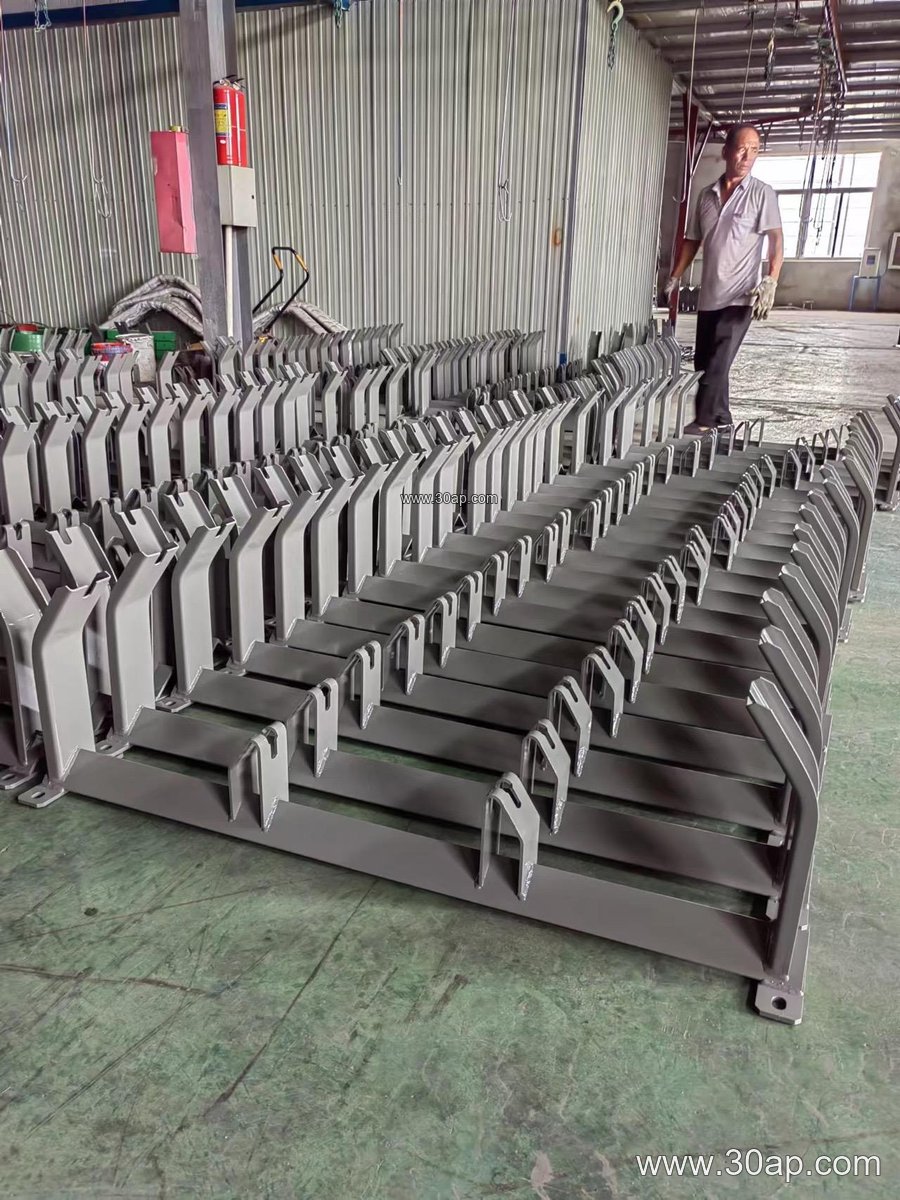
Matching Bracket, Roll Diameter and Belt Width
A vertical idler bracket is selected together with the trough set, not on its own. Common roll diameters for troughed sets are Ø89, Ø108, Ø133, Ø159 and Ø194 mm, and the bracket cradle must suit the shaft end of the roll actually fitted. Belt widths such as B500, B650, B800, B1000, B1200, B1400, B1600, B1800, B2000, B2200 are matched to roll diameter and trough angle by the conveyor designer; there is no rule that one belt width locks in one roll size or one angle.
| Application example | Belt width | Trough angle | Idler diameter |
|---|---|---|---|
| Small aggregate transfer | B650 | 30 degrees | Ø89 mm |
| Quarry main line | B800 | 35 degrees | Ø108 mm |
| Coal yard trunk conveyor | B1200 | 45 degrees | Ø133 mm |
| Ore handling conveyor | B1400 | 35 degrees | Ø159 mm |
These combinations are indicative only and should be confirmed against the conveyor layout, belt tension and material lump size. A forward-leaning set, often about 1.5 to 2 degrees, is a separate feature of the idler frame and should be checked before ordering brackets, since the lean affects how the wing roll contacts the belt edge.
Buyer Checklist
Before ordering, confirm the belt width, the required trough angle, the wing roll shaft diameter and the fixing hole pattern on the existing frame. Ask whether the conveyor runs a multi-ply fabric core conveyor belt, an EP conveyor belt, or a steel cord conveyor belt, because belt stiffness and edge behaviour affect how much support the bracket must provide. On abrasive duty such as a quarry conveyor belt or crusher conveyor belt, specify a robust steel grade and a finish that resists dust and corrosion. On heat resistant conveyor belt or oil resistant conveyor belt duties, keep the bracket clear of hot material spill and check that any coating is compatible with the environment.
Finally, inspect installed brackets during routine idler roller checks. A bent upright, an elongated slot, or a loose foot bolt will change the trough angle and lead to belt misalignment long before the roll itself fails.