What Is a Custom Conveyor Bracket?
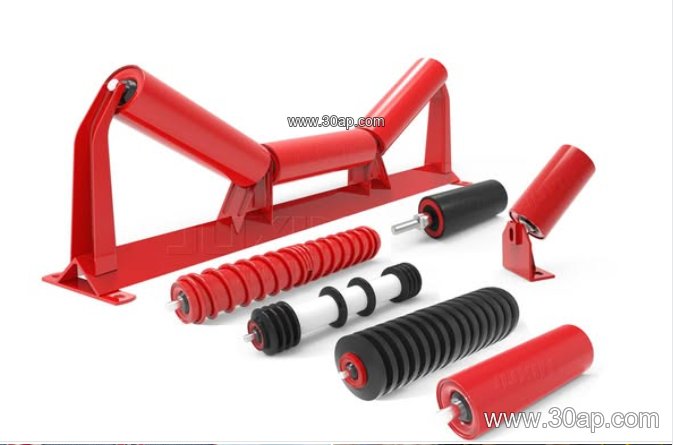
A custom conveyor bracket is a fabricated support component designed to hold idler rollers at the correct position and angle along a conveyor frame. Unlike a one-size-fits-all part, it is built to match a specific belt width, trough angle, roller diameter, and mounting arrangement. Whether you call it a custom conveyor bracket or a made-to-order idler support, the goal is the same: keep the belt tracking smoothly and distribute material load evenly.
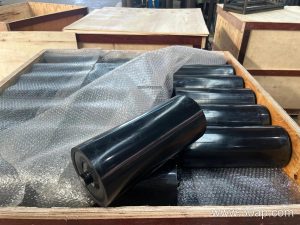
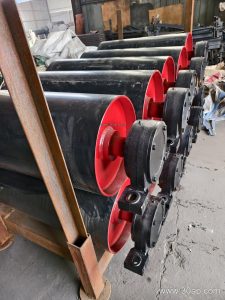
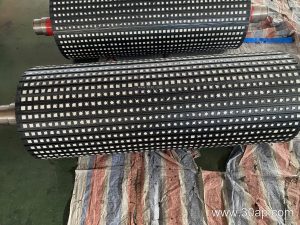
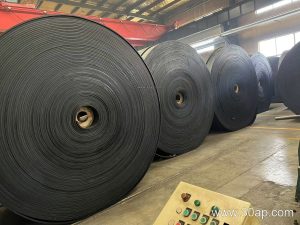
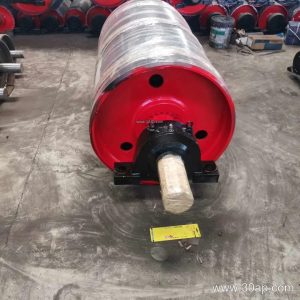
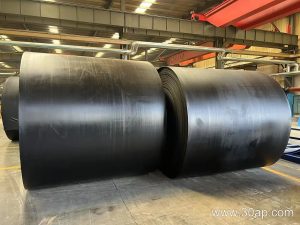
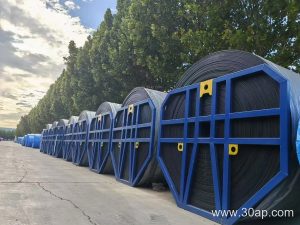
These brackets are common in bulk handling operations such as a quarry, a cement plant, or a power station coal yard. They work together with the conveyor belt, idler roller, and conveyor pulley to form the complete carrying and return run.
Construction and Materials
Most custom conveyor brackets are fabricated from angle steel, channel steel, or bent steel plate. The choice depends on load, environment, and the required stiffness. A heavy-duty bracket for a primary crusher discharge may use thicker channel, while a lighter frame on a sand and gravel line can use bent plate.
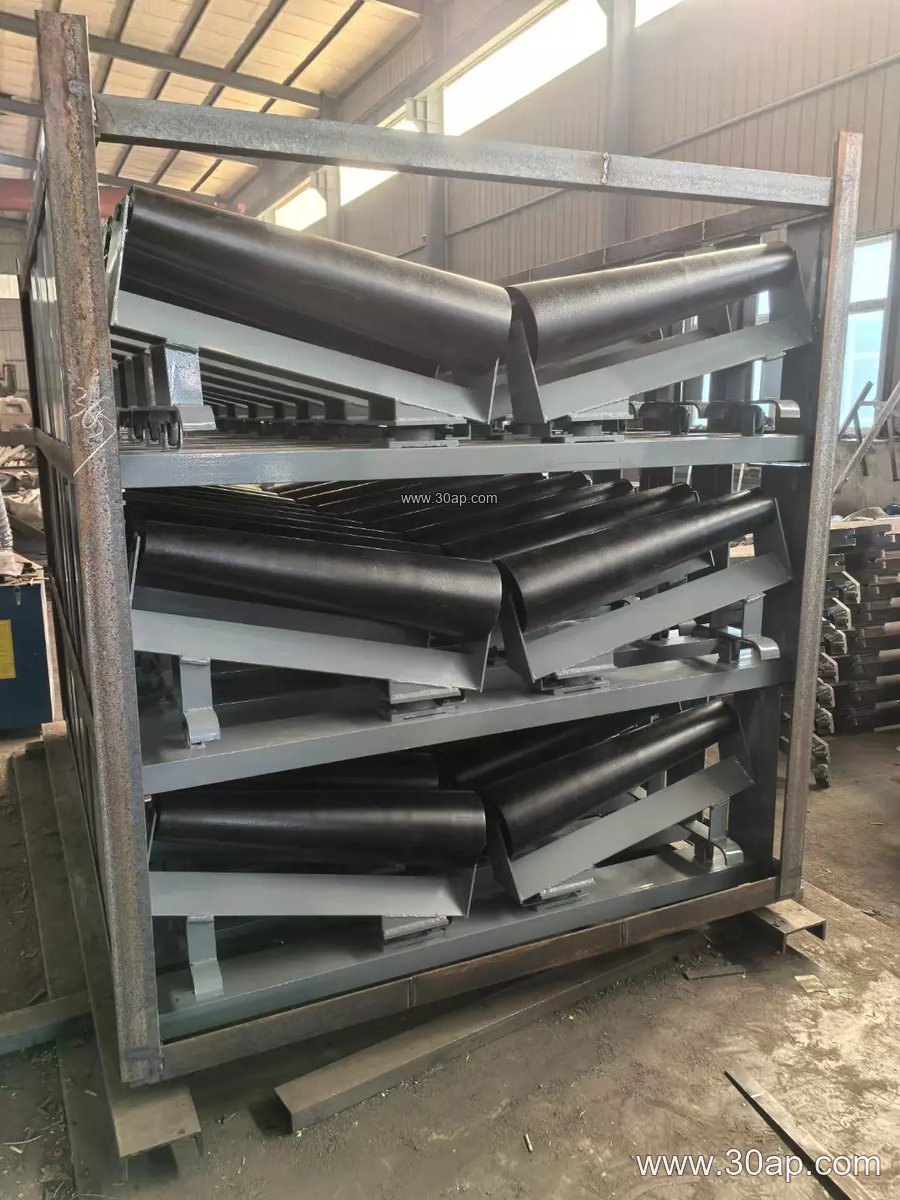
Typical features include:
- Slotted or drilled mounting holes for adjustment
- Reinforced gussets at high-stress corners
- Powder coating or galvanizing for corrosion resistance
- Fixed or adjustable trough angles
Fabrication tolerances matter. A bracket that is twisted or mis-drilled will cause the idler roller to sit unevenly, which leads to belt mistracking and edge wear.
Common Types and Where They Fit
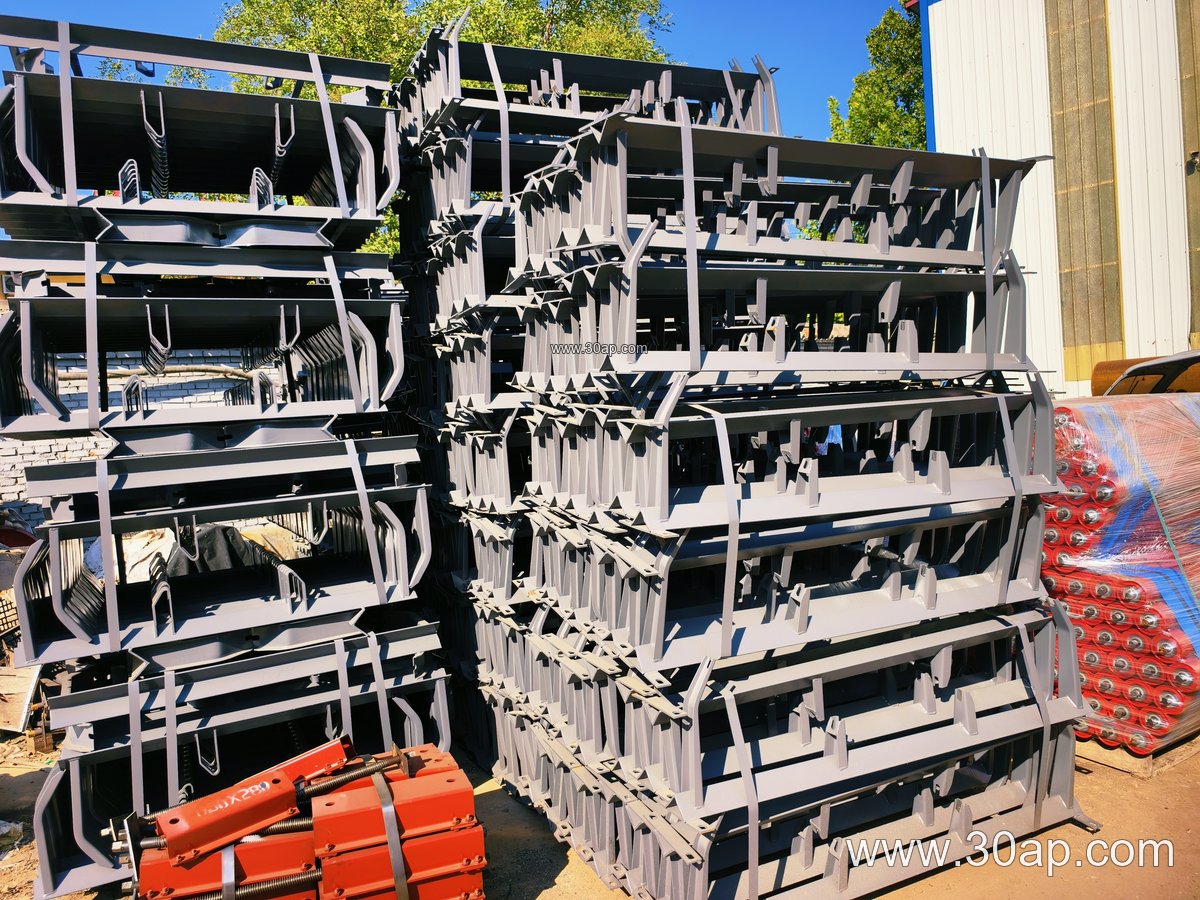
Custom conveyor brackets are not a single product. They include several subtypes, each with a distinct role:
- Troughing bracket – supports the carrying idlers at a set trough angle.
- Transition bracket – guides the belt from flat to troughed profile near pulleys.
- Return bracket – holds the lower idlers that support the empty belt.
- V-return bracket – used with V-shaped return idlers for self-cleaning.
- Impact bracket – reinforced to absorb shock at loading points.
- Self-aligning bracket – allows slight movement to correct belt tracking.
- Adjustable bracket – permits trough angle changes on site.
- Suspended bracket – hangs from the frame for easy roller replacement.
For comparison, a fixed bracket is simpler and cheaper, while an adjustable type offers flexibility when material characteristics change. Neither replaces the other; they serve different needs.
Matching Brackets to Belt and Roller Dimensions
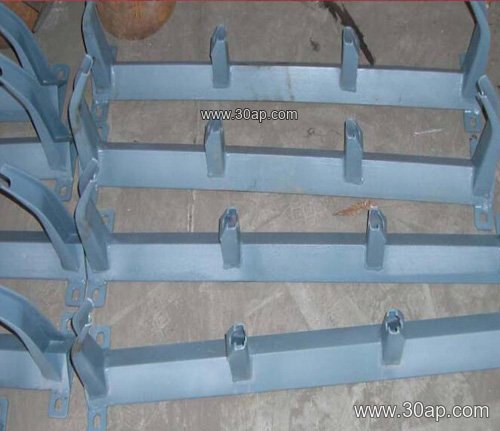
Selection starts with belt width and roller diameter. Common belt widths include B500, B650, B800, B1000, B1200, B1400, B1600, B1800, B2000, B2200. Roller diameters are often Ø89, Ø108, Ø133, Ø159, Ø194. Trough angles are typically 20, 30, 35, or 45 degrees. Forward tilt is usually about 1.5 to 2 degrees.
The table below shows reference combinations, not fixed rules:
| Belt Width | Trough Angle | Roller Diameter | Typical Bracket Style |
|---|---|---|---|
| B500 | 20° | Ø89 | Troughing |
| B650 | 30° | Ø89 | Troughing |
| B800 | 35° | Ø108 | Troughing / Impact |
| B1000 | 35° | Ø133 | Troughing / Transition |
| B1200 | 45° | Ø133 | Troughing / V-return |
| B1400 | 45° | Ø159 | Heavy-duty troughing |
| B1600 | 35° | Ø159 | Transition |
| B1800 | 45° | Ø194 | Heavy-duty troughing |
| B2000 | 35° | Ø194 | Return / V-return |
| B2200 | 45° | Ø194 | Custom heavy-duty |
Mounting hole spacing and crossbeam length change with belt width and trough angle. They are determined by design, not by a universal number.
Applications Across Industries
In an iron ore mine, custom conveyor brackets must handle abrasive dust and heavy loads, often paired with an abrasion resistant conveyor belt. In a coal preparation plant, flame retardant conveyor belt and anti-static properties are important, and brackets may need extra grounding. A limestone quarry typically uses troughing and impact brackets at transfer points. A fertilizer plant may require corrosion-resistant finishes. In each case, the bracket is selected to suit the belt, the idler roller, and the environment.
For long overland systems, steel cord conveyor belt and EP conveyor belt are both common, and bracket spacing is adjusted to control sag. In underground coal mining, compact suspended brackets help with maintenance in confined spaces.
Buyer Checklist
Before ordering, confirm the belt width, roller diameter, trough angle, mounting hole pattern, material thickness, and surface finish. Ask whether the bracket is fixed or adjustable. Check that the design allows easy roller replacement without dismantling the frame. For corrosive or wet conditions, specify galvanizing or suitable coating.
Finally, request drawings for approval. A small dimensional error in a custom conveyor bracket can cause big tracking problems. Clear communication on dimensions and tolerances is the best way to ensure a smooth installation.