What a Conveyor Impact Idler Does
A conveyor impact idler is the shock-absorbing roller set placed directly beneath a loading or transfer point. Its job is to catch the falling stream of material before it reaches the ordinary carrying idlers, softening the blow that would otherwise hammer the belt, the frame, and the bearings downstream. In a quarry, a coal preparation plant, or a cement plant, the drop height at the chute can be several meters, and the repeated impact of lump ore or clinker is one of the fastest ways to damage a conveyor belt. The impact idler is the component that takes that punishment on purpose.
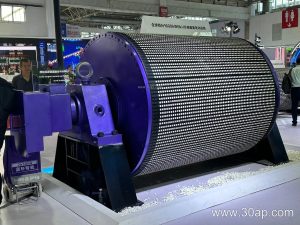
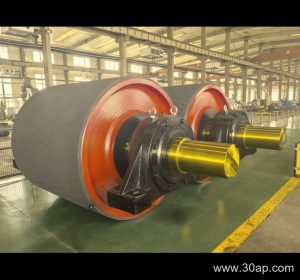
This is a distinct product from the drive pulley, tail pulley, or bend pulley at the ends of the conveyor. Those pulleys transmit power and change belt direction; the impact idler only supports and cushions the belt. The two should not be treated as interchangeable when specifying a conveyor.
How the Roller Is Built
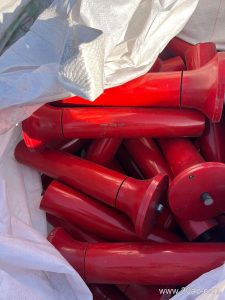
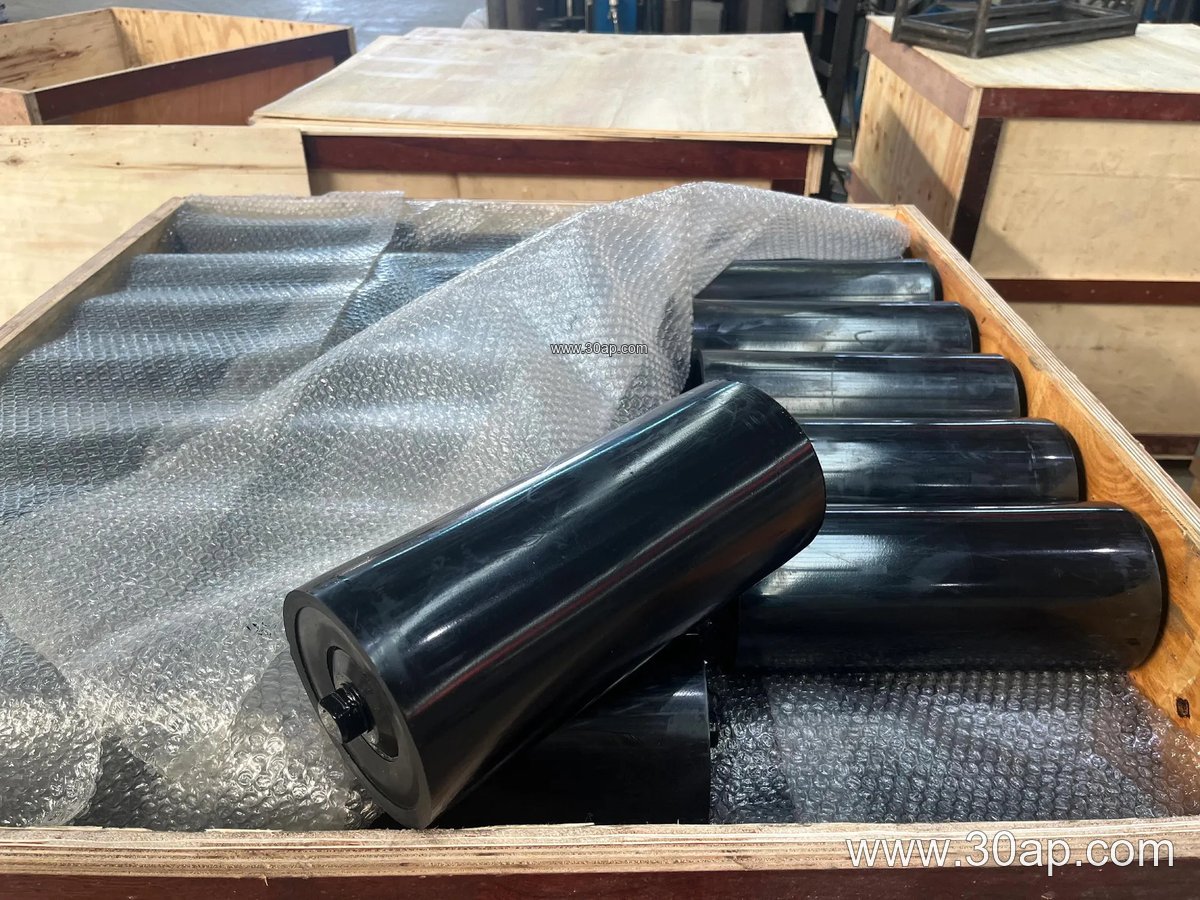
The typical construction uses a steel tube shell fitted with rubber rings or a rubber-covered surface, mounted on a shaft with sealed bearings. The rubber rings compress under load and rebound, absorbing energy that would otherwise pass into the belt carcass. Some designs use a dense rubber disc stack; others use a smooth rubber sleeve. The roller ends usually carry labyrinth or contact seals to keep out dust and fine grit, which is critical in aggregate and ore handling.
Common shell diameters for this roller family include Ø89, Ø108, Ø127, Ø133, Ø159, and Ø178 mm, with larger sizes used at heavy primary crushing stations. Bearing sizes such as 6205, 6305, 6306, and 6308 are frequently fitted, but the bearing must be matched to the actual load and shaft design rather than chosen from belt width alone.
Where It Fits on the Conveyor
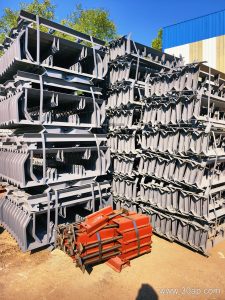
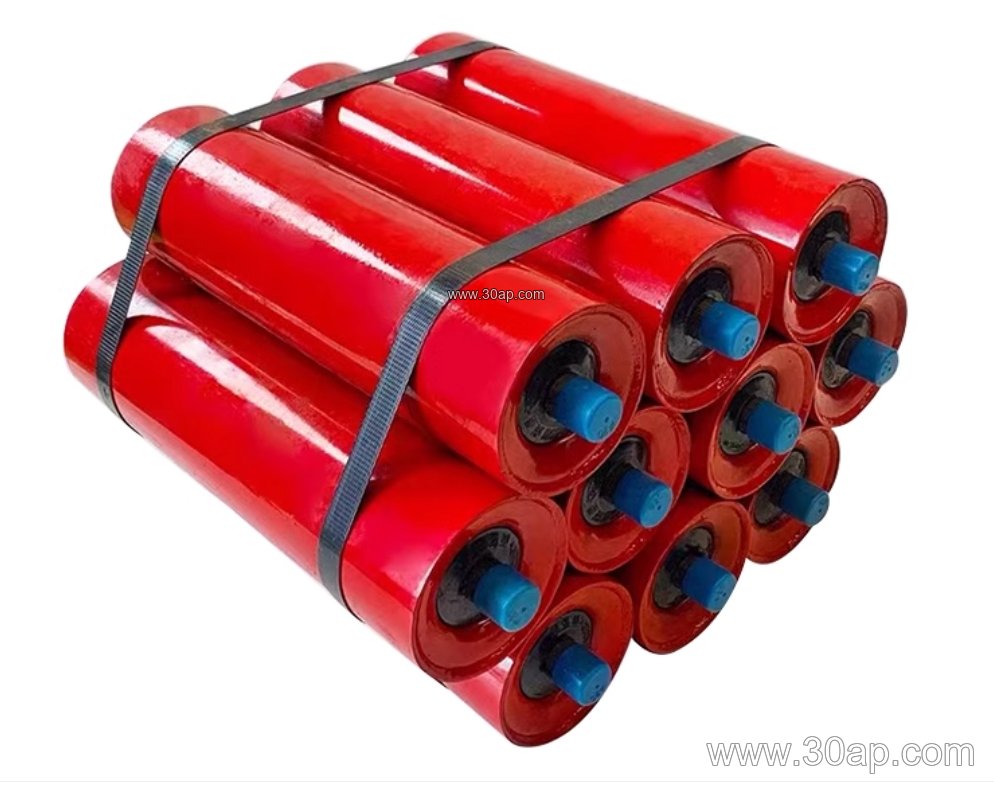
The impact idler is normally installed in a short group of three to five units right under the chute, replacing standard troughing idlers in that zone. In a stone crushing line or a bulk material conveyor belt system, this cushioning section protects the belt from punctures and edge damage caused by sharp rock. In a coal mining conveyor belt or an underground mining conveyor belt, flame retardant and anti-static properties of the belt matter, but the impact idler itself is selected mainly for load capacity and seal quality.
The same cushioning logic applies at a power plant conveyor belt receiving coal, at a port ship loading conveyor belt, and at a concrete batching plant. Where the material is hot, such as clinker, the rubber grade of the ring should be checked against the temperature, and a heat resistant conveyor belt in the same zone will also need compatible support.
Matching Diameter, Belt Width, and Trough Angle
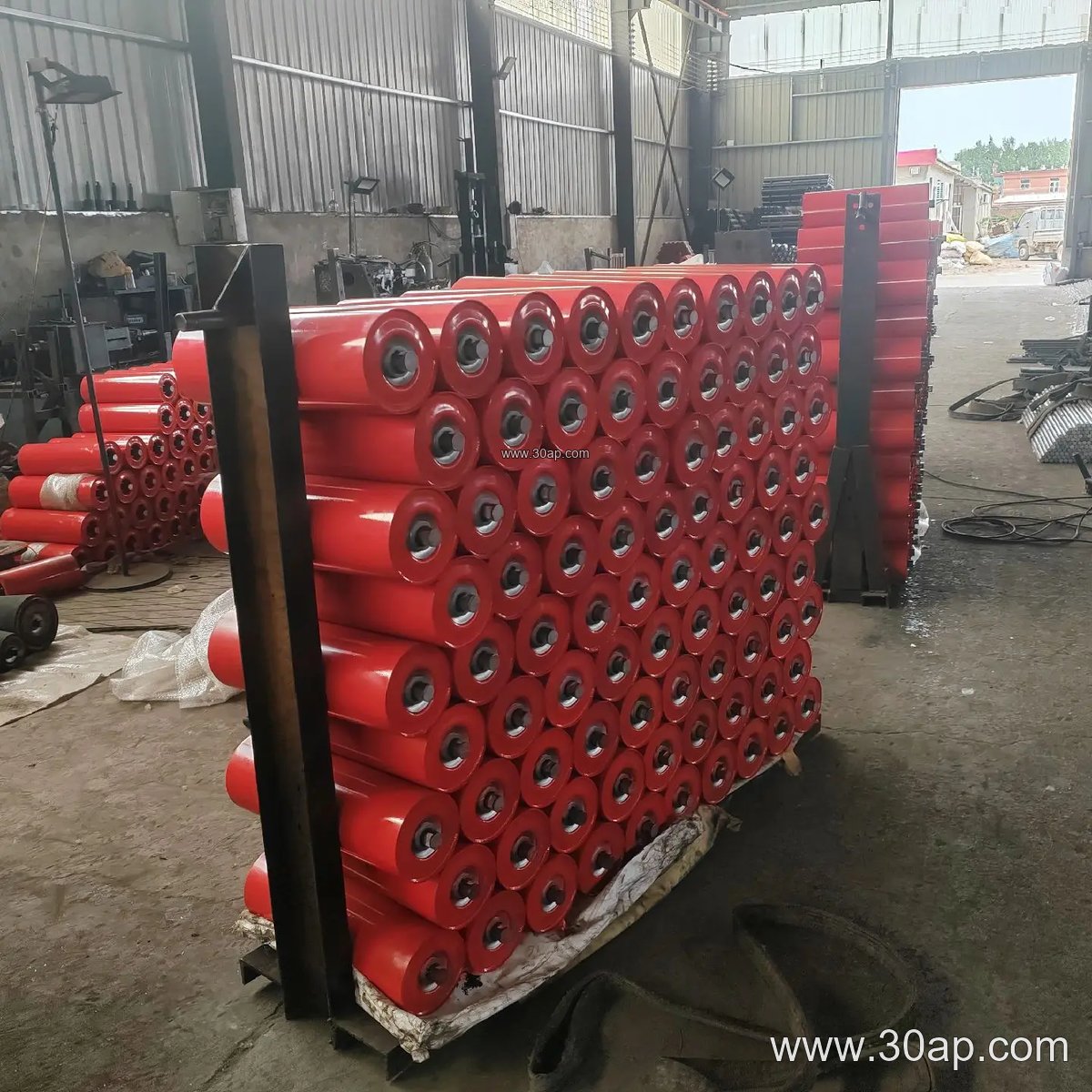
Buyers often ask for a single rule linking belt width to roller diameter. No such fixed rule exists. A B800 belt may run on Ø108 or Ø133 mm idlers depending on load, belt speed, and the trough angle chosen. The table below gives common reference values only; final selection follows the conveyor design.
| Belt width | Common impact idler diameter | Typical trough angle |
|---|---|---|
| B500 | Ø89 to Ø108 mm | 20 to 30 degrees |
| B650 | Ø89 to Ø127 mm | 20 to 35 degrees |
| B800 | Ø108 to Ø133 mm | 30 to 35 degrees |
| B1000 | Ø108 to Ø159 mm | 30 to 35 degrees |
| B1200 | Ø127 to Ø159 mm | 30 to 35 degrees |
| B1400 | Ø133 to Ø178 mm | 35 to 45 degrees |
| B1600 | Ø159 to Ø178 mm | 35 to 45 degrees |
| B1800 and above | Ø178 to Ø219 mm | 35 to 45 degrees |
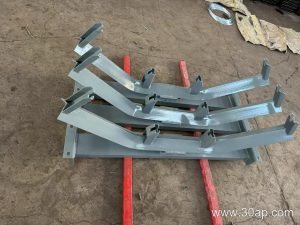
For a three-roll troughing set, roller length changes with belt width and trough angle. As a rough guide, B800 often uses about 315 mm rolls and B1200 about 465 mm, but the side rolls and center roll can differ, so the drawing governs.
What to Check Before Ordering
- Drop height and lump size at the transfer point, which set the impact energy.
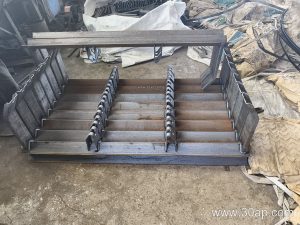
- Belt width and trough angle, so the idler frame and roll length fit the existing conveyor bracket.
- Shaft end type, fixing centers, and whether the frame is welded or bolted.
- Seal design for dusty or wet conditions, especially in wash plants and ports.
- Rubber hardness and ring profile, matched to hot, oily, or abrasive cargo.
- Compatibility with the belt in use, whether that is an abrasion resistant conveyor belt, an oil resistant conveyor belt, or a heavy-duty mining conveyor belt.
A properly chosen impact idler reduces belt replacement frequency at the loading zone and protects the pulley and frame from vibration. It is a small part of the conveyor cost but a large part of its uptime.