What a PVC Mining Conveyor Belt Is
A PVC Mining Conveyor Belt is a solid-woven or fabric-reinforced belt whose covers and carcass are based on polyvinyl chloride rather than plain rubber. In practice, buyers often shorten the name to PVC conveyor belt, and the same product also appears in catalogs as a PVC solid woven belt for mining service. It is a distinct product from rubber-covered fabric belts and from steel cord belts, and it should not be confused with PVG belts, which use a different cover compound.
The belt is common in underground coal mining, coal preparation plants, cement works, power plant coal yards and quarry plants where flame resistance and anti-static behavior matter. Its lighter weight compared with a heavy rubber belt makes it easier to handle during installation, and its smooth surface releases wet, sticky material reasonably well.
Construction and Surface Options
The carcass is usually a solid woven fabric impregnated and coated with PVC, giving a belt that resists delamination and moisture ingress. Cover thickness is normally modest because the PVC body itself carries much of the wear duty. Where a job needs extra grip on an incline, a chevron conveyor belt profile can be specified; where material must be contained, a corrugated sidewall conveyor belt or a skirted conveyor belt design may be more suitable. These are alternative constructions, not replacements for the plain PVC belt.
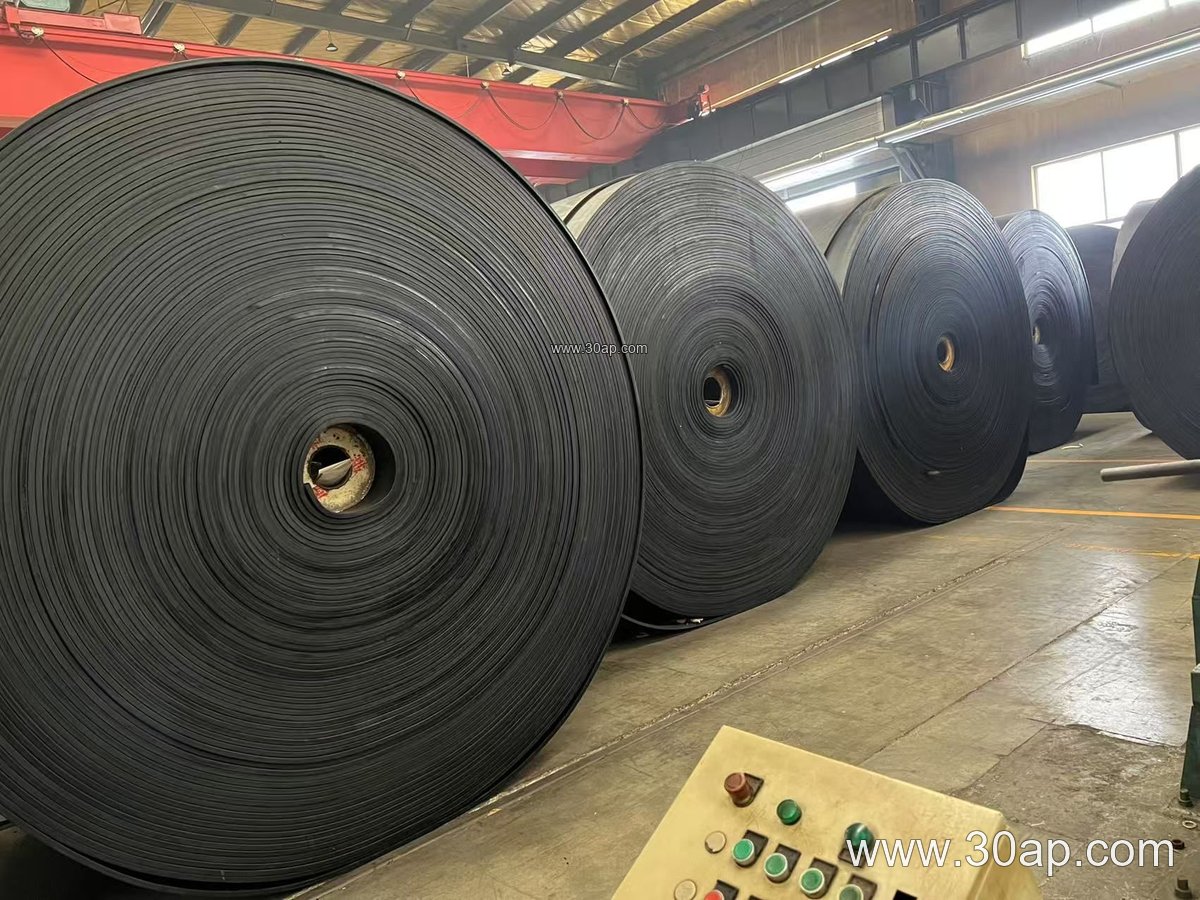
For comparison only, a rubber conveyor belt with an EP conveyor belt carcass or an NN conveyor belt carcass is often chosen for very high abrasion or heavy impact, while a steel cord conveyor belt serves long, high-tension trunk lines. Each has its place; the PVC belt stays the practical choice for flame-sensitive underground and plant service.
Typical Sizes and Reference Data
Dimensions are set by the conveyor design, not by a single rule. The following values are common reference points only and vary between manufacturers.
- Belt widths: B500, B650, B800, B1000, B1200, B1400, B1600 up to B2000 for wide installations.
- Cover grades: 3+1.5 mm, 4+2 mm and 5+2 mm are frequently quoted; thicker builds appear on abrasive duties.
- Carcass: solid woven construction in several strength classes; 2 to 6 plies appear in fabric-core designs.
- Surface forms: plain, chevron or patterned, and sidewall versions for steep inclines.
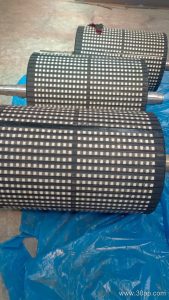
No single belt width fixes a pulley diameter, and shaft size is always calculated from the actual load and pulley design. Drive, tail and bend pulleys each perform a different function and are selected separately.
| Item | Common reference | Note |
|---|---|---|
| Width | B500 to B2000 | Match to trough width and material load |
| Cover | 3+1.5 to 5+2 mm | Thicker for abrasive rock |
| Strength class | EP200 to EP2000 equivalents | Confirm with supplier data |
| Surface | Plain, chevron, sidewall | Chosen by incline and containment |
Where It Fits on the Conveyor
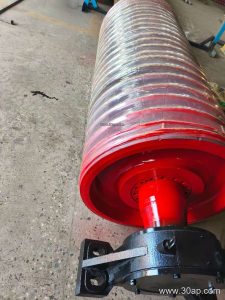
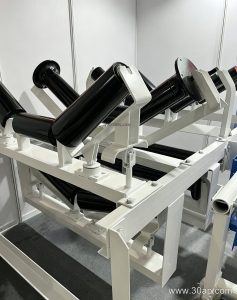
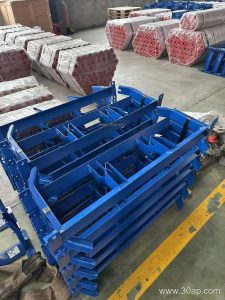
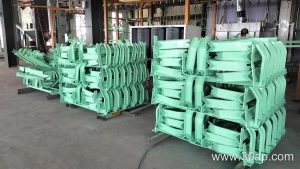
On a typical installation the belt runs over idler rollers, wraps the head and tail conveyor pulleys, and is held in line by conveyor brackets and frame sections. In a coal mine the belt may travel several hundred meters through transfer points, and every joint and splice deserves attention. In a cement plant it may feed clinker or raw meal; in a sand and gravel yard it may carry wet aggregate. A quarry conveyor belt of this type often works alongside a crusher conveyor belt on the same site.
Flame retardant and anti-static grades are usually requested for underground service. A cold resistant conveyor belt grade helps in northern yards, while an oil resistant conveyor belt cover is useful around lubricated drives. Heat is a different matter: PVC belts have temperature limits, so hot clinker or sinter should go on a heat resistant conveyor belt instead.
Buyer Checklist
- State the material, lump size, moisture and temperature range.
- Confirm the required flame and anti-static performance with the supplier.
- Give the conveyor layout, incline and pulley sizes so the belt can be matched.
- Ask about splice method and whether an endless conveyor belt is preferred.
- Check cover thickness against actual wear, not only against price.
For more on matching belts with idlers, pulleys and frames, see the technical pages at conveyorbeltingmfg.com, where PVC Mining Conveyor Belt specifications, idler roller options and conveyor pulley data are grouped by application.