What a Bend Rubber Lagged Pulley Does
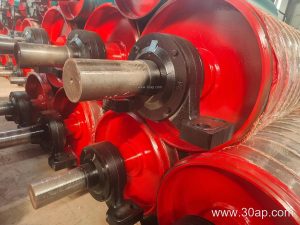
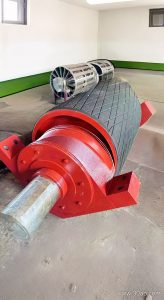
In a conveyor system, the bend pulley—also called a direction change pulley—guides the belt along a new path without driving it. When that pulley is covered with rubber lagging, it gains grip and protection that matter in dusty, wet, or high-traction layouts. The bend rubber lagged pulley is not a drive pulley or a tail pulley; it sits at intermediate positions to redirect the belt, often around a transfer point or before a tensioning section.
At sites such as a limestone quarry or a coal washing plant, the bend pulley helps keep the belt aligned while the main drive does the heavy pulling. A rubber lagged surface reduces belt slip on the non-drive side and cushions the contact between the belt cover and the pulley shell.
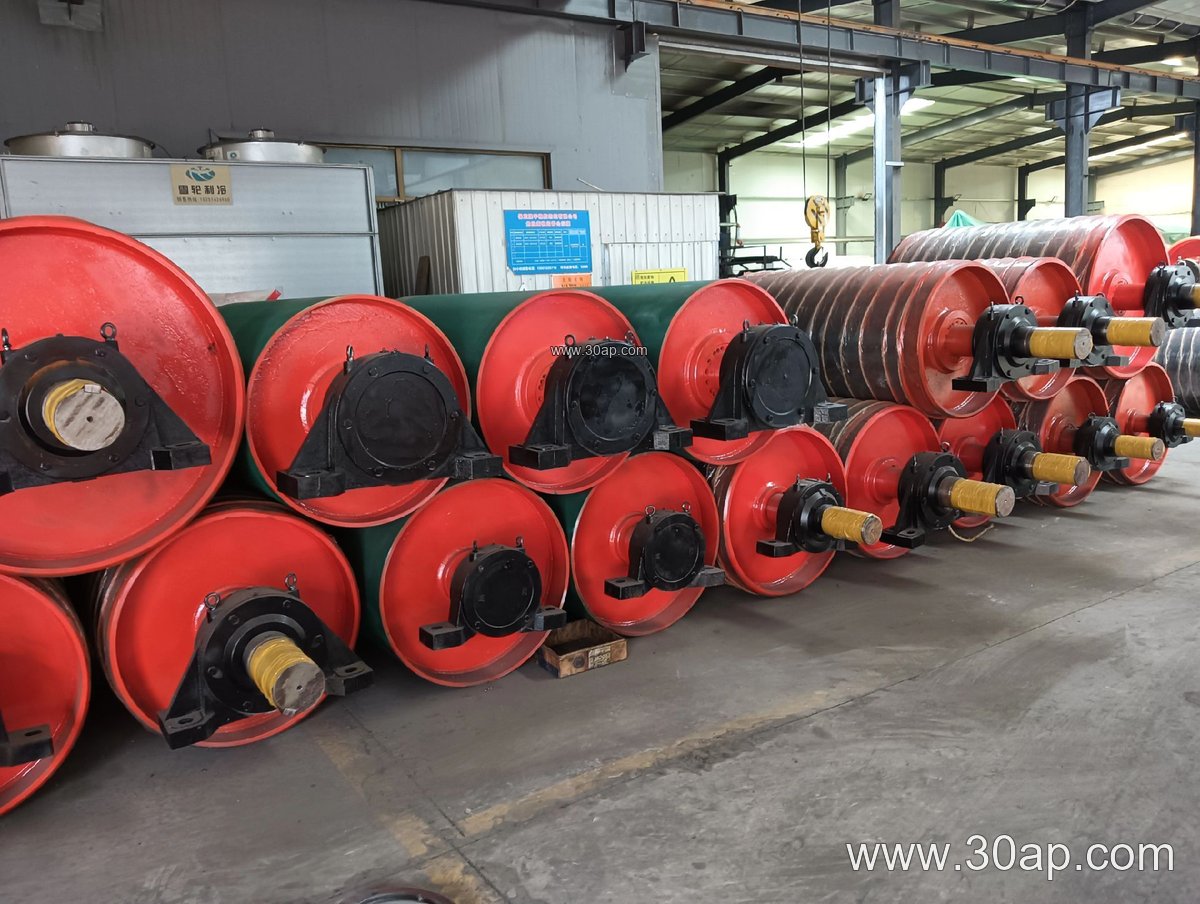
Construction and Surface Options
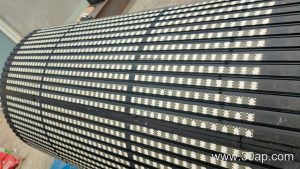
A typical bend rubber lagged pulley starts with a steel shell, welded end discs, and a shaft sized by torque and load rather than belt width alone. The rubber lagging can be applied in several ways: cold-bonded rubber, hot-vulcanized rubber, or cast rubber. Surface patterns include plain, diamond, and herringbone. Thickness commonly ranges from 8 mm to 20 mm, with 10 mm and 12 mm often chosen for general direction changes.
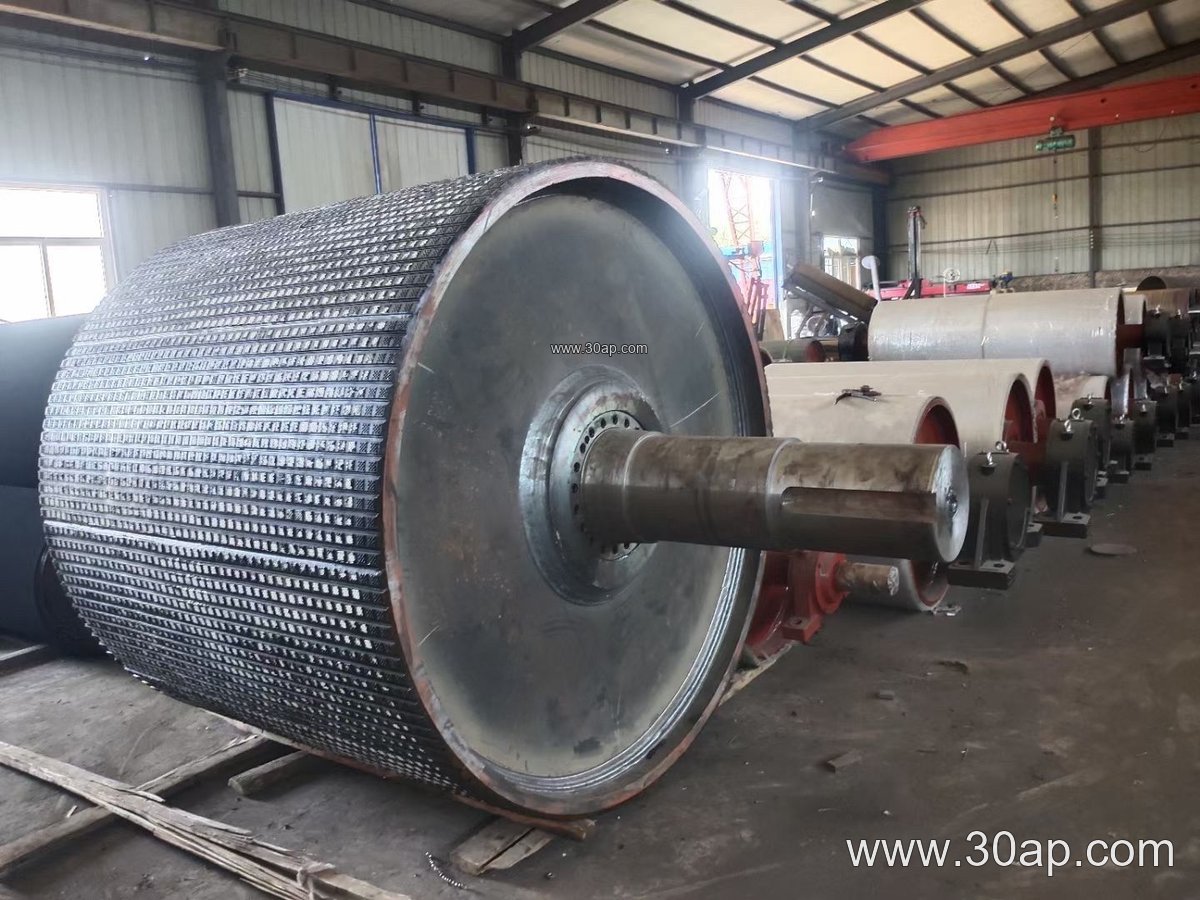
For abrasive service in an iron ore or copper ore line, a thicker lagging may be preferred. In a cement plant clinker handling area, heat and dust call for lagging that resists both. The pulley face width usually exceeds the belt width—for example, a B800 belt often runs on a pulley face around 950 mm, while a B1200 belt may use a face near 1400 mm. These are common references, not fixed rules.
Where It Fits in the Conveyor Layout
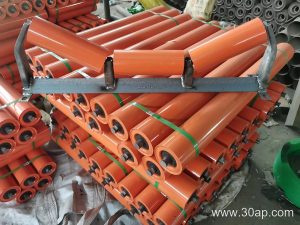
Bend pulleys appear in many positions: before a tension take-up, after a discharge chute, or along a route that must step around structural columns. They are common in aggregate conveyor lines, power plant coal handling, and port bulk terminals. In an underground coal mining conveyor, a bend rubber lagged pulley may work with a flame retardant conveyor belt and a set of conveyor idler rollers to keep the return strand stable.
The pulley does not replace the drive pulley or the tail pulley. Those components have different duties: the drive pulley transmits power, while the tail pulley returns the belt. The bend pulley only changes direction, so its lagging is selected for grip and wear rather than for high torque transmission.
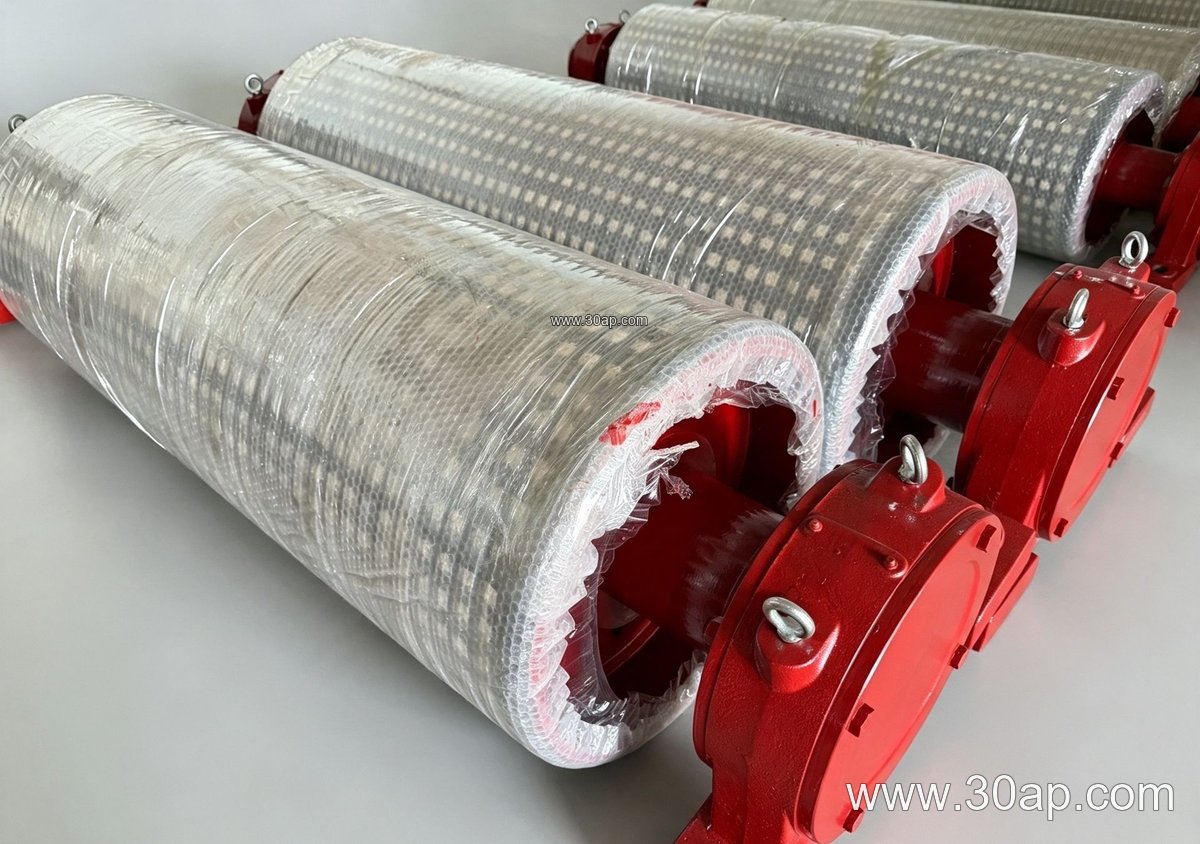
Matching the Pulley to the Belt and Load
Buyers should share the belt width, belt type, and expected belt tension with the pulley supplier. A fabric core conveyor belt such as an EP conveyor belt or NN conveyor belt behaves differently from a steel cord conveyor belt, and the pulley diameter should be large enough to avoid excessive bending stress. Common diameter references include Ø200, Ø315, Ø500, Ø800, and Ø1000, but the final choice depends on belt construction and system design.
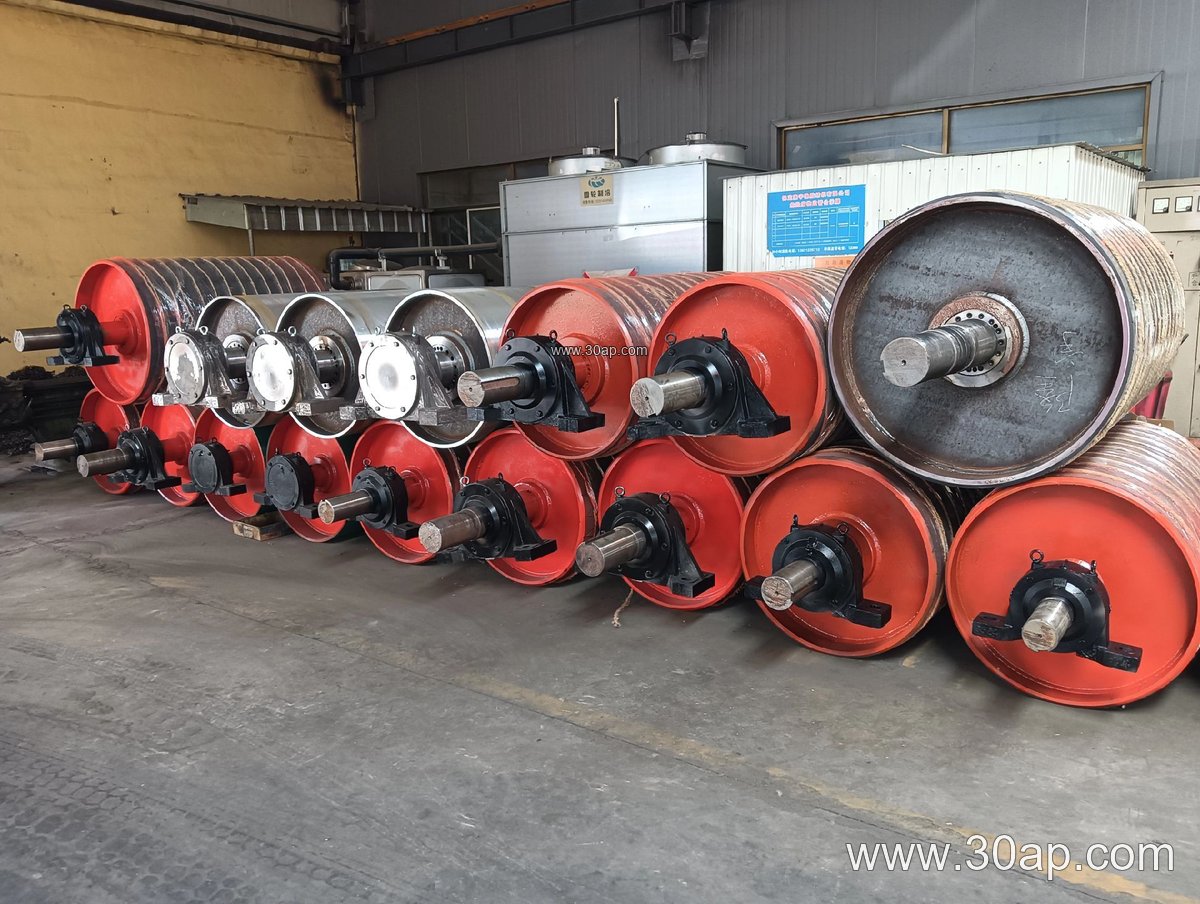
Shaft diameter is often selected from a range such as Ø80, Ø100, Ø120, or Ø160 based on torque and bearing load—never from belt width alone. A B650 belt and a B1400 belt may use very different shaft sizes even if both pulleys carry rubber lagging.
Selection and Maintenance Notes
- Confirm the pulley’s role: bend, tension, or snub—each has different load expectations.
- Specify lagging type and thickness for the environment: abrasive, oily, or wet.
- Check that the pulley face width clears the belt and that the conveyor bracket aligns with the shaft.
- Inspect lagging for wear, glazing, or separation during scheduled shutdowns.
- Keep the pulley clean; material buildup on a rubber lagged surface can cause belt tracking problems.
For a quarry conveyor belt or a crushing circuit, a bend rubber lagged pulley with diamond lagging often improves tracking on wet mornings. In a food grade or cold resistant application, the lagging compound should be chosen accordingly. The same pulley style can serve many industries, but the rubber specification should follow the duty.
When ordering, ask for the pulley drawing, lagging hardness, and balancing grade. A well-matched bend rubber lagged pulley helps extend conveyor belt life and keeps the return strand running smoothly.