What an Intermediate Bend Pulley Does
An intermediate bend pulley is a non-drive conveyor pulley installed between the head and tail of a conveyor to redirect the belt path, adjust wrap angle on another pulley, or control belt sag in sections where the layout changes direction. In a long overland run at a quarry or a transfer gallery in a cement plant, the belt may need to rise, dip, or pass around an obstacle. Instead of forcing one large terminal pulley to handle every change, engineers add a bend pulley at the intermediate position. This keeps tension distribution more even and lets the return strand follow a cleaner route.
It is worth keeping names straight. A bend pulley is not a drive pulley and not a tail pulley. The drive pulley transmits torque to the belt, the tail pulley closes the loop at the loading end, and the bend pulley only changes direction or wrap. Because the bend pulley carries no drive torque, its shaft, bearing housing and lagging are selected around radial load, belt tension and wrap angle rather than motor power. The same logic applies to a snub or take-up pulley, but those have their own positions and duties.
Construction and Surface Options
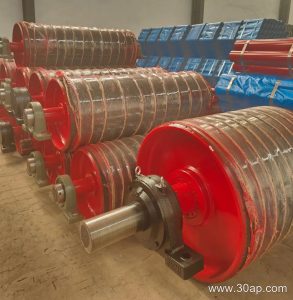
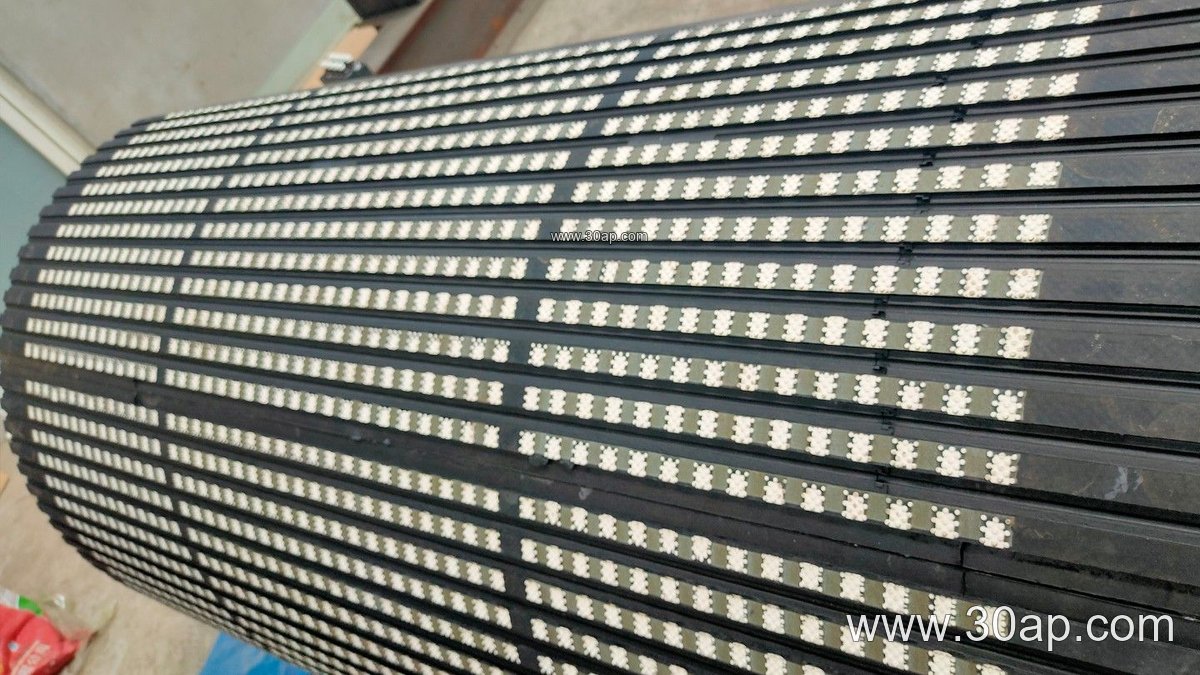
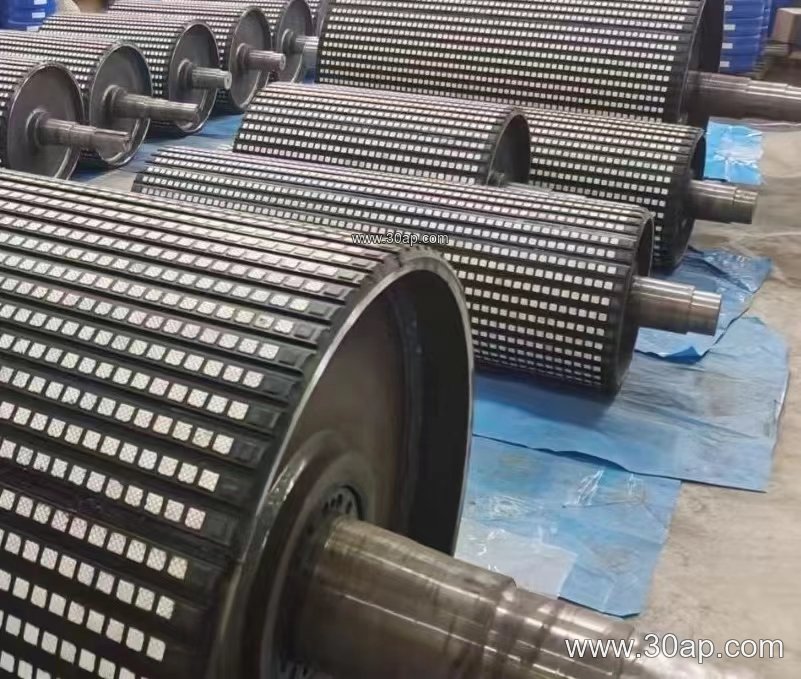
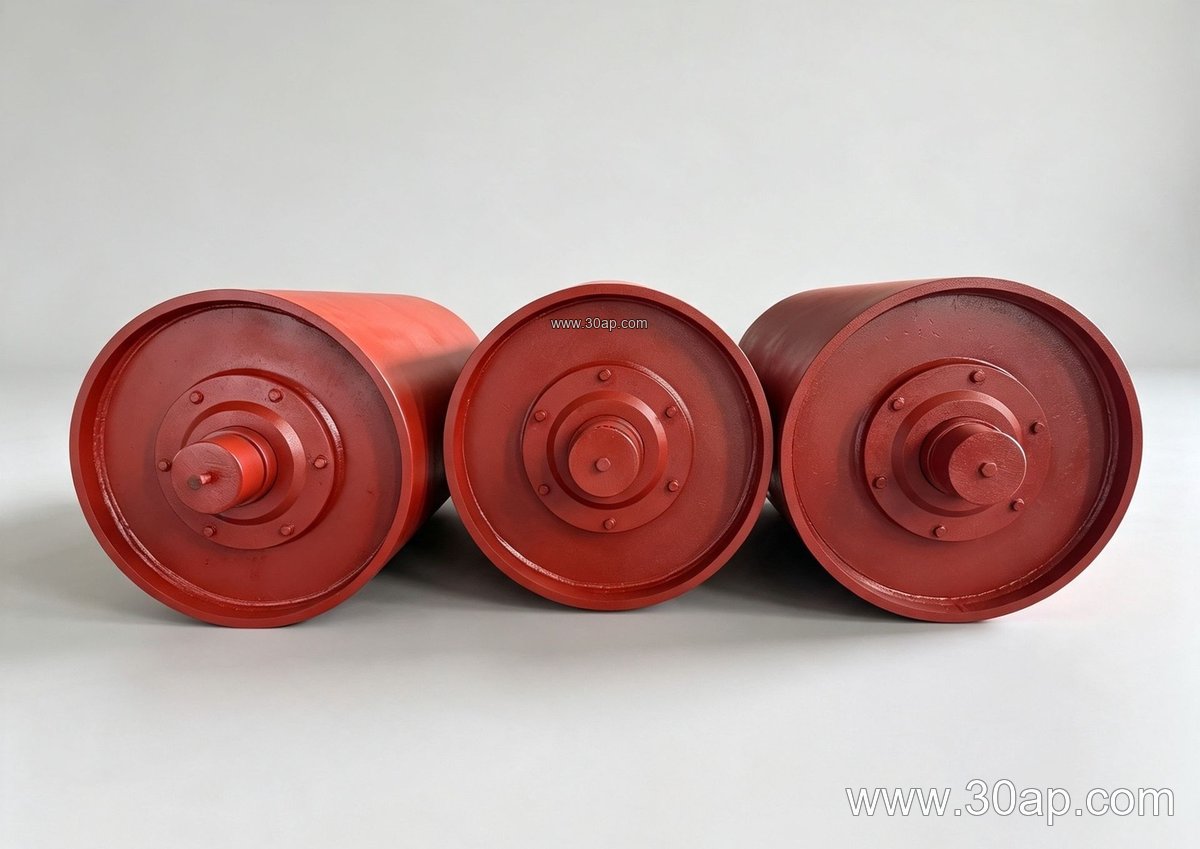
Most intermediate bend pulleys use a welded steel shell with a shaft running through the hub or with end discs and a stub shaft, depending on load. The shell is machined to reduce runout, and the surface may stay plain or receive lagging. Common surface forms include plain finish, hot vulcanized rubber, cold bonded rubber, diamond grooving, herringbone grooving, ceramic tiles and flat rubber sheet. Lagging thickness is often 8, 10, 12, 15 or 20 mm, chosen by contact conditions rather than by habit. A pulley running in a wet, gritty limestone quarry may benefit from grooved rubber or ceramic lagging to shed fines, while a clean return bend in a power plant coal handling line may work well with plain or flat rubber.
Bearings are usually mounted in pillow blocks fixed to a conveyor bracket or frame. Sealing matters in dusty service, and grease paths should stay accessible. Shaft diameter is determined by torque and bending load, not by belt width alone. Typical shaft sizes in the reference range include Ø50, Ø60, Ø70, Ø80, Ø90, Ø100, Ø120, Ø140, Ø160, Ø180 and Ø200, but the final figure follows the designer’s load calculation.
Sizes and Layout Combinations
Bend pulleys follow the belt width family of the conveyor. Face width is normally a little wider than the belt so the belt does not run off the shell edge. The table below shows common reference pairings; they are examples for layout discussion, not fixed rules, and one belt width can work with more than one pulley diameter.
| Belt width | Typical face width | Example diameter | Typical application |
|---|---|---|---|
| B400 | about 500 mm | Ø200 to Ø315 | small aggregate line |
| B650 | about 750 mm | Ø250 to Ø400 | crusher discharge |
| B800 | about 950 mm | Ø315 to Ø500 | cement plant transfer |
| B1000 | about 1150 mm | Ø400 to Ø630 | coal yard conveyor |
| B1200 | about 1400 mm | Ø500 to Ø800 | iron ore plant |
| B1400 | about 1600 mm | Ø630 to Ø1000 | port bulk terminal |
| B1600 | about 1800 mm | Ø800 to Ø1250 | heavy mining duty |
| B1800 | about 2000 mm | Ø1000 to Ø1400 | large ore handling |
When sizing, the wrap angle is as important as diameter. A small diameter pulley with a large wrap may cause higher bending stress in the belt, especially with a thick steel cord conveyor belt or a multi-ply fabric core conveyor belt. A larger diameter reduces bending but takes more space. Designers balance the two, and they also check the belt path against nearby idler roller frames and conveyor brackets.
Where It Fits in Different Industries
In a sand and gravel plant, an intermediate bend pulley often sits on the return strand to lift the belt over a walkway or to guide it back into a take-up zone. In underground coal mining, flame retardant conveyor belt and anti-static conveyor belt are common, and the bend pulley must be positioned so that fines do not build up on the shell. In a copper ore or gold mining concentrator, an abrasion resistant conveyor belt may run over a rubber lagged bend pulley, while a steel cord conveyor belt on a long overland route needs careful diameter selection to limit fatigue.
Other service conditions change the picture. A heat resistant conveyor belt in a cement clinker line may need a plain or heat tolerant surface and enough clearance for thermal expansion. An oil resistant conveyor belt in a recycling or metal plant may call for rubber lagging that resists swelling. A corrugated sidewall conveyor belt or pipe conveyor belt changes the belt profile, so the pulley face and guide details must match the belt construction. Even a simple food grade conveyor belt in a grain silo needs a clean, smooth shell with no trapped material.
Buyer Checklist
- Confirm the position in the conveyor and the required wrap angle, not just the belt width.
- State the belt type and tension, for example EP conveyor belt, NN conveyor belt or steel cord, so the supplier can check bending stress.
- Choose lagging by environment: plain, flat rubber, diamond, herringbone or ceramic.
- Specify shaft diameter from the load calculation; do not assume it from belt width.
- Check bearing sealing, lubrication access and mounting bracket dimensions against the existing frame.
- Ask for runout and balance checks, especially on wider pulleys such as B1800 or B2000 units.
A well chosen intermediate bend pulley is a quiet part of the conveyor, but it influences belt life, tracking and maintenance intervals across quarries, power plants, ports and processing plants. Matching the pulley to the belt, the layout and the dust or moisture conditions is more useful than copying a single size from another line.