What a Conveyor Bracket Quotation Covers
A conveyor bracket quotation is more than a price for a bent piece of steel. It is a document that should define the support frame or roller mount that holds the idler roller in place along a conveyor belt. Whether you are building a new overland conveyor for a quarry or replacing worn brackets at a cement plant, the quotation tells you what you are buying, how it fits, and what to check before approval. In many plants, the conveyor bracket is the quiet component that keeps the belt tracking true and the idler roller spinning freely. A clear quotation helps you compare suppliers without confusing a troughing bracket with a return bracket or a bend pulley support.
How the Bracket Is Built and Where It Fits
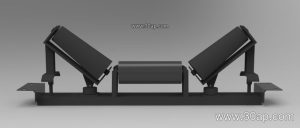
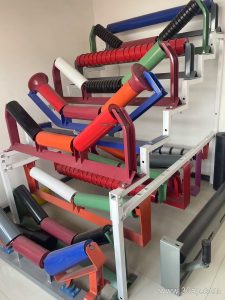
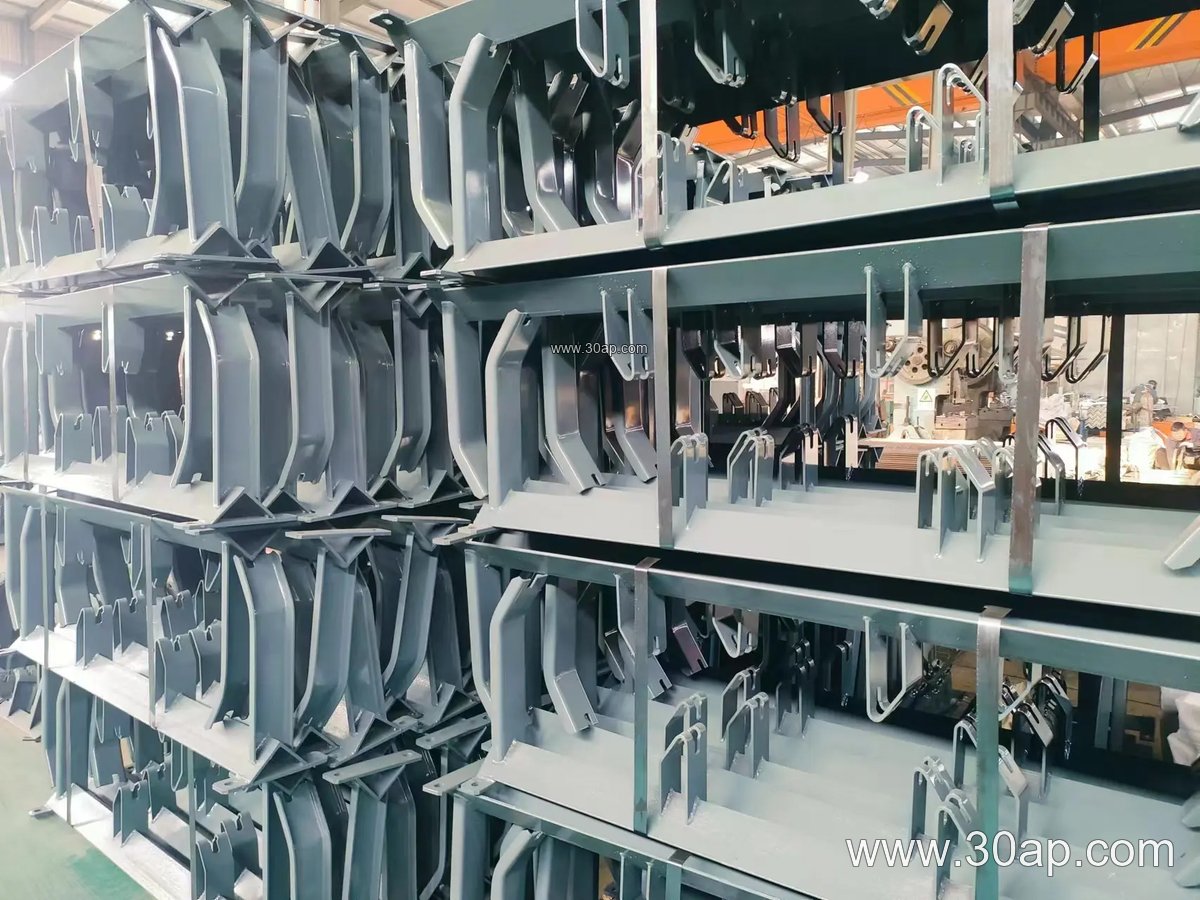
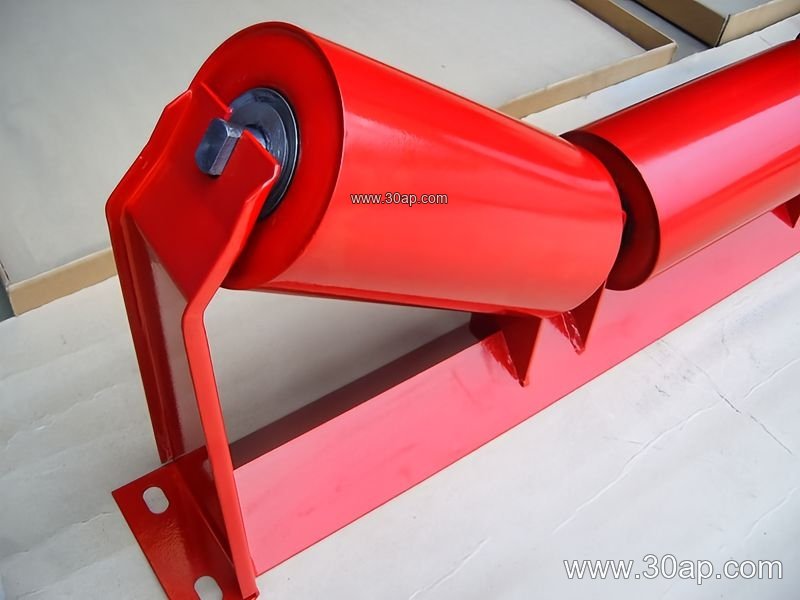
Most conveyor brackets are fabricated from angle steel, channel steel, or folded steel plate. The shape depends on the mounting position. A troughing bracket carries the upper run and sets the trough angle; a return bracket supports the lower run; an impact bracket sits under the loading point to absorb shock. The bracket connects to the conveyor stringer or cross beam, and the idler roller sits in its slots or bolt holes. Installation hole spacing and beam length usually change with belt width and trough angle, so these dimensions should be stated as “per design” rather than assumed fixed. A quotation should list the material, surface treatment, and whether the bracket is fixed or adjustable. Adjustable brackets allow the trough angle to be set between common values such as 20, 30, 35, and 45 degrees, while a forward-leaning bracket may use a small tilt of about 1.5 to 2 degrees.
Matching Brackets to Belt Width and Roller Diameter
Belt width and roller diameter are related, but there is no single mandatory pairing. A B800 conveyor may use a 30-degree troughing bracket with Ø108 idlers, while a B1200 line in a power plant coal yard may run 35-degree brackets with Ø133 rollers. The quotation should confirm the bracket series, the roller diameter it accepts, and the trough angle. Common belt widths include B500, B650, B800, B1000, B1200, B1400, B1600, B1800, B2000, and B2200. Roller diameters often fall in the range of Ø89, Ø108, Ø133, Ø159, and Ø194, but the final choice depends on load, belt speed, and the conveyor design. Do not assume that one belt width locks you into one roller diameter or one trough angle. Ask the supplier to state the bracket’s compatible roller diameter range and the installation hole pattern.
Where Conveyor Brackets Are Used
These support frames appear wherever a conveyor belt carries bulk material. In a limestone quarry, troughing brackets and impact brackets keep the belt stable under falling rock. In a coal washing plant, flame retardant and anti-static belts often run on brackets that are easy to inspect and replace. In a cement plant, heat resistant belts on clinker lines need brackets that hold alignment under thermal movement. Aggregate plants, iron ore terminals, and port ship-loading systems also rely on properly quoted brackets to keep the idler roller in position. The bracket itself does not move the belt, but a poor fit can cause belt edge wear, roller misalignment, and unnecessary downtime.
What to Check Before Approving a Quotation
- Bracket type and position: Confirm whether the quote is for a troughing bracket, return bracket, impact bracket, or transition bracket. These are not interchangeable.
- Belt width and trough angle: The quotation should state the belt width and the angle range, for example B1000 with an adjustable 20 to 45 degree range.
- Roller diameter and mounting details: Check the accepted idler roller diameter and whether the hole spacing matches your existing stringer.
- Material and finish: Ask for the steel grade, thickness, and surface treatment. Painted, galvanized, and bare finishes behave differently in wet or corrosive service.
- Adjustability: If your conveyor has varying load or tracking issues, an adjustable bracket may be worth the extra cost over a fixed bracket.
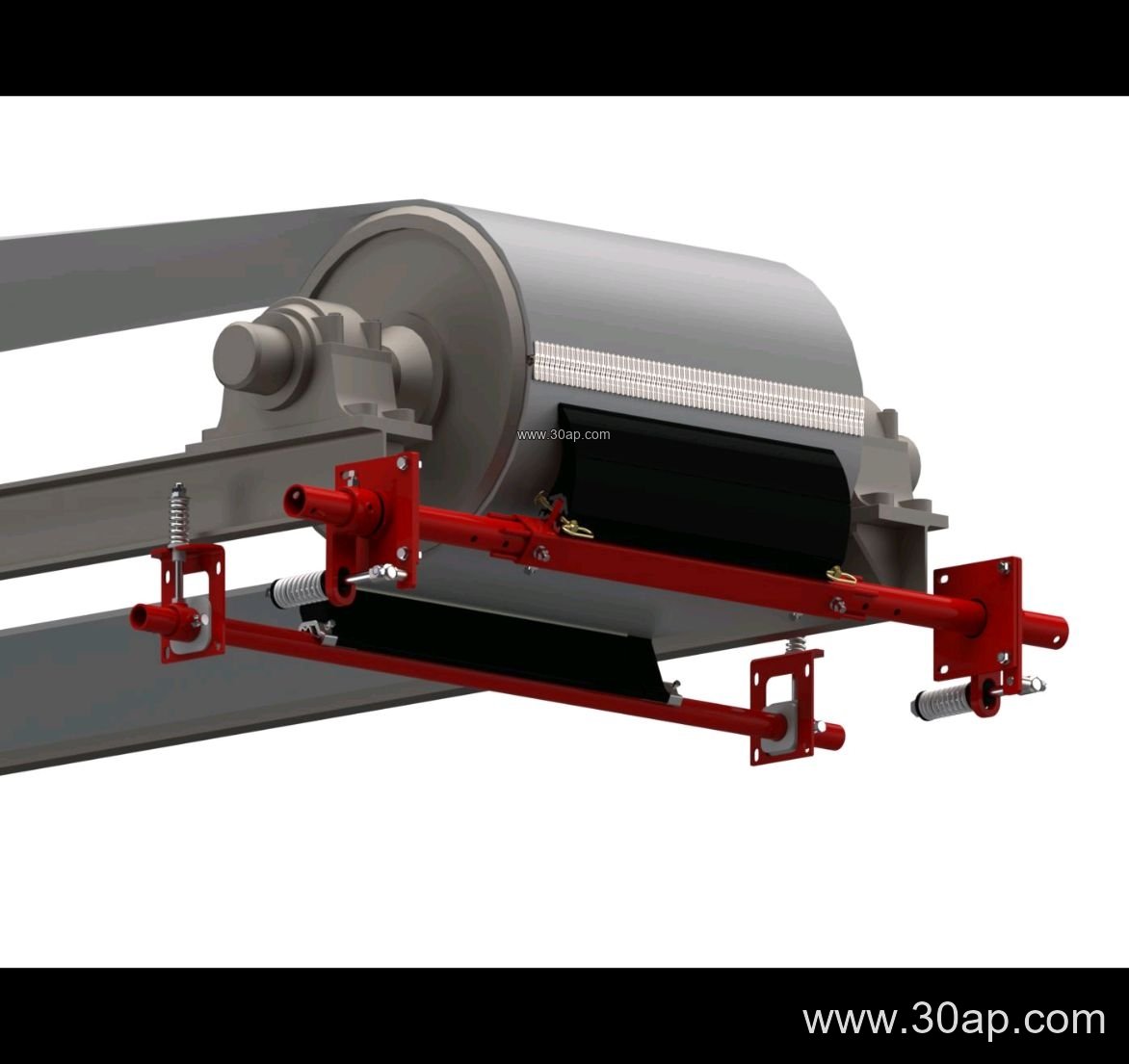
- Related equipment: The quotation may also mention the conveyor belt, conveyor pulley, or idler roller for context, but the bracket remains the quoted item.
For a reliable comparison, request a drawing or dimension sketch with each quotation. That sketch should show the bracket orientation, mounting hole pattern, and the roller seating position. A quotation without dimensions is difficult to verify against your conveyor structure.
Quotation Details That Reduce Installation Problems
Ask whether the quotation includes fasteners, and whether the bracket is supplied as a welded assembly or a knock-down set. For a B650 conveyor in a small sand and gravel line, a simple fixed bracket may be enough. For a B1800 conveyor at an iron ore terminal, the quotation should clearly define the bracket’s load path and the number of support points. Keep in mind that the conveyor bracket works with the idler roller and the conveyor belt as a system. A bracket that fits the roller but not the stringer will delay installation. A clear, itemized quotation with type, belt width range, roller diameter, trough angle, material, and finish helps you avoid that outcome.