What the Tail Pulley Does on a Conveyor
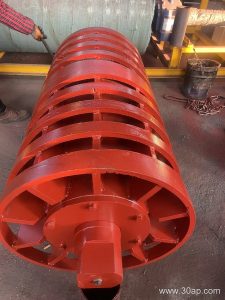
The belt conveyor tail pulley sits at the return end of the conveyor, opposite the drive. Its main job is to keep the conveyor belt tracking back into the carrying run while the drive pulls the loaded side forward. On a quarry conveyor or a cement plant clinker line, this pulley is often the last point where belt alignment can be corrected before the belt returns to the head. It is not a drive pulley and not a bend pulley; each of those has a different role in the conveyor layout.
Because the tail pulley turns with the belt rather than driving it, its design centers on smooth rotation, stable shaft support and a surface that resists material build-up. In dusty operations such as a limestone mine or a sand and aggregate plant, fines can pack around the pulley face if the lagging and brackets are not chosen with cleaning in mind.
How a Tail Pulley Is Built
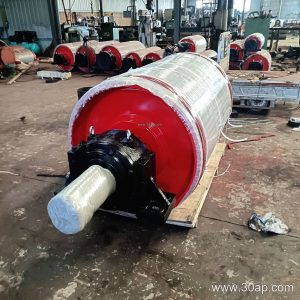
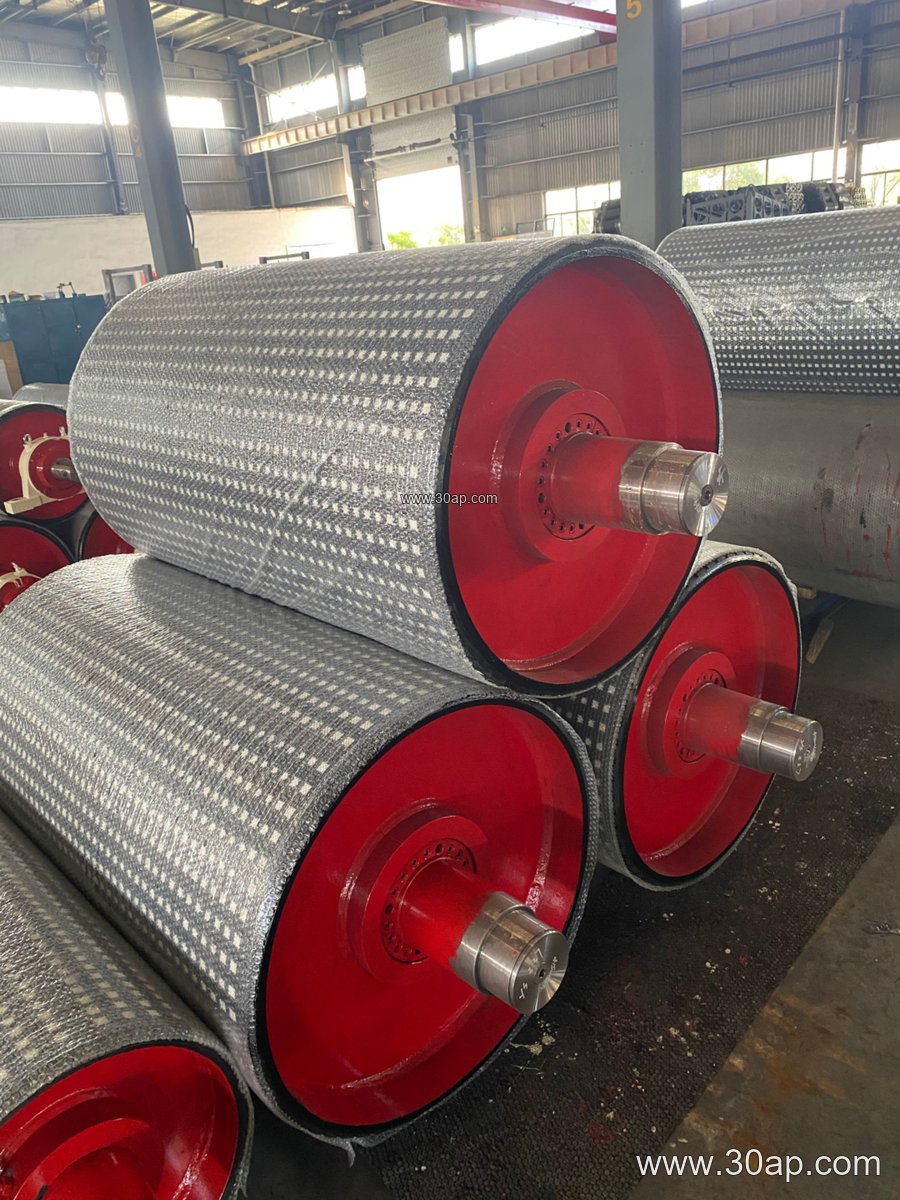
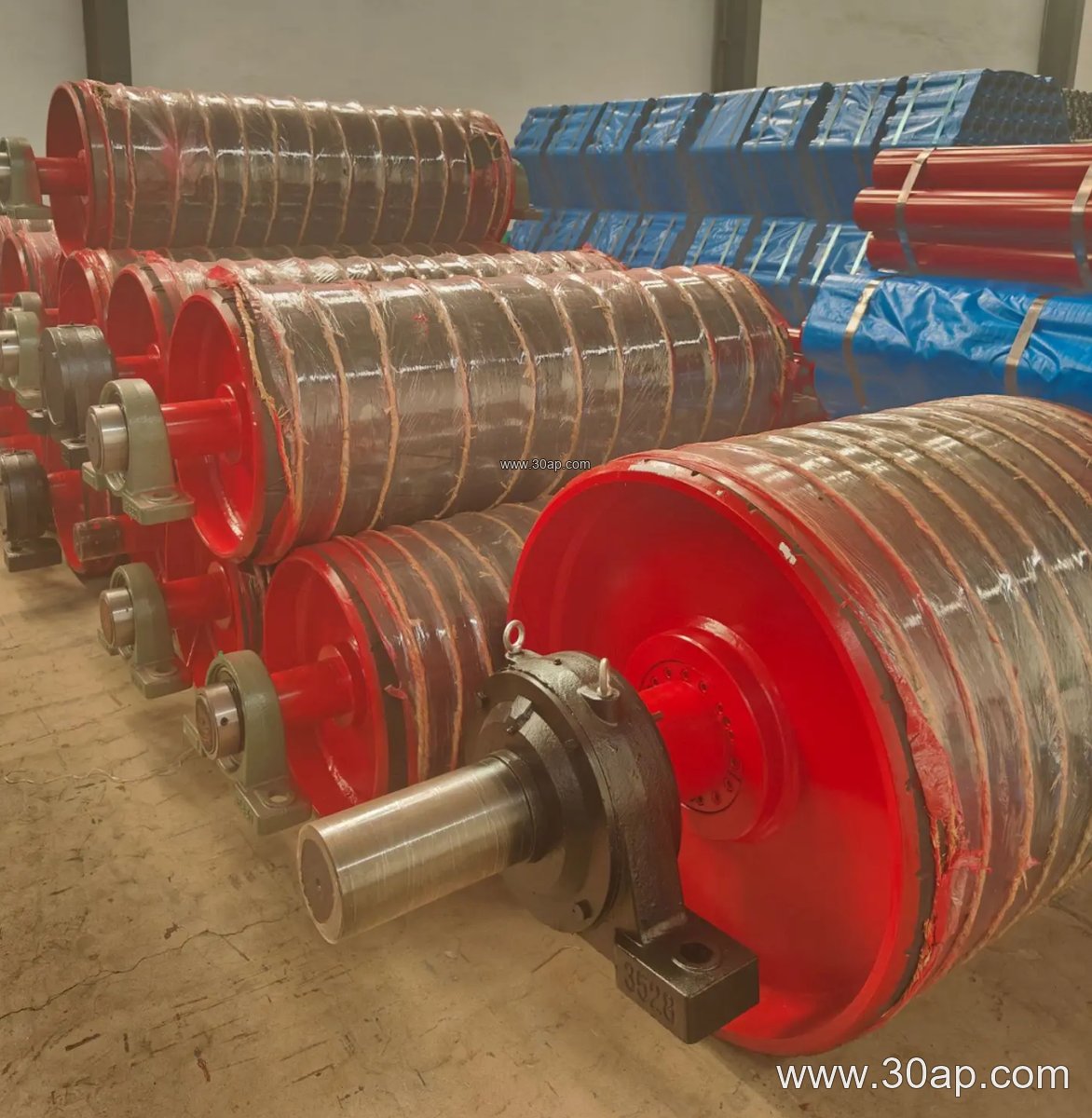
A typical belt conveyor tail pulley combines a cylindrical shell, end discs, a through shaft and bearing housings mounted in conveyor brackets. The shell may be plain steel or covered with rubber lagging. Common surface forms include plain, cold-bonded rubber, hot-vulcanized rubber, diamond lagging and ceramic lagging. Lagging thickness is often 8, 10, 12, 15 or 20 mm, selected according to belt load and dirt conditions rather than a single fixed rule.
Shaft diameter is set by torque and bearing load. Typical shaft sizes range from Ø50 to Ø200, but the correct value comes from conveyor design calculations, not from belt width alone. Pulley diameters commonly run from Ø200 up to Ø1800 depending on belt tension and space. Face width is usually slightly wider than the belt, for example about 500 mm for B400, about 950 mm for B800 and about 1400 mm for B1200.
Where It Fits in Bulk Handling
Tail pulleys appear in crushing and screening circuits, cement raw material transport, power plant coal handling and port bulk terminals. In a crusher conveyor or a stone crushing line, the tail end often sees impact and dust, so a robust shell and well-sealed bearings matter. In a coal mining conveyor or underground coal mining conveyor, flame retardant conveyor belt and fire resistant conveyor belt are usually specified for the belt itself, and the pulley should be matched to the same duty level.
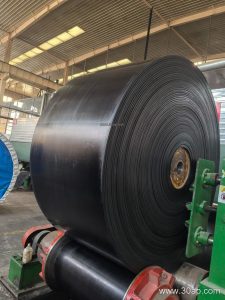
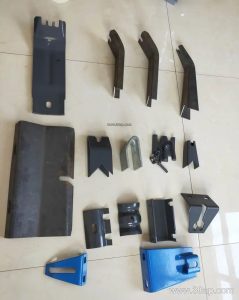
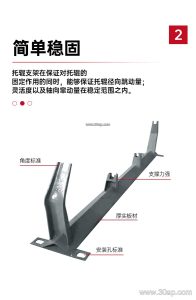
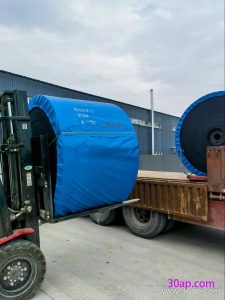
The tail pulley also works closely with the conveyor belt and the idler roller set. A misaligned tail pulley can cause edge wear on an EP conveyor belt or a multi-ply fabric core conveyor belt, while a worn lagging surface may allow slip and material spillage. Checking the pulley together with the conveyor bracket and take-up arrangement helps avoid repeated tracking problems.
Specification Pointers for Buyers
When specifying a belt conveyor tail pulley, confirm the belt width, pulley diameter, face width, shaft diameter, bearing type and lagging. A B800 × Ø500 unit and a B1200 × Ø1000 unit are both common combinations, but they are examples, not fixed pairings. The table below lists reference values that buyers often discuss.
| Parameter | Common reference values |
|---|---|
| Belt width | B400, B500, B650, B800, B1000, B1200, B1400, B1600, B1800, B2000 |
| Pulley diameter | Ø200, Ø250, Ø315, Ø400, Ø500, Ø630, Ø800, Ø1000, Ø1250, Ø1400 |
| Face width examples | B400 about 500 mm; B650 about 750 mm; B1000 about 1150 mm; B1400 about 1600 mm |
| Shaft diameter | Ø50, Ø60, Ø70, Ø80, Ø90, Ø100, Ø120, Ø140, Ø160, Ø180, Ø200 |
| Lagging thickness | 8, 10, 12, 15, 20 mm |
For abrasive ore or iron ore conveyor duty, a heavier lagging and a larger shaft may be needed. For a food grade conveyor belt line, a clean plain or approved rubber surface is often preferred. In cold climates, a cold resistant conveyor belt may run alongside a pulley selected for low-temperature bearing grease.
Maintenance and Selection Notes
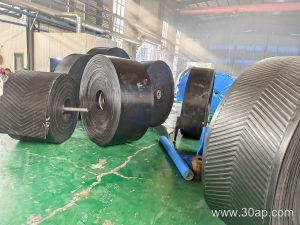
Inspect the tail pulley for lagging wear, shell cracks, bearing noise and material wrap. Keep the return side clear so that a chevron conveyor belt or corrugated sidewall conveyor belt does not drag debris into the pulley. Where space is tight, a bend pulley may be added nearby, but it does not replace the tail pulley function.
Buyers should ask for a drawing showing shaft size, bearing centers, lagging type and balancing grade. Whether the conveyor handles coal, clinker, copper ore or aggregate, the tail pulley should be sized from actual belt tension and load, not copied from a neighboring line.