What a Port Bulk Material Conveyor Idler Does
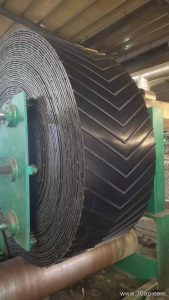
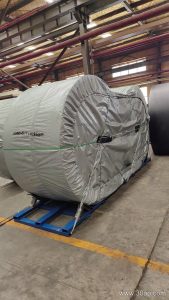
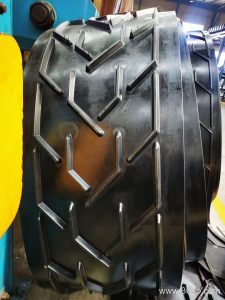
At a port terminal, a port bulk material conveyor idler carries the loaded conveyor belt across long stockyard and ship-loading runs. The idler roller is the rotating element that supports the belt and the material on it, keeping the belt tracking steadily while iron ore, coal, or sand and gravel moves from the quay to the stockpile. Because port conveyors often run at high capacity and in salty, dusty air, the idler is a wear part that deserves attention at the specification stage rather than after the first failure.
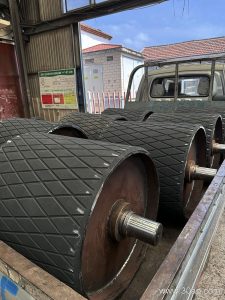
The idler is not the same as a conveyor pulley. Drive, tail and bend pulleys transmit power and change belt direction; they are separate components with their own shafts and lagging. A port bulk material conveyor idler only supports the belt, and mixing the two up in a spare-parts list causes ordering mistakes.
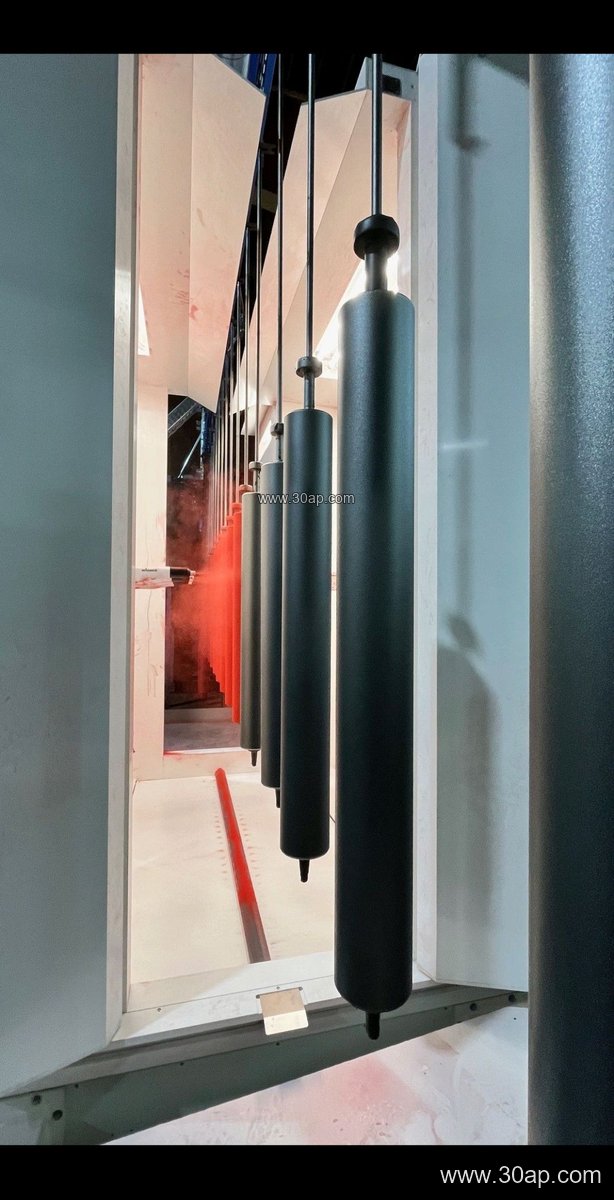
Construction of the Idler Roller
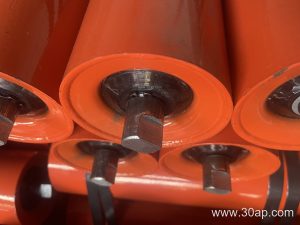
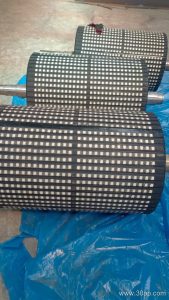
A typical idler roller is built from a steel tube shell, a shaft, bearing housings at each end, and a sealing arrangement. The shell may be plain steel, nylon-coated, ceramic-lined, or fitted with rubber rings for impact absorption. Bearings are usually deep-groove ball types such as 6204, 6205, 6305, 6306, 6308 or 6310, matched to the load and shaft design rather than to belt width alone.
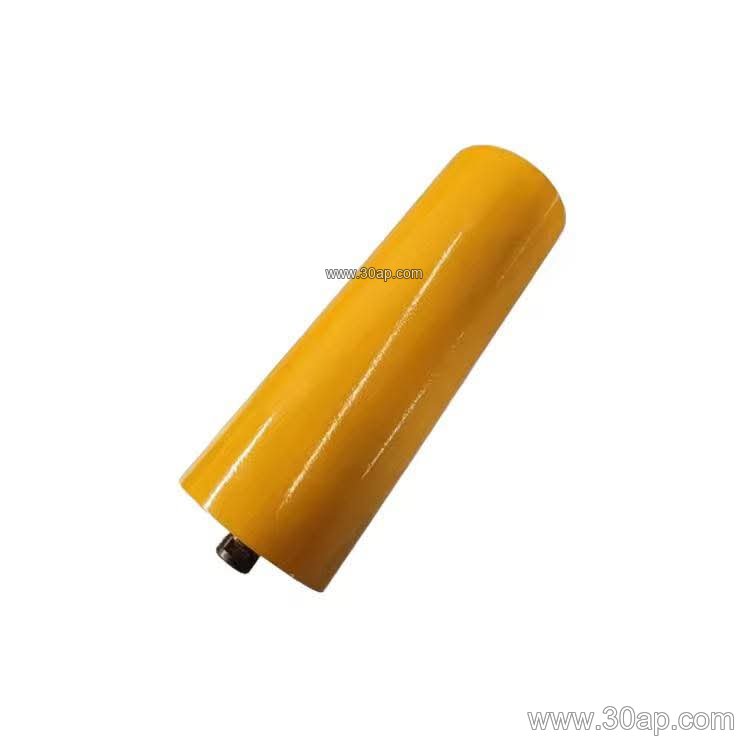
Sealing matters as much as the bearing. Port air carries fine dust and salt mist, so a labyrinth seal with grease retention is common. The roller must spin freely by hand, run without wobble, and hold its concentricity after thousands of hours under load.
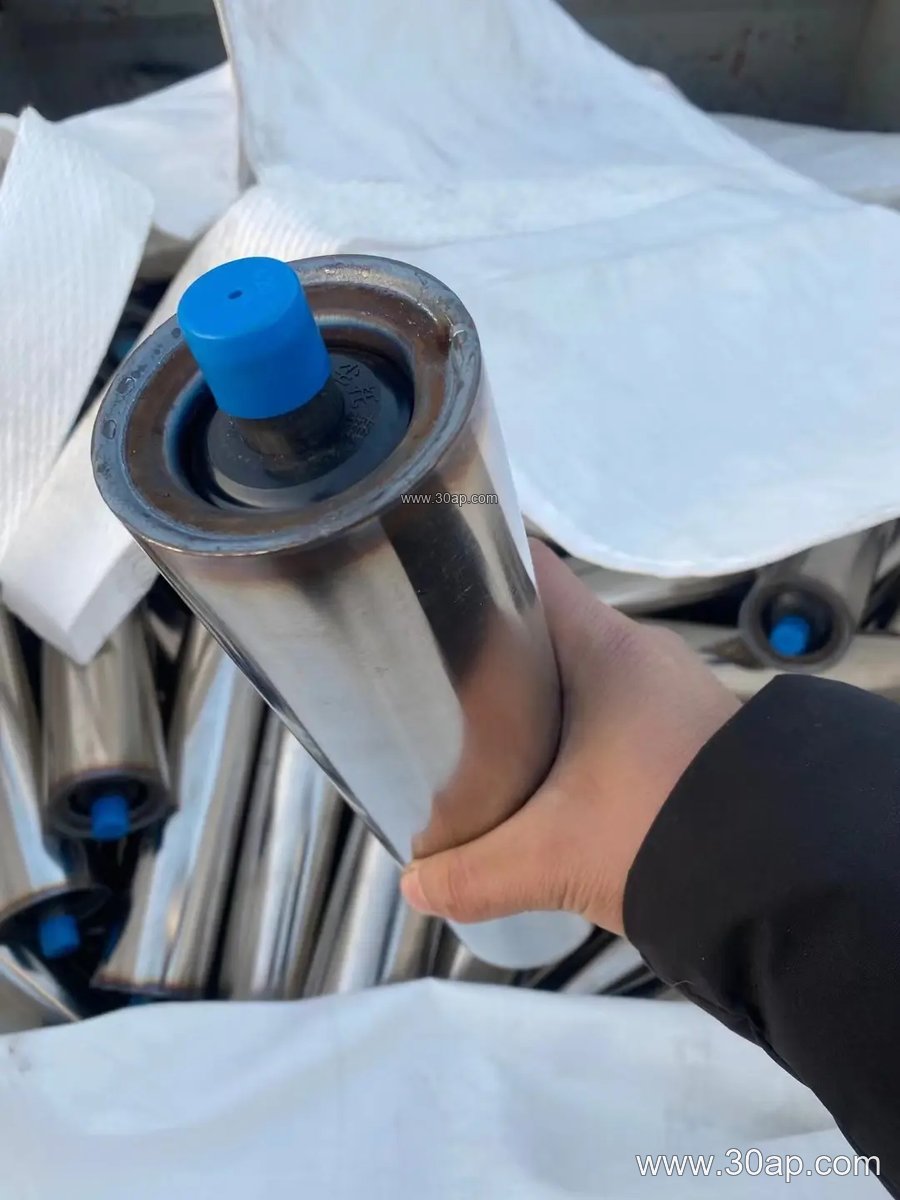
Common Idler Types and Where They Sit
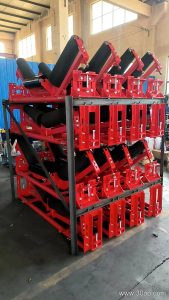
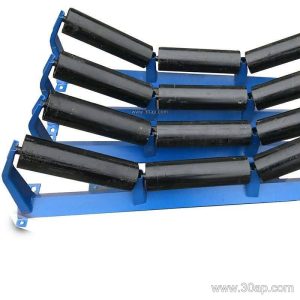
On the carrying side, three-roll troughing sets are the standard arrangement, with trough angles usually 20, 30, 35 or 45 degrees. A slight forward tilt of about 1.5 to 2 degrees is sometimes used on training idlers to help the belt stay centered. On the return side, flat return idlers, V-return idlers or spiral return rollers keep the empty belt supported and shed stray material.
- Troughing idlers support the loaded belt on the carry side.
- Impact idlers with rubber rings sit below the loading point to cushion lumps.
- Training idlers correct belt drift on long port runs.
- Return idlers and spiral rollers support the empty belt.
The conveyor bracket or frame that holds each set is part of the same support system and should be ordered to match the idler group.
Reference Dimensions for Early Planning
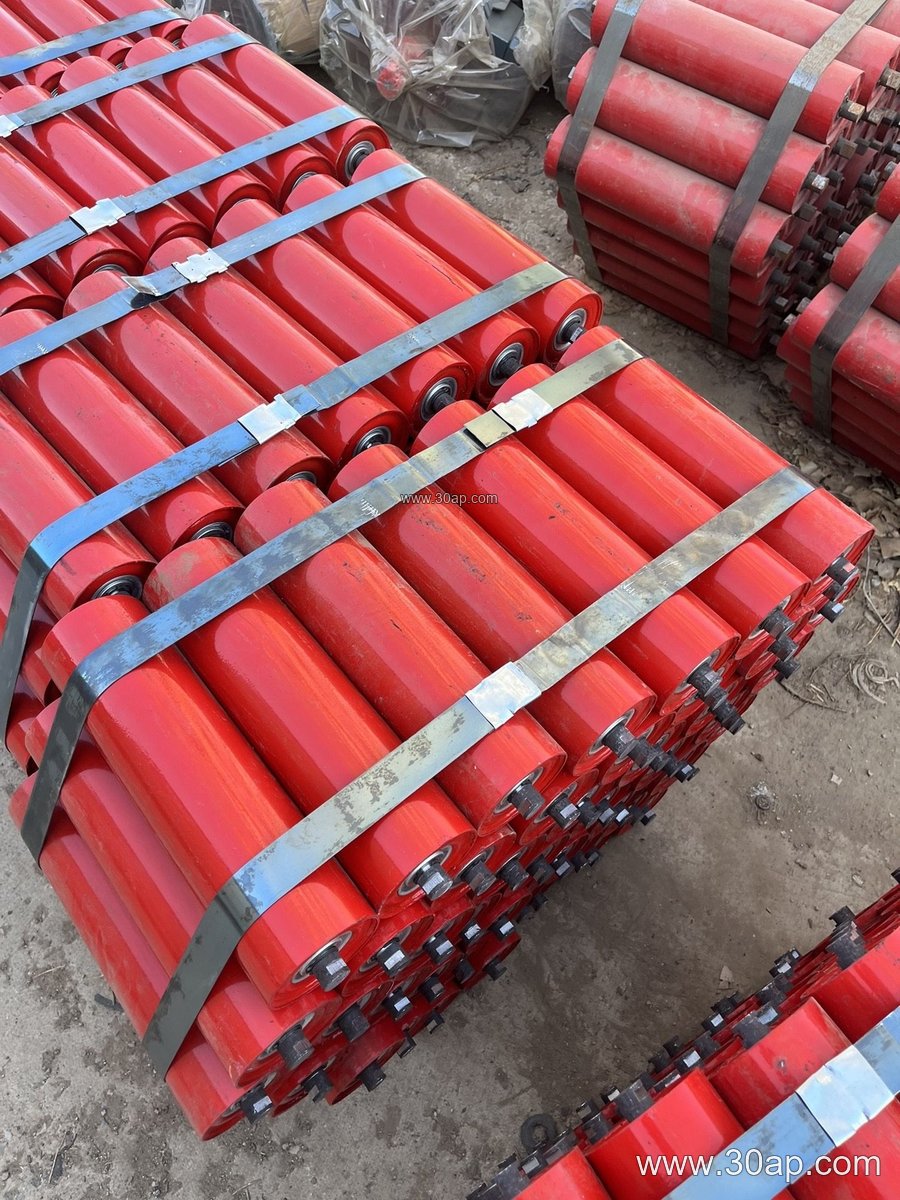
The table below gives common reference values, not fixed supply rules. Roller length varies with belt width, trough angle and group form, and the side rollers of a three-roll set can differ from the center roller.
| Item | Common reference values |
|---|---|
| Roller diameter | Ø63, Ø76, Ø89, Ø102, Ø108, Ø127, Ø133, Ø159, Ø178, Ø194, Ø219 mm |
| Belt width | B400, B500, B650, B800, B1000, B1200, B1400, B1600, B1800, B2000, B2200, B2400 |
| Trough angle | 20, 30, 35, 45 degrees |
| Roller length, three-roll troughing (example) | about 200 mm at B500, 250 mm at B650, 315 mm at B800, 380 mm at B1000, 465 mm at B1200, 530 mm at B1400, 600 mm at B1600, 670 mm at B1800, 750 mm at B2000 |
| Roller surface | steel tube, nylon, ceramic, rubber ring |
Buying Notes for Port Projects
Start with the belt width, the trough angle and the duty cycle, then confirm the roller diameter and shaft size with the conveyor designer. Do not assume that one belt width locks in one pulley diameter or one shaft diameter; those values follow the full load calculation. Ask for the seal type, bearing designation, shell thickness and surface finish, and check that the idler group matches the existing conveyor bracket spacing.
For a coal terminal, a cement plant or a sand and gravel line, spare idlers should be stored by type and size so maintenance crews can replace a failed roller without stopping the belt for long. A well-chosen port bulk material conveyor idler reduces belt wear, keeps the conveyor belt tracking true, and protects the conveyor pulley and frame from unnecessary load.