What a Conveyor Carrying Bracket Does
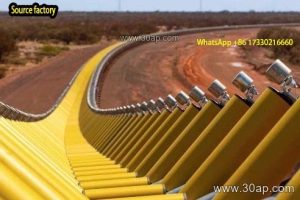
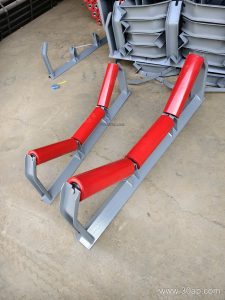
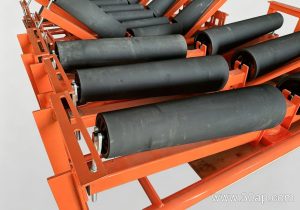
A conveyor carrying bracket is the structural support that holds the carrying-side idlers in place along a belt conveyor. It sits between the conveyor frame and the idler roller, keeping each roller at the right height, spacing and trough angle so the conveyor belt can move material smoothly without sagging or rubbing. In a quarry, a coal washing plant or a cement clinker line, these brackets are repeated many times along the length of the conveyor, which makes them a key wear and alignment component rather than a minor accessory.
The same part is also commonly called a carrying idler bracket or carrying roller support bracket. It is not the same as a return bracket, which supports the belt on its empty run, and it should not be confused with a conveyor pulley, since pulleys drive or redirect the belt while brackets simply hold the idlers.
Construction and Common Forms
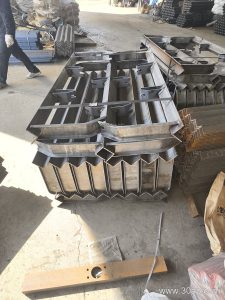
Most carrying brackets are fabricated from angle steel, channel steel or folded steel plate. The frame is welded or bolted and then drilled with mounting slots for the idler shafts. The bracket may be fixed at one trough angle or made adjustable so maintenance crews can set the angle to suit the material and belt load.
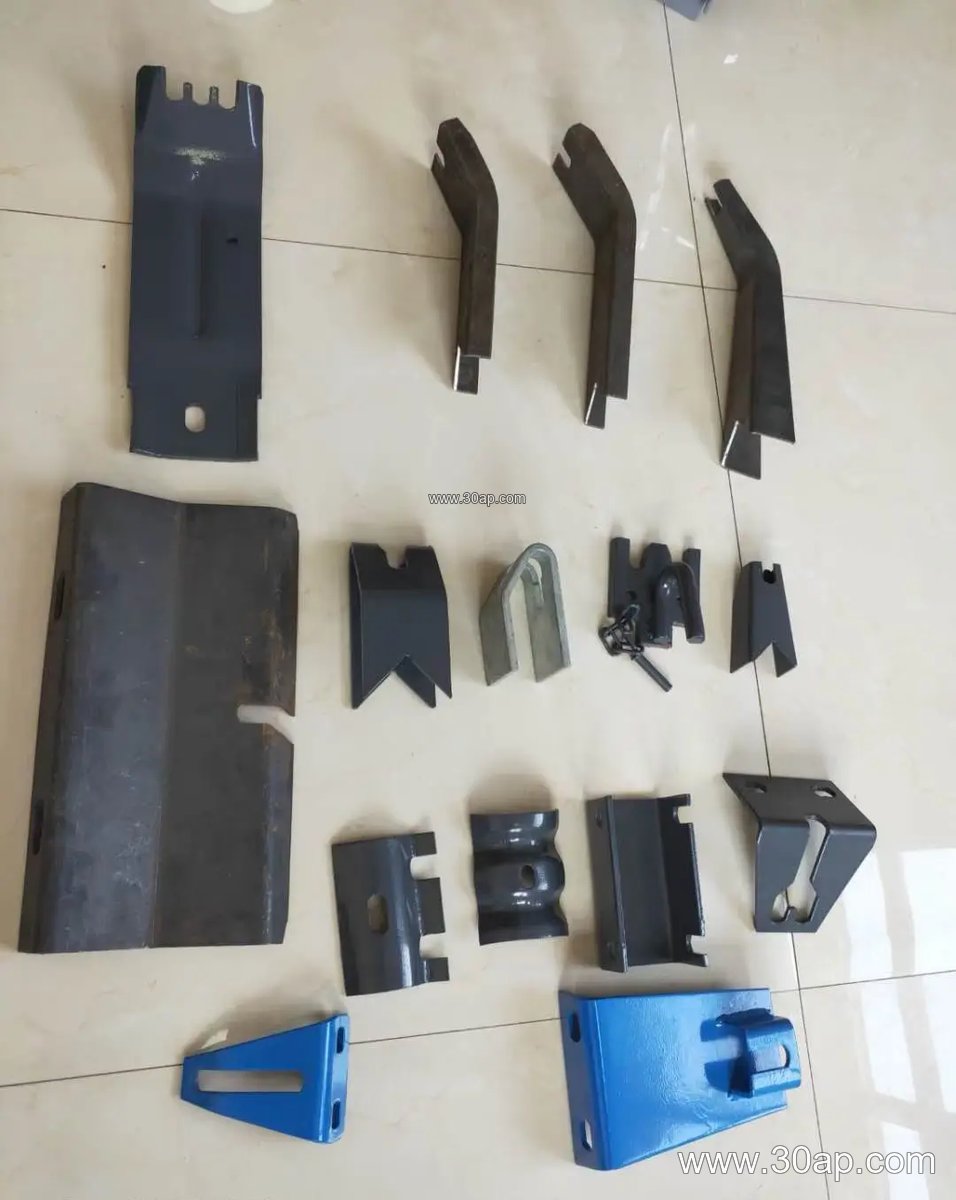
- Trough carrying bracket – the standard three-roller support used on the load side of the belt.
- Transition bracket – used near the tail or head to ease the belt from flat to troughed.
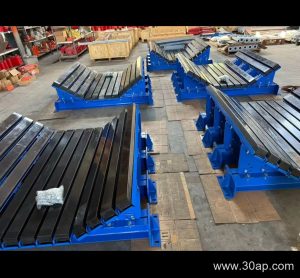
- Impact bracket – a heavier form that carries cushion idlers below a chute or crusher discharge.
- Self-aligning bracket – a pivoting design that helps correct belt drift.
- Adjustable bracket – allows the trough angle to be changed on site.
Common trough angles are 20, 30, 35 and 45 degrees. A slight forward tilt of about 1.5 to 2 degrees is sometimes built into the bracket to help centre the belt. Materials and finishes should be matched to the site, for example galvanised steel in a port terminal or a coated finish in a fertiliser plant where corrosion is a concern.
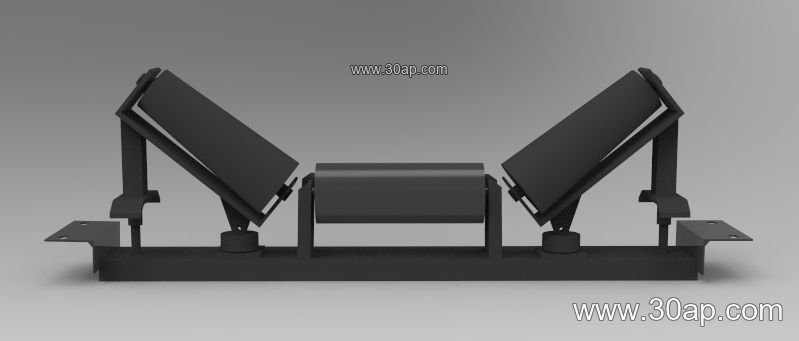
Matching Bracket, Belt and Roller
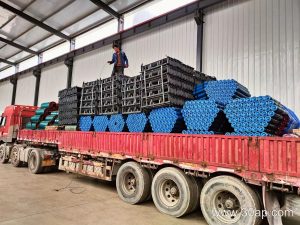
The bracket must suit the belt width, the idler diameter and the frame hole spacing. Common belt widths run from B500 through B650, B800, B1000, B1200, B1400, B1600, B1800, B2000 and B2200. Roller diameters are usually Ø89, Ø108, Ø133, Ø159 or Ø194 depending on load and belt speed. A bracket for a B800 belt at 35 degrees with Ø108 rollers is a typical arrangement, while a B1200 line at 45 degrees with Ø133 rollers would use a wider, heavier bracket. These are reference combinations, not fixed rules; the final match is set by the conveyor designer.
| Parameter | Common Range | Notes |
|---|---|---|
| Belt width | B500 to B2200 | Bracket length follows belt width |
| Trough angle | 20°, 30°, 35°, 45° | Adjustable versions cover several angles |
| Idler diameter | Ø89 to Ø194 | Selected by load and speed |
| Material | Angle steel, channel, folded plate | Finish matched to site conditions |
Where It Is Used
Carrying brackets appear wherever a conveyor belt moves bulk material. In a limestone mine or stone crushing and screening line, they support the belt under heavy rock loads. In a power plant coal handling system they keep the belt aligned through long transfer runs. They are also found in steel plants, sintering plants, batching plants and grain silos. The exact bracket style should follow the duty, the belt width and the idler type rather than a single default choice.
What Buyers Should Check
Before ordering, confirm the belt width, the idler diameter, the required trough angle and the frame hole pitch. Ask whether the bracket is fixed or adjustable, and check the steel thickness and finish. Spare parts should match the existing conveyor frame so that a replacement can be bolted in without re-drilling. Maintenance is simple: inspect for bent frames, worn slots and loose bolts, and replace any bracket that no longer holds the idler square to the belt. A correctly selected conveyor carrying bracket keeps the belt, idler roller and frame working together and reduces unnecessary downtime.