What the ST1000 Conveyor Belt Is
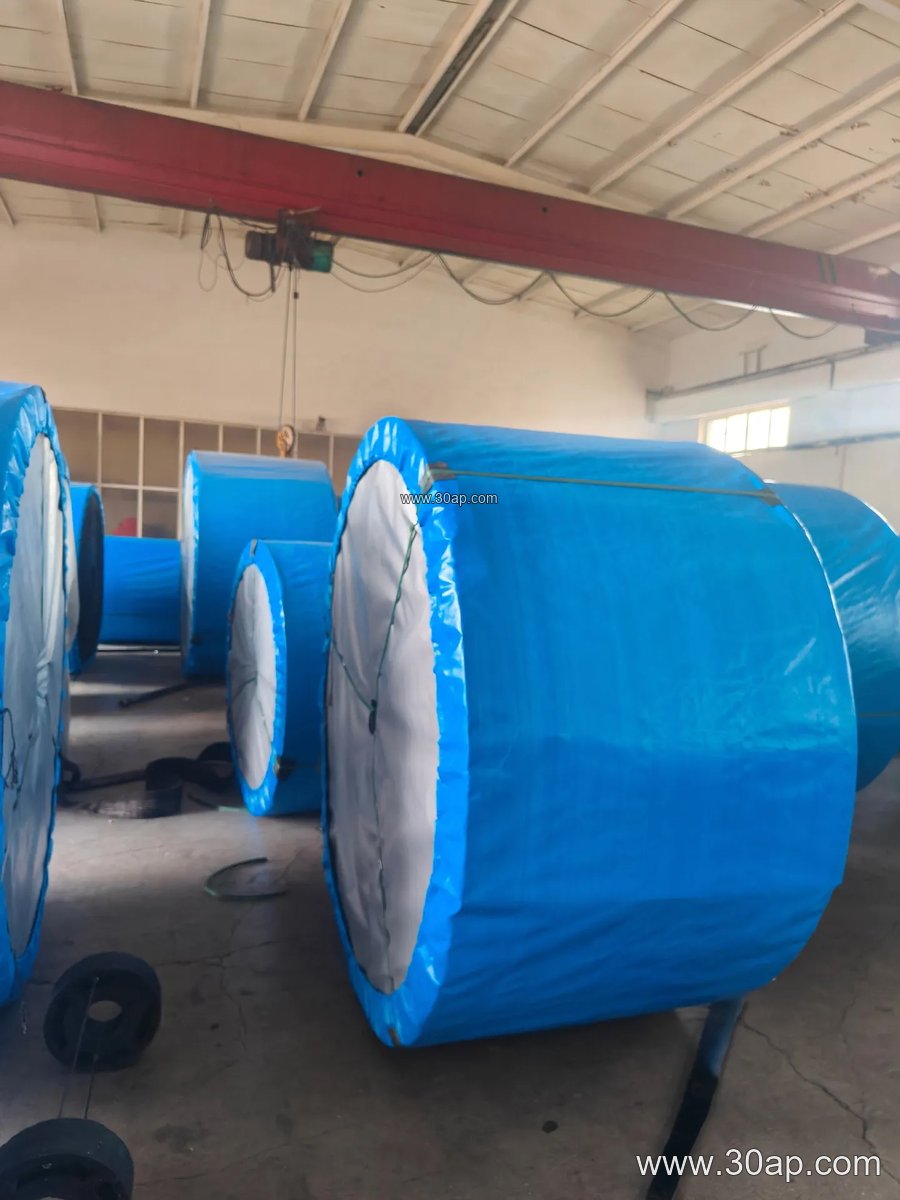
The ST1000 Conveyor Belt is a steel cord conveyor belt with a nominal tensile strength of 1000 N/mm across its width. It belongs to the steel cord family, where high-carbon steel cables run longitudinally through a rubber compound instead of the woven fabric plies used in an EP Conveyor Belt or NN Conveyor Belt. That construction gives the ST1000 its defining traits: very low elongation under load, excellent length stability, and the ability to carry heavy bulk material over long centre distances with few transfer points.
The designation follows a simple pattern. ST stands for steel cord, and the number is the rated breaking strength per millimetre of belt width. An ST1000 sits in the middle of the common range, below ST1250, ST1600 and ST2000, and above lighter fabric constructions. It is a heavy-duty product, but it is not the stiffest belt available, which matters when a conveyor profile includes small pulleys or tight transitions.
How the Belt Is Built
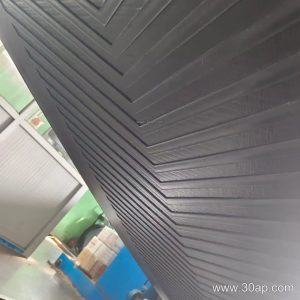
Inside an ST1000 belt, a single layer of parallel steel cords forms the tension member. The cords are spaced evenly and sandwiched between top and bottom cover rubber. A typical build includes:
- Steel cords as the load-bearing core, protected by a cushion compound
- Top cover rubber for abrasion, impact and in some cases heat or oil exposure
- Bottom cover rubber, usually thinner, running against the idler roller and pulley surfaces
- Edge rubber that seals the cord layer against moisture and mechanical damage
Cover thickness is specified by the application. Common combinations are quoted as top plus bottom, for example 4+2 mm, 5+2 mm, 6+2 mm or 8+3 mm. A primary crusher discharge might call for a thick, impact resistant top cover, while a long overland run may use a moderate cover and rely on the steel cord for strength. Cover grade can be plain abrasion resistant, heat resistant, oil resistant, flame retardant or anti-static depending on the site. Splices are usually hot-vulcanised and need skilled work, because the cord spacing and tension must be reproduced accurately.
Where ST1000 Belts Are Used
Steel cord belts are common in mines, cement plants, power stations, ports and large quarries. The ST1000 strength class suits main haulage lines, plant-to-stockpile conveyors and long inclined routes where a fabric belt would stretch too much or need too many splices. In a coal mining conveyor system, a flame retardant and anti-static grade may be required; in a cement plant, heat resistant covers appear on clinker lines, while limestone and raw meal circuits usually favour abrasion resistant rubber. Iron ore, copper ore and other ore conveyor routes also use steel cord belts because of the tonnage and the long distances involved.
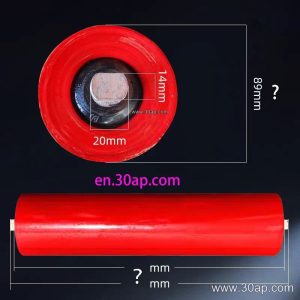
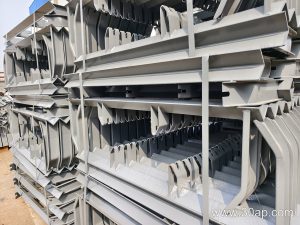
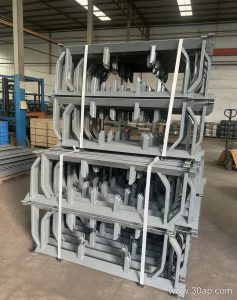
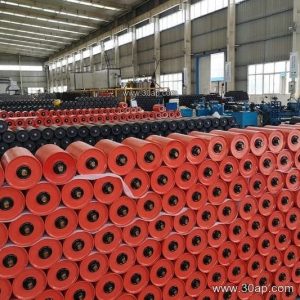
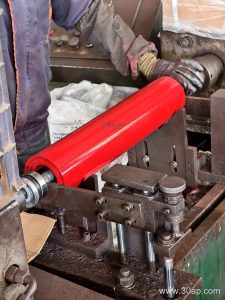
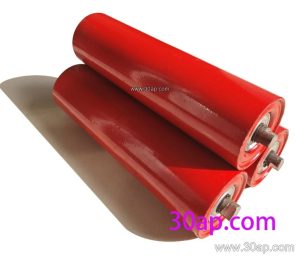
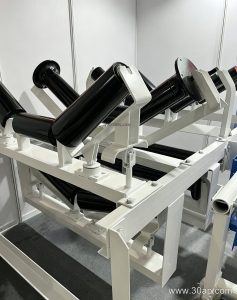
The belt does not work alone. The conveyor pulley at the drive and tail ends, the idler roller sets along the carry and return sides, and the conveyor bracket frames all influence belt life. A mismatched pulley diameter, worn idlers or misaligned frames can damage even a correctly specified ST1000 belt, so mechanical condition deserves as much attention as the belt itself.
Specification Notes for Buyers
Width and strength are chosen together with the conveyor design, not from a fixed table. The following values are reference points only and should be confirmed with the belt manufacturer and the conveyor designer.
| Parameter | Reference range | Notes |
|---|---|---|
| Strength class | ST1000 (1000 N/mm) | Other classes include ST1250, ST1600, ST2000 |
| Belt width | B800, B1000, B1200, B1400, B1600 | Selected from lump size, capacity and pulley face |
| Cover thickness | 4+2, 5+2, 6+2, 8+3 mm | Top + bottom, adjusted to duty |
| Cover grade | Abrasion, heat, oil, flame retardant, anti-static | Matched to material and environment |
| Splice | Hot vulcanised steel cord splice | Follow the maker’s splice procedure |
Buyers should ask for the cord pitch, cover compound data and recommended minimum pulley diameters rather than assuming a width dictates a pulley size. A 1000 mm wide belt can run on different pulley diameters depending on the cord construction and the conveyor layout.
Selection and Care
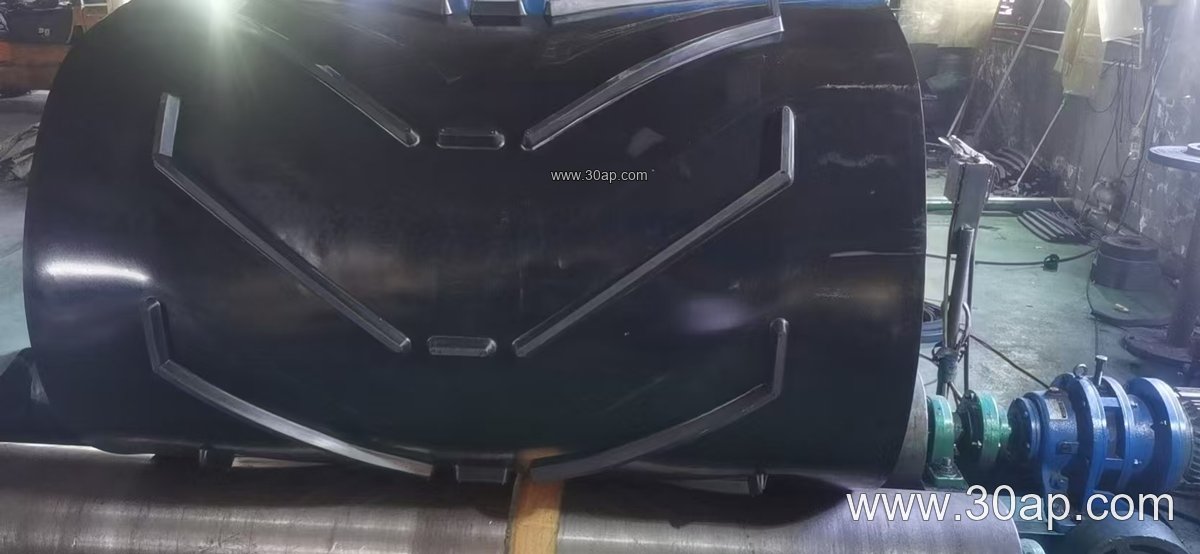
Determine the peak load, the incline, the material temperature and the environment first. Then check whether a steel cord design is really needed; on short conveyors, a Multi-Ply Fabric Core Conveyor Belt or a high-strength EP Conveyor Belt may be the more economical choice. Where the route is curved or the material is fine and dusty, a Pipe Conveyor Belt or a Corrugated Sidewall Conveyor Belt solves a different problem and should not be treated as a substitute for the ST1000. For steep inclines, a Chevron Conveyor Belt is often compared, but it is a fabric product with a different duty profile.
In service, watch for cord exposure at the edges, cover gouges, and tracking drift. Keep pulleys lagged and aligned, replace failing idler rollers promptly, and record splice inspections. Tension and take-up settings should follow the conveyor design; over-tensioning shortens cord life. With the right cover grade and good mechanical maintenance, an ST1000 belt can serve long haulage routes in mining, cement, power and port operations.