What a Five-Roll Idler Set Does
A five-roll idler set is a troughing assembly that supports the loaded run of a conveyor belt with five rollers instead of the usual three. The extra rolls let the belt form a deeper, smoother trough, so bulk material sits more centrally and the belt edge stays under better control. In a quarry, a coal preparation plant, or a cement kiln feed line, this is often the difference between a belt that tracks quietly and one that spills at every transfer point. The assembly is also called a five-roller troughing idler set, and both names describe the same hardware.
Five-roll sets are not a replacement for a drive pulley, a tail pulley, or a bend pulley, and they are not a substitute for a return idler or an impact idler. They belong to the carrying side of the conveyor and work alongside those components, not in place of them.
How the Assembly Is Built
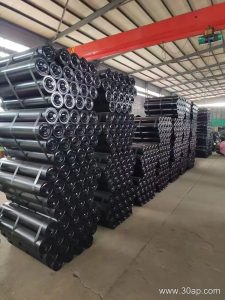
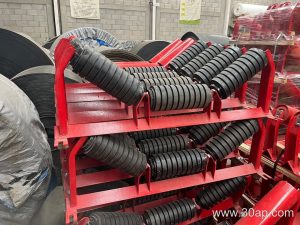
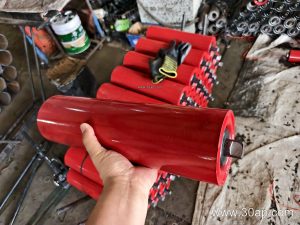
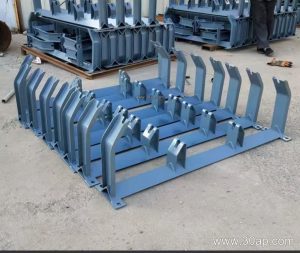
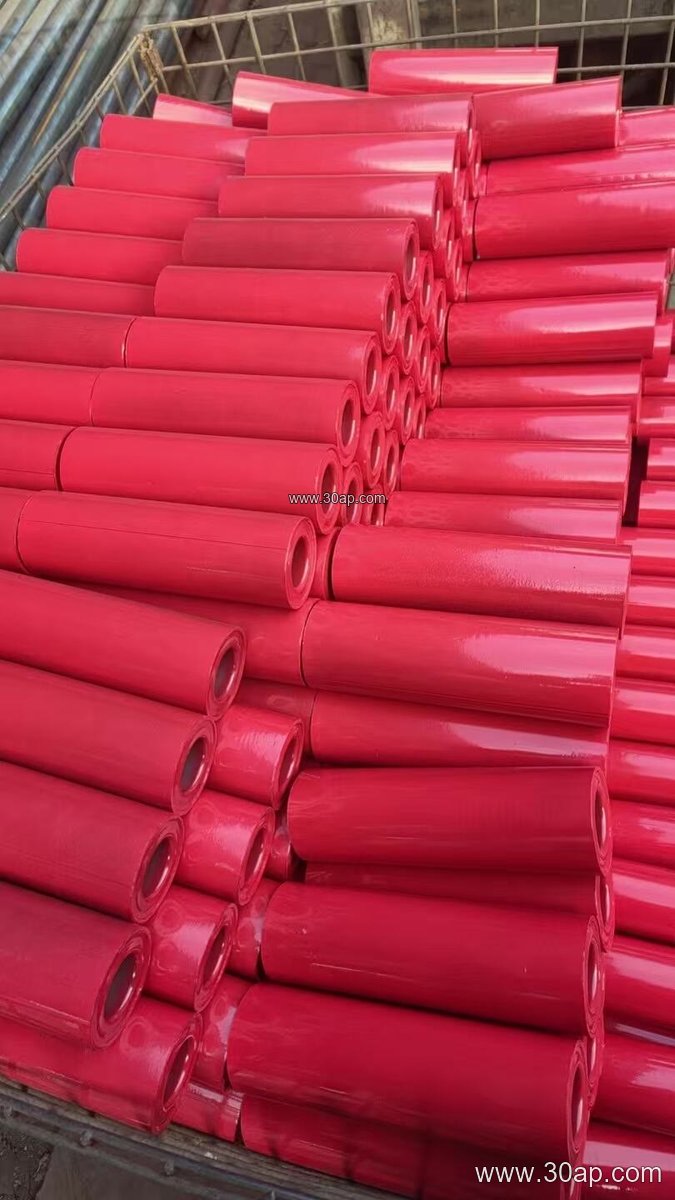
Each set normally contains five idler rollers carried in a fabricated conveyor bracket. The two outer rolls sit at a steeper angle, the two intermediate rolls form a transition, and the centre roll stays close to flat. Typical trough angles are 30, 35, and 45 degrees, with the outer stations set more steeply than the middle ones on deeper troughs. Rollers are commonly steel tube with pressed end caps and sealed ball bearings; rubber rings, nylon, or ceramic surfaces may appear where wear or build-up is a concern.
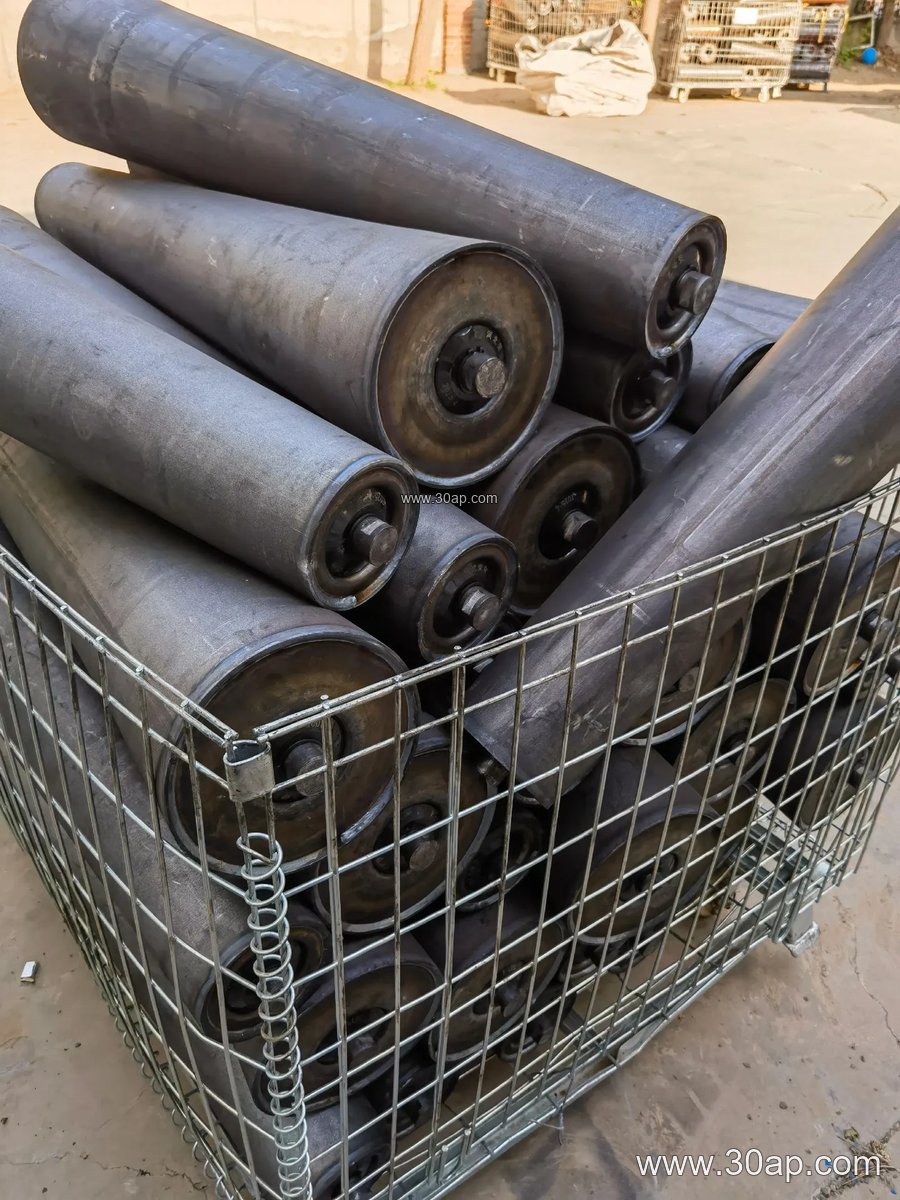
Roll diameter and length follow the belt width, the trough angle, and the frame design. A sample of common reference values is shown below; these are examples, not fixed matches.
- Roll diameter: commonly Ø89, Ø108, Ø127, Ø133, Ø159 mm, with larger diameters for wider and heavier belts.
- Belt width: B800, B1000, B1200, B1400, B1600, B1800 and wider.
- Trough angle: 30, 35, or 45 degrees.
- Roller surface: steel tube, nylon, rubber ring, or ceramic.
- Bearing sizes seen in service: 6205, 6305, 6306, 6308, 6310.
Roll length changes with belt width and frame geometry. As a rough guide only, a three-roll B1000 set might use a 380 mm roll, while a five-roll arrangement distributes the same belt width across more, shorter rolls. Side rolls and centre rolls can differ, so the drawing from the conveyor designer governs.
Where It Fits on the Conveyor
The five-roll set is usually chosen where belt width is large, where material is fine and dusty, or where the belt needs gentler edge support. In a limestone mine feeding a crusher, or a power plant coal yard with long overland runs, the deeper trough reduces spillage and keeps the load centred on the belt. It also helps when the conveyor carries a fabric core belt such as an EP conveyor belt or an NN conveyor belt that benefits from even support across its width.
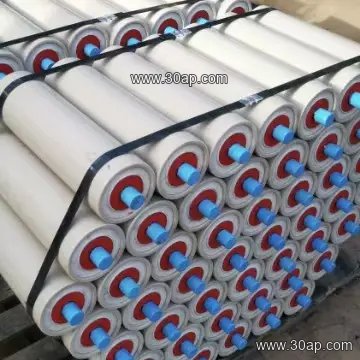
On a belt handling abrasive ore, a high abrasion resistant conveyor belt may run over five-roll sets in the load zone, while a flame retardant conveyor belt in an underground coal mining conveyor is more often paired with three-roll troughs unless the belt is unusually wide. The choice depends on the belt, the material, and the frame, not on a single rule.
Buying Points for the Five-Roll Idler Set
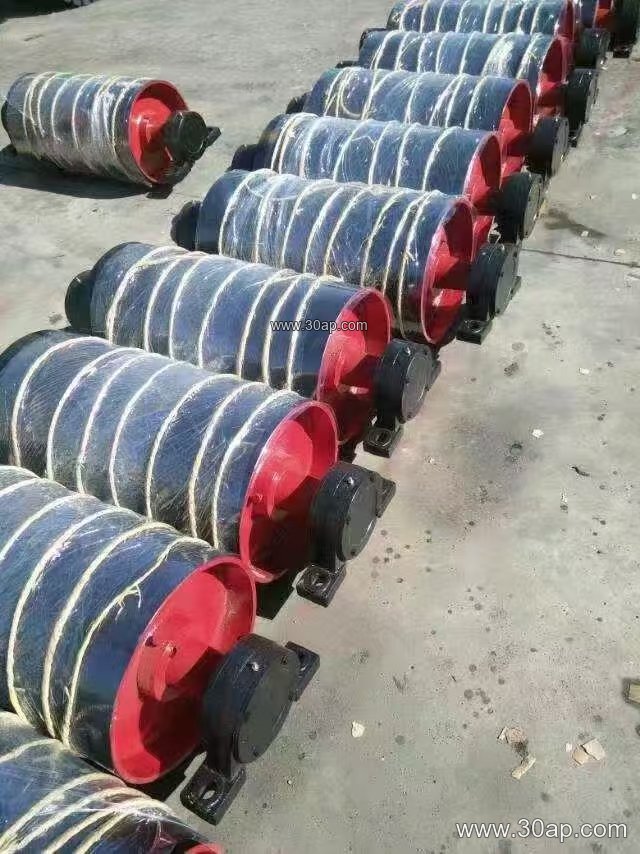
Buyers should confirm the belt width, the trough angle, the roll diameter, the roll length, the shaft and bearing arrangement, and the bracket hole spacing before ordering. The bracket must match the conveyor stringer and the existing roller frames. Sealing matters in dusty quarries and in wash-down areas, and the bearing type should suit the load and speed. Ask for a dimensional drawing and check that the centre roll and outer rolls are supplied as a matched set.
A five-roll idler set is often compared with a three-roll troughing set. The three-roll version is simpler and lighter, while the five-roll layout gives a rounder trough for wide belts and difficult loads. Neither replaces a drive pulley, tail pulley, or bend pulley, and neither is a return idler. For a complete conveyor line, the set is one part of a system that also includes the conveyor belt, conveyor pulley, and conveyor bracket.
For more on idler rollers and conveyor components, see the roller and bracket pages at our site. Matching the right five-roll idler set to the belt width and load is the practical way to keep a conveyor running straight.