What a vertical idler bracket does
A vertical idler bracket is a support fitting that holds an idler roller in a near-vertical or steeply inclined working position, usually on the return side or in a transition zone where the belt path changes direction sharply. Unlike the familiar troughed carrying bracket that spreads three rollers across the belt width, this bracket keeps the roller close to the belt edge and turns the roll axis so the roller guides the belt rather than cradling the load. In many plants it is treated as a piece of conveyor bracket hardware rather than a standalone machine part, yet its position has a direct effect on how evenly a conveyor belt tracks.
Because the roller axis is rotated, the bracket sees a different load pattern from a standard carrying bracket. Belt tension presses the roller sideways, and any misalignment shows up quickly as edge wear or belt wander. That is why the vertical version is usually installed in matched pairs, one on each side, so the two rollers share the guiding duty.
How the bracket is built
Most units are fabricated from angle steel, channel steel, or folded steel plate, with a base plate drilled for bolting to the conveyor frame stringer. The roller holder is welded or bolted at an angle that matches the intended roller position, and a slot or set of holes often allows small adjustments during installation. A simple design has a fixed angle; an adjustable design lets maintenance crews fine-tune the roller contact after the belt is tensioned.
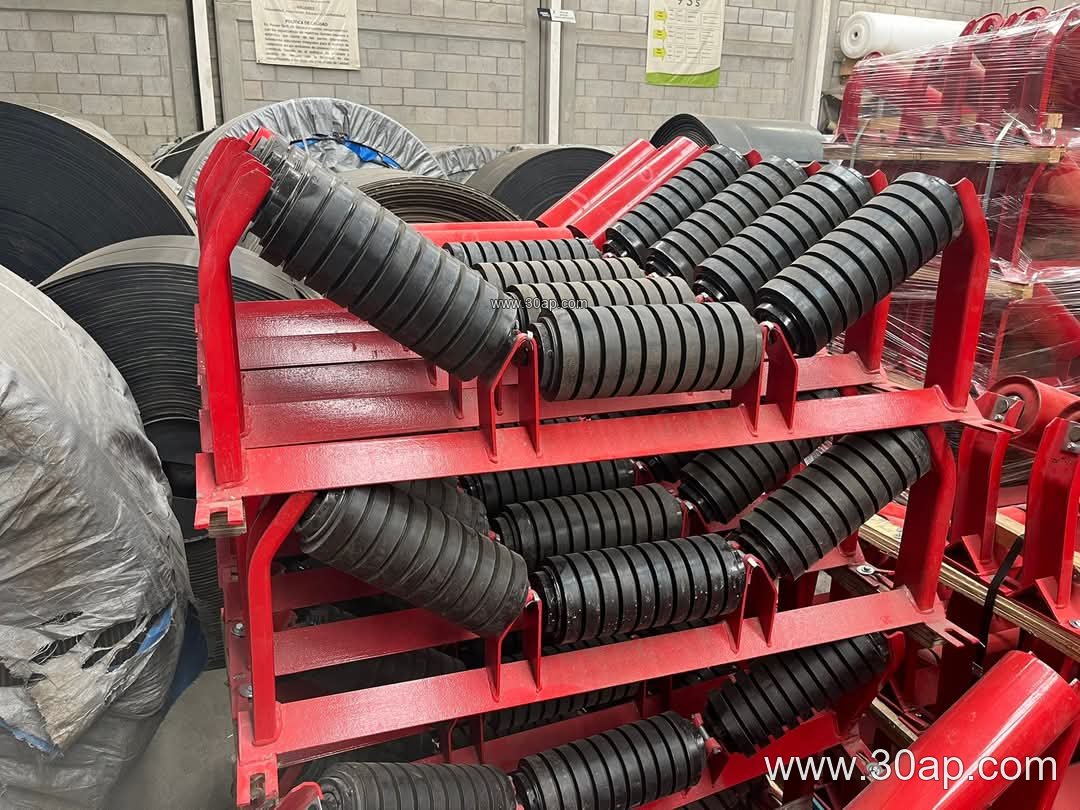
Typical build details include:
- Base plate with slotted mounting holes for alignment on site
- Angle or channel upright sized to the roller shaft and bearing housing
- Reinforcing gusset where the upright meets the base
- Optional adjustable slot for fine angle setting, usually a few degrees either way
- Painted or galvanized finish depending on the environment
The bracket must match the roller it carries. A Ø108 roller and a Ø159 roller need different holder openings and different heights above the frame. Mounting hole spacing and crossbeam length are determined by belt width and the frame design, so they are normally confirmed against the conveyor drawing rather than assumed.
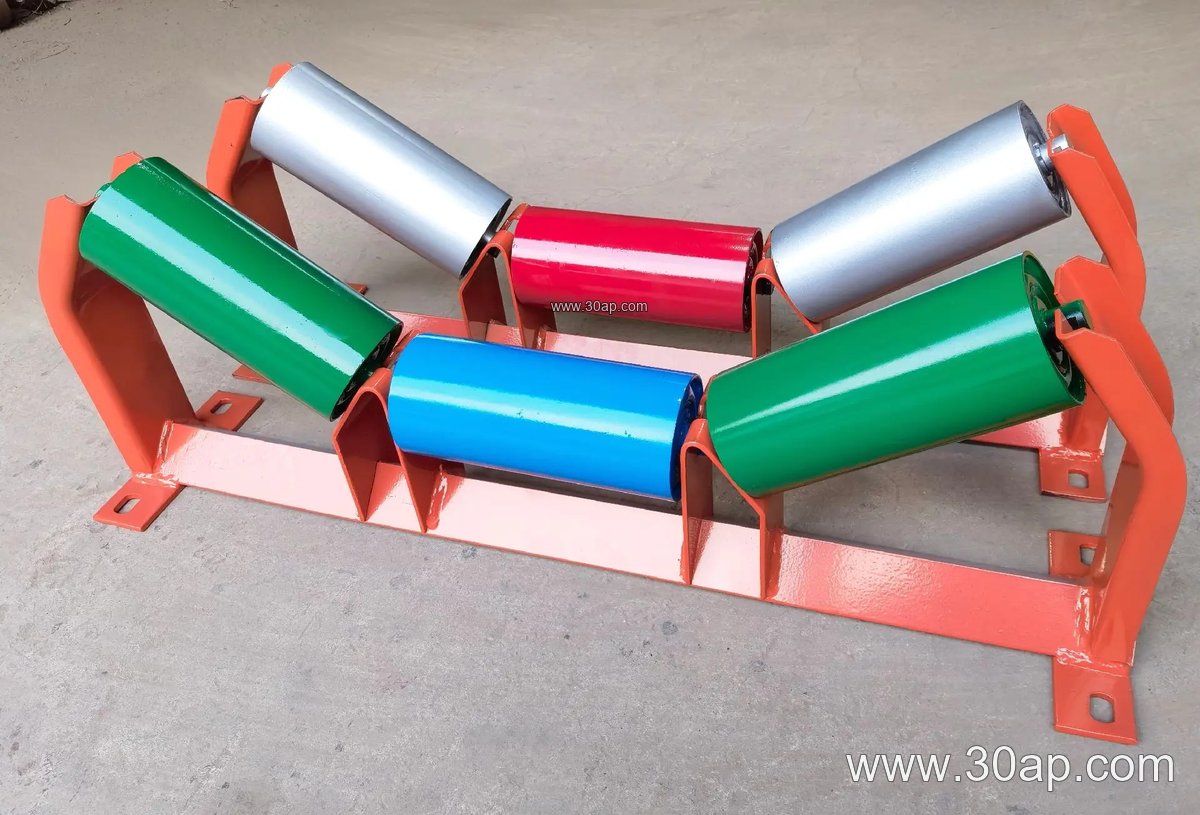
Where it fits on a conveyor
Vertical brackets appear most often where the belt leaves a pulley at a steep angle, in short transition sections, and on the return strand of tight conveyor layouts. In a quarry or aggregate line they may guide the belt through a compact transfer point. In a coal handling plant or power plant coal yard, they help keep the return belt centred where space is limited. Cement plants and crushing and screening circuits use them in similar confined spots.
They are not a substitute for a bend pulley or a tail pulley. Those components change belt direction around a drum, while a vertical idler bracket only supports and guides the belt with a roller. Nor should it be confused with a V-return bracket, which uses two rollers in a shallow V to support the return strand. The vertical unit is a different tool for a different geometry.
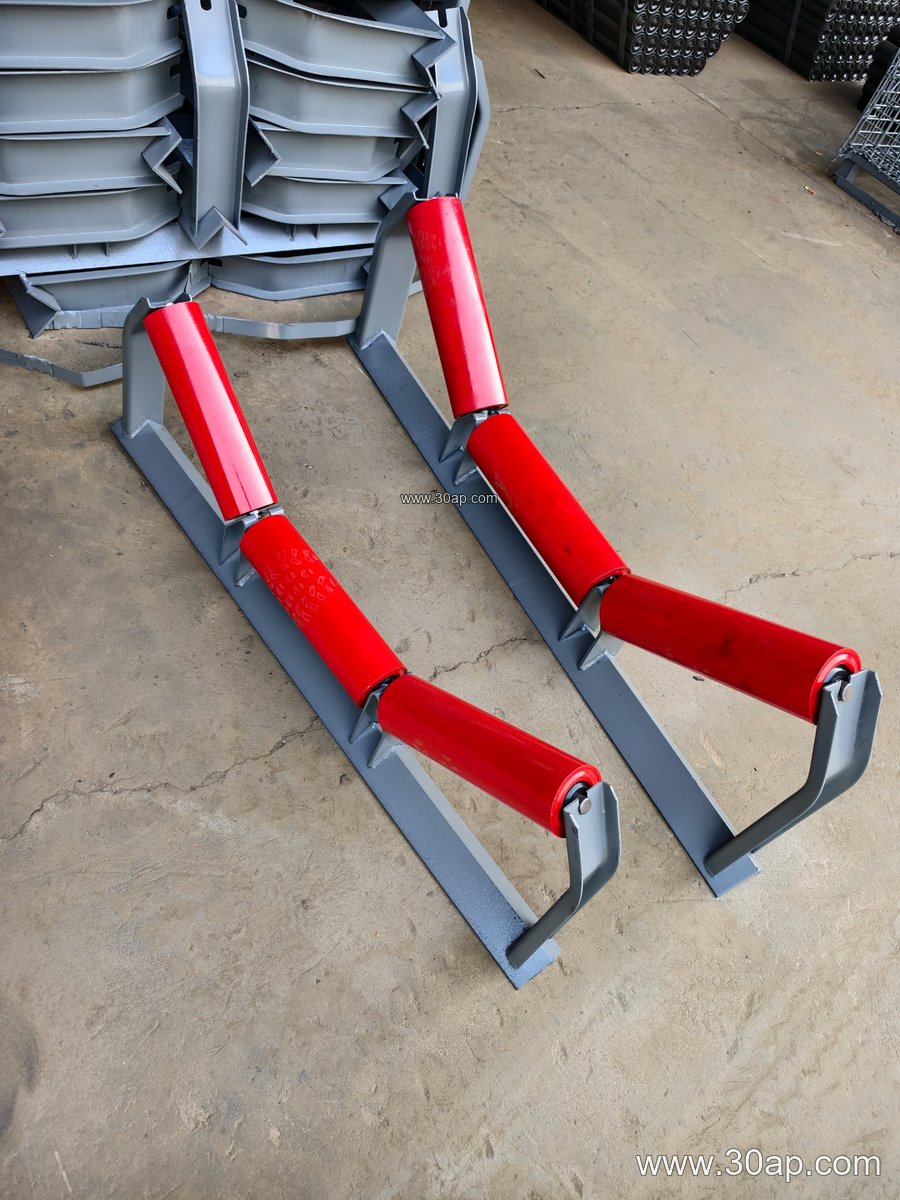
Matching the bracket to belt and roller
Selection starts with the belt width and the roller diameter, then moves to the frame details. The table below shows common reference combinations; actual values follow the conveyor design.
| Reference | Belt width | Roller diameter | Typical use |
|---|---|---|---|
| Light duty | B500 to B650 | Ø89 | Small aggregate or sand lines |
| Medium duty | B800 to B1000 | Ø108 to Ø133 | Quarry and cement plant conveyors |
| Heavy duty | B1200 to B1600 | Ø133 to Ø159 | Coal handling, power plant coal yard |
| Wide belt | B1800 to B2200 | Ø159 to Ø194 | Iron ore and large tonnage bulk systems |
These are reference ranges, not fixed pairings. A B800 conveyor can use more than one roller diameter depending on load and belt speed, and no single belt width locks the bracket to one size. The bracket drawing should state the roller diameter, the mounting hole pattern, and the frame beam spacing.
On the belt side, the duty matters as much as the geometry. A heavy-duty mining conveyor belt carrying abrasive ore puts more side load on the guide roller than a smooth EP conveyor belt in a food or grain facility. Heat resistant conveyor belt and flame retardant conveyor belt installations in power plants also call for brackets that keep the roller clear of hot material and allow easy inspection. Where the belt is a steel cord conveyor belt, the stiffer carcass changes tracking behaviour, so the vertical guide position is usually set with extra care.
Buyer checklist
- Confirm belt width, roller diameter, and the exact frame beam section before ordering.
- Ask whether the angle is fixed or adjustable, and how much adjustment is provided.
- Check the mounting hole pattern against the existing conveyor bracket holes.
- Specify the finish for the site: painted for general use, galvanized for wet or corrosive areas.
- Order in pairs for guiding positions, and keep a small spare set for changeouts.
- Verify that the bracket clears the belt edge through the full range of belt wander.
For plant operators sourcing through www.conveyorbeltidler.com, it helps to send a sketch of the frame and the roller to be carried. A correct vertical idler bracket is a small item, but it keeps the return belt steady and protects the edges of an expensive conveyor belt.