What an Aggregate Production Line Idler Does
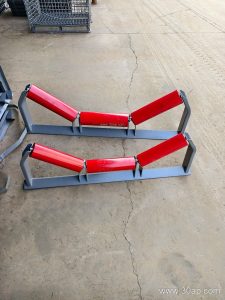
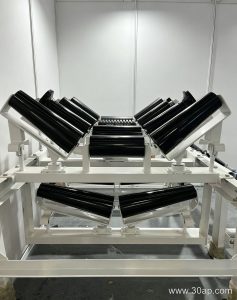
An aggregate production line idler is the rotating support that carries the conveyor belt between the head and tail of a crushing and screening circuit. In a sand and gravel plant, the belt leaving a jaw or cone crusher is heavy, abrasive and often wet, so these idlers must keep the belt tracking while absorbing constant impact and grit. The idler roller is not a passive accessory; it sets the belt’s trough shape, controls material spillage and influences how much power the drive pulley must deliver.
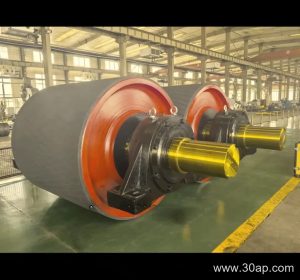
The same component appears under several accurate names, including carrying idler, troughing roller and belt support roller, but it remains the same product family. Drive pulleys, tail pulleys and bend pulleys are separate components and are never interchangeable with an idler.
Construction and Surface Options
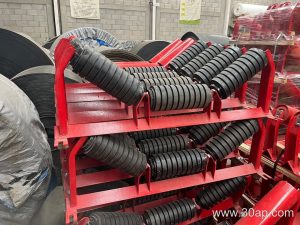
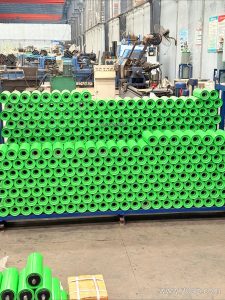
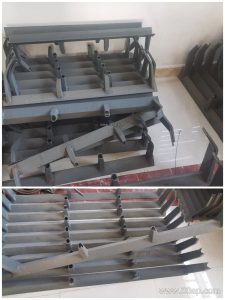
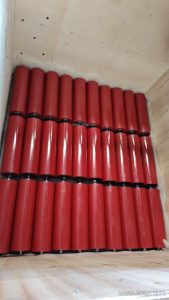
A typical unit combines a steel tube shell, a through shaft, sealed bearing housings and a bracket that locks into the conveyor frame. The shell may be plain steel, nylon-coated, ceramic-lined or fitted with rubber rings. Rubber-ring impact idlers are common below crusher discharge points, while ceramic-faced rollers suit abrasive limestone and granite streams. Sealing quality matters more than appearance: fine dust from screening decks is the main cause of premature bearing failure.
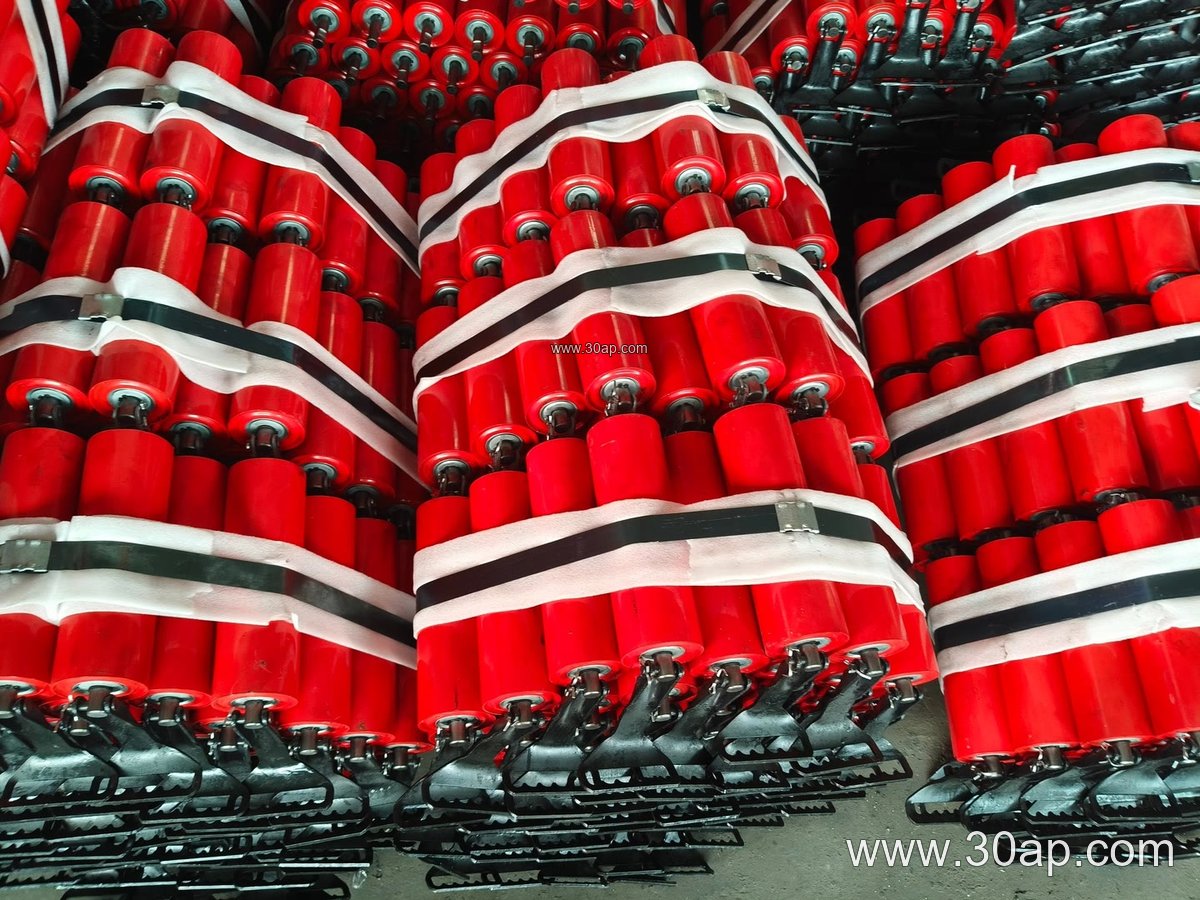
- Shell materials: steel tube, nylon, ceramic, rubber ring
- Common bearing numbers: 6204, 6205, 6305, 6306, 6308, 6310
- Common roller diameters: Ø63, Ø76, Ø89, Ø102, Ø108, Ø127, Ø133, Ø159, Ø178, Ø194, Ø219 mm
- Trough angles: 20, 30, 35 and 45 degrees
Matching Roller Length to Belt Width
Roller length follows belt width, trough angle and the idler set configuration rather than a single fixed rule. The table below gives common reference examples for three-roll troughing sets; side rollers and centre rollers can differ, and final values are set by design.
| Belt width | Typical roller length (three-roll troughing) |
|---|---|
| B500 | about 200 mm |
| B650 | about 250 mm |
| B800 | about 315 mm |
| B1000 | about 380 mm |
| B1200 | about 465 mm |
| B1400 | about 530 mm |
| B1600 | about 600 mm |
| B1800 | about 670 mm |
| B2000 | about 750 mm |
No single belt width is tied to one pulley diameter, and shaft size must be calculated from load, span and speed. A 1200 mm belt may run on several roller diameters depending on tonnage and spacing. Where a plant uses a 1000mm Conveyor Belt or a 1400mm belt on the same transfer tower, keep spare rollers grouped by frame position to avoid mixing.
Where These Idlers Are Used
Quarries and crushing plants are the classic home, but the same roller appears in cement plants feeding raw mills, in power plant coal handling, in iron ore and copper ore concentrators, and in tunnel spoil lines. In a limestone quarry, troughing idlers on the primary discharge belt handle sharp rock; return rollers underneath keep the belt from sagging between frames. In a concrete batching plant, smaller diameters and tighter spacing are common because belts are short and start-stop frequently.
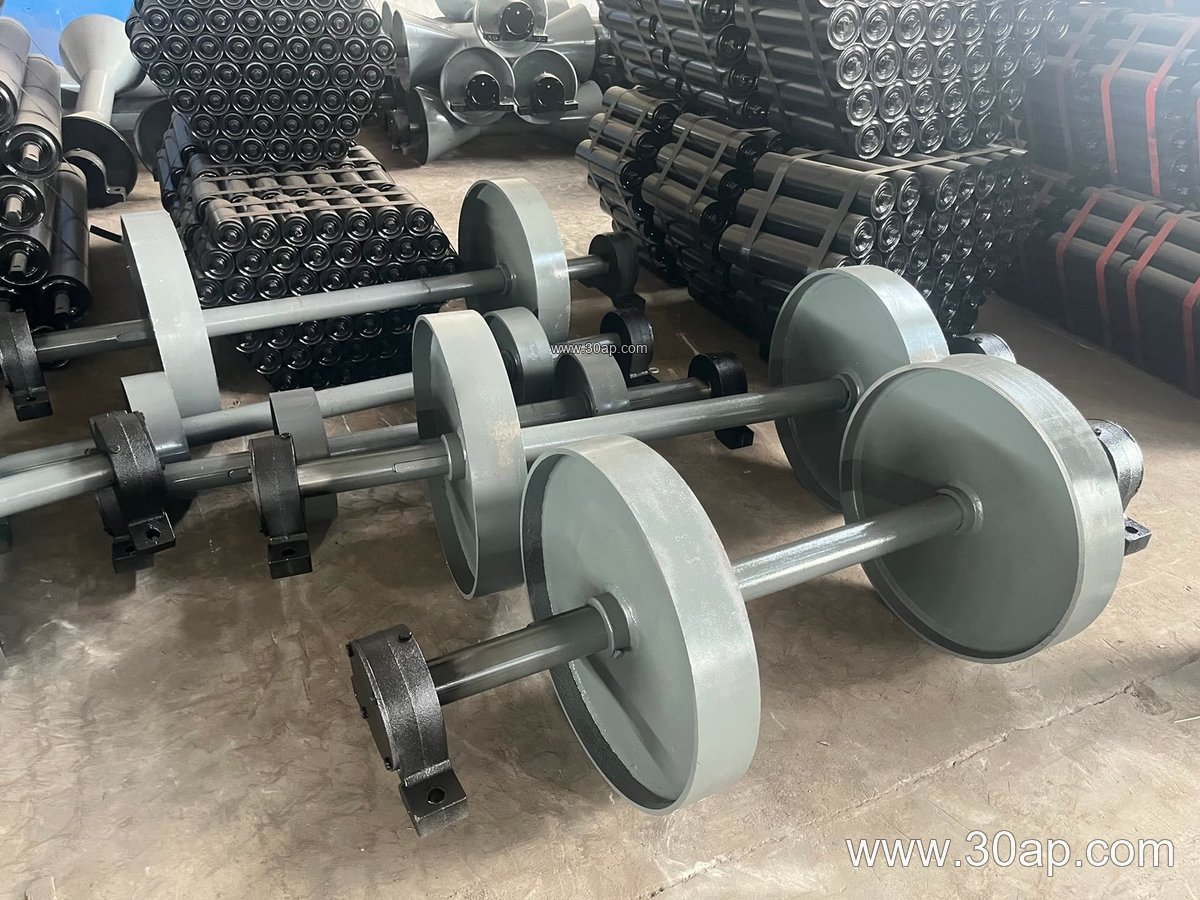
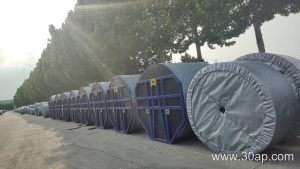
Belt selection works alongside idler choice. A heavy Abrasion Resistant Conveyor Belt on a crusher discharge line needs impact rollers at the load point, while a long overland run may use a Steel Cord Conveyor Belt with wider spacing and larger rollers. Where coal dust is present, a Flame Retardant Conveyor Belt is normally specified together with anti-static rollers and grounded frames.
Types and Placement
Carrying idlers form the trough on the loaded strand. Transition idlers sit near the head and tail to gradually change belt shape. Return idlers support the empty strand, with V-type and flat forms common. Self-aligning idlers, including friction and tapered types, correct minor misalignment on long belts. Spiral and comb rollers are used where sticky material builds up on the shell. Selecting the right type for each position is more useful than buying one style for the whole plant.
Buyer Checklist
- Confirm belt width, trough angle and frame hole spacing before ordering.
- State the material: crushed granite, limestone, coal or ore changes shell and seal choice.
- Ask for bearing brand and sealing arrangement, not just roller diameter.
- Check that brackets match the existing conveyor bracket profile.
- Keep a small stock of impact and return rollers for quick replacement.
- Review lubrication-free sealed designs for dusty screening areas.
For aggregate conveyors, related hardware such as the conveyor pulley, conveyor belt and conveyor bracket should be reviewed as one system. A well-matched idler set reduces belt edge damage, lowers spillage and keeps the production line running through the shift.