What a Ceramic Lagged Pulley Is
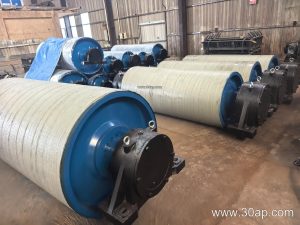
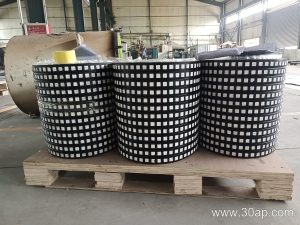
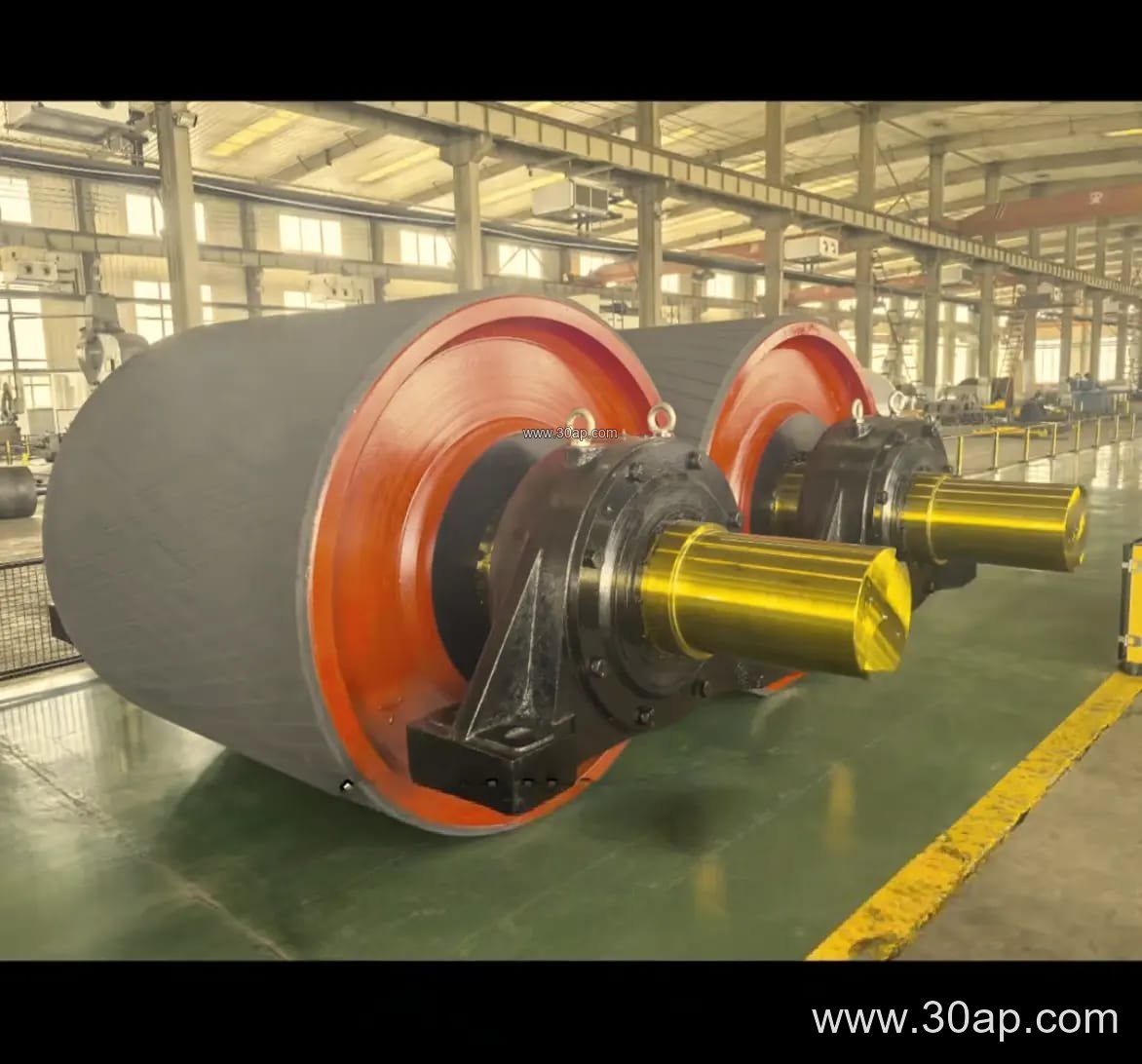
A ceramic lagged pulley is a conveyor pulley whose outer surface is fitted with ceramic tiles embedded in a rubber or polymer matrix. This ceramic lagging is a specialized surface treatment for drive pulleys, tail pulleys, and bend pulleys where standard rubber alone may wear too quickly. The tiles provide a hard, wear-resistant contact face that grips the conveyor belt while resisting abrasion from abrasive bulk materials.
Unlike a plain rubber lagged pulley, the ceramic version is built for locations where slip and wear are constant concerns. The ceramic lagging is not a separate product type; it is a surface option applied to a conveyor pulley. This distinction matters when specifying equipment, because the pulley’s role — drive, tail, or bend — determines how the lagging is used, not the lagging itself.
Construction and Surface Details
The lagging usually consists of small ceramic tiles set into a rubber backing. The tiles are arranged in a pattern that leaves channels between them, allowing water and fine particles to escape and helping the belt run cleaner. Common lagging thicknesses are 8, 10, 12, 15, and 20 mm, with the thicker options chosen for high-torque drive positions.
The pulley body is typically welded steel with a machined shell. Shaft diameters are sized by torque and load, with common values including Ø50, Ø60, Ø70, Ø80, Ø90, Ø100, Ø120, Ø140, Ø160, Ø180, and Ø200 mm. These are reference ranges, not fixed pairings with belt width. A B800 pulley might use a Ø500 shell in one conveyor and a larger diameter in another, depending on belt tension and wrap angle.
Ceramic versus Rubber Lagging
Rubber lagging, whether cast, cold-bonded, or hot-vulcanized, offers good grip in general service. Ceramic lagging adds a harder wearing surface that suits abrasive conditions. Diamond and herringbone rubber patterns improve traction in wet or muddy environments, but ceramic tiles are usually selected when the abrasive action of the material being conveyed is the dominant wear factor. The choice is about matching the surface to the duty, not about one option being universally better.
Where Ceramic Lagging Is Used
Ceramic lagged pulleys appear in bulk handling where fines and sharp particles are present. In a limestone quarry, a drive pulley with ceramic lagging can maintain grip on a conveyor belt carrying crushed rock. In a coal preparation plant, the same surface helps resist wear from coal dust and slurry. Cement plants use them on clinker conveyors, and power plants apply them to coal handling lines.
These pulleys are also found in sand and gravel operations, copper and iron ore concentrators, and port bulk terminals. The common thread is an abrasive load and a need for consistent belt traction. A tail pulley may use ceramic lagging to reduce buildup, while a bend pulley might use it to extend service life in a dusty transfer point.
Matching the Pulley to the Conveyor
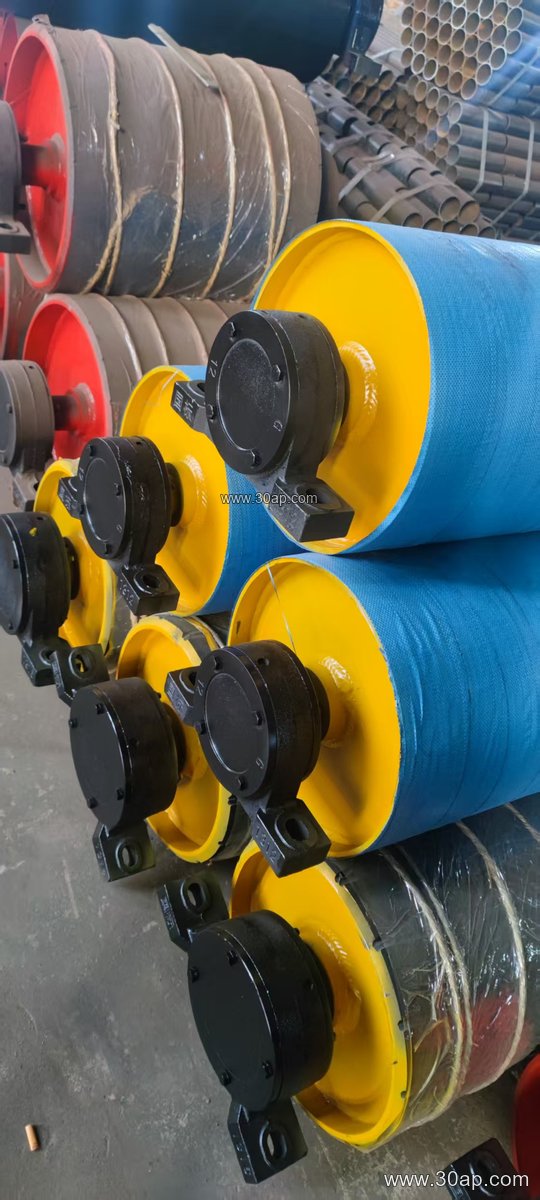
Selecting a ceramic lagged pulley starts with the pulley’s function. A drive pulley needs enough lagging grip to transmit torque without slip. A tail pulley benefits from a wear-resistant surface that sheds material. A bend pulley, which changes belt direction, may use ceramic lagging where the belt is dirty or the environment is harsh. These roles are not interchangeable, and the lagging specification should follow the role.
Belt width and pulley diameter are related through conveyor design, not a fixed table. Typical shell widths are slightly wider than the belt: a B650 belt often uses a shell around 750 mm, a B1000 belt around 1150 mm, and a B1400 belt around 1600 mm. Diameters range from Ø200 to Ø1800 mm in common heavy-duty designs. A B1200 conveyor might use a Ø1000 drive pulley, but the same belt width could use a different diameter elsewhere on the route.
Reference Dimensions
| Belt Width | Typical Shell Width | Common Diameter Range |
|---|---|---|
| B500 | 600 mm | Ø250–Ø500 mm |
| B800 | 950 mm | Ø400–Ø800 mm |
| B1000 | 1150 mm | Ø500–Ø1000 mm |
| B1200 | 1400 mm | Ø630–Ø1250 mm |
| B1400 | 1600 mm | Ø800–Ø1400 mm |
These figures are reference data. Final dimensions depend on belt tension, shaft load, and the pulley’s position. Shaft diameter is determined by torque and bending load, not by belt width alone.
Buyer Checklist
- Confirm the pulley’s role: drive, tail, bend, or another position. The lagging pattern and thickness should support that duty.
- Specify lagging thickness based on torque and wear conditions. 10–15 mm is common for drive pulleys; thicker lagging may be used in severe abrasion.
- Check compatibility with the conveyor belt and the conveyor bracket. The pulley must fit the frame and align with the belt path.
- Review the shaft diameter and bearing selection with the conveyor designer. Do not assume a shaft size from belt width.
- Consider the environment: dust, water, and material size all influence whether ceramic lagging is the right surface.
A ceramic lagged pulley is a durable, grip-focused component for abrasive conveyor service. Its value comes from matching the lagging to the pulley’s job and the material it handles, not from a single specification number.