What a Carbon Steel Conveyor Bracket Does
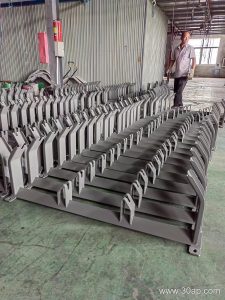
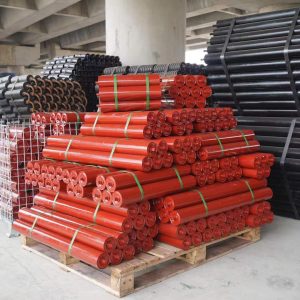
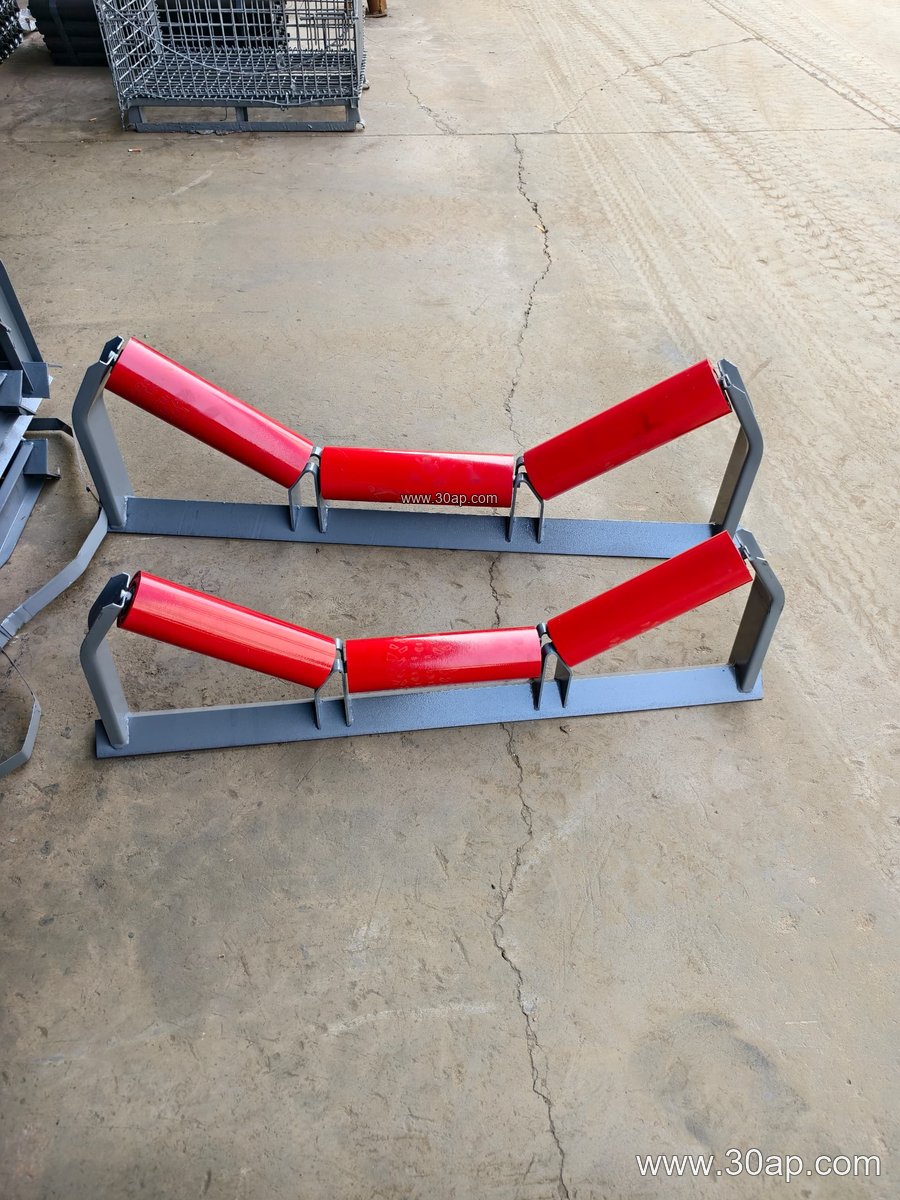
A carbon steel conveyor bracket is the structural component that holds idler rollers in the correct position along a conveyor frame. Often called a carbon steel conveyor support bracket or simply a steel bracket, it transfers the load of the belt and material to the main frame while maintaining the proper trough angle. In quarry, cement, and power plant belt systems, these brackets are the quiet workhorses that keep the belt tracking straight and the rollers spinning freely.
Construction and Common Forms
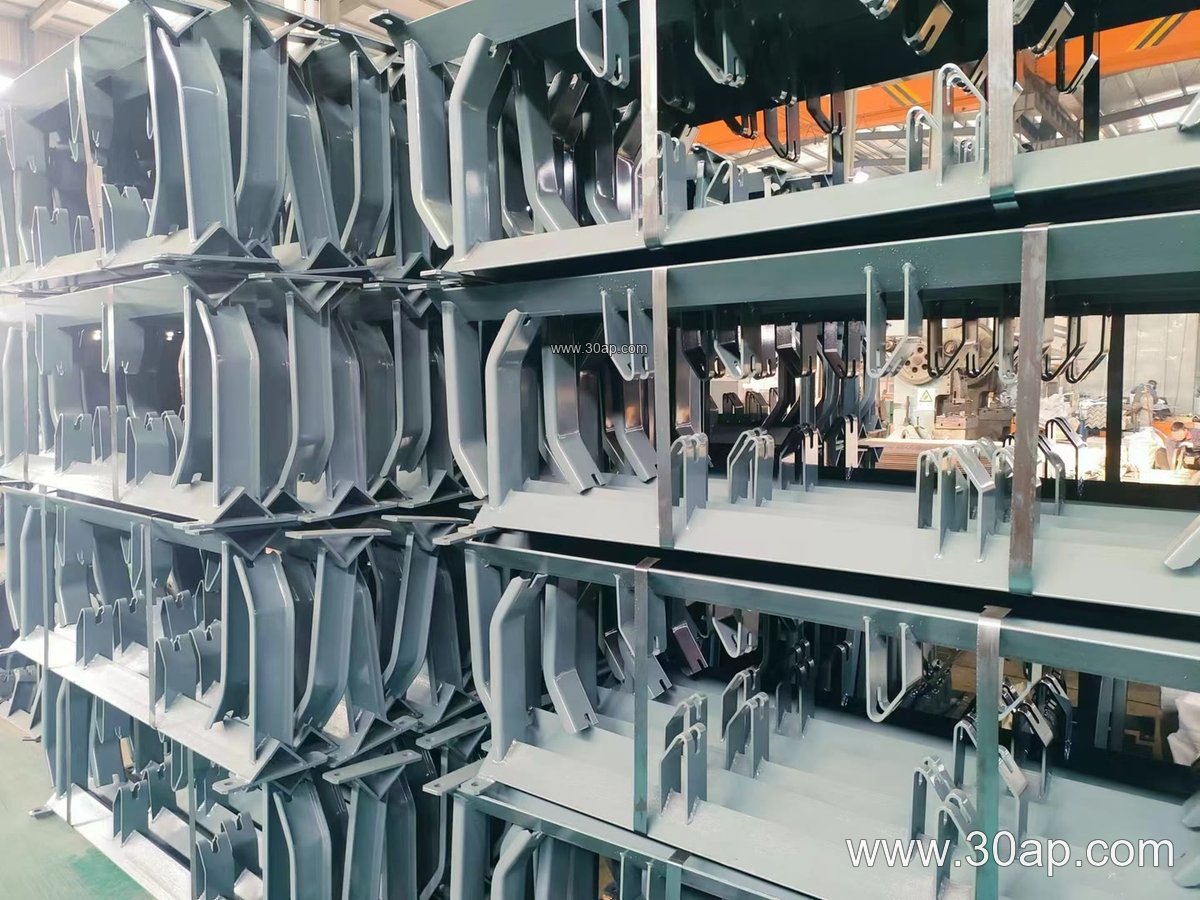
Most brackets are fabricated from angle steel, channel steel, or folded steel plate. The choice depends on load and mounting style. Common types include trough brackets for carrying idlers, return brackets for the belt return side, and transition brackets near pulleys. Adjustable versions allow the trough angle to be set between 20 and 45 degrees, which helps fine-tune belt capacity and material containment.
Typical Reference Dimensions
The table below shows common reference combinations. These are not universal specifications; actual mounting hole spacing and beam length are determined by belt width, trough angle, and frame design.
| Belt Width | Trough Angle | Idler Diameter | Bracket Style |
|---|---|---|---|
| B500 | 20° | Ø89 | Trough, fixed |
| B650 | 30° | Ø89 | Trough, adjustable |
| B800 | 35° | Ø108 | Trough, fixed |
| B1000 | 35° | Ø108 | Transition |
| B1200 | 45° | Ø133 | Trough, adjustable |
| B1400 | 45° | Ø133 | Trough, fixed |
| B1600 | 35° | Ø159 | Return, V-type |
| B1800 | 35° | Ø159 | Trough, fixed |
| B2000 | 30° | Ø194 | Trough, adjustable |
Forward-leaning brackets, usually set at about 1.5 to 2 degrees, are sometimes used to help center the belt. Impact brackets near loading points may be reinforced to absorb shock.
Where These Brackets Are Used
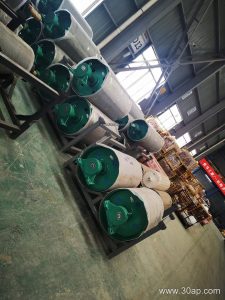
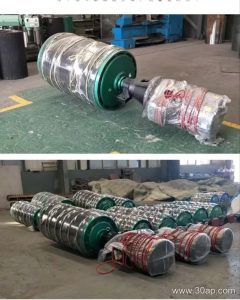
You will find carbon steel conveyor brackets in limestone quarries feeding crushers, in cement plants moving clinker and raw meal, and in coal-fired power stations handling fuel on EP conveyor belt lines. They also appear in sand and gravel plants, steel mills, and port loading systems. In each case, the bracket must match the conveyor pulley arrangement and the roller spacing specified for the duty.
Matching Brackets to Belt and Rollers
Selection starts with belt width and the required trough angle. A wider belt generally needs a longer bracket beam and may use a larger roller diameter to reduce sag. However, there is no fixed rule that one belt width must use one specific roller diameter or trough angle. For example, a B1200 conveyor might run at 35 degrees with Ø133 rollers in one plant and at 45 degrees with the same roller size in another, depending on material characteristics and belt speed. Buyers should confirm hole centers, beam length, and mounting height with the conveyor frame drawing.
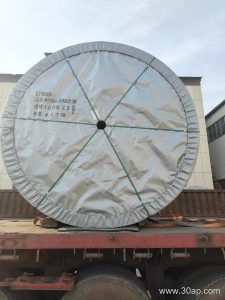
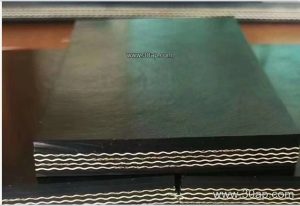
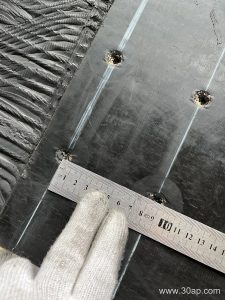
The bracket also interacts with the belt itself. A heavy-duty mining conveyor belt may require stronger brackets and closer roller spacing than a lighter aggregate conveyor belt. In dusty or wet conditions, adjustable brackets make it easier to correct belt misalignment without replacing the entire frame.
Buyer Checklist
- Confirm belt width and trough angle, and whether the bracket must be fixed or adjustable.
- Check the idler diameter and the mounting hole pattern on the existing frame.
- Specify the material grade and surface treatment suitable for the environment, such as painted or galvanized carbon steel.
- Consider transition brackets near drive and tail pulleys to avoid abrupt belt bending.
- Ask for dimensional drawings rather than relying on nominal sizes alone.
Well-chosen carbon steel conveyor brackets help extend roller life and keep the belt centered, whether the line moves coal, clinker, or ore. They are a small part of the system but a critical one for smooth, continuous operation.