What a Fixed Conveyor Bracket Does
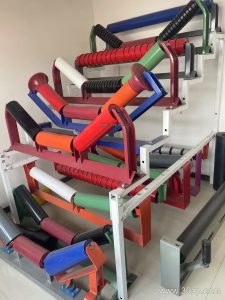
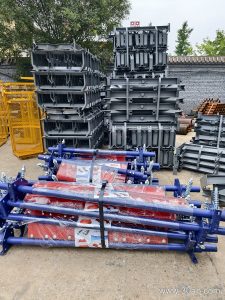
A fixed conveyor bracket is a rigid support structure that holds idler rollers in a set position along a conveyor frame. Unlike adjustable brackets, which let maintenance crews change the trough angle or roller spacing, a fixed bracket is built to one geometry and stays there. It is the workhorse of belt support in mines, coal preparation plants, cement lines, power station coal yards, and aggregate operations where consistent belt tracking matters more than field adjustability.
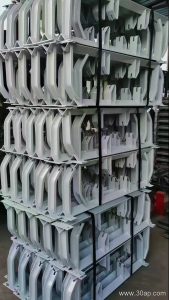
The bracket itself is usually fabricated from angle steel, channel steel, or folded steel plate. Its job is simple but critical: keep the idler roller at the correct height and angle so the conveyor belt runs smoothly, carries material without spillage, and wears evenly. A well-made fixed bracket also transfers load from the roller to the main frame without flexing or loosening over time.
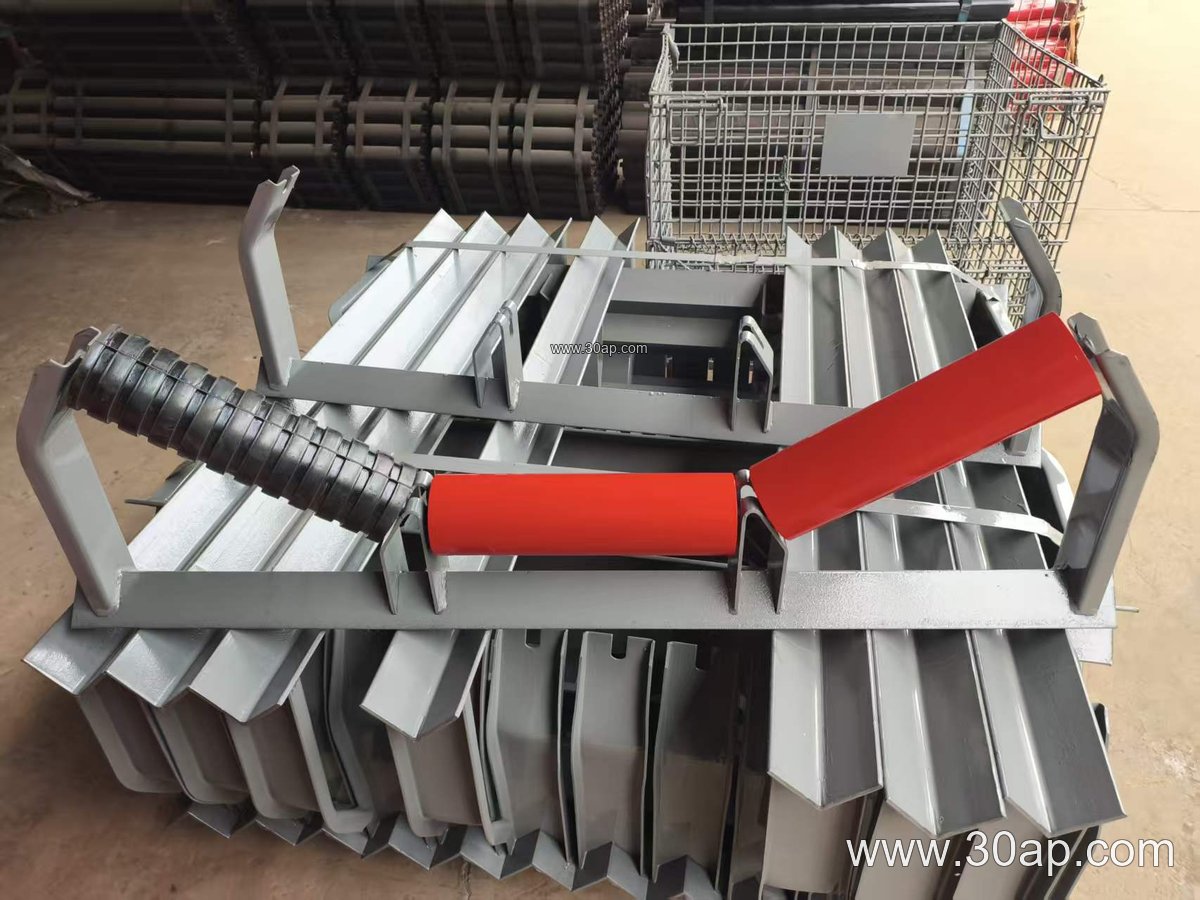
Construction and Common Forms
Most fixed brackets fall into a few familiar shapes. Trough brackets support the carrying side of the belt, often at 20, 30, 35, or 45 degrees. Return brackets hold the belt on the lower run, and V-return brackets help center the belt on the way back. Transition brackets sit near pulleys to guide the belt from flat to troughed. Impact brackets are reinforced for loading points where rock, ore, or clinker drops onto the belt.
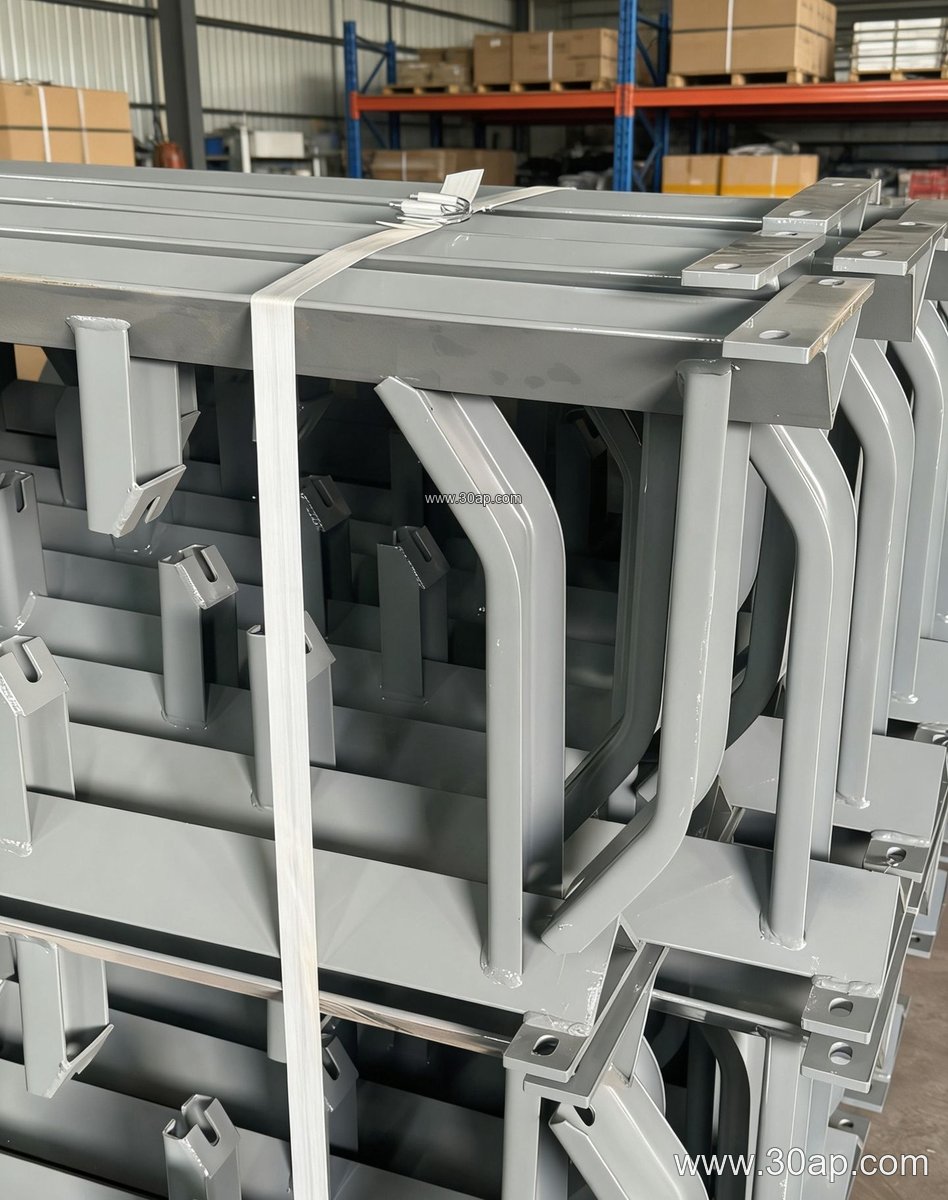
Materials and dimensions follow the duty. Light aggregate lines may use folded plate, while heavy-duty mining conveyor brackets tend toward channel steel. Mounting hole spacing and crossbeam length change with belt width and trough angle, so they are always determined by design rather than treated as a universal constant.
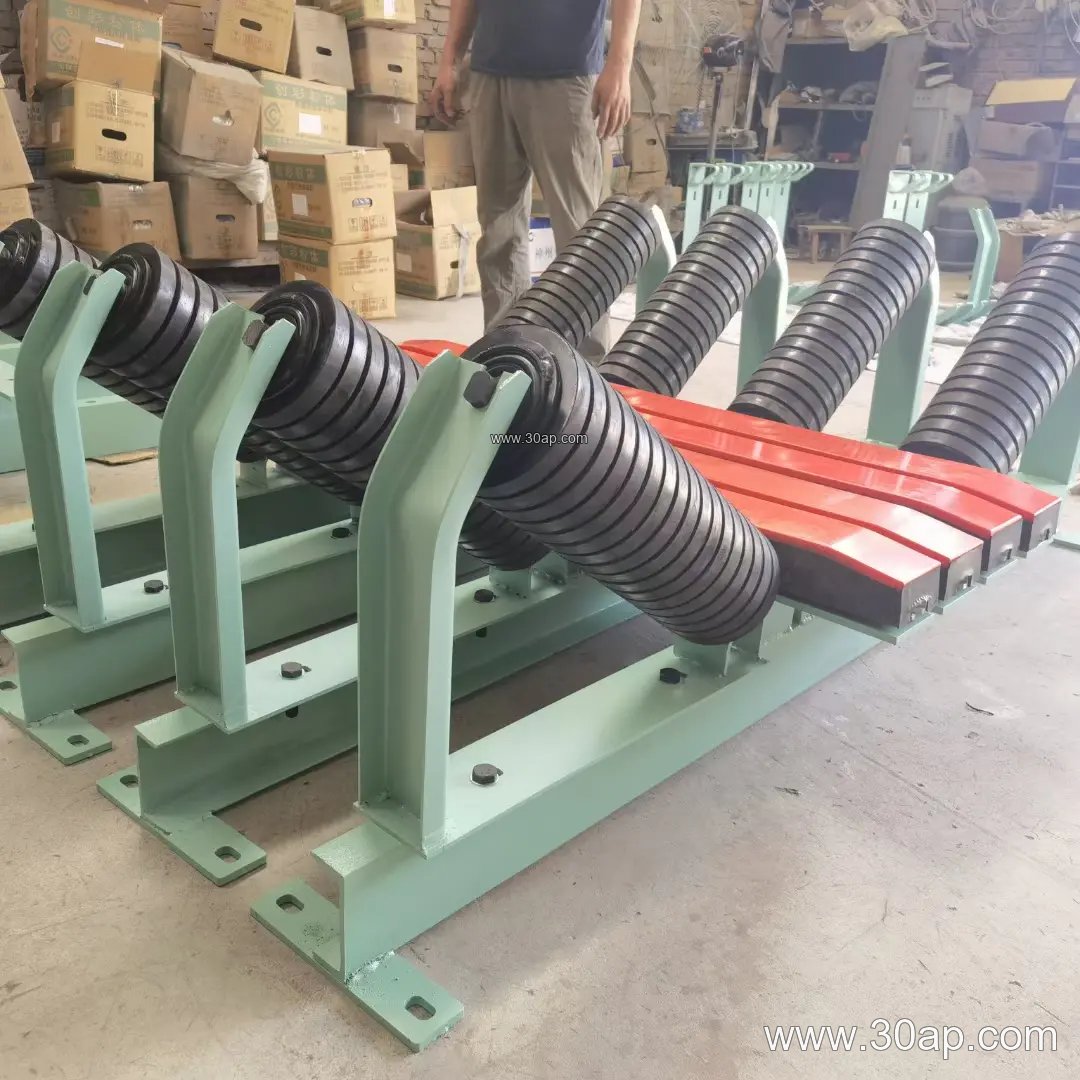
Matching Brackets to Belt and Roller
The bracket must suit the belt width, the idler roller diameter, and the trough angle. Common belt widths include B500, B650, B800, B1000, B1200, B1400, B1600, B1800, B2000, and B2200. Roller diameters such as Ø89, Ø108, Ø133, Ø159, and Ø194 are matched to load and belt speed. A typical combination might read B800 with a 35-degree trough and Ø108 rollers, or B1200 with a 45-degree trough and Ø133 rollers, but these are examples, not fixed rules. One belt width can work with more than one roller diameter or trough angle depending on the conveyor design.
For a quick reference, the table below shows common bracket forms and their usual roles. Values are indicative only and should be confirmed against the conveyor layout.
| Bracket Form | Typical Role | Common Belt Widths | Typical Trough Angle | Roller Diameter Range |
|---|---|---|---|---|
| Trough bracket | Carrying side support | B500–B2200 | 20°, 30°, 35°, 45° | Ø89–Ø194 |
| Return bracket | Lower run support | B500–B2000 | Flat or V-return | Ø89–Ø159 |
| Transition bracket | Pulley approach | B650–B1800 | Variable by design | Ø108–Ø159 |
| Impact bracket | Loading zone | B800–B2000 | 20°–45° | Ø108–Ø194 |
Where Fixed Brackets Fit Best
Fixed brackets shine in long straight runs where the belt path is stable. In a coal mining conveyor or a quarry conveyor, they keep the belt profile constant and reduce the chance of misalignment. In a cement plant, fixed trough brackets support clinker and raw meal belts day after day with little attention. Power plant coal handling and port ship-loading systems also rely on them because predictable belt support means fewer spillage problems and less downtime.
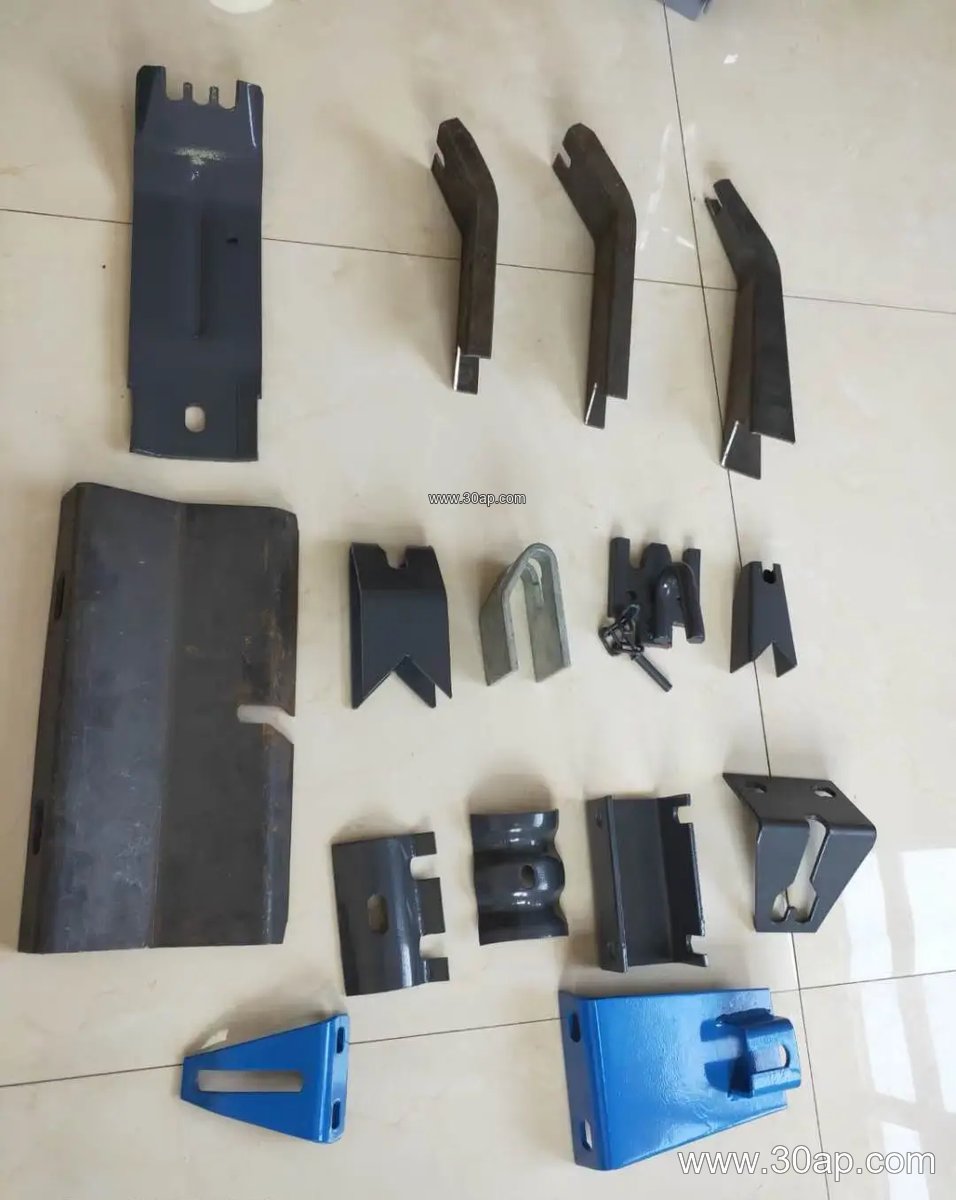
They are also common on belts carrying abrasive material, where an abrasion resistant conveyor belt runs over rollers that must stay aligned. Where the belt itself is a heavy-duty mining conveyor belt or a steel cord conveyor belt, the bracket must be sturdy enough to handle tension and load without distortion.
Buyer Checklist
- Confirm belt width, trough angle, and roller diameter before ordering; these three values drive the bracket geometry.
- Check the frame connection: bolt hole patterns vary between manufacturers and conveyor designs.
- Match material thickness to the duty, especially at transfer points and in primary crushing circuits.
- Consider the environment: dusty coal yards, corrosive fertilizer plants, and wet wash plants may call for different surface protection.
- Ask for dimensional drawings so the bracket can be checked against the existing idler roller and conveyor bracket layout.
Fixed brackets are not glamorous, but they are the quiet foundation of reliable belt conveying. Getting the details right at the buying stage saves far more time than fixing a wandering belt later. For related components, see our range of conveyor pulleys and conveyor brackets at pk-conveyor.com.