What an Iron Ore Conveyor Idler Does on the Line
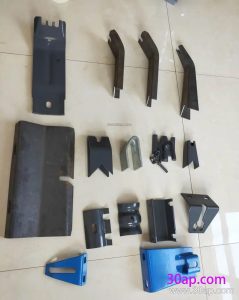
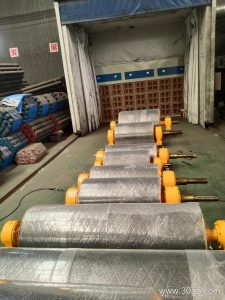
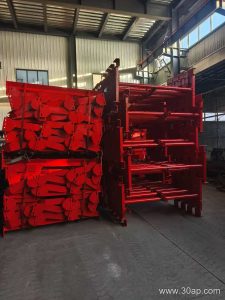
On a loaded ore conveyor, the idler roller is the part that actually carries the belt and the material. An iron ore conveyor idler is built to survive one of the harshest duty cycles in bulk handling: sharp, dense, abrasive rock falling from a crusher or transfer chute, dust that works into every gap, and long shifts with little downtime. In practice, the troughing idler set supports the loaded strand, while return idlers hold up the empty side. The frame and the conveyor bracket position each roller at the correct angle so the belt keeps its shape and the load stays centered.
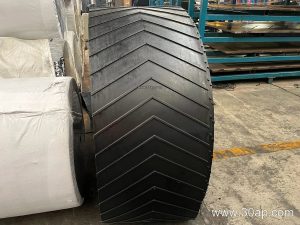
Because iron ore is heavy, the load per idler station is high. That is why ore conveyor idler design leans toward thicker shells, larger shaft ends, and better sealing rather than light-duty construction. A quarry conveyor belt or a heavy-duty mining conveyor belt running over these rollers needs a stable, evenly supported trough; a weak idler shows up quickly as belt sag, spillage, and edge wear.
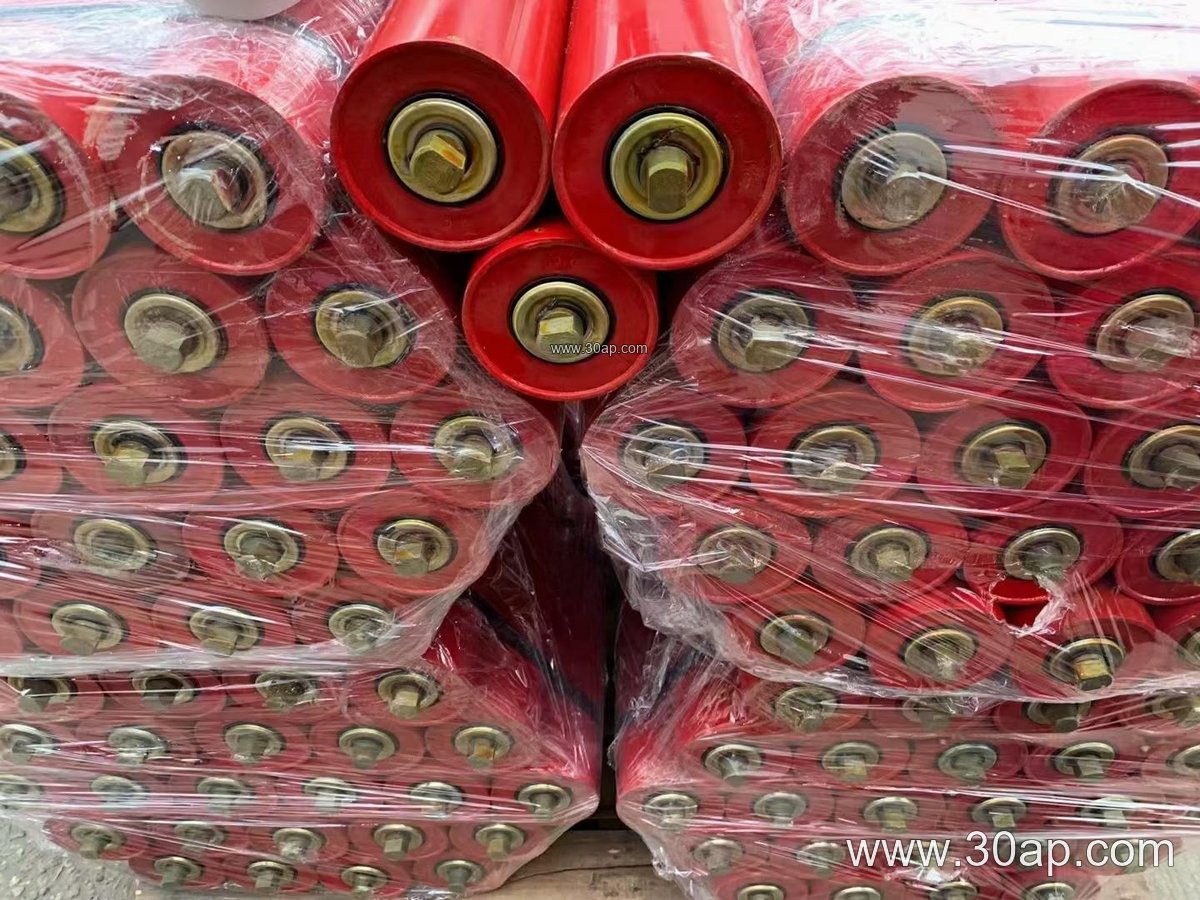
How the Roller Is Built
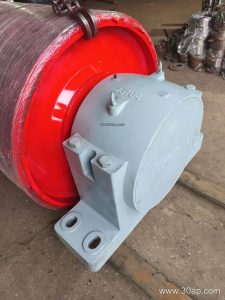
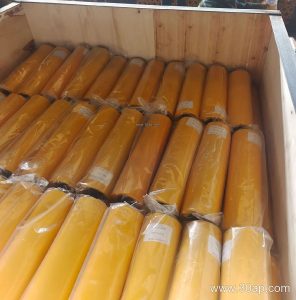
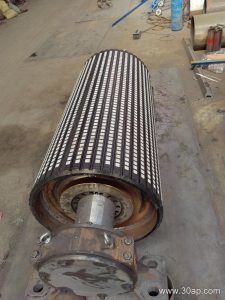
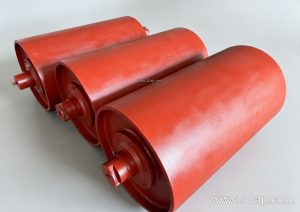
Most iron ore conveyor idlers share a common architecture. A steel tube shell rotates on a shaft through two bearing housings, each protected by a labyrinth or contact seal. The shell may be plain steel, nylon-coated, ceramic-covered, or fitted with rubber rings for impact zones. Bearing selection follows the load and speed, with common sizes including 6204, 6205, 6305, 6306, 6308, and 6310 — none of which is tied to one shell diameter.
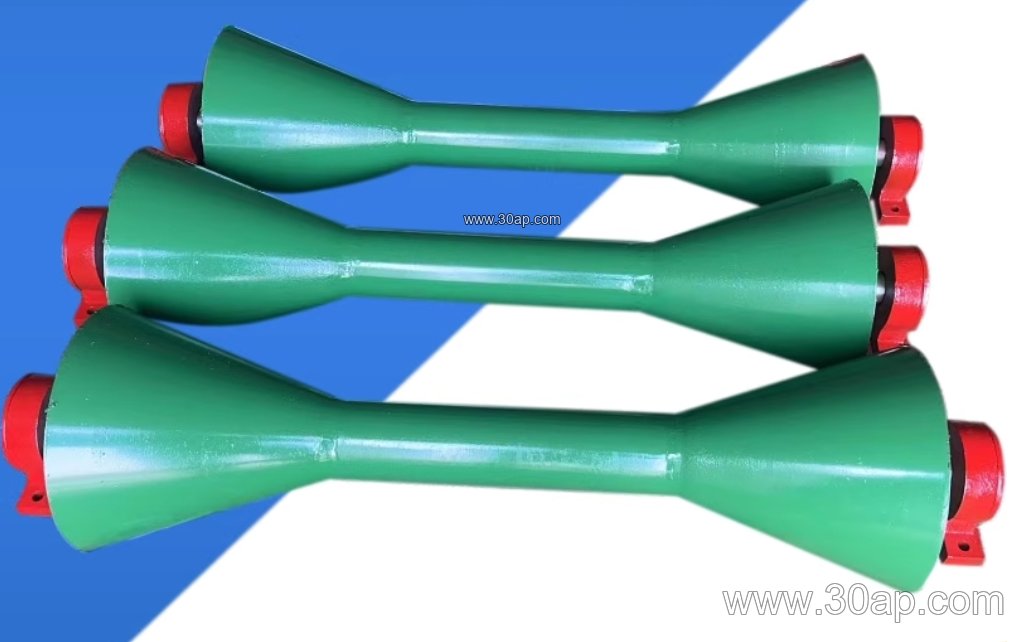
- Shell: welded steel tube, machined at the ends for bearing fit
- Shaft: usually cold-drawn round bar with flattened or drilled ends for the bracket
- Bearing: deep-groove ball bearing, greased for life or regreasable
- Seal: multi-stage labyrinth, sometimes with an outer dust lip
- Surface: plain, nylon, ceramic, or rubber ring
The troughing set itself is normally two- or three-roll. A three-roll troughing idler at 35 degrees is common on main ore lines, while 20 degrees and 45 degrees appear where belt training or capacity demands differ. A small forward tilt of about 1.5 to 2 degrees is used on training idlers to help the belt steer itself.
Sizes That Matter When Specifying
Roller diameter and belt width are chosen together with speed, load, and spacing. The table below gives reference values only; final selection is by design.
| Parameter | Common reference values |
|---|---|
| Roller diameter | Ø63, Ø76, Ø89, Ø102, Ø108, Ø127, Ø133, Ø159, Ø178, Ø194, Ø219 mm |
| Belt width | B400, B500, B650, B800, B1000, B1200, B1400, B1600, B1800, B2000, B2200, B2400 |
| Trough angle | 20°, 30°, 35°, 45° |
| Troughing roll length (example, three-roll) | B500 ≈ 200 mm; B650 ≈ 250 mm; B800 ≈ 315 mm; B1000 ≈ 380 mm; B1200 ≈ 465 mm; B1400 ≈ 530 mm; B1600 ≈ 600 mm; B1800 ≈ 670 mm; B2000 ≈ 750 mm |
| Bearing | 6204, 6205, 6305, 6306, 6308, 6310 |
Side rolls and center rolls can differ in length on the same set, and one belt width does not lock in a single pulley diameter. Keep the belt, pulley, and idler schedule coordinated rather than treating any value as a fixed pair.
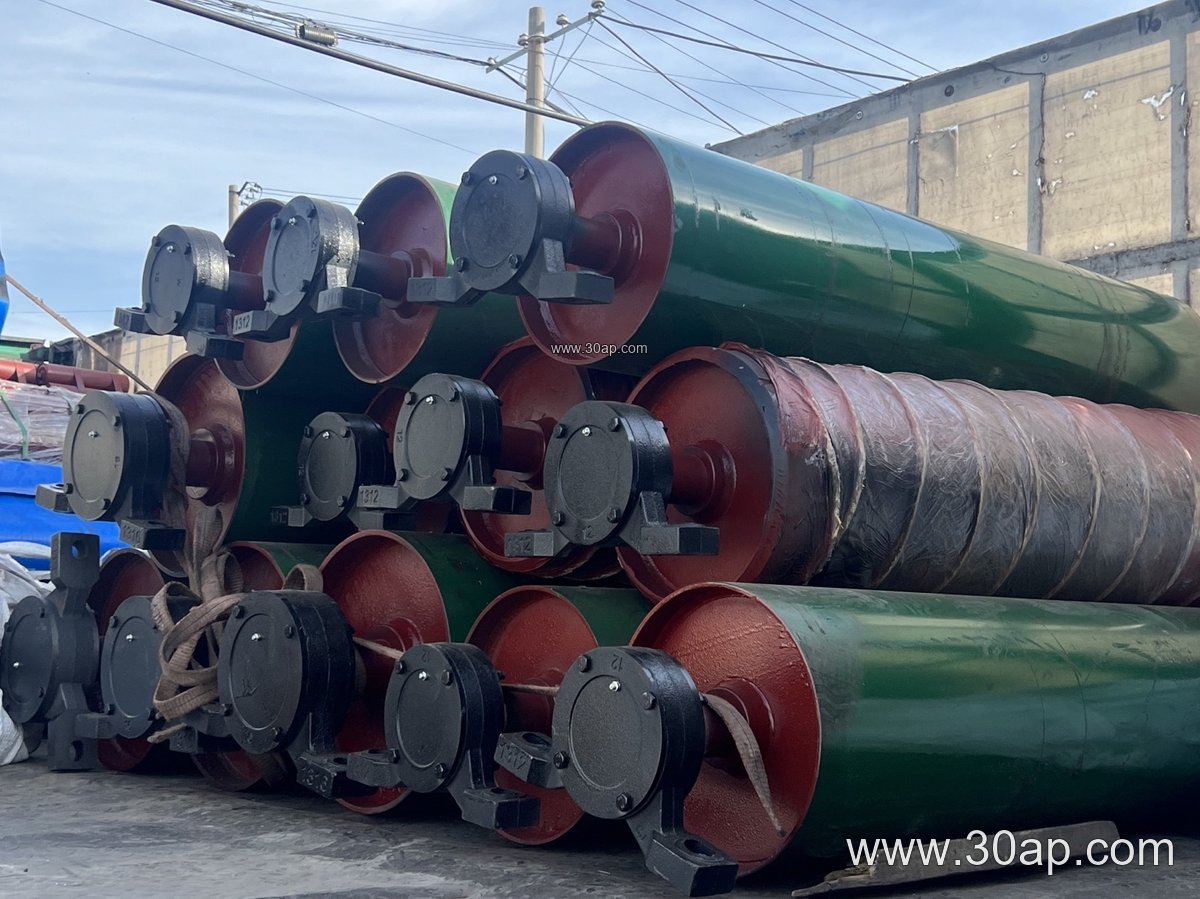
Where These Idlers Work
The obvious home is an iron ore conveyor belt line between the primary crusher and the stockpile, but the same roller family serves sinter plants and steel plant conveyor systems, port shiploading lines, and copper or gold operations handling similar dense rock. In a power plant coal yard, a flame retardant conveyor belt may run on lighter idlers, but the ore duty version is heavier. For a crusher conveyor belt receiving direct dump, impact idlers with rubber rings absorb the fall energy before the material settles into the trough.
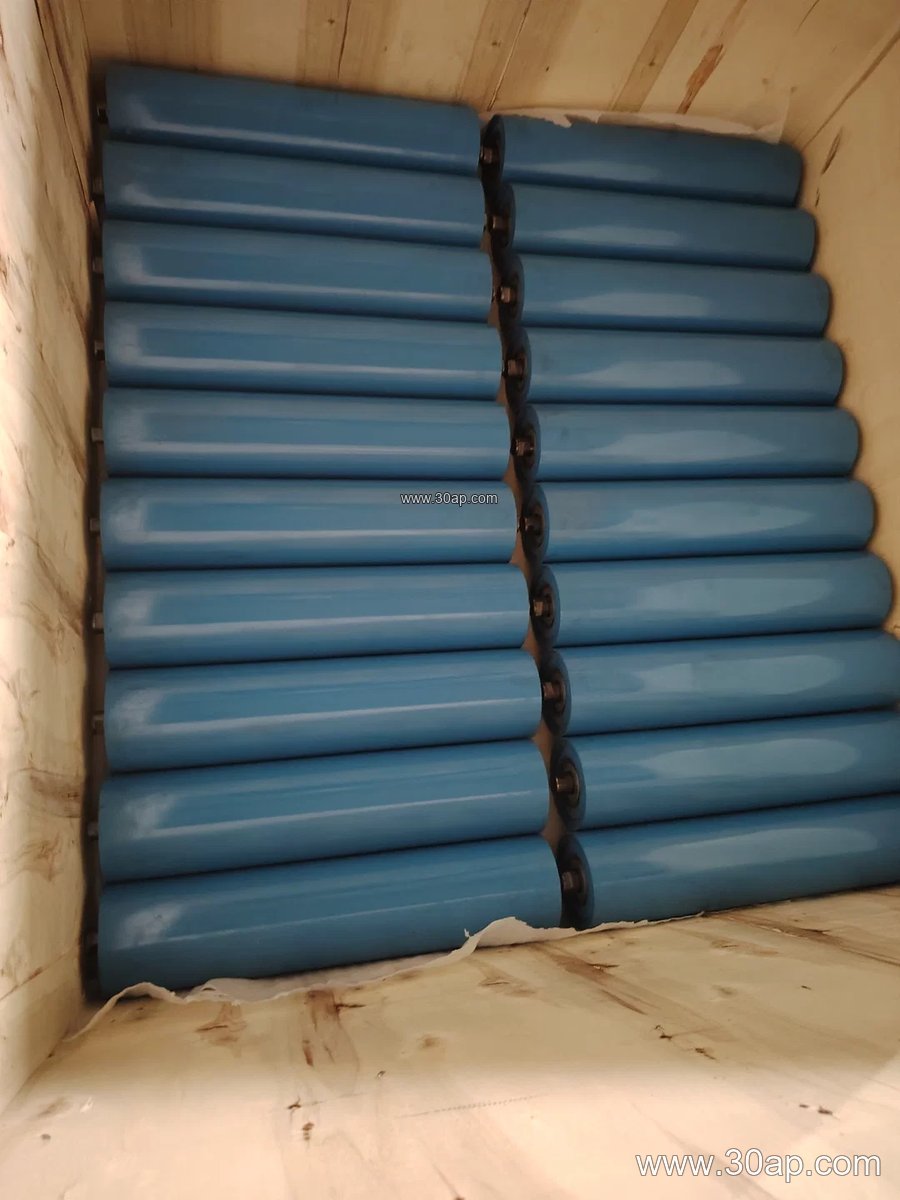
Elsewhere, a pipe conveyor belt or a corrugated sidewall conveyor belt calls for different idler arrangements entirely, because the belt shape is no longer a simple trough. Mentioning that contrast matters: the iron ore conveyor idler is a troughing and return component, not a substitute for the drive, tail, or bend pulley, which remain separate parts of the conveyor pulley group.
What a Buyer Should Check
Ask about shell wall thickness, seal type, bearing brand and clearance, and whether the roller is greased for life or serviceable. Confirm the bracket hole pattern matches the existing frame, since a replacement set that does not bolt up wastes a shutdown window. For abrasive ore, a ceramic or thick nylon shell extends life; for wet, sticky feed, smooth steel with good sealing may be better. Check rotation by hand before installation and keep spare rollers matched to the duty class.
Sealing is the usual failure point. Dust entering the bearing destroys a roller long before the shell wears out, so a multi-stage labyrinth with a dust lip is worth the extra cost on any iron ore conveyor idler expected to run for years. For more on matching belts and rollers, see iron ore conveyor idler guidance and the related conveyor belt selection notes.