What a Conveyor Belt Self-Aligning Idler Does
Misalignment is one of the most common reasons a conveyor line stops early. When the belt drifts toward the frame, material spills, edges fray, and the structure takes a side load it was never designed for. A Conveyor Belt Self-Aligning Idler — also called a self-tracking idler or self-aligning roller — is a carrying or return idler mounted on a pivoting frame that swings slightly when the belt wanders. The resulting angle gently steers the belt back toward the center line without an operator touching a thing.
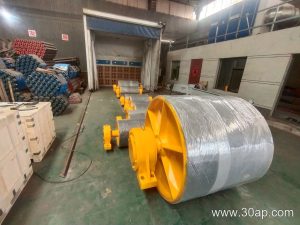
This is a tracking accessory, not a drive component. It works alongside the conveyor pulley that transmits power, the conveyor bracket that holds each station, and the belt itself. It does not replace a drive pulley, tail pulley, or bend pulley, and it cannot correct every tracking fault on its own.
How the Assembly Is Built
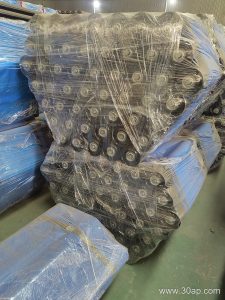
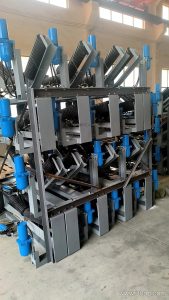
The core is a set of idler rollers carried in a pivoting bracket. A vertical pivot pin lets the whole group rotate a few degrees around its center. Friction or conical roller ends sense the belt edge; when the belt touches one side, the frame swings and the rollers push the belt back. Common designs include friction self-aligning, conical self-aligning, and forward-leaning (about 1.5 to 2 degrees) trough sets.
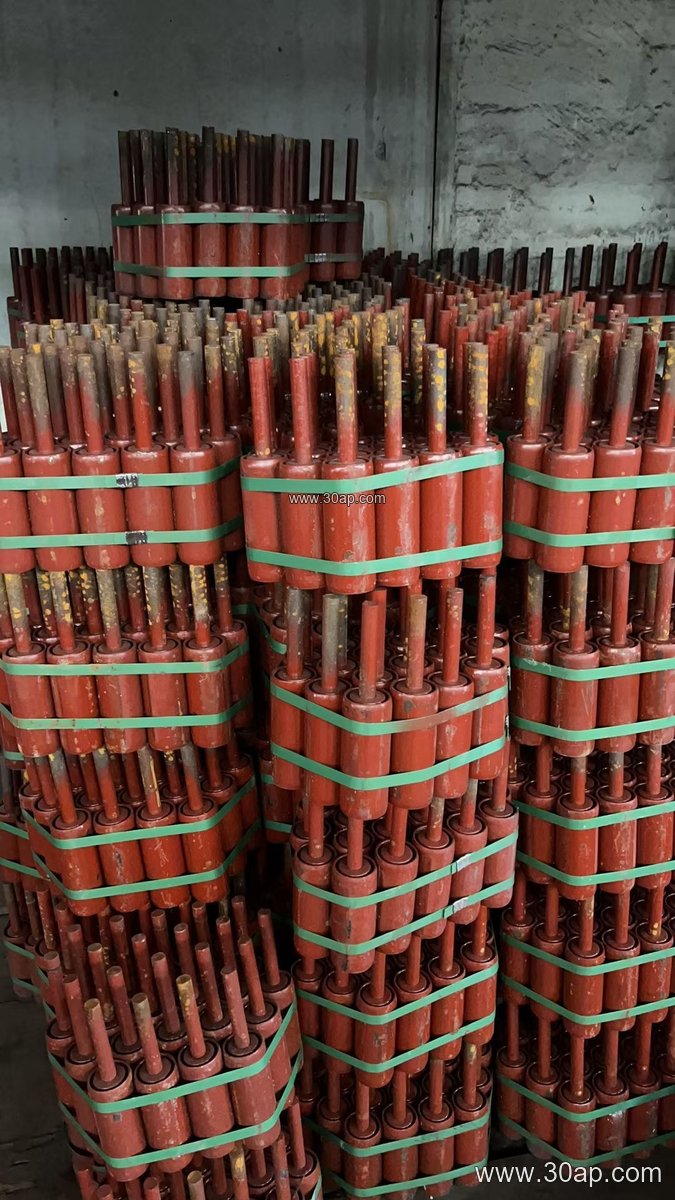
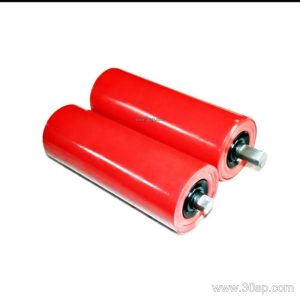
- Roller shell: steel tube, nylon, ceramic, or rubber ring, matched to the duty
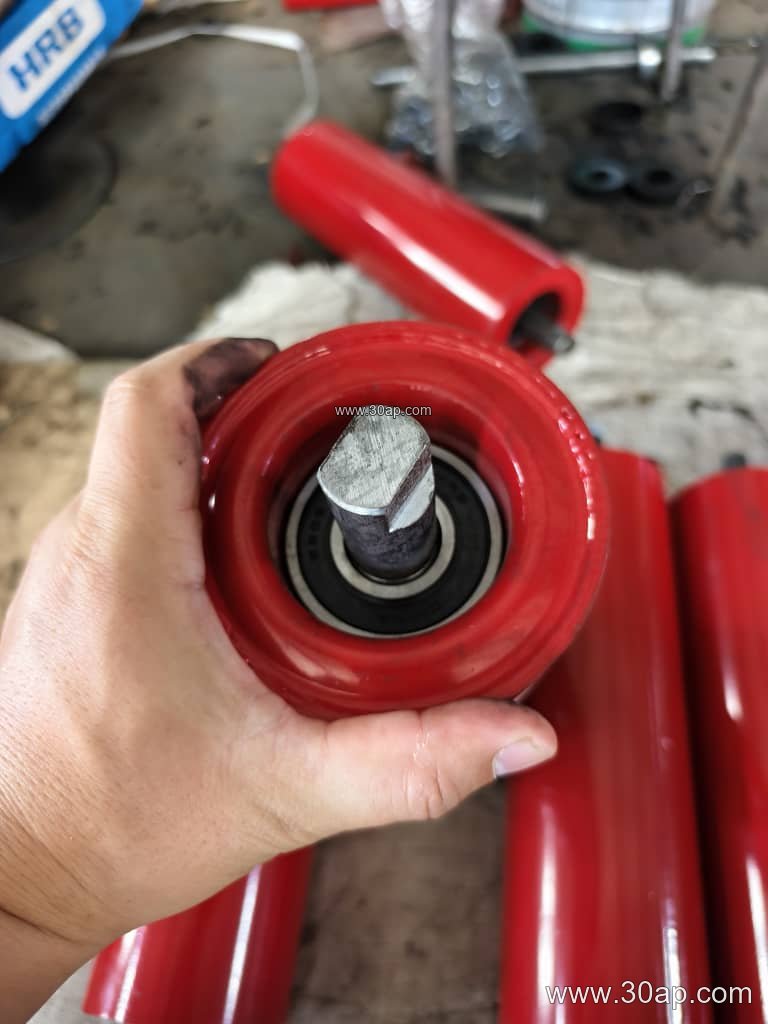
- Bearing: 6204, 6205, 6305, 6306, 6308, or 6310, selected by load and speed
- Pivot and stop: limits the swing angle so the belt is nudged, not forced
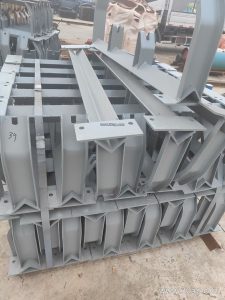
- Frame: two- or three-roll trough form for the carrying side, or a V-return layout
Sealing matters as much as the pivot. Dust and grit from a crusher discharge or a quarry conveyor belt line will seize a poor bearing long before the roller wears out, so labyrinth seals and greased-for-life bearing housings are common in heavy duty versions.
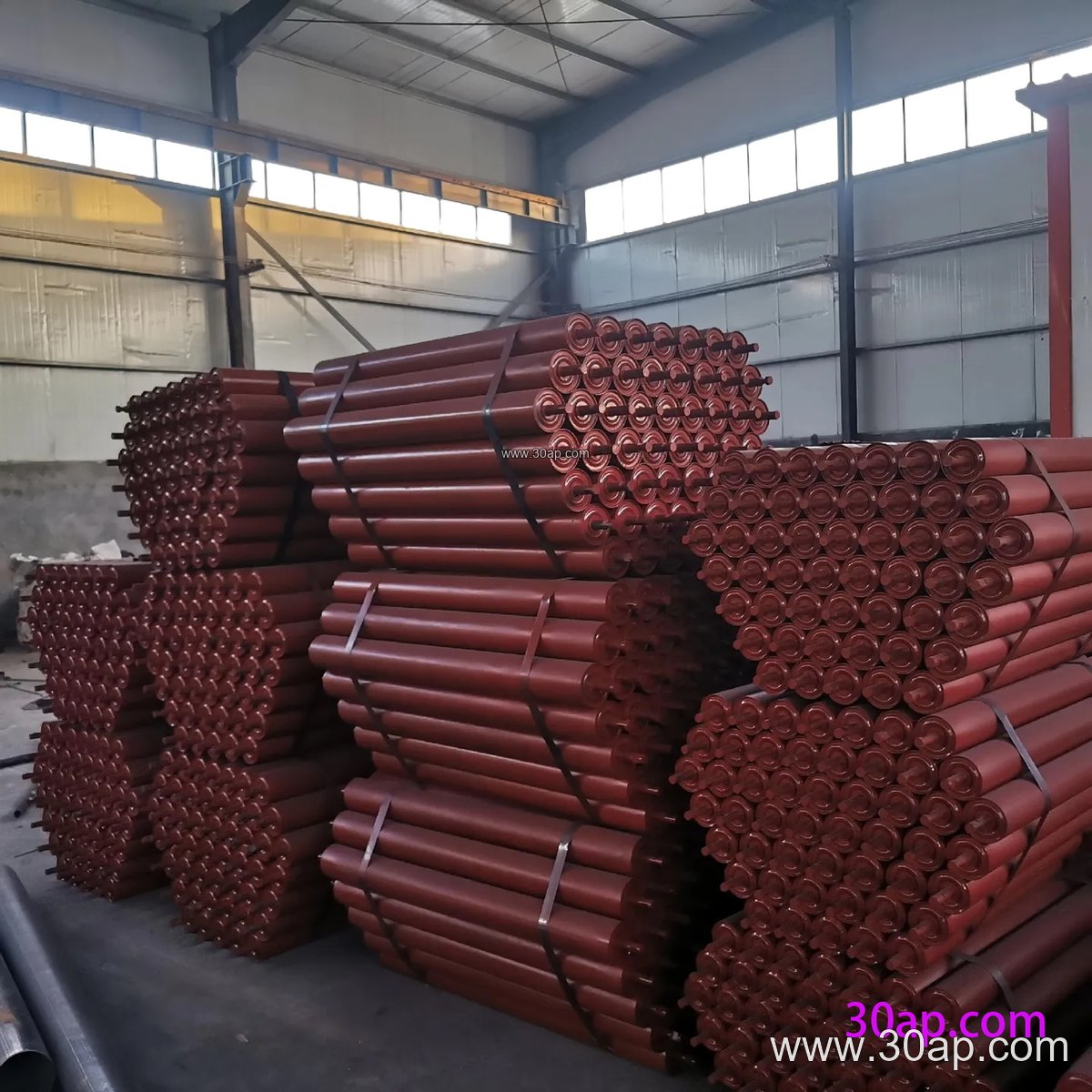
Typical Dimensions and Configurations
Self-aligning idlers follow the same roller diameter and belt width ranges as standard idlers. The table below gives common reference values; actual roller length depends on belt width, trough angle, and roll arrangement, so side rolls and center rolls may differ.
| Parameter | Common Reference Values |
|---|---|
| Roller diameter | Ø63, Ø76, Ø89, Ø102, Ø108, Ø127, Ø133, Ø159, Ø178, Ø194, Ø219 mm |
| Belt width | B400, B500, B650, B800, B1000, B1200, B1400, B1600, B1800, B2000, B2200, B2400 |
| Trough angle | 20°, 30°, 35°, 45° |
| Roller length (three-roll trough, example) | about 200 mm at B500, 315 mm at B800, 465 mm at B1200, 600 mm at B1600, 750 mm at B2000 |
| Bearing | 6204, 6205, 6305, 6306, 6308, 6310 |
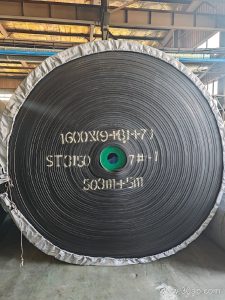
These are reference values for planning, not a fixed match between one belt width and one roller diameter. A wide, heavy steel cord conveyor belt may call for a larger shaft and bearing than a light fabric belt of the same width, and the final selection should come from the conveyor designer.
Where Self-Aligning Idlers Are Used
They are most useful where belts are long, where loading is off-center, or where the structure is exposed to wind and weather. One typical home is a coal handling system at a power plant, where the belt passes through transfer towers and the belt path shifts slightly with load. Another is a cement plant clinker line, where heat, dust, and heavy lumps punish both the belt and the tracking hardware.
They are usually installed a short distance after the loading point and at intervals along the carrying run, plus a few on the return side. On a long overland line carrying a heavy-duty mining conveyor belt, a small number of correctly placed self-aligning stations can reduce edge damage significantly. They are not a substitute for proper pulley alignment, square frames, or even belt tension.
What Buyers Should Check
Before ordering, confirm the belt width and the trough angle, then confirm the roller diameter and bearing series the existing conveyor uses. Ask whether the idler is for the carrying side or the return side, because the frame and roller layout differ. Check the pivot design and the swing limit, and ask how the bearing is sealed against the local dust and moisture.
Also consider the belt surface. A chevron or cleated belt may need more clearance, and a pipe conveyor or corrugated sidewall belt has different tracking needs entirely. Finally, treat the self-aligning idler as one part of a tracking system that includes the idler roller set, the pulleys, and the frame alignment. Buyers who match all of these together get far more value than those who treat the idler as a standalone fix.