What a Turning Pulley Does
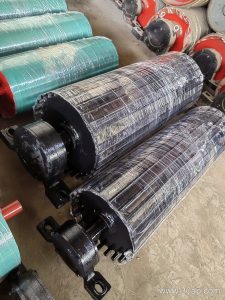
A turning pulley is the drum that changes the direction of a conveyor belt, guiding it from one run to the next without driving the belt forward. In many layouts it sits at the tail, at a tensioning station, or at a bend where the belt must be redirected. Because it does not transmit drive torque, its job is to support the belt, hold a stable path, and keep friction and belt stress under control. Buyers often meet it under the equivalent name bend pulley, and the two terms describe the same non-driven redirect drum.
A turning pulley should not be confused with the head or drive pulley, which grips the belt and pulls the load, or with the tail pulley, which can serve a different structural role depending on the conveyor design. Each position has its own load case, so the correct specification follows the duty, not just the belt width.
Construction and Surface Options
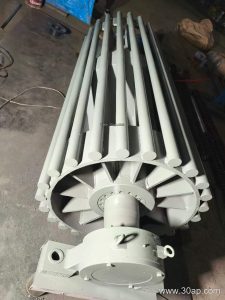
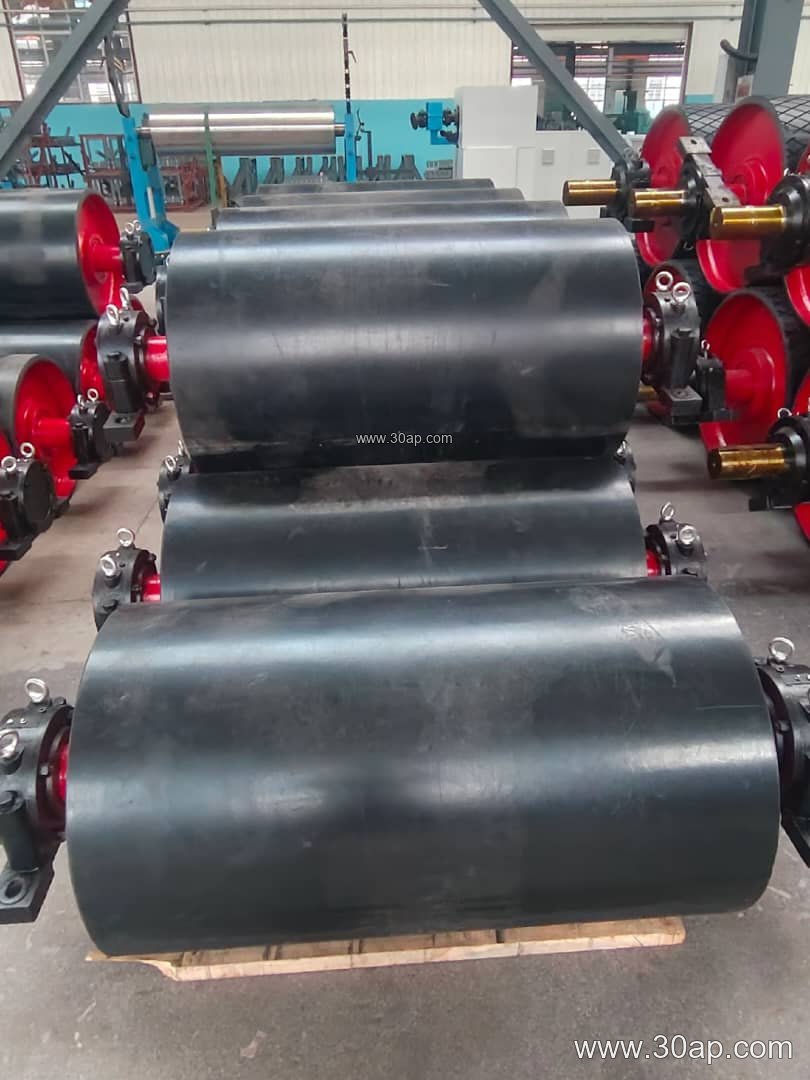
The drum body is usually a welded steel shell with machined end discs and a shaft that runs through bearings mounted in pillow blocks or a fabricated frame. Shell thickness, shaft diameter, and bearing size are set by the calculated torque and radial load. Shaft diameters commonly range from Ø50 to Ø200 mm, but the final value must come from the torque and load calculation rather than from belt width alone.
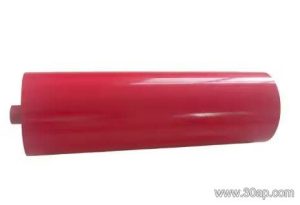
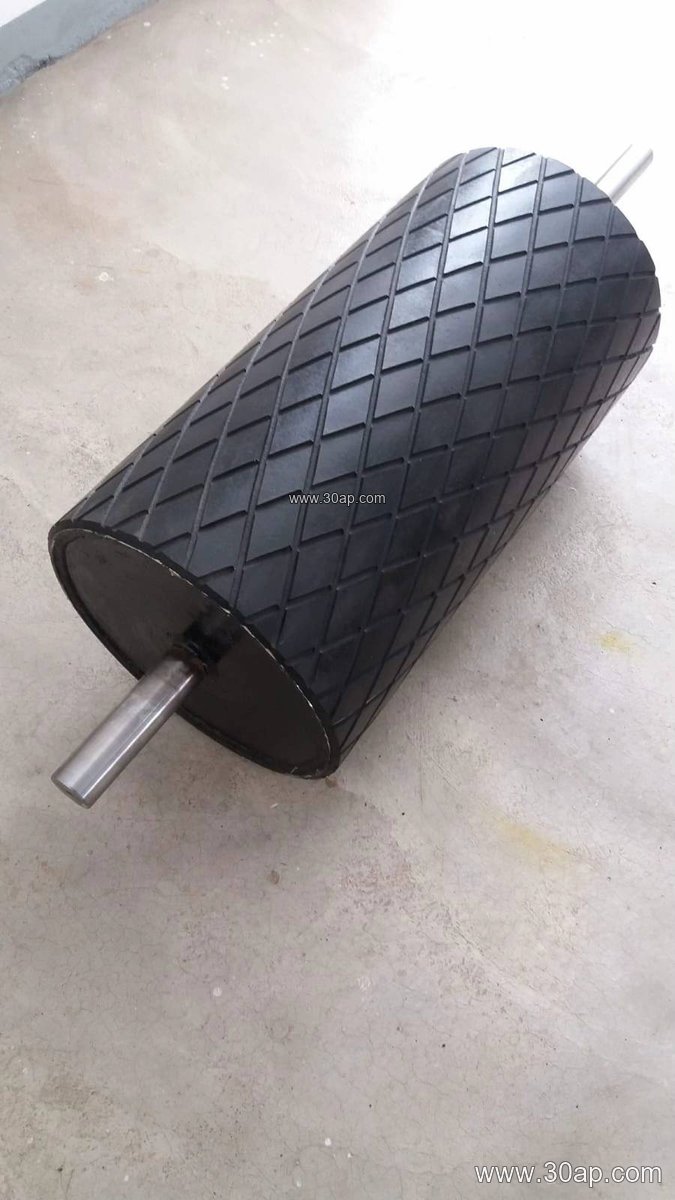
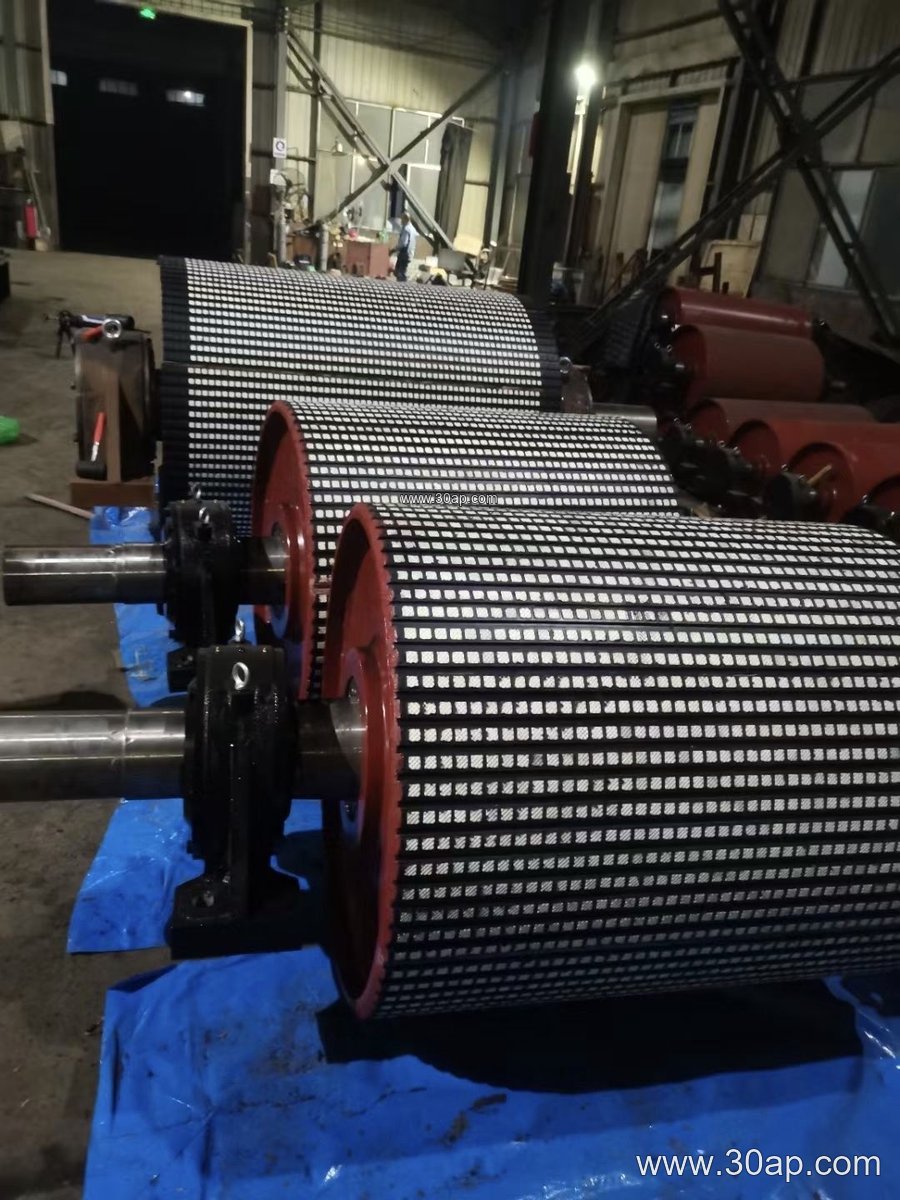
Surface finish matters because a turning pulley relies on friction between the shell and the belt. Common choices include plain finish, cast rubber, cold-bonded rubber, hot-vulcanized rubber, diamond grooving, herringbone grooving, ceramic lagging, and flat rubber sheet. Lagging thickness is often 8, 10, 12, 15, or 20 mm. Grooved or ceramic surfaces help shed water and fines, while plain or flat rubber surfaces suit cleaner duty. The shell face width is normally a little wider than the belt, for example about 750 mm for B650, about 1150 mm for B1000, and about 1600 mm for B1400.
Typical Reference Combinations
- B800 with Ø500 shell for a medium-duty bend position
- B1200 with Ø1000 shell for a main redirect on a long run
- B1400 with Ø800 shell for a compact tail or tensioning station
These are reference examples only. A wider belt does not force a single diameter, and a given belt width can work with several drum sizes depending on wrap angle, belt tension, and space.
Where It Fits in the Plant
In a limestone quarry or an aggregate crushing line, a turning pulley often redirects the belt after the discharge point so the return strand can reach the tensioning take-up. In a coal washing plant or a power plant coal yard, the same drum keeps the belt aligned around a transfer tower. The surrounding equipment usually includes a conveyor belt, idler roller sets, a conveyor pulley at the head, and a conveyor bracket that carries the bearing housings.
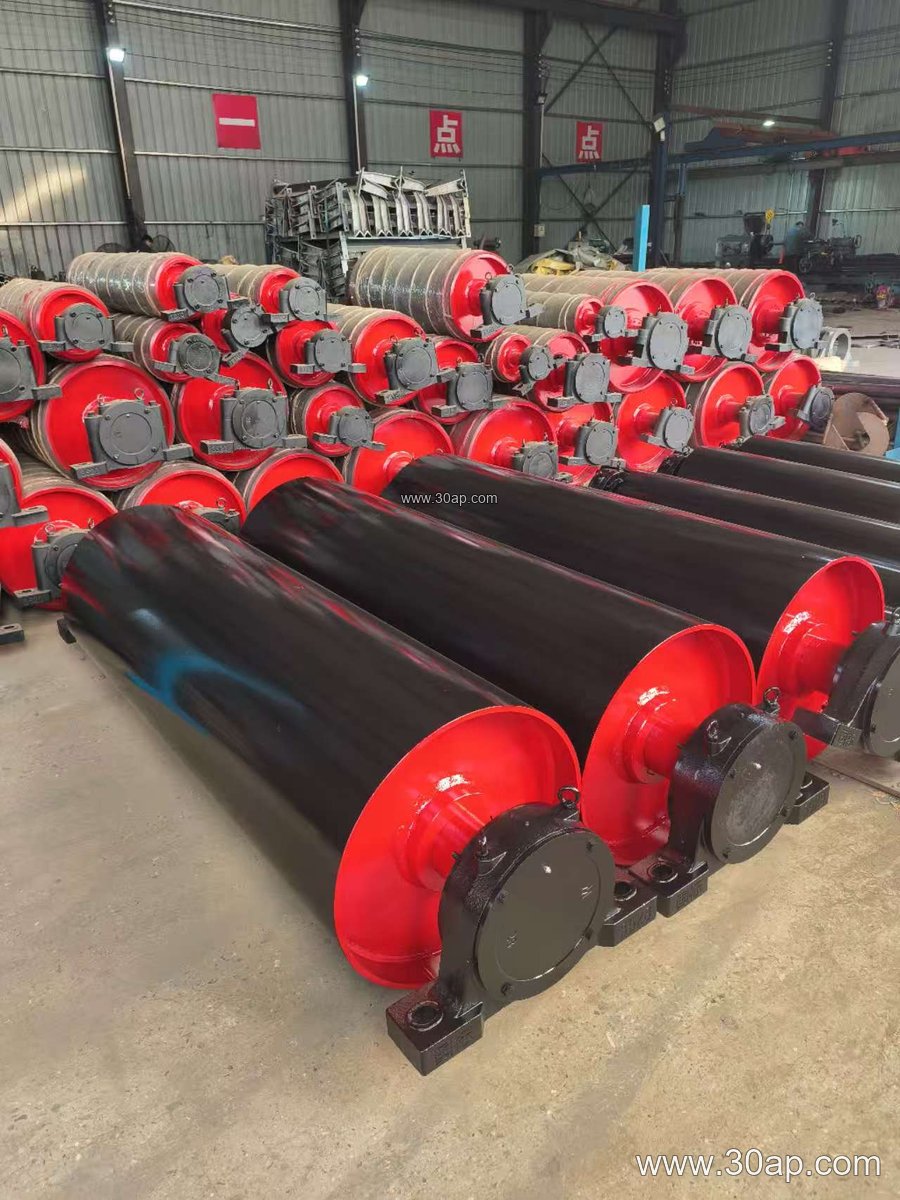
The belt itself influences the choice. A heavy-duty mining conveyor belt or a steel cord conveyor belt carries high tension and needs a robust shell and shaft, while an EP conveyor belt or a multi-ply fabric core conveyor belt may allow a lighter drum. In dusty or wet conditions, an abrasion resistant conveyor belt and a grooved lagging surface work together to limit slip. For underground work, a flame retardant conveyor belt is common, and the drum should be specified for the same environment. Visit www.morning-sun.com for conveyor drum and belt routing references.
Selection Points for Buyers
Start with the wrap angle and the belt tension at that point, then confirm the shell diameter, face width, shaft size, and bearing type. Check that the lagging suits the material: sticky loads favor grooved or ceramic surfaces, while fine dry material may run well on flat rubber. Confirm the mounting arrangement and the conveyor bracket dimensions before ordering, and make sure the drum can be removed for relagging without dismantling the whole structure.
Alignment deserves attention during installation. A turning pulley that sits out of square with the belt centerline will cause edge wear and mistracking, no matter how good the lagging is. Use a laser or string line to set the drum parallel to the adjacent idler roller frames, and check runout after tightening the bearings.
Maintenance Habits That Extend Service Life
Inspect lagging for wear, cuts, and embedded material at each shutdown. Worn grooves reduce friction and can let the belt slip under load. Lubricate bearings to the schedule given by the bearing maker, and watch for overheating or abnormal noise. Keep the area around the drum clear so spilled material does not build up against the shell. When relagging is needed, record the original surface type and thickness so the replacement matches the duty.
For plants handling bulk material conveyor belt systems, a well-matched turning pulley protects both the belt and the structure. Whether the line moves ore, clinker, or coal, the drum should be treated as a load-bearing component with its own specification, not as a generic spare part. More routing details are available at www.morning-sun.com, and a second reference set can be found at www.morning-sun.com for conveyor pulley selection.